UAE summers from June through September push ambient temperatures to 38–47°C inside poultry houses, triggering heat stress that silently cuts feed intake by 5–25%. For a broiler farm running 10,000 birds per cycle, that translates to an FCR climbing from 1.80 to 2.10 and an extra AED 12,000–18,000 in feed waste per batch — before you even count mortality losses. The good news: a structured summer feeding strategy built around night feeding windows, fat-enriched formulations, targeted vitamin and electrolyte supplementation, and on-farm daily milling can recover most of those losses and actually shave 15% off your total feed cost. This guide covers every lever available to UAE poultry farmers — from reprogramming automatic pan feeders at 4 AM to swapping wheat bran for vegetable oil in your finisher formula. Whether you run broilers, layers, or a mixed operation, the principles apply across Ras Al Khaimah, Al Ain, and every emirate where summer is the hardest four months of the year.
The Thermic Effect of Feed: Why Eating Makes Birds Hotter
Every kilogram of feed a bird digests generates body heat through a process called the thermic effect of feeding (TEF). Under temperate conditions, this heat is harmless — it actually helps birds maintain body temperature. In a 42°C UAE summer, it becomes a liability. The bird's core body temperature is already at its physiological limit (41–42°C). Adding more metabolic heat through feed digestion risks fatal hyperthermia.
The bird's survival instinct overrides production: it voluntarily reduces feed intake. A broiler at 35°C ambient temperature eats 15–20% less than at 25°C. At 38°C, voluntary intake drops 25%. The consequences cascade immediately:
- Broiler FCR rises from 1.80 (standard) to 2.10–2.20 in peak summer — meaning you spend 17–22% more feed per kilogram of live weight produced
- Layer egg production drops 15–30% within 7–10 days of sustained heat stress above 35°C
- Eggshell quality deteriorates as bicarbonate shifts to respiratory compensation for heat (panting depletes blood CO₂)
- Mortality spikes — a single heat event at 45°C without intervention can cause 2–5% mortality in a single day on a 10,000-bird farm, equal to 200–500 birds at AED 18–25 per bird = AED 3,600–12,500 in a single afternoon
The farms that absorb these losses passively, waiting for October, are the farms that lose money every summer. The farms that restructure their entire feeding operation around summer heat biology are the farms that stay profitable year-round.
1. The Night Feeding Strategy: Moving 70% of Daily Intake Into Cool Hours
The single highest-ROI intervention for any UAE poultry farm in summer is restructuring feeding time. Birds cannot refuse to eat at night — temperatures drop to 28–33°C in Ras Al Khaimah between midnight and 6 AM, and birds will eagerly consume feed when their body heat burden is manageable.
The 4-Hour Pre-Peak Suspension Rule
Daily temperature in the UAE peaks between 10 AM and 4 PM. Feed the birds heavily in this window and you are adding metabolic heat precisely when ambient heat is at its worst. The protocol:
- Suspend feed 4 hours before peak: Remove or lock feeders at 6 AM so the digestive thermic effect peaks before 10 AM, not during it
- First afternoon offer: 4 PM — temperatures begin declining; birds accept feed cautiously
- Evening offer: 8 PM — major feeding window; birds eat aggressively as temperature drops below 34°C
- Night offer: Midnight — coolest period; critical intake window for broilers in finishing phase
- Pre-dawn offer: 4 AM — second major window before morning heating begins
Target: 70% of daily feed intake between 6 PM and 6 AM. This single adjustment recovers 8–12% of summer-suppressed intake without changing a single ingredient in your formula.
Programming Automatic Pan Feeders for the Summer Schedule
Modern automatic pan feeder systems used on UAE farms (track-and-pan systems covering houses of 1,200–2,400 m²) can be timer-programmed for exactly this schedule. Set the feeder chain to run at:
- 4:00 PM — 10-minute run (afternoon activation)
- 8:00 PM — 15-minute run (primary evening fill)
- 11:30 PM — 10-minute run (midnight top-up)
- 3:45 AM — 15-minute run (pre-dawn primary fill)
- 6:00 AM — short 5-minute run (last morning offer before suspension)
For farms without programmable automatic feeders, this is one of the strongest ROI arguments for equipment investment. A basic programmable feeder system for a 1,200 m² house costs AED 8,000–15,000 and pays itself back within 1–2 summer cycles through recovered FCR alone.
2. Reformulating the Summer Feed: Reducing Heat Increment Through Fat
Not all energy sources create equal metabolic heat. This is the key insight behind summer feed reformulation:
- Carbohydrates (grain/fiber): heat increment = 25–30% of metabolizable energy
- Protein: heat increment = 30–35% of metabolizable energy
- Fat (vegetable oil): heat increment = only 10–14% of metabolizable energy
Fat has 33% less heat increment than carbohydrates and delivers 2.25× the metabolizable energy per gram. In a summer formulation, fat is not a luxury — it is a thermoregulatory tool.
Summer Broiler Finisher Formula (UAE-Adapted)
| Ingredient |
Standard Formula (%) |
Summer Formula (%) |
| Yellow corn |
62 |
60 |
| Soybean meal (48% CP) |
30 |
28 |
| Vegetable oil (palm/soy) |
2 |
5–6 |
| Wheat bran |
3 |
0 (eliminate entirely) |
| Limestone / DCP |
1.5 |
1.5 |
| Premix / additives |
1.5 |
1.5 + summer supplements |
Key changes explained:
- Eliminate wheat bran entirely: wheat bran is high in fiber, which has the highest heat increment of all feed components. Removing it in summer cuts metabolic heat load immediately.
- Increase oil from 2% to 5–6%: this maintains energy density (approximately 3,100–3,200 kcal ME/kg) even as grain and protein fractions decrease, delivering energy with minimal heat burden.
- Maintain the calorie-to-protein (C:P) ratio at the same production-appropriate level — but achieve it through fat energy rather than grain energy.
The cost of adding 3–4% extra oil at current UAE market prices (approximately AED 3.80–4.20/kg for crude palm oil) adds about AED 0.15–0.18 per kg of finished feed. The FCR improvement from 2.10 back toward 1.90 on a 10,000-bird house saves approximately AED 14,000–20,000 per cycle. The math strongly favors the reformulation.
3. Lysine Supplementation: Maintaining Amino Acid Delivery When Intake Falls
When a broiler eats 25% less feed, it receives 25% less lysine — the first-limiting amino acid for growth. Unless you compensate, growth depression compounds the heat stress production loss.
The solution is straightforward: increase the lysine concentration in the diet so that the reduced intake still delivers the same total daily lysine consumption.
Summer Lysine Targets for UAE Broilers
- Standard finisher lysine: 0.85–0.90% of diet (total)
- Summer finisher lysine: 1.05–1.15% of diet (total)
- This is achieved by increasing synthetic L-Lysine HCl inclusion from approximately 0.18% to 0.30–0.35%
- Cost increase: approximately AED 0.04–0.06 per kg of finished feed
- Recovery: broilers eating 20% less feed but receiving 1.10% lysine maintain the same daily lysine intake as birds eating normally at 0.88% — growth is substantially protected
Apply the same logic to methionine (increase from 0.38% to 0.44–0.48%) and threonine (increase from 0.62% to 0.72–0.78%) in your summer formulations. These three amino acids together cost less than AED 0.12/kg extra to fortify but protect weeks of growth performance.
4. Vitamin and Electrolyte Supplementation During Heat Events
Heat stress triggers a hormonal cascade — cortisol rises, which suppresses immune function and further depresses feed intake. Targeted micronutrient supplementation directly interrupts this cascade.
Vitamin C: The Anti-Stress Vitamin
Unlike mammals, poultry synthesize their own vitamin C — but their synthesis capacity is overwhelmed during heat stress. Supplementation at 200–400 mg/kg of feed has been demonstrated in multiple UAE-condition trials to:
- Reduce plasma cortisol levels by 15–25%
- Improve eggshell quality in layers (shell thickness recovers 8–12%)
- Reduce summer mortality risk by 0.5–1.5 percentage points on commercial UAE farms
Cost: approximately AED 0.03–0.06/kg of feed. ROI: exceptional, especially for layer flocks where eggshell breakage during summer peaks can represent AED 8,000–15,000 per month in a 20,000-bird layer house.
Vitamin E: Cellular Protection
At 150–200 IU/kg of feed, vitamin E acts as a lipid-soluble antioxidant protecting cell membranes from heat-stress-induced oxidative damage. It is particularly important when you increase dietary fat (as recommended above) because higher fat diets increase oxidative load. Standard premix vitamin E levels (50–80 IU/kg) are inadequate for UAE summer conditions — supplement above premix levels.
Electrolytes: Restoring Blood Chemistry Disrupted by Panting
Panting is a bird's primary heat dissipation mechanism. Extended panting causes respiratory alkalosis — blood CO₂ drops, blood pH rises, bicarbonate shifts, and the bird's acid-base balance is disrupted. This impairs bone mineralization in layers (shell quality), muscle function in broilers, and overall feed utilization.
Electrolyte supplementation protocol for heat events above 38°C:
- Sodium bicarbonate (baking soda): 0.5% of diet or 0.3–0.5% of drinking water — restores blood bicarbonate, supports eggshell formation
- Potassium chloride: 0.1% of diet or 0.15% of drinking water — replaces potassium lost in elevated urine output during heat stress
- Ammonium chloride: avoid in summer — acidifies blood, worsening heat alkalosis
These electrolytes can be added directly to the drinking water during heat emergencies (days above 42°C) for rapid effect, or incorporated into feed at lower preventive levels throughout the summer period.
5. Pellets vs. Mash in Summer: Why Feed Form Matters at 40°C
A heat-stressed bird expends energy eating. Mash feed requires more physical effort to consume — birds must sort through fine particles, inhale dust (creating respiratory stress), and expend more metabolic energy per gram consumed. Pellets deliver more nutrition with less effort.
Summer pellet advantage:
- Feed intake improves 8–12% with pellets vs. mash under heat-stressed conditions (UAE field observations consistent with international data)
- Pellet dust is eliminated, reducing respiratory irritation already heightened by heat-related panting
- Pellet hardness above 4 kg/cm² maintains structure in UAE summer humidity (60–80% RH in coastal farms), preventing fines formation in the feeder
- Pellets flow more freely in automated feeder systems, reducing bridging in hoppers during hot storage
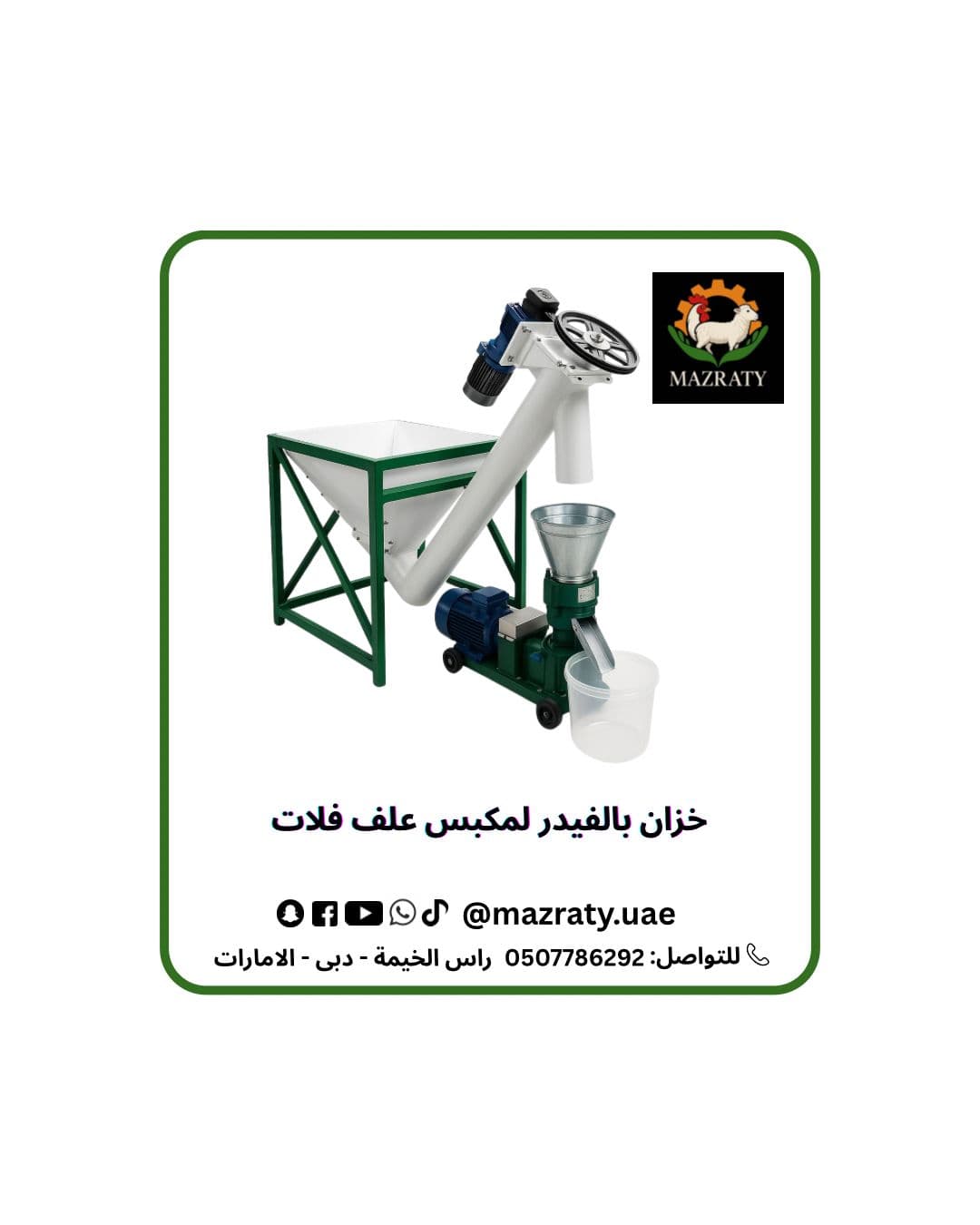
For farms currently using mash feed in summer: the conversion to a pelleted product — or to on-farm pelleting — is one of the most direct paths to recovering 8–12% of heat-suppressed intake. Combined with night feeding scheduling, these two interventions alone can recover 15–20% of summer production losses.
6. Water Management: The Feed Is Only Half the Equation
Water consumption doubles in summer, and water availability directly controls how much feed a bird can process. A dehydrated bird stops eating. Period.
Summer Water Requirements by Bird Weight and Temperature
| Bird Weight (kg) |
Water at 25°C (ml/day) |
Water at 35°C (ml/day) |
Water at 38°C+ (ml/day) |
| 0.5 (day 14 broiler) |
80 |
140 |
180 |
| 1.0 (day 28 broiler) |
150 |
260 |
340 |
| 1.8 (day 35+ finisher) |
200 |
380 |
420+ |
| Layer (1.8–2.0 kg) |
220 |
400 |
460+ |
Practical UAE farm water management adjustments for summer:
- Increase nipple drinker pressure to 25–30 cm H₂O (from standard 20 cm) to deliver water faster when birds queue at drinkers
- Reduce nipple spacing from 15 cm to 10–12 cm in finisher houses — overcrowding at drinkers is a heat-mortality risk factor
- Keep water temperature below 25°C by insulating supply pipes and pre-cooling header tanks; warm water (above 30°C) is rejected by heat-stressed birds
- Flush drinker lines at 5 AM (before daily heating) to replace stagnant hot water from overnight radiative heating of above-roof supply pipes
- Water:feed ratio monitoring: target 1.7–2.0:1 in standard conditions; if your ratio climbs above 2.5:1, the flock has a health or heat stress problem requiring immediate investigation
7. Protecting Feed from Mold and Mycotoxins in UAE Summer Storage
Feed stored in UAE summer conditions — bin temperatures of 35–45°C, relative humidity 60–80% in coastal areas — is at high risk for mold growth and mycotoxin accumulation. Aflatoxin from Aspergillus molds can develop to dangerous levels within 48–72 hours in a hot, humid feed bin.
Mycotoxins in summer feed create a compounding disaster: they suppress immune function and feed intake further, on top of heat stress already suppressing both. A flock eating mycotoxin-contaminated feed in July is fighting two simultaneous assaults on production.
UAE Summer Feed Storage Protocol
- Add approved mold inhibitors at mixing: propionic acid-based products at 0.1–0.3% of feed weight are the UAE standard; they inhibit mold growth in the feed mass throughout the storage period
- Reduce bin storage time to 48 hours maximum during July–August peak heat; never store mixed feed for more than 72 hours at ambient temperatures above 38°C
- Inspect feed bins every 48 hours for caking (moisture-induced clumping), color changes, or musty odor — any of these are immediate red flags for mold contamination
- Shade feed bins on the south and west faces — direct sun on a metal bin at 2 PM raises internal temperature to 55–60°C, accelerating fat oxidation (rancidity) and mold risk simultaneously
- Consider white paint or reflective cladding on storage bins — reduces surface temperature by 8–12°C at a cost of AED 200–400 per bin
Recognizing Heat-Damaged Feed
Heat-damaged feed shows specific signs beyond obvious mold:
- Rancid (bitter, soapy) smell from fat oxidation — oxidized fat reduces palatability and destroys fat-soluble vitamins
- Darker color in pellets — Maillard reaction between heat-damaged proteins and sugars reduces amino acid bioavailability, particularly lysine
- Clumping in bags or bins without visible mold — indicates moisture migration and microclimate humidity problems
Any feed showing these signs should be discarded. The cost of running heat-damaged feed through a 10,000-bird house is always greater than the cost of the discarded feed itself.
8. On-Farm Feed Milling: The Summer Game-Changer
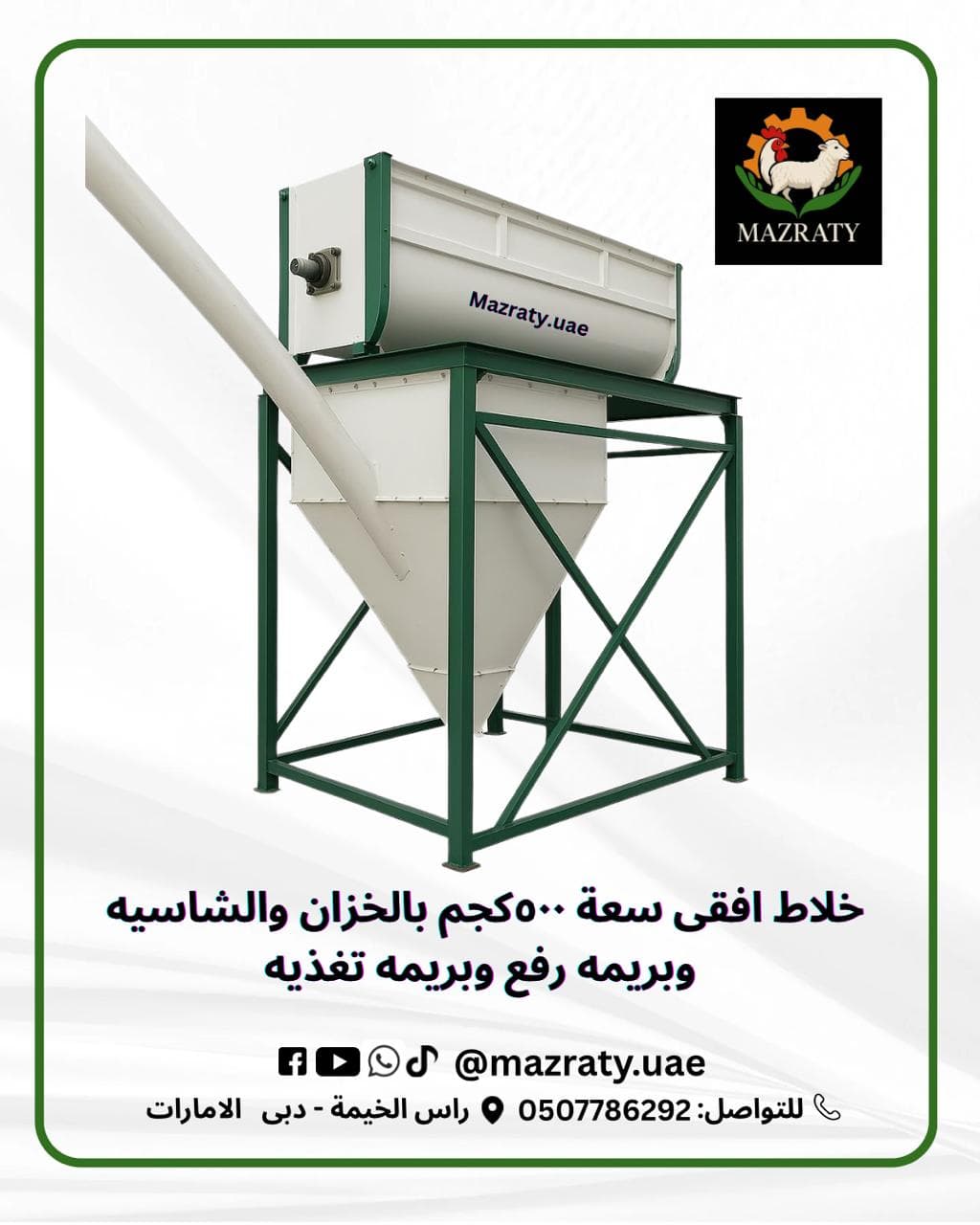
Every problem described above — storage mold, heat-damaged fat, oxidized vitamins, reduced palatability — is eliminated when feed is milled fresh daily. An on-farm hammer mill and mixer producing feed in 24-hour batches delivers:
- Zero storage heat damage: feed moves from mixer to feeder within hours, not days
- Exact summer formulation control: you can adjust oil inclusion, lysine level, and vitamin pack daily based on actual temperature forecasts, not a batch formulated 10 days ago
- Freshness palatability: newly mixed feed with fresh fat and fresh ingredients is significantly more palatable to heat-stressed birds than aged commercial feed
- Mold inhibitor efficacy: propionic acid added at mixing is most effective in fresh feed; its efficacy declines in commercially mixed feed that has already sat 7–14 days in transit and storage
Investment Economics for UAE Farm Scale
| Farm Size |
Recommended Mill Capacity |
Equipment Investment (AED) |
Annual Feed Cost Saving (AED) |
Payback Period |
| 5,000 birds / 300 m² |
1–2 ton/hour |
45,000–75,000 |
28,000–40,000 |
18–24 months |
| 10,000 birds / 600 m² |
2–3 ton/hour |
85,000–130,000 |
55,000–80,000 |
18–24 months |
| 25,000 birds / 1,500 m² |
5 ton/hour |
180,000–260,000 |
130,000–190,000 |
16–20 months |
These savings represent the combination of: eliminated commercial feed margin (AED 0.08–0.15/kg), reduced summer FCR through fresh formulation, eliminated heat-damage waste, and optimized summer formulation that cannot be achieved with commercial pre-mixed feed.
9. Practical Summer Feeding Schedule: Day-by-Day Protocol by Temperature
| Ambient Temperature |
Feed Access Hours |
Recommended Feed Times |
Target Night Intake (%) |
Priority Action |
| Below 33°C |
20 hours/day |
Standard + 4 PM, 8 PM top-up |
50% |
Normal management |
| 33–36°C |
18 hours/day |
6 AM, 4 PM, 8 PM, midnight |
60% |
Add electrolytes to water |
| 36–39°C |
16 hours/day |
5 AM, 4 PM, 8 PM, midnight, 3 AM |
70% |
Full summer formula + Vit C |
| 39–42°C |
14 hours/day |
4 AM, 4 PM, 7 PM, 10 PM, 2 AM |
80% |
Emergency electrolytes, check water |
| Above 42°C |
12 hours/day (night only) |
3 AM, 5 PM, 8 PM, 11 PM, 2 AM |
90% |
Maximum cooling priority; misting on |
Key Daily Monitoring Checklist During UAE Summer
- Check feeder fill level at each programmed run — empty feeders before a scheduled cool window mean lost intake
- Record daily water consumption per house — a sudden drop in water intake is the earliest warning of acute heat stress before mortality begins
- Weigh birds weekly — FCR tracking catches heat-related performance loss before it becomes catastrophic
- Test feed bin contents every 48 hours for caking or odor changes
- Monitor ventilation pad efficiency — a wet-pad system losing 30% of cooling capacity in peak July heat is costing AED 500–1,000/day in extra mortality and FCR loss
Pulling It Together: The 15% Feed Cost Saving Breakdown
The 15% feed cost reduction claim is not a marketing number — it is built from specific, measurable interventions:
- Night feeding schedule: recovers 8–12% of suppressed intake, reducing total cycle length by 2–3 days → saves 3–5% on total feed per cycle
- Summer reformulation (fiber out, fat in): FCR improvement from 2.10 to 1.90 → saves 9.5% of feed per kg of live weight produced
- Reduced mortality: 1% mortality reduction on a 10,000-bird house = 100 birds × AED 20 average feed cost invested = AED 2,000 recovered per cycle
- On-farm milling: eliminates commercial margin and heat damage waste → AED 0.10–0.15 saved per kg of feed consumed
Not every farm can implement all interventions simultaneously. Prioritize: (1) night feeding schedule — zero cost, immediate impact; (2) summer formula with increased fat — ingredient cost, high ROI; (3) vitamin/electrolyte supplementation — low cost, critical during heat events; (4) on-farm milling — capital investment, highest long-term return.
Mazraty: Your Summer Feed Equipment Partner in Ras Al Khaimah
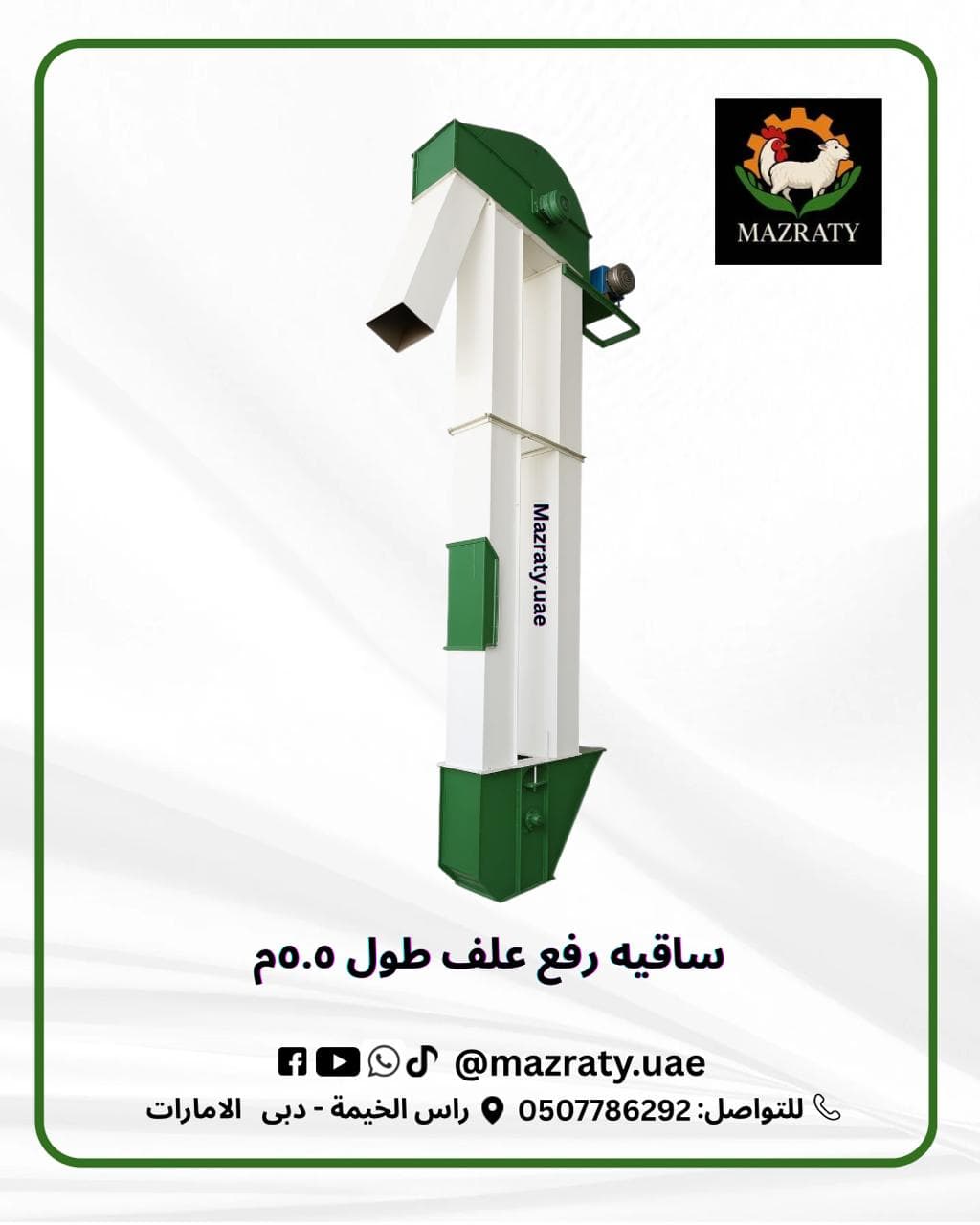
Every recommendation in this guide — from daily fresh milling to precision summer formulation to programmable automated feeding — depends on having the right equipment reliably operating in UAE conditions. Mazraty supplies the complete range of poultry feed processing and delivery equipment suited to the UAE climate and farm scale: hammer mills, ribbon mixers, pellet mills, automatic pan feeder systems, and storage solutions engineered for Gulf temperatures.
Our team can help you spec the right system for your farm size, calculate payback on your specific flock economics, and source equipment that arrives ready for UAE summer conditions — not equipment designed for European climates that degrades in 42°C heat.
Contact Mazraty today on WhatsApp: +971 50 535 3412
Tell us your farm size (birds per cycle), current feed source (commercial or on-farm), and your biggest summer challenge — and we will build you a specific equipment recommendation with UAE-realistic ROI numbers before you make any decision.
Reviewed planning sources
These references support operating and welfare principles. Final design and health programs remain site-, strain-, authority- and veterinarian-specific.
Frequently Asked Questions
Should feeding change during hot weather?
Timing and monitoring may change with flock intake, but formulation changes require a nutritionist and actual performance records.
Is there a fixed feed-cost saving?
No. Savings depend on ingredients, waste, feed conversion and energy; calculate them from current farm records.