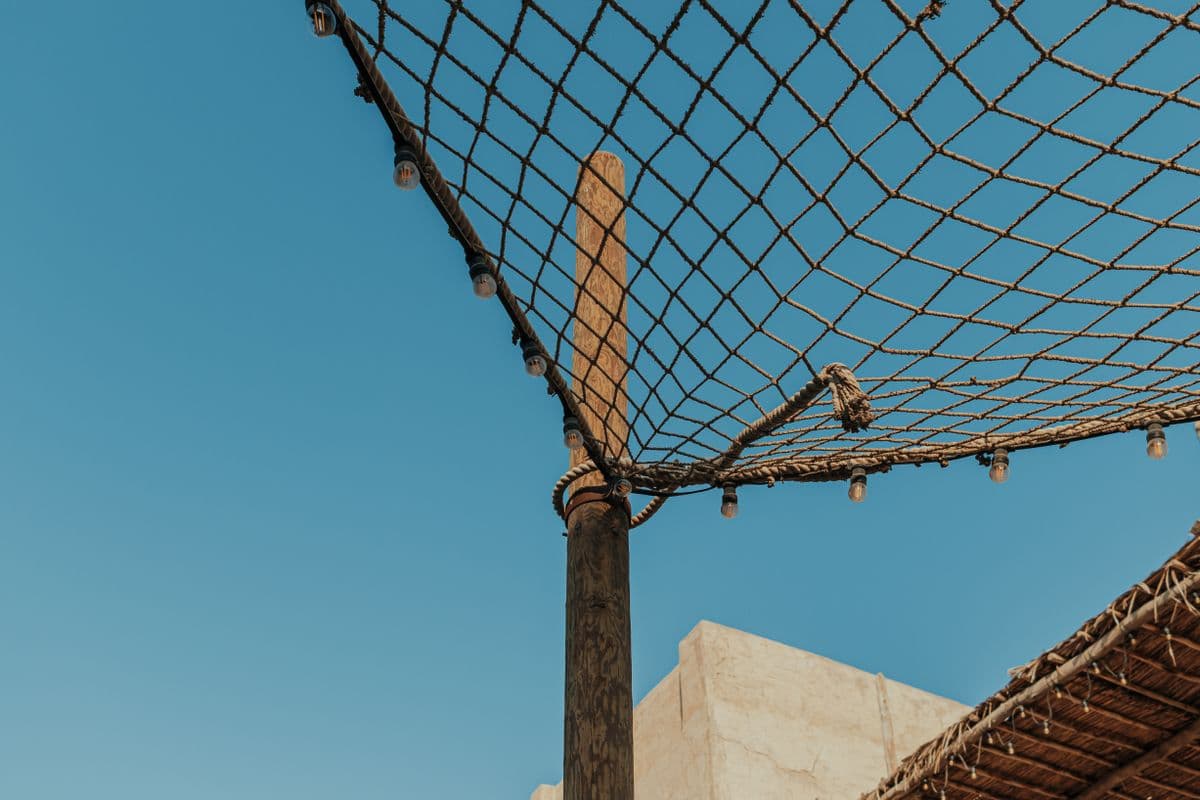
UAE farms face some of the most intense solar radiation on earth — 6 to 8 kWh/m²/day in summer — driving dark metal rooftops to surface temperatures of 65–80°C and turning unshaded outdoor spaces into hazards for animals, workers, feed, and water storage. Shade nets and external sun-shading structures offer a low-cost, electricity-free strategy to cut solar radiation loads by 40–80% and reduce internal building temperatures by 4–8°C. Whether you manage a broiler farm in Ras Al Khaimah, a rabbit operation in Al Ain, or a mixed livestock holding in Abu Dhabi, correctly selected HDPE shade nets, tensioned shade sails, galvanized frame awnings, and strategic overhanging eaves can transform farm performance before the peak summer months. This guide covers every decision point: shade factor percentages for each application, structure engineering for UAE shamal wind loads, water tank and feed storage shading, worker safety compliance, and annual maintenance protocols. Mazraty supplies and installs complete shade net systems across the UAE — WhatsApp +971 50 535 3412.
The financial consequences are measurable. A 1,000 m² broiler house in Ras Al Khaimah running evaporative cooling pads without roof shading may consume 8,000–12,000 AED per month in electricity during summer. Adding external shade net structures that reduce solar gain by 50–70% typically cuts that cooling energy load by 20–35%, representing 1,600–4,200 AED monthly savings against a one-time shade structure installation cost of 15,000–30,000 AED — yielding payback periods of six to eighteen months.
Understanding HDPE Shade Net Specifications
High-Density Polyethylene (HDPE) shade netting is the standard material for agricultural sun shading across the Gulf. Understanding the specification sheet is essential before purchasing.
Shade Factor Percentage
The shade factor describes the percentage of incoming solar radiation that the net blocks. Common grades available in the UAE market:
| Shade Factor |
Radiation Blocked |
Primary Application |
Approximate Price (AED/m²) |
| 30% |
Low reduction |
Wind break, light crop shading |
4–6 |
| 50% |
Moderate |
Broiler house rooftop, vegetable nurseries |
6–9 |
| 75% |
High |
Rabbit/pigeon cages, outdoor livestock yards |
9–14 |
| 90% |
Very high |
Worker shade corridors, parking, nursery propagation |
14–20 |
Weight and Construction Type
Weight is expressed in grams per square meter (g/m²) and indicates durability. Lightweight nets (60–80 g/m²) are suitable for temporary or seasonal deployment. Medium-weight nets (100–130 g/m²) suit permanent rooftop installations. Heavy-duty agricultural nets (150–200 g/m²) are specified for high-wind coastal sites in Ras Al Khaimah and Fujairah.
Construction type matters for UAE conditions:
- Knitted HDPE nets are the standard for most farm applications. The knitted structure allows wind to pass through without creating excessive pressure on the support frame — critical in a country with shamal storms. A knitted net rated 50% shade allows approximately 40–50% of wind speed to pass through rather than acting as a sail.
- Woven HDPE nets offer higher tear strength and dimensional stability but create more wind resistance. They are appropriate for sheltered internal corridors or low-wind-exposure applications where durability against foot traffic or animal contact is the primary concern.
UV Stabilization Rating
This is the specification most frequently overlooked by buyers and most consequential for UAE conditions. The UV Index in the Emirates reaches 11+ (extreme) from May through September. Standard agricultural HDPE that is UV stabilized for temperate climates may carry a 3-year rating — appropriate for Europe but inadequate here. For UAE farms, specify a minimum 5-year UV stabilization warranty. Premium nets with 8–10 year UV guarantees are available and worth the 20–30% price premium for permanent structures, as they avoid the cost and disruption of full net replacement every three years.
Visual checks for UV degradation include: powdery white surface coating (chalking), visible thread fraying at edges, loss of color density, and reduced flexibility when handled. A net that has failed UV stabilization should be replaced before the summer season, not during it.
Selecting the Correct Shade Percentage for Each Farm Zone
Rooftop Over-Structure Shading (50–75%)
Installing shade nets on a frame positioned 30–50 cm above the roof surface is among the most cost-effective interventions available to UAE farm operators. The air gap between net and roof allows convective cooling — the net intercepts 50–75% of direct radiation, and the heated air rising from the roof surface escapes laterally rather than accumulating. Measured results on farms in Ras Al Khaimah show roof surface temperature reductions from 75°C to 45–50°C with this approach, and a corresponding indoor ambient temperature reduction of 5–8°C during peak afternoon hours.
For a 1,000 m² poultry house rooftop, a 50% shade net installation typically costs 18,000–28,000 AED including galvanized frame, tensioning hardware, and net material at current UAE market rates.
Broiler House Side Wall Shading (40–50%)
West-facing and south-facing sidewalls of broiler houses receive intense afternoon solar loading from March through October. A shade net canopy extending 1.5–2 m outward from the eave line, angled at 5–10 degrees downward, intercepts direct solar radiation before it reaches the wall cladding. This reduces wall surface temperature by 15–25°C and cuts conductive heat gain through the wall by a proportional amount. A 40–50% shade net is appropriate here — higher shade factors restrict ventilation air flow entering through side-wall inlets.
Outdoor Animal Housing: Rabbit and Pigeon Cages (75–90%)
Rabbits experience acute heat stress above 30°C and can suffer mortality at 35°C. Pigeons tolerate higher ambient temperatures but develop respiratory stress under direct solar radiation. Outdoor cage arrays without shading in UAE summers are simply not viable — direct sun on a wire cage effectively concentrates radiation on the animal with no barrier. A 75–90% shade net over outdoor cage arrays, combined with natural ventilation, can keep cage-level temperatures within survivable range even when ambient shade temperature reaches 42–45°C. The net frame should extend at least 60 cm beyond the cage perimeter on the east, south, and west sides to eliminate low-angle morning and afternoon direct sun penetration.
Worker Rest and Transit Areas (90%+)
UAE occupational health regulations (MoHRE Ministerial Resolution No. 44 of 2022) require employers to provide shade for outdoor workers from June 15 to September 15 between 12:30 and 15:00. The practical standard for a shaded area that is genuinely cooler — not just legally compliant — is 90%+ shade factor combined with at least one open side for air movement. Worker shade shelters on UAE farms are typically 20–50 m² structures at 3,000–8,000 AED installed cost.
Structural Engineering for UAE Wind Conditions
A shade net that is properly specified but inadequately engineered for wind loading is a liability, not an asset. The UAE experiences shamal (northwesterly) winds of 60–80 km/h during summer storms, with gusts reaching 100–120 km/h in coastal Ras Al Khaimah and Fujairah. An improperly anchored shade structure under those conditions becomes a projectile capable of damaging adjacent buildings, injuring animals, or injuring workers.
Column Spacing and Foundation Requirements
- Maximum column spacing for permanent shade structures: 4 meters in UAE coastal exposure zones; 5 meters acceptable in sheltered inland sites
- Column embedment depth: minimum 60 cm for soils with bearing capacity above 100 kPa; 80–100 cm in sandy coastal soils typical of Ras Al Khaimah and Sharjah coastal farms
- Foundation concrete: minimum 25 MPa, 400 × 400 × 600 mm pad for 60 mm diameter columns; increase to 500 × 500 × 700 mm for coastal exposed sites
- Net tensioning: lateral tension cables at 2 m intervals along the net perimeter; turnbuckles at each anchor point for post-installation tensioning adjustment
Drainage Slope
UAE receives 75–100 mm of annual rainfall, most of it in intense winter events of 20–40 mm in a few hours. While modest by global standards, ponding on a flat shade net creates load accumulation and can cause structural failure. Specify a minimum 5% drainage slope — equivalent to 5 cm drop per 100 cm of horizontal run — toward one or two edges. On structures over 8 m wide, a center ridge design with bilateral drainage is preferable.
Frame Material Specifications
The UAE coastal environment — particularly in Ras Al Khaimah, Umm Al Quwain, and Sharjah — combines salt aerosol, humidity, and heat in a combination that accelerates corrosion severely. Frame material selection is non-negotiable:
- Hot-dip galvanized steel (minimum 85 microns coating, ISO 1461): the standard specification for UAE agricultural structures. Provides 15–25 years of corrosion protection in typical farm environments
- 316 stainless steel for fasteners, tensioning cables, and anchor hardware at coastal sites within 500 m of the shoreline
- Never use mild steel without coating in UAE conditions — untreated mild steel sections show visible rust within 6–12 months and structural section loss within 3–5 years in coastal humidity
- Powder-coated aluminum is appropriate for lightweight structures (worker shelters, small cage covers) but is not structurally adequate for large-span rooftop or farm-perimeter shade systems
Water Tank Shading: A Critical but Overlooked Priority
Water is the single most critical input in UAE livestock farming during summer. A 10,000-liter water tank left unshaded in UAE July conditions will reach 42–48°C by early afternoon. Even a reflective white polyethylene tank in full sun typically stabilizes at 35–40°C. Water at these temperatures:
- Reduces voluntary intake in poultry and livestock by 30–50%, directly triggering heat stress even when ambient temperatures are marginally manageable
- Accelerates bacterial growth (coliform bacteria double every 20 minutes at 40°C vs. every 4 hours at 20°C)
- Promotes rapid algae proliferation in transparent or semi-transparent tanks, contaminating drinker lines
- Degrades chlorine residual treatment rapidly, requiring more frequent dosing at higher cost
A shade net structure over water tanks — even a simple 75% shade net on a light frame — reduces stored water temperature by 8–12°C compared to unshaded tanks. In practice this means the difference between 45°C water (refusal by animals) and 33–36°C water (acceptable intake maintained). Additionally, algae growth in shaded tanks is reduced by approximately 90%, dramatically reducing drinker-line cleaning frequency and associated labor costs.
For a farm with three 10,000-liter tanks, a shade structure of 30–40 m² costs 4,000–8,000 AED installed and will reduce water heating, chlorination costs, and veterinary expenses associated with heat-stress water deprivation throughout the summer season.
Feed Storage Shading: Protecting Nutritional Value and Food Safety
Feed bags and sacks stored on outdoor pallets in UAE summer conditions are exposed to one of the most aggressive degradation environments in global agriculture. Surface temperatures of unshaded pallets in direct sun can reach 55–65°C — hot enough to cause:
- Vitamin degradation: Fat-soluble vitamins A, D, E, and K begin degrading measurably above 40°C; at 55°C, loss rates accelerate significantly over a storage period of even 24–48 hours. Vitamin E, critical for immune function in broilers, has a half-life of weeks at 55°C vs. months at 25°C
- Mycotoxin accelerated growth: Aflatoxin-producing Aspergillus species thrive between 25–45°C with high humidity. Hot feed bags in humid conditions are a perfect substrate. Feed containing elevated aflatoxin levels causes immunosuppression, liver damage, and reduced feed conversion across the flock
- Fat oxidation: Feed rations containing added fats or fish meal undergo rapid rancidity at elevated temperatures, reducing palatability and introducing oxidative stress compounds
- Bag integrity failure: Woven polypropylene feed sacks become brittle and tear at seams when repeatedly heated and cooled — creating spillage, pest access, and contamination
A shade structure over feed storage pallets — ideally with vertical shade panels on south and west sides and open north and east sides for air movement — maintains surface temperatures 15–25°C below unshaded conditions. For a farm storing 5 tonnes of feed at a time on a 20 m² pallet area, a dedicated shade structure at 3,000–6,000 AED prevents feed quality losses that can easily exceed that cost within a single summer season.
Ventilation Corridors and Architectural Shading
Farm buildings designed or retrofitted with wide overhanging eaves of 1.5–2 meters create a continuously shaded zone along all four walls. This architectural shading approach has several compounding benefits:
- Sidewall cladding (typically corrugated steel) remains in shade for most of the day, keeping wall surface temperatures close to ambient shade temperature rather than 40–60°C above it
- Inlet air entering the building through side-wall openings passes through a shaded zone before entering, arriving 5–10°C cooler than air that crosses unshaded ground or wall surfaces
- Workers moving around the building perimeter have continuous overhead shade without requiring separate shade structures
- Combined with properly designed cross-ventilation, wide eaves reduce the effective cooling load on evaporative or mechanical cooling systems by 15–20%
Retrofitting existing buildings with extended eave structures is straightforward: cantilever brackets welded or bolted to existing columns, supporting light shade net or translucent polycarbonate panels. For a 100 m-perimeter building, a 2-meter eave extension costs approximately 25,000–40,000 AED installed, with energy savings justifying the investment within two to three summer seasons.
Worker Safety in UAE Summer Heat
August heat index readings in the UAE routinely reach 50–55°C "feels like" temperature when combining ambient air temperature of 42–44°C with relative humidity of 70–85% in coastal areas and in early morning hours. This places outdoor workers firmly in the Extreme Danger zone of the heat index scale, where heat stroke can occur within minutes of physical exertion without shade or cooling.
UAE law is explicit: MoHRE Ministerial Resolution No. 44 of 2022 mandates outdoor work prohibition between 12:30 and 15:00 from June 15 to September 15, with employer obligations to provide shaded rest areas, potable water, and electrolyte supplements. Farms that do not comply face fines and — critically — significant liability in the event of a heat-related worker injury or fatality.
Practical farm compliance infrastructure includes:
- Shaded walkways connecting housing areas, feed storage, and utility buildings — allowing workers to move between zones without sun exposure
- Covered loading docks and unloading areas at feed delivery points
- Water stations at 30-meter maximum intervals along outdoor work routes, with cool water (ideally below 15°C via insulated cooler)
- Shaded rest shelters of minimum 2 m × 3 m per 4 workers, positioned to capture prevailing breeze
A comprehensive worker shade program for a 500-bird farm employing 3–4 outdoor workers can be implemented for 8,000–15,000 AED — a cost that is typically reimbursed through reduced absenteeism, worker productivity, and regulatory compliance within one summer season.
Quick-Deploy Temporary Solutions for Emergency Coverage
Not every farm shading need requires a permanent engineered structure. UAE farms frequently face situations where a new outdoor area, recently relocated animals, or an unexpected equipment delay requires immediate temporary shade coverage within days rather than weeks.
Pre-built shade sail structures — triangular (typically 3.6 m × 3.6 m × 3.6 m) or square (4 m × 4 m to 6 m × 6 m) — are available as off-the-shelf products at farm supply retailers including Mazraty. They attach to existing posts, walls, or purpose-driven ground stakes, can be deployed by two workers in 2–3 hours, and provide immediate 90–95% shade coverage. For emergency summer coverage of a 36 m² outdoor area, a set of three triangular shade sails costs 800–1,500 AED and can be in place before the next peak-heat afternoon.
Shade sails are not long-term solutions for UAE conditions: the fabric grades available in pre-built form typically carry 2–3 year UV warranties, attachment hardware is not rated for shamal gusts, and large format (above 25 m²) shade sail configurations are not stable in high-wind conditions without additional anchoring. They are, however, a legitimate and valuable bridge tool while permanent structures are planned and installed.
Annual Maintenance Protocol
A shade net structure that is correctly installed but improperly maintained degrades rapidly in the UAE environment. The following annual maintenance schedule, timed around the summer season, maximizes service life:
Pre-Summer Inspection (April)
- Net inspection: check for UV degradation (chalking, brittleness, color fading), tears, and seam failures. Replace any section showing mechanical weakness before summer loading
- Pressure wash: remove dust accumulation that has built up through winter — desert dust on a shade net can reduce effective shade performance by 10–15% and add weight that stresses seams. Wash with clean water at moderate pressure (1,500–2,000 PSI); avoid high-pressure contact at seam lines
- Tensioning check: nets relax over winter thermal cycling. Re-tension all perimeter cables and adjust turnbuckles to restore design tension. A properly tensioned net should not sag more than 5 cm at mid-span between support cables
- Anchor and frame inspection: inspect all column-to-foundation connections, welded joints, and anchor bolts for corrosion, movement, or cracking. Treat any surface rust with zinc-rich primer before it reaches the structural section
Post-Shamal Inspection (September–October)
- After significant wind events, re-inspect all anchor points for movement
- Check net attachment points for tearing — high-wind damage almost always initiates at attachment grommets rather than in the net body
- Inspect drainage slopes for sediment accumulation that may have altered water routing
Service Life Expectations
- 5-year UV-rated HDPE net in UAE conditions: realistic service life 4–6 years with annual maintenance
- 8-year UV-rated HDPE net: 7–10 years service life
- Hot-dip galvanized steel frame (85-micron coating): 15–25 years before structural maintenance required
- Tensioning cables (316 stainless): 10–15 years at coastal sites
Investment Summary: Shade Net Structures for UAE Farm Sizes
| Farm Zone |
Typical Area |
Recommended Shade % |
Installed Cost (AED) |
Expected Summer Benefit |
| Broiler house rooftop |
500–2,000 m² |
50–75% |
15,000–55,000 |
5–8°C indoor temperature reduction |
| Sidewall canopy |
80–300 m² |
40–50% |
5,000–18,000 |
15–25°C wall surface reduction |
| Outdoor animal cages |
50–200 m² |
75–90% |
6,000–22,000 |
Survivable cage temp in peak summer |
| Water tank shade |
20–60 m² |
75% |
4,000–8,000 |
8–12°C water temperature reduction |
| Feed storage shade |
20–50 m² |
75% |
3,000–6,000 |
Prevents vitamin/mycotoxin degradation |
| Worker shade shelters |
10–50 m² |
90%+ |
3,000–8,000 |
Legal compliance + heat-stroke prevention |
Mazraty: Your Shade Net and Farm Structure Partner in Ras Al Khaimah
Mazraty has supplied and installed shade net structures for farms across Ras Al Khaimah, Umm Al Quwain, Sharjah, and the Northern Emirates. Our team carries HDPE shade net stock in all standard shade factors (30%, 50%, 75%, and 90%), with UV-stabilized material carrying 5-year and 8-year warranties appropriate for UAE conditions. We supply hot-dip galvanized frame components, tensioning hardware, shade sails, and full installation services for permanent and semi-permanent structures.
Whether you need a single worker shelter installed before the June 15 MoHRE deadline or a complete rooftop shade system for a 2,000 m² poultry facility, Mazraty can survey your site, provide a no-obligation design and quotation, and complete installation typically within 7–14 days from order confirmation.
Contact Mazraty on WhatsApp: +971 50 535 3412 — send your farm dimensions and we will prepare a shade net specification and cost estimate for your specific application.
Reviewed planning sources
These references support operating and welfare principles. Final design and health programs remain site-, strain-, authority- and veterinarian-specific.
Frequently Asked Questions
Is a higher shade percentage always better?
No. Balance solar reduction with airflow, daylight and the purpose of the covered area.
What determines the support structure?
Span, wind direction, anchors, UV resistance and applicable local structural loads determine the design.