Plan partridge and francolin housing, water, feed, isolation and UAE licensing without copying quail density or cage assumptions.
Against this backdrop, structured cage-based farming of Chukar partridge (Alectoris chukar), Sand partridge (Ammoperdix heyi), Grey francolin (Francolinus pondicerianus), and Black francolin (Francolinus francolinus) has emerged as a viable agribusiness for UAE smallholders and mid-scale operators alike. The key advantage over poultry is margin: a live Chukar sells for AED 40–65 depending on size and buyer, compared to AED 12–18 for a broiler chicken of equivalent weight. The challenge is that game birds are biologically unlike commercial poultry and demand purpose-built housing, species-appropriate nutrition, and a solid understanding of UAE wildlife law.
Mazraty, based in Ras Al Khaimah, supplies the cage systems, feeders, drinkers, and incubation equipment that UAE game bird farmers rely on. This guide walks through every stage of a commercial operation.
Species Overview: Know Your Birds Before You Build
Choosing the right species determines your cage design, feed formulation, market channel, and legal obligations. Each of the four primary UAE game bird species has distinct characteristics.
Chukar Partridge (الشكّار)
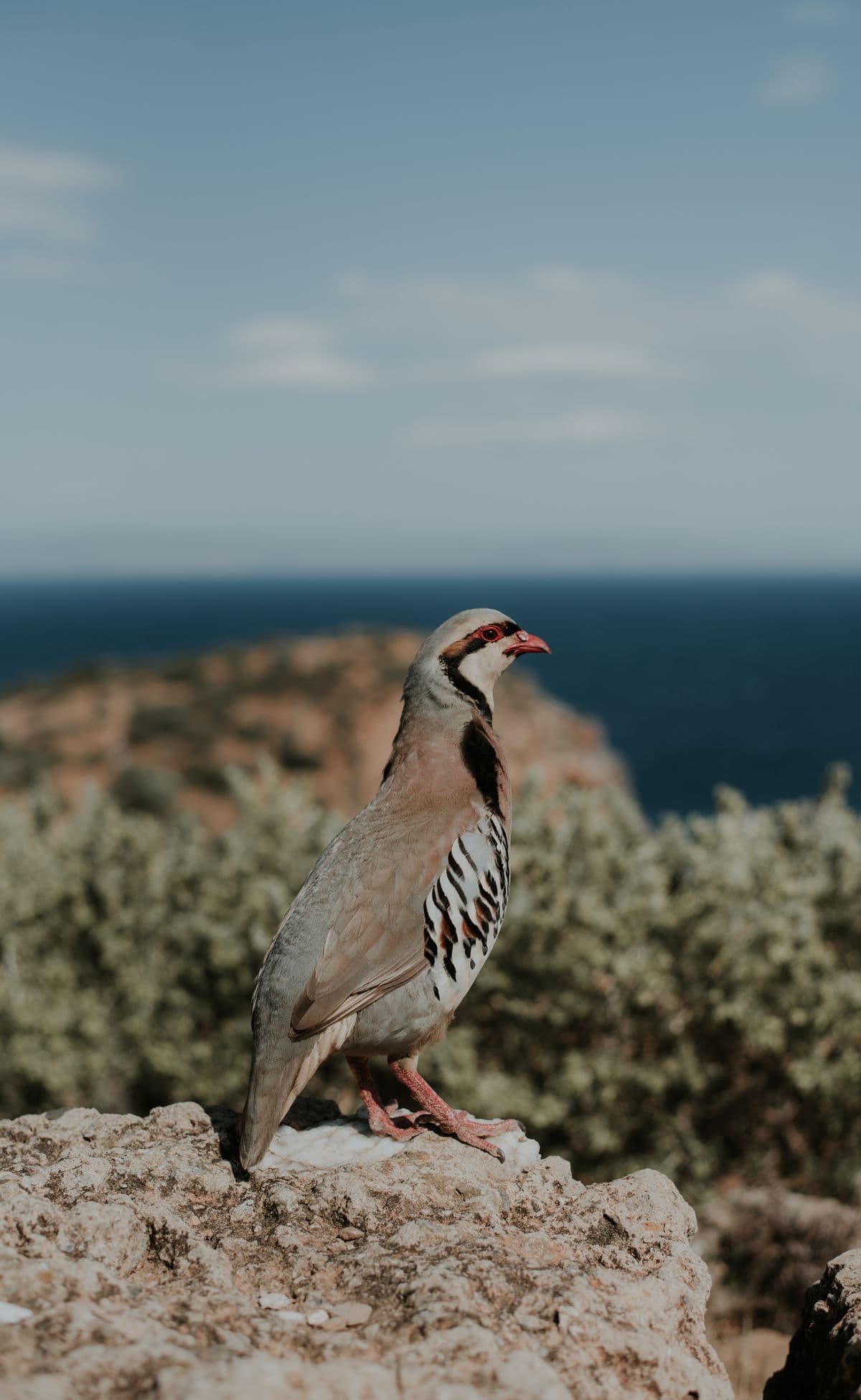
The Chukar is the dominant commercial game bird in the UAE and across the Middle East. It is hardy, adaptable to arid heat, and already naturalised in parts of the Hajar Mountains. Mature birds weigh 450–700 g. Hens lay 15–25 eggs per clutch and can produce two clutches annually under managed lighting. The Chukar is the primary target of hunting club release programs and the species most requested by gourmet restaurants. It tolerates UAE summer temperatures above 40°C better than most game birds, provided shade and ventilation are adequate — making it the lowest-risk starting species for new UAE farmers.
Sand Partridge (حجل الرمال)
Sand partridge are smaller (200–300 g) and native to the Arabian Peninsula's desert margins. They are legally considered a protected native species under UAE Federal Law No. 24 of 1999, meaning commercial breeding requires specific MOCCAE authorisation and birds cannot be sold without documentation of captive origin. Their appeal lies in conservation programs: the Environment Agency Abu Dhabi (EAD) and similar bodies pay above-market rates for healthy captive-bred individuals for release. Cage requirements differ from Chukar — Sand partridge need deeper sandy substrate for dust bathing and are more sensitive to respiratory pathogens.
Grey Francolin (الدرّاج الرمادي)
Grey francolin are resident in UAE farmland edges and wadis. They are moderately sized (200–400 g), vocal, and strongly territorial — cocks will fight if not separated. Males command a premium in live bird markets as singing birds kept for the pleasure of their call, separate from the meat market. They lay 6–12 eggs per clutch with lower commercial egg production than Chukar. Incubation is 18–19 days. UAE buyers pay AED 70–120 for a quality male Grey francolin.
Black Francolin (الدرّاج الأسود)
Black francolin are less common in UAE captive farming but increasingly sought by collectors and high-end wildlife parks. Males display striking black-and-chestnut plumage. They are more sensitive to cold (below 15°C) and humidity extremes, requiring temperature-controlled housing — a genuine consideration in UAE winters in Ra's al-Khaimah's higher elevations. Breeding pairs sell for AED 200–400, making them the highest-value species per bird but with a narrower market.
Legal Framework: Permits, CITES, and MOCCAE Compliance
Operating a game bird farm in the UAE without proper authorisation exposes you to fines, confiscation of stock, and criminal liability. The legal framework is straightforward once understood.
MOCCAE Wildlife Breeding Permit: Any facility breeding wildlife species — including all four species above — must obtain a Wildlife Breeding Establishment licence from the Ministry of Climate Change and Environment. Applications require a facility plan, biosecurity protocol, and veterinary oversight agreement. Annual inspections are standard. The permit specifies species, maximum flock size, and approved sales channels.
CITES Compliance: Black francolin is listed on CITES Appendix III in some exporting countries. If sourcing breeding stock from outside the UAE, verify the CITES status of the exporting country and obtain the relevant import documentation. Failure to comply at the border results in seizure of all birds.
Municipal Trade Licences: Selling live birds or game meat commercially requires a trade licence from the relevant emirate authority. In Ras Al Khaimah, this falls under the RAK Municipality and Economic Development Department.
Practical Advice: Begin the MOCCAE permit application three to four months before you intend to acquire stock. The approval timeline varies but is rarely faster than six weeks. Mazraty can provide a site visit and documentation of the cage specifications required for your permit application.
Cage Systems: Flight Pens, Colony Units, and Breeding Pairs
Partridge and francolin cannot be housed in standard quail battery cages. Their natural behaviour — running, dust bathing, perching at height, hiding from aerial threats — must be accommodated or stress-induced mortality will undermine your operation. Mazraty's game bird cage range is designed for UAE conditions with UV-resistant galvanised mesh, powder-coated steel frames, and modular sizing.
Space Requirements
For Chukar partridge in colony housing, the minimum floor space is 0.25 m² per bird in grow-out pens, and 1.0 m² per breeding pair or trio in breeding enclosures. These are minimums; commercial operators in Abu Dhabi use 0.4 m² per bird in grow-out to reduce pecking losses. Height matters: Chukar flush vertically when startled, and a cage less than 90 cm high will cause head injuries. Mazraty's standard game bird colony cage is 2.4 m × 1.2 m × 1.0 m (H), housing 10–12 grow-out birds at the recommended density.
Essential Cage Features
- Perches: Install natural wood perches (2–3 cm diameter) at two height levels. Partridge instinctively roost above ground level. Without perches, birds pile in corners and suffocate.
- Hiding cover: Attach strips of burlap, artificial grass panels, or shade cloth to one end wall and along one side. Game birds need visual barriers to feel secure. This reduces the dominance stress that triggers feather pecking.
- Sandy substrate: A 5–8 cm layer of clean coarse sand on the cage floor allows dust bathing, which is essential for ectoparasite control. Replace top 2 cm weekly.
- Anti-flush netting: The mesh ceiling should include a soft nylon net layer if the pen height exceeds 1.2 m, to prevent skull fractures during flight startle responses.
- Shade and ventilation: UAE summer ambient temperatures reach 46–48°C. Cage placement must ensure 70–80% shade between 09:00 and 17:00. Orient cage length east–west to minimise direct sun on mesh sides. Mazraty can advise on shade structure integration with cage units.
Breeding Enclosures
Breeding pairs or trios (1 cock : 2 hens) are separated into individual enclosures during the laying season (February–July in the UAE). A standard Mazraty breeding unit is 1.5 m × 0.8 m × 0.9 m with a covered nest corner lined with dry grass or coconut fibre. The separation is critical: Chukar cocks in group housing will monopolise hens, leading to uneven fertilisation rates and hen stress. Confirmed fertilisation rates in properly managed breeding enclosures run 85–92%.
Breeding Ratios, Egg Collection, and Incubation
The productive core of any game bird operation is controlled breeding. Unlike quail, where a single male serves a large hen flock, partridge are pair or trio breeders.
Recommended Ratios
- Chukar partridge: 1 cock to 2–3 hens
- Sand partridge: 1 cock to 2 hens (more territorial)
- Grey francolin: 1 cock to 1 hen (strictly monogamous in captivity)
- Black francolin: 1 cock to 2 hens
Introduce pairs two weeks before the expected laying season to allow bonding. Changing partners mid-season drops fertility by 15–20% as the cock re-establishes dominance.
Egg Collection
Collect eggs twice daily — morning and late afternoon. Chukar hens lay predominantly in the morning. Store eggs with broad end up at 16–18°C and 75% relative humidity. Do not refrigerate. Set eggs within 7 days of lay for maximum hatchability; hatchability drops approximately 3% per additional day of storage beyond 7 days. Wipe visibly soiled eggs with a dry cloth — never wash, as washing removes the protective cuticle and dramatically increases bacterial penetration during incubation.
Incubation Specifics
Chukar partridge eggs incubate for 23–24 days at 37.7°C (99.9°F) dry bulb and 29–30°C (84–86°F) wet bulb (approximately 55–60% relative humidity) for the first 20 days. In the final 3–4 days (lockdown), raise humidity to 70–75% and stop egg turning. Mazraty's cabinet incubators maintain ±0.1°C accuracy with automatic turning every 60 minutes — critical for Chukar, which are more sensitive to temperature fluctuation than quail or broilers. UAE ambient humidity is typically very low (20–35%), so the incubator's humidity system works harder here than in humid climates; check water reservoir levels twice daily.
Grey francolin incubation is shorter at 18–19 days at 37.5°C. Black francolin and Sand partridge run 19–21 days. Do not mix species in the same incubation batch if using different temperature or humidity settings.
Brood Rearing: Temperature, UV Light, and Early Nutrition
Newly hatched partridge chicks are far more delicate than quail or broiler chicks. They require precise brooding conditions and, critically, UV-B light exposure that quail farmers typically overlook.
Brooding Temperature
- Days 1–7: 37–38°C at chick level
- Days 8–14: 35–36°C
- Days 15–21: 32–33°C
- Days 22–28: 28–30°C
- Day 28+: Ambient, with UAE summer ambient rarely below 28°C, so heating is rarely needed after week 4 from March–October
Use infrared brooder lamps rather than heat mats for game bird chicks. Heat mats cause ground-level huddle stress and respiratory exposure to floor pathogens. Hang brooder lamps so chicks can self-regulate by moving toward or away from the heat source.
UV-B Light for Vitamin D3 Synthesis
Partridge and francolin evolved outdoors under full-spectrum sunlight. Vitamin D3 deficiency in cage-reared chicks causes rickets, poor feathering, and high mortality in weeks 2–4. Unlike chickens, game birds do not efficiently absorb oral vitamin D3 supplements. The solution is UV-B lighting: install a 5.0 UV-B fluorescent tube (UVB output 5%) for 8–10 hours daily within 40 cm of the chick level. Replace UV-B tubes every 6 months — the UV-B output degrades before visible light output does, making visual inspection unreliable. Mazraty stocks appropriate reptile-grade UV-B tubes that work equally well for game bird brooding.
Feed Formulation: High-Protein Starter to Finisher
Game birds require significantly higher dietary protein than commercial broilers, particularly in the first four weeks of life. Using standard broiler starter feed is a common and costly mistake that stunts growth and increases mortality.
Starter Phase (Weeks 1–4): 28% Crude Protein
Source a game bird starter crumble with 28% crude protein (CP), 1.1% methionine + cystine, 1.0% lysine, and 3.0% calcium. If a commercial game bird starter is unavailable, a turkey poult starter (26–28% CP) is the best substitute. Feed in small quantities four to six times daily — game bird chicks have small crops and do not gorge-feed well. Use chick-height trough feeders that prevent feed waste and floor contamination.
Grower Phase (Weeks 5–10): 22–24% Crude Protein
Transition to grower pellets at 22–24% CP from week 5. Mix 25% grower with 75% starter in week 5 to avoid digestive disruption. Full grower from week 6. Add 2–3% whole millet or cracked wheat to the grower ration from week 6 onward — this provides behavioural enrichment (pecking activity) and reduces feather-pecking aggression.
Breeder Ration (Adult Breeding Birds): 18–20% CP with Elevated Calcium
Breeding hens require 3.5–4.0% dietary calcium for strong eggshell formation. A dedicated game bird breeder pellet at 18–20% CP meets this requirement. Supplement with oyster shell grit provided free-choice. Cock birds can be fed from the same breeder ration — the elevated calcium does not harm them at normal intake levels. Switch breeding birds to the breeder ration six weeks before the anticipated laying season.
Water Quality and Drinker Management
UAE tap water in some areas has elevated salinity and mineral content. Test farm water for total dissolved solids (TDS) — game bird chicks tolerate TDS up to 800 ppm without performance loss; above 1,200 ppm causes diarrhoea and poor water intake. Use nipple drinker lines rather than open bell drinkers for chicks; open drinkers become contaminated within hours in UAE heat and are a primary Histomoniasis transmission route. Flush drinker lines daily with clean water.
UAE Market Demand and Sales Channels
Understanding where to sell determines how you structure your production calendar. The UAE game bird market has four distinct buyer categories.
1. Hunting Clubs and Release Programs
Hunting clubs affiliated with the Falconers Association and private estates in Abu Dhabi and Ras Al Khaimah purchase Chukar in batches of 200–2,000 birds per release event. Peak demand is October–March (the legal hunting season). Contracts are typically arranged four to six months in advance. Price range: AED 45–65 per bird (live, 6–8 weeks, 300–450 g). This is the highest-volume channel but requires reliable batch production.
2. Government Conservation Programs
The Environment Agency Abu Dhabi and Ras Al Khaimah Environment Protection Authority run annual release programs for Sand partridge and Grey francolin. They require MOCCAE-certified captive-bred birds with health certificates. Prices are government-tender rates, typically AED 35–50 per bird, but volume contracts can run to several thousand birds annually and provide production stability.
3. Gourmet Restaurants and Hotels
Dubai and Abu Dhabi's five-star hotel sector and standalone fine-dining restaurants pay AED 80–120 per dressed Chukar partridge (approximately 300–350 g oven-ready). Volume is lower — typically 20–100 birds per week per restaurant — but margins are highest. Requires a food processing permit and cold-chain logistics. Black francolin commands AED 150–200 dressed.
4. Live Bird Markets
Sharjah's Central Market (Souq Al Jubail) and Abu Dhabi's Al Muroor live bird market accept partridge and francolin from licensed suppliers. Grey francolin males sell for AED 70–120 as singing birds. Chukar sell at AED 35–50 live. This channel is accessible for smaller farms and provides weekly cash flow without batch scheduling constraints.
Disease Prevention and Health Management
Game birds are susceptible to several diseases that rarely affect commercial poultry, and the UAE's heat and dust conditions elevate some risks. A prevention-first approach is non-negotiable in a profitable operation.
Histomoniasis (Blackhead Disease)
Caused by Histomonas meleagridis, a protozoan transmitted by the cecal worm Heterakis gallinarum. Partridge and francolin are highly susceptible. Mortality can reach 80–100% in untreated chick flocks within 10 days of outbreak. Prevention: Never house game birds on soil previously used for turkeys or chickens (cecal worm eggs persist for years). Use wire-floored cages or concrete-floored pens with removable sand substrate. Deworm all breeding adults with fenbendazole before the laying season. There is no approved treatment in most GCC countries — prevention is your only defence.
Marek's Disease
Herpesvirus causing tumours, leg paralysis, and high mortality in birds 6–30 weeks old. Vaccinate all chicks at hatch with Marek's HVT vaccine (turkey herpesvirus vector). Vaccination is inexpensive (under AED 0.50 per dose) and virtually eliminates Marek's losses. Do not skip this step — unvaccinated game bird flocks in the UAE have experienced 30–40% Marek's mortality.
Respiratory Infections
UAE dust storms (shamal winds) dramatically elevate airborne pathogen loads. Mycoplasma gallisepticum and Newcastle Disease are the primary respiratory threats. Maintain biosecurity: foot dips at cage entry, dedicated footwear per cage block, and visitor restriction during brooding. Vaccinate for Newcastle Disease at day 7 and day 21 via eye-drop or drinking water. Monitor birds daily — a 10% drop in feed consumption is typically the first sign of respiratory challenge.
Coccidiosis
Eimeria species affect partridge chicks from week 2 onward on soil or litter floors. Use coccidiostat-medicated starter feed (amprolium-based) for the first four weeks. Switch to non-medicated feed when transitioning to grower phase. This is particularly important if you run a combination sand-substrate floor system.
Profitability Model: 500-Bird Chukar Operation
The following model represents a single 12-week grow-out cycle for 500 Chukar partridge chicks purchased at day-old, targeting hunting club sale at 8 weeks live weight.
| Item | Quantity / Unit | AED Cost |
|---|
| Day-old Chukar chicks | 500 @ AED 8 | 4,000 |
| Starter feed (28% CP, weeks 1–4) | 125 kg @ AED 4.50/kg | 563 |
| Grower feed (22% CP, weeks 5–8) | 250 kg @ AED 3.80/kg | 950 |
| Vaccines (Marek's + Newcastle) | 500 doses | 350 |
| Bedding, sand, consumables | Lump | 300 |
| Water and electricity | 8 weeks | 400 |
| Labour (part-time) | 8 weeks @ AED 500/week | 4,000 |
| Total Variable Cost | | 10,563 |
Revenue: Assuming 5% mortality (25 birds), 475 birds sold live to hunting club at AED 55 average = AED 26,125.
Net Profit per Cycle: AED 26,125 − AED 10,563 = AED 15,562
Cycles per Year: 3 grow-out cycles (excluding cage cleaning and rest periods)
Annual Net (variable costs only, excluding cage amortisation): approximately AED 46,000–50,000
Capital cost for the cage infrastructure (five Mazraty colony units, brooder, incubator, feeders, and drinkers) for a 500-bird operation is approximately AED 14,000–18,000, giving a full capital payback within the first year of operation at this production volume.
Mazraty Cage Solutions for Game Bird Farmers
Mazraty's game bird cage range has been designed in consultation with UAE game bird producers who faced the same challenges you will encounter: escapes through undersized mesh, UV-degraded plastic components, feeders that jam with millet, and drinkers that algae-foul within 48 hours in summer heat. The solutions in the current range address each of these failures directly.
- Game Bird Colony Cage (2.4 m × 1.2 m × 1.0 m): 19-gauge galvanised mesh with 25 × 25 mm openings — large enough for ventilation, small enough to prevent chick escape. Removable sand tray. Two perch rails included.
- Breeding Trio Enclosure (1.5 m × 0.8 m × 0.9 m): Individual nest box with coconut-fibre lining. Egg collection slot at rear. Separate cock and hen entry management.
- Automatic nipple drinker lines: Stainless steel nipples rated for 50°C ambient temperature. No open water surface. Eliminates Histomoniasis transmission through shared water.
- Cabinet incubators (100–500 egg capacity): ±0.1°C accuracy, automatic turning, digital humidity display, UAE voltage (220V/50Hz).
- UV-B brooding lamp kits: 5.0 UVB tube with adjustable hanging bracket and on/off timer.
Mazraty offers farm visits for operations in Ras Al Khaimah and Northern Emirates to assess cage placement, ventilation, and layout before purchase. This pre-purchase consultation is provided free of charge and can significantly reduce the risk of expensive cage system errors on a new game bird farm.
Ready to start or expand your game bird operation? Contact Mazraty today for a personalised cage system quote, incubator recommendation, and feed sourcing advice. Reach our team on WhatsApp at +971 50 535 3412 — we respond seven days a week and can arrange delivery to all UAE emirates. Mazraty is Ras Al Khaimah's trusted partner for serious game bird farmers.
Reviewed planning sources
These references support operating and welfare principles. Final design and health programs remain site-, strain-, authority- and veterinarian-specific.
Frequently Asked Questions
Are partridge and quail the same bird?
No. They differ in size, behaviour and housing needs, so density and equipment values should not be copied between them.
What is the first step for a commercial project?
Confirm licensing, bird source and market, then design housing, isolation, nutrition and veterinary care for the species.