Natural or mechanical ventilation for your UAE poultry farm? Mazraty delivers a full decision guide with cost analysis and expert recommendations for the Gulf climate.
Natural Ventilation: How It Works and Where It Fails
The Physics of Natural Ventilation
Natural ventilation relies on two physical forces: wind pressure differentials driving air through building openings, and thermal buoyancy (the stack effect) where warm air rises and exits through ridge openings as cooler air enters at the sides. An open-sided house is designed to maximise both effects — wide sidewall openings allow cross-ventilation while an open ridge allows hot air to escape upward.
What Natural Ventilation Requires to Work
For natural ventilation to perform adequately in a poultry house, all of the following must be present simultaneously:
- Outdoor temperatures generally below 32-35°C during peak daylight hours.
- Consistent wind speeds of at least 1.5 metres per second.
- Moderate relative humidity that does not impede evaporative cooling from birds' respiratory systems.
- A meaningful temperature differential between inside and outside to generate buoyancy-driven airflow.
The Critical Failure Point: Above 40°C
Natural ventilation begins to struggle when outdoor temperatures exceed 35°C and fails completely as temperatures approach and surpass 40°C. This is precisely the operating reality of UAE summers. From June through September, outdoor temperatures in most of the country remain above 40°C for extended portions of the day — and in some locations, temperatures do not drop below 38°C even at night.
When outdoor air temperature exceeds 40°C, opening the sides of a building does not cool it — it imports hot air and adds it to the metabolic heat generated by the birds themselves. Field measurements from experimental farms in the Ras Al Khaimah region during July showed internal temperatures in open-sided houses reaching 47-49°C during the afternoon, compared with 30-32°C inside closed mechanically ventilated houses at the same time. That 15-17°C differential translates directly into elevated mortality and severe production losses.
Mechanical Ventilation: Systems Suited to the Gulf Climate
Tunnel Ventilation — The Gold Standard for UAE Poultry
Tunnel ventilation is the most widely adopted and most effective mechanical system for UAE poultry farms. Large exhaust fans installed at one end of the building pull outdoor air through inlets at the opposite end, creating a high-velocity airstream that flows the full length of the house and across the birds before being exhausted. Airspeed at bird level typically reaches 2.5-3 metres per second, creating a wind-chill effect that reduces the felt temperature by 6-8°C below the actual air temperature — giving birds effective thermal relief even when the incoming air is warm.
Evaporative Cooling Combined with Tunnel Ventilation
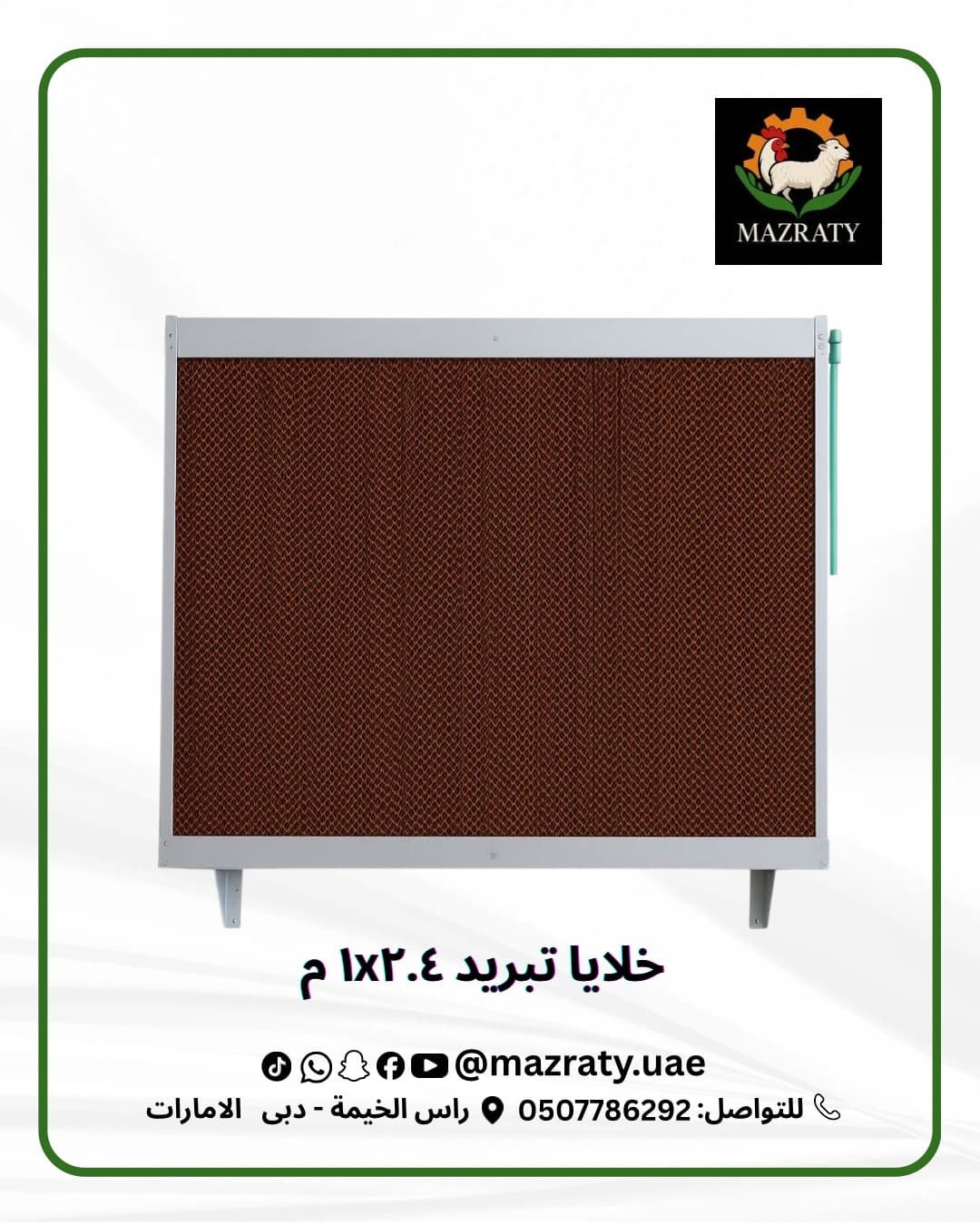
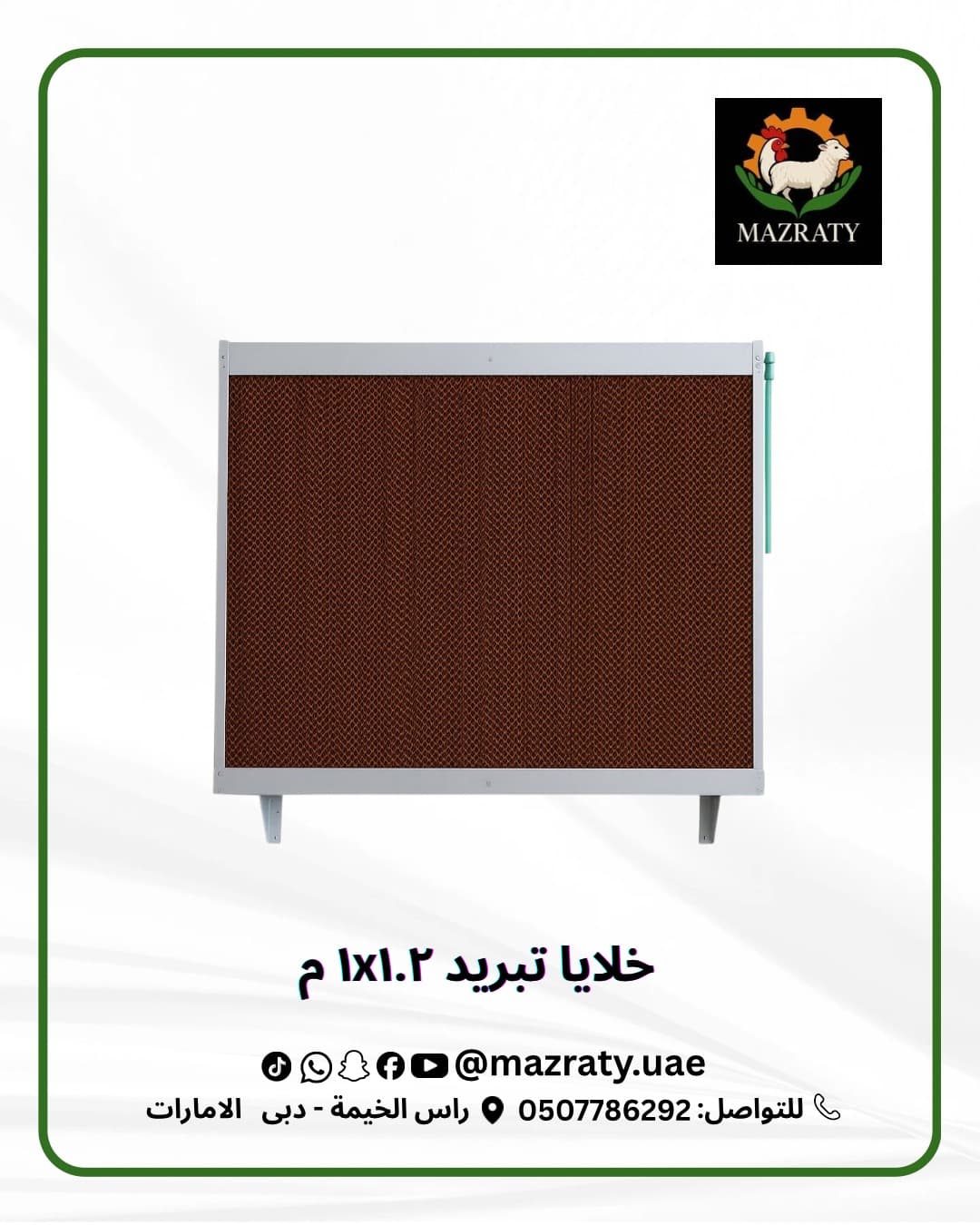
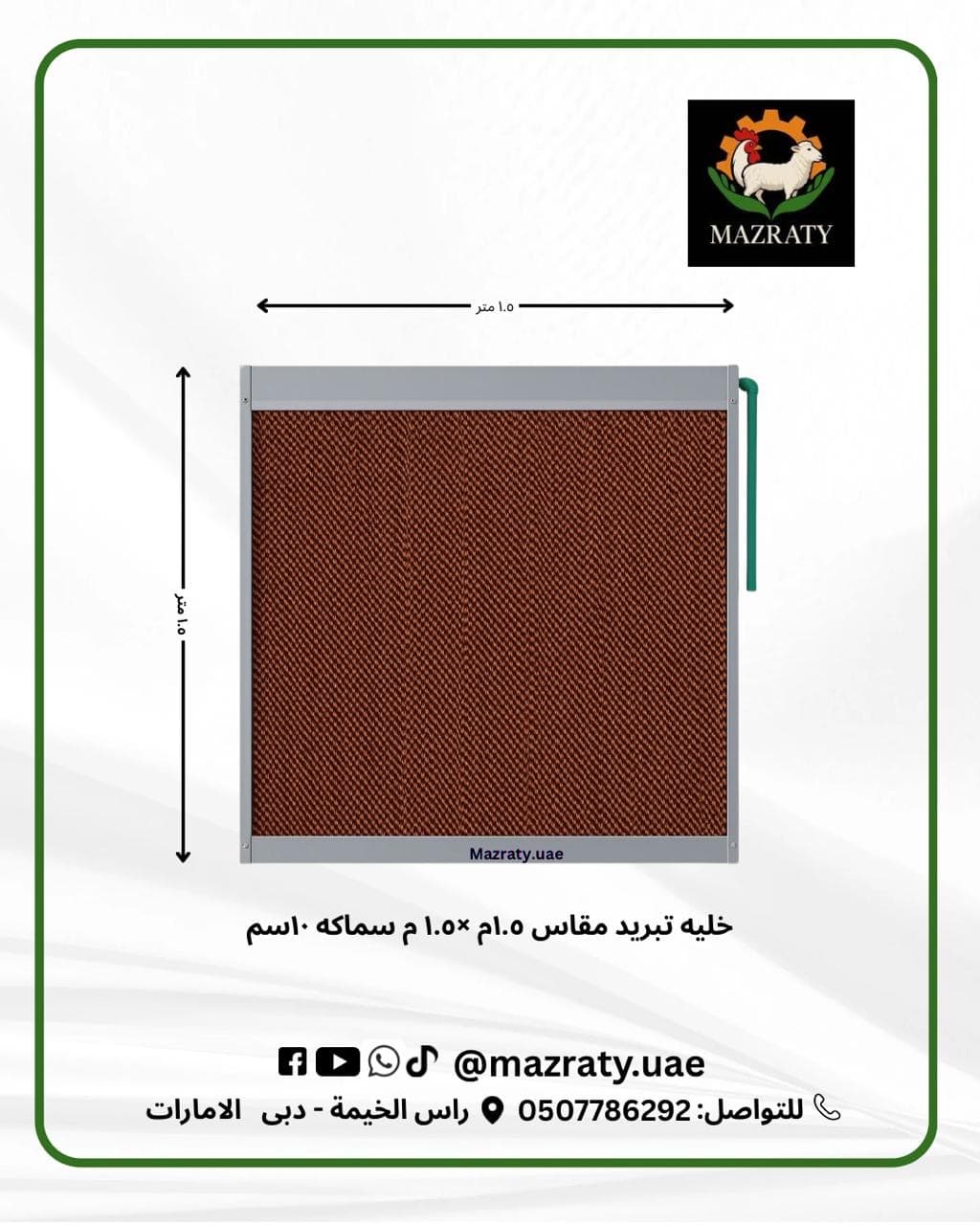
The most effective UAE poultry environments pair tunnel ventilation with evaporative cooling pads at the air inlets. Water is pumped over cellulose pads; as incoming air passes through the saturated pads, evaporation drops the air temperature by 8-12°C before it enters the building. In dry inland UAE locations (Al Ain, Ras Al Khaimah inland), this combination can maintain internal temperatures of 26-30°C even on 48°C summer days — well within the safe thermal range for most commercial poultry breeds.
Positive Pressure Distribution for Small Houses
For small-scale operations with fewer than 1,000 birds, a positive-pressure system using a central fan and perforated distribution duct running above the birds can provide adequate summer ventilation at a lower capital cost. However, its performance in extreme UAE heat is significantly lower than tunnel systems, and it should be considered a budget solution rather than an optimal one.
Head-to-Head Comparison: Natural vs Mechanical Ventilation
Thermal and Humidity Performance
During the cooler months — roughly November through March — natural ventilation performs adequately in the UAE and is broadly comparable to mechanical ventilation in terms of maintaining bird comfort. The critical gap opens in the six summer months, when natural ventilation is completely unable to hold internal temperatures within the safe range (18-28°C for broilers, 16-26°C for layers). No amount of design optimisation can overcome an outdoor air temperature of 45°C with natural ventilation alone.
Capital Investment
An open-sided house for 5,000 birds with basic equipment in the UAE typically costs between AED 40,000 and AED 60,000. An equivalent closed house with a full mechanical ventilation system — tunnel fans, evaporative cooling pads, electronic controller, and insulated walls — runs between AED 90,000 and AED 130,000. The additional capital required is approximately AED 50,000-70,000 for the same production capacity.
Annual Operating Costs
- Natural ventilation: Routine maintenance of curtains, nets, and openings. No ventilation electricity cost. Estimated annual maintenance: AED 2,000-4,000 for a small house.
- Mechanical ventilation: Electricity for fans, pumps, and controllers. For a 5,000-bird house in the UAE running year-round, electrical costs are estimated at AED 15,000-25,000 per year based on prevailing industrial tariffs.
Impact on Productivity: The Real Numbers
This is where the true economic case is made. A broiler farm operating with natural ventilation in UAE summers typically experiences:
- Summer mortality rates rising from a normal 3-5% to 12-25% during heat waves — the loss of hundreds of birds per cycle.
- Live weight at slaughter declining 15-20% due to heat stress reducing feed intake and growth rate.
- Feed Conversion Ratio (FCR) deteriorating from a healthy 1.85 to 2.3-2.6, meaning more feed cost per kilogram of product.
- Egg production in laying flocks falling 20-35% during summer months.
Economic Analysis: When Does Mechanical Ventilation Pay Off?
A Realistic Working Example
To make this concrete, consider a 5,000-bird broiler farm in Ras Al Khaimah running four cycles per year — two summer cycles and two winter cycles:
With Natural Ventilation (Summer Cycles):
- Average summer mortality: 18% — losing 900 birds per summer cycle.
- Revenue loss from mortality: 900 birds × 2 kg average weight × AED 10/kg = AED 18,000 per summer cycle.
- Additional feed cost from high FCR: approximately AED 1,800 per cycle above normal.
- Total losses across two summer cycles: approximately AED 39,600 per year.
With Mechanical Ventilation (Same Cycles):
- Summer mortality drops to 4% — losing 200 birds per cycle.
- Revenue loss: 200 × 2 kg × AED 10 = AED 4,000 per summer cycle.
- Total mortality losses across two summer cycles: AED 8,000 per year.
- Additional electricity cost: AED 20,000 per year.
Net annual benefit of mechanical ventilation: AED 39,600 - AED 8,000 - AED 20,000 = AED 11,600 per year. On an additional investment of AED 60,000, this represents payback in under six years on mortality savings alone. When improved FCR, faster growth, and consistent year-round production are included, industry specialists in the Gulf estimate effective ROI in two to three years.
Want a customised feasibility analysis for your specific farm? Contact Mazraty on WhatsApp at +971 50 535 3412 — our engineers will calculate the real numbers for your operation.
Decision Factors: Choosing the Right System
Natural Ventilation Is Suitable When:
- Your farm is in a mountainous or elevated area where summer temperatures remain below 38°C for most of the day.
- You operate on a strictly seasonal basis — winter production only (October through April) with no summer cycles.
- Capital is extremely limited and you need to begin production quickly with minimal investment.
- Your flock size is very small (fewer than 500 birds) and does not justify the mechanical system investment.
Mechanical Ventilation Is Essential When:
- You operate year-round in the UAE with continuous production regardless of season.
- Your flock exceeds 1,000 birds and summer mortality losses represent a material financial impact.
- You raise high-value birds — organic chicken, specialised breeds, or certified production programs.
- You have supply contracts requiring consistent, predictable production volumes throughout the year.
- You want to optimise FCR and growth rates to their full genetic potential.
Building Design: Open-Sided vs Closed Environment Houses
Open-Sided Houses
Open-sided houses feature low sidewalls — typically 40-80 cm — covered with galvanised mesh and roll-down curtains for night closure. They rely entirely on natural airflow during the day. In the UAE, these buildings function acceptably from October through March, but become hazardous to birds from June through September. Some farmers add circulation fans to improve air movement inside the house, but this does not address the fundamental problem of importing hot outdoor air.
Closed Controlled-Environment Houses
Fully closed houses feature insulated walls with no open sidewalls. All air exchange is controlled mechanically through fans and inlets managed by an electronic controller. This design requires a higher initial investment in both construction and equipment, but gives the farmer complete environmental control year-round, independent of external weather conditions. Closed houses represent the production standard for commercial-scale operations in hot climates globally.
Hybrid Buildings: A Practical Middle Ground
Many medium-scale UAE farms benefit from a hybrid design combining: closeable side curtains or insulated panels, tunnel fans operating during summer, and evaporative cooling pads at air inlets. This hybrid approach costs less than a fully closed building while delivering close to closed-house performance during summer months. It is the most common upgrade path for farms transitioning from open-sided to controlled-environment production.
Regional Considerations Within the UAE
Ras Al Khaimah — Mountainous Interior Areas
Farms in the Jebel Jais foothills and similar elevations benefit from temperatures 4-6°C cooler than coastal areas, extending the effective window for natural ventilation slightly. However, July and August still require mechanical cooling, and farms aiming for consistent year-round production should not rely on altitude as a substitute for proper mechanical ventilation.
Coastal Areas — Dual Challenge of Heat and Humidity
Coastal farms face a compound challenge: high temperatures and high humidity simultaneously. Humidity above 80-85% significantly reduces the cooling efficiency of evaporative pads, as evaporation is limited by the already moisture-saturated air. In coastal areas, supplementary mechanical refrigeration or dedicated cooling systems may be warranted for premium production operations. Contact Mazraty at +971 50 535 3412 for coastal-specific system recommendations.
Inland Desert Areas
Inland desert areas suffer from the highest temperatures — reaching 49-50°C on extreme days — but their low relative humidity makes evaporative cooling highly efficient, with pad systems achieving 85-90% of their rated cooling capacity. Tunnel ventilation combined with high-quality evaporative pads represents the optimal and most cost-effective solution for inland desert farms.
Common Mistakes to Avoid When Investing in Ventilation
- Undersizing fans: Ventilation capacity calculations must account for building volume, bird density, and maximum design outdoor temperature. Fans rated for temperate climates are systematically undersized for UAE conditions.
- Skipping wall insulation: A fully closed house with uninsulated walls will absorb radiant heat throughout the day and transfer it inward, undermining even a powerful fan system.
- Neglecting pad maintenance: Cellulose cooling pads accumulate mineral deposits and algae in the UAE's hard water environment. Without regular cleaning — typically every 2-4 weeks during summer — efficiency drops 30-50%. Mazraty offers maintenance packages; call +971 50 535 3412 to arrange service.
- Manual fan control: Relying on manual switches for fan operation means thermal spikes can build for hours before human intervention. Electronic thermostatic controllers that activate fans automatically as temperature rises are essential, not optional.
- Blocking airflow paths: Storing feed bags, equipment, or partitions in ways that interrupt the designed air channel through the house defeats the purpose of tunnel ventilation. Keep the air path from inlet to exhaust completely clear.
Conclusion and Final Recommendation
For UAE poultry farms operating year-round with flocks exceeding 1,000 birds, the evidence is unambiguous: mechanical tunnel ventilation with evaporative cooling is not an optional upgrade but an economic necessity. The ROI of 2-3 years through reduced summer mortality alone makes it one of the highest-return investments available in poultry farming infrastructure.
For small-scale or strictly seasonal (winter-only) operations, natural ventilation with supplemental circulation fans represents a viable low-cost starting point — but any plan for year-round or commercial-scale production should include mechanical ventilation from the outset. Retrofitting later costs more than building right the first time.
Mazraty has supplied, installed, and maintained poultry ventilation systems across the UAE for over 20 years, with free delivery to all Emirates. Whether you are designing a new house, upgrading an existing open-sided building, or troubleshooting summer performance problems, our team can provide a solution matched to your specific climate zone, flock type, and budget.
Get in touch today via WhatsApp at +971 50 535 3412 for a free consultation and customised equipment proposal.
Reviewed planning sources
These references support operating and welfare principles. Final design and health programs remain site-, strain-, authority- and veterinarian-specific.
Frequently Asked Questions
1. At exactly what outdoor temperature does natural ventilation stop protecting broilers in UAE conditions?
Research and field data consistently show that natural ventilation begins losing its ability to protect birds at outdoor temperatures above 35°C and fails to maintain safe internal temperatures (below 30°C for broilers) once outdoor temperatures exceed 40°C. Since UAE summer temperatures routinely exceed 40°C for sustained periods, natural ventilation provides no meaningful thermal protection during the hottest months.
2. Can an existing open-sided house be converted to mechanical tunnel ventilation without full demolition?
Yes — and this retrofit approach is common across the UAE. The typical conversion involves: closing the sidewalls with insulated sandwich panels or equivalent material, cutting openings for tunnel fans at the back wall, installing evaporative cooling pads and inlets at the front wall, and adding an electronic climate controller. Total cost is typically 30-40% less than new construction for the same capacity. Contact Mazraty at +971 50 535 3412 to assess your existing building.
3. What electricity bill should I budget for mechanical ventilation on a 5,000-bird farm in the UAE?
Based on UAE industrial electricity tariffs and typical system operating hours, a 5,000-bird house with full tunnel ventilation and evaporative cooling will incur approximately AED 15,000-25,000 per year in electrical costs. This figure is consistently lower than the mortality and production losses experienced in naturally ventilated houses during summer, making the economics of mechanical ventilation strongly positive.
4. Does high coastal humidity reduce the effectiveness of evaporative cooling pads?
Yes. Evaporative cooling pads operate by transferring heat from incoming air into water vapour. When the air is already close to saturation (relative humidity above 80-85%), evaporation is limited and cooling performance drops. In high-humidity coastal areas of the UAE, pads may achieve only 60-75% of their rated cooling efficiency compared with 85-90% in dry inland areas. Supplementary cooling or different system designs may be appropriate for highly humid coastal locations.
5. How often should ventilation fans and cooling pads be serviced in UAE conditions?
In the UAE environment, a thorough service every six months is the minimum recommended schedule — covering fan bearing lubrication, belt inspection (for belt-drive fans), controller calibration, and pad cleaning with a mineral-scale remover. Before the summer season (April-May), a full pre-summer service ensures peak performance when it matters most. Mazraty provides scheduled maintenance services with free delivery across all Emirates — contact us via WhatsApp at +971 50 535 3412 to set up a service agreement.
6. Is tunnel ventilation suitable for quail and turkey production, or only for chickens?
Tunnel ventilation is effective for all commercial poultry species, but the specific parameters differ by species. Quail require lower minimum temperatures and are more sensitive to drafts — airspeed at bird level should be lower than for broilers, and house design must ensure the air channel does not create cold spots in cool months. Turkey houses are typically larger with higher heat loads, requiring fans with greater capacity per unit area. Mazraty's engineering team can specify the correct system parameters for any poultry species — reach us at +971 50 535 3412.