When UAE summer temperatures breach 45°C and relative humidity hovers below 35%, poultry producers face a narrow but exploitable window for evaporative cooling. High-pressure misting systems — operating at 60 to 100 bar — force water through precision orifices as small as 0.1 mm, shattering it into droplets of just 10 to 30 microns. At that size, a droplet has so little mass relative to its surface area that it evaporates completely within 30 to 60 centimetres of air travel, absorbing latent heat from the surrounding air before ever contacting a bird, a feeder, or a square centimetre of litter. The result is 5 to 12°C of genuine air temperature reduction — enough to push a critically hot house back into a manageable thermal zone — with zero floor wetting, no respiratory irritation from oversized droplets, and no caking of bedding material. This guide examines the physics, equipment selection, zoning strategies, water quality requirements, and return-on-investment data UAE poultry producers need to choose, install, and operate a high-pressure misting system that delivers real performance throughout a Gulf summer.
The Physics: Flash Evaporation vs Conventional Misting
Why Droplet Size Is Everything
The time a water droplet takes to evaporate depends on the ratio of its surface area to its volume. A spherical droplet of 10 microns (0.01 mm) has a surface-to-volume ratio approximately 1,000 times higher than a droplet of 1,000 microns (1 mm). In practice, this translates to evaporation time measured in milliseconds rather than seconds.
In the dry conditions typical of a UAE poultry house in summer — 42°C and 25 to 30% relative humidity — a 10-micron droplet evaporates completely within 30 to 50 cm of travel distance in still air. A 100-micron droplet from a garden-hose-style low-pressure mister travels several metres before it evaporates, and a significant fraction reaches the floor, the litter, feeders, drinkers, and the birds themselves. That surface wetting is precisely what raises litter moisture content, promotes ammonia production, and creates the respiratory and footpad conditions that cost producers money.
Flash Evaporation: Cooling the Air, Not the Surface
High-pressure misting at 60 to 100 bar produces the 10 to 30 micron droplet range where flash evaporation occurs. When those droplets evaporate, they absorb latent heat of vaporisation directly from the surrounding air — approximately 2,260 kJ per kilogram of water evaporated. That energy is extracted from the air itself, lowering its dry-bulb temperature without raising its dew point temperature to the same degree. The result is cooler, slightly more humid air — but humidity increase is controlled because the system cycles off before saturation can occur.
On a representative UAE summer day (42°C, 25% RH, which corresponds to a wet-bulb temperature of approximately 26°C), the theoretical maximum evaporative cooling potential is about 16°C. High-pressure misting with proper cycle control captures 50 to 75% of that potential, delivering 8 to 12°C of measurable dry-bulb temperature reduction — a meaningful difference for a bird already under thermal stress.
Pressure Requirements: Getting the Classification Right
The poultry industry often uses the term "misting" loosely, lumping together systems that perform very differently. Understanding the three pressure categories is essential before specifying any equipment.
| Pressure Category |
Operating Pressure |
Typical Droplet Size |
Fate of Droplets |
Verdict for Poultry Houses |
| Low pressure |
3–7 bar |
100–200 microns |
Fall to floor; wet surfaces |
Avoid entirely |
| Medium pressure |
20–40 bar |
50–100 microns |
Partially evaporate; partially settle |
Borderline — only in very low-RH conditions with excellent ventilation |
| High pressure |
60–100 bar |
10–30 microns |
Flash evaporation before contact |
Correct choice for UAE poultry houses |
Low-pressure systems purchased from general landscaping suppliers are commonly misused in poultry houses, with predictably poor results: litter moisture climbs, pathogen loads increase, and FCR deteriorates. A system producing 150-micron droplets at 5 bar is fundamentally unsuitable regardless of how the thermostat is set. Only systems rated and tested at 60 bar and above should be considered for any enclosed poultry environment in the UAE.
Pump Selection: The Heart of the System
Stainless Steel Piston Pumps
For continuous-duty high-pressure misting in poultry applications, stainless steel piston (plunger) pumps are the industry-preferred choice. They deliver constant pressure with minimal pulsation, handle the duty cycles required during UAE summer (often 10 to 14 hours per day of active operation), and their stainless wetted parts resist the mildly acidic or mineralised water common in UAE groundwater supplies.
Key specifications to verify:
- Pressure rating: minimum 70 bar continuous, 100 bar peak
- Flow rate: sized to the total nozzle count — a typical 1,000 m² broiler house with 150 nozzles at 0.07 L/min each requires a pump delivering approximately 10.5 L/min
- Duty cycle: rated for continuous (100%) duty, not intermittent duty — many budget pumps are rated only for 20 to 30 minutes per hour, which is inadequate for UAE summer conditions
- Motor protection: IP55 or higher for the humid, dusty poultry house environment
- Bypass valve: internal pressure-relief to protect the pump during solenoid-off cycles
Diaphragm Pumps
Diaphragm pumps offer somewhat lower capital cost and are oil-free, but they typically max out at 40 to 50 bar — putting them in the medium-pressure category. They are acceptable for outdoor fog systems, greenhouse pre-cooling, or rabbit colonies where some surface wetting is tolerable, but they should not be the first choice for enclosed broiler or layer houses where litter integrity is critical.
For a 500 m² layer house in Ras Al Khaimah, a single-head piston pump rated at 70 bar and 5 L/min (approximately AED 3,500–6,000) is typically sufficient. A 2,000 m² tunnel-ventilated broiler house may require a dual-head pump at 70 bar and 15–20 L/min (AED 8,000–15,000).
Nozzle Types and Spacing: Precision Over Volume
Anti-Drip Nozzles Are Non-Negotiable
The most common installation failure in poultry misting systems is using nozzles without anti-drip (check-valve) mechanisms. When the pump cycles off, residual pressure in the line drops slowly, and nozzles without check valves continue to drip large-droplet water for several seconds to minutes after shutdown. That post-shutdown drip falls directly onto litter and birds, producing exactly the wetting that high-pressure flash evaporation was designed to prevent. Every nozzle in a poultry misting system must incorporate an anti-drip mechanism rated to seal at pressures as low as 1 bar.
Nozzle Orifice Materials
- Stainless steel orifice inserts: Best durability in hard or mineralised water; longest service life (3–5 years before orifice enlargement); higher cost per nozzle (AED 15–35 each)
- Ceramic orifice inserts: Extremely hard and resistant to abrasive particles in water; preferred where filtration is imperfect; service life comparable to stainless in clean water (AED 20–45 each)
- Brass nozzles: Lower cost but susceptible to corrosion in saline groundwater common in coastal UAE areas; orifice enlargement over time shifts droplet size upward toward the problematic 100+ micron range; acceptable as a budget option only with RO-treated water
Nozzle Spacing and Placement Height
For uniform temperature reduction across a UAE poultry house, nozzles should be spaced 2 to 3 metres apart along the distribution lines. Wider spacing creates hot spots between nozzle influence zones; tighter spacing increases capital cost without proportional benefit and risks localised over-humidification.
Mounting height is critical: nozzles should be positioned 2.5 to 3 metres above the litter surface. This height provides adequate air travel distance for the 10 to 30 micron droplets to complete flash evaporation before any droplet can settle onto birds, which in a broiler house of 2.5 to 3 m ceiling height means nozzles should be at or near the roof structure. In houses with lower clearances, the higher-pressure end of the range (80–100 bar) is preferred to ensure even finer droplet production with shorter evaporation distances.
Water Quality Requirements: The Hidden Maintenance Driver
Why Hardness Matters So Much
High-pressure nozzles force water through orifices as small as 0.1 mm. Dissolved calcium and magnesium salts — water hardness — precipitate at the nozzle tip as water evaporates, gradually narrowing the orifice and eventually blocking it completely. In UAE groundwater, total dissolved solids (TDS) commonly range from 800 to 3,000 mg/L and total hardness from 200 to 800 mg/L CaCO₃. Without pre-treatment, nozzle blockage in this water quality range occurs within days to weeks of installation — turning a AED 30,000 investment into an expensive and ineffective drip system.
Target water quality for high-pressure misting nozzle longevity:
- Total hardness: below 100 mg/L CaCO₃
- Total dissolved solids: below 200 mg/L
- pH: 6.5–7.5
- Iron: below 0.1 mg/L (precipitates and blocks orifices)
- Particle size: below 5 microns after filtration (upstream of pump)
Reverse Osmosis Pre-Treatment
For most UAE farm locations, the only practical path to meeting these water quality targets is a small reverse osmosis (RO) unit upstream of the misting pump. A 500 L/hour RO unit suitable for a medium poultry house costs AED 2,500–5,000 installed and reduces TDS by 90 to 95%, bringing even high-TDS UAE groundwater into the target range. The RO unit pays for itself within one season by eliminating the nozzle replacement and cleaning labour that hard-water operation demands. The RO reject stream (concentrate) can be redirected to dust suppression in yards or concrete washing rather than being wasted.
At minimum, a three-stage filtration train should precede the high-pressure pump: a 50-micron sediment pre-filter, a 5-micron sediment fine filter, and a 1-micron pre-nozzle in-line filter at each zone. Filter replacement is a monthly task during summer operation.
Zoning with Solenoid Valves: Cycle Control Is the Key to Litter Protection
Why Continuous Misting Is Wrong
Even with 10-micron droplets, continuous misting will eventually raise house relative humidity to the point where evaporation slows, residual droplet mass increases, and litter begins to accumulate moisture. The goal is to maintain house RH in the 50 to 70% range — enough to support evaporative cooling but not so high that moisture accumulates. This requires cycle control, not continuous operation.
Standard Cycle Protocol
The widely adopted protocol for UAE poultry house misting is:
- ON cycle: 20 to 45 seconds (typically 30 seconds) — sufficient to inject a measured slug of fine mist that evaporates and cools
- OFF cycle: 3 to 8 minutes (typically 5 minutes) — allows the injected moisture to evaporate completely, RH to stabilise, and the house to absorb the cooling benefit before the next cycle
This cycle is governed by an environmental controller that monitors both dry-bulb temperature and relative humidity simultaneously. The controller activates misting only when temperature exceeds a set point (typically 28–30°C) AND relative humidity is below a ceiling set point (typically 70–75%). If RH exceeds 75%, misting is inhibited regardless of temperature — preventing the feedback loop where cooling effort itself creates conditions that impair further cooling.
Multi-Zone Solenoid Layout
A house of 1,500 m² should be divided into at least three longitudinal misting zones, each controlled by a separate 24V solenoid valve. Zones activate sequentially (Zone 1, then 2, then 3, then rest) rather than simultaneously. Sequential activation avoids the pressure surge that causes large-droplet spatter from nozzles during zone switching, and it allows the pump to maintain consistent operating pressure across fewer active nozzles at any moment. Each solenoid valve should have a strainer upstream to catch debris before it reaches the valve seat.
Integration with Mechanical Ventilation
Misting + Tunnel Ventilation: Complementary, Not Competing
Tunnel ventilation moves air at 2.0 to 2.5 m/s longitudinally through the house, which itself provides 3 to 5°C of convective cooling (wind-chill effect on birds). High-pressure misting injected into that airstream produces cooler air that travels through the house before arriving at the birds. The combined effect is additive: tunnel ventilation contributes convective cooling and removes heat and moisture; misting contributes evaporative cooling to the incoming or mid-house air.
Nozzle Placement Relative to Inlets
Avoid placing misting nozzles within 3 metres of tunnel ventilation inlets (inlet pads or curtains). At inlets, incoming air velocity is highest and turbulence is greatest — conditions that can cause even fine droplets to coalesce into larger drops before they have time to evaporate. Instead, position the first misting line 4 to 6 metres inside the inlet end and continue lines toward the exhaust end. This ensures air entering from the inlets is already moving at a controlled velocity before it encounters mist, and the mist evaporates in the relatively stable mid-house airstream.
Static Pressure Consideration
Adding misting nozzle bodies to the roof structure creates minor airflow obstructions. In a well-designed installation, this effect is negligible (less than 1 Pa additional static pressure). However, poorly routed tubing that runs across the house width rather than along the longitudinal axis can partially block fan draw and reduce effective ventilation rate. Tubing should always run parallel to airflow direction wherever possible.
Comparative Performance: Misting vs Pad Cooling vs Combined System
On a representative UAE summer day — 42°C outdoor temperature, 30% relative humidity, wet-bulb temperature approximately 28°C — the performance of different cooling approaches in a standard tunnel-ventilated broiler house compares as follows:
| Cooling Strategy |
Typical Temperature Reduction |
Conditions / Notes |
| Tunnel ventilation only |
3–5°C (convective wind-chill) |
Air temperature inside still 37–39°C |
| High-pressure misting only |
8–12°C dry-bulb reduction |
Requires RH <60% for effectiveness; best in dry UAE interior zones |
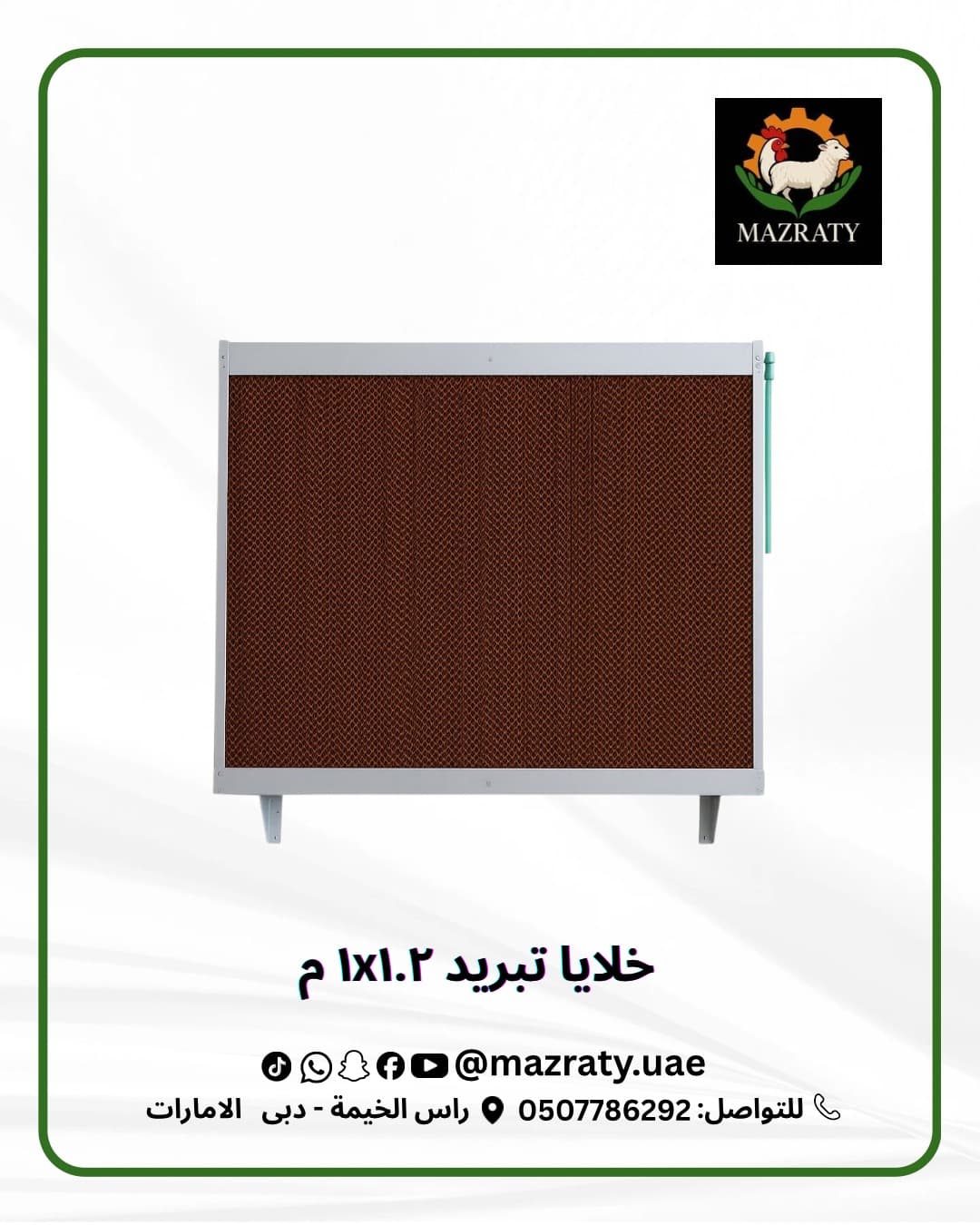
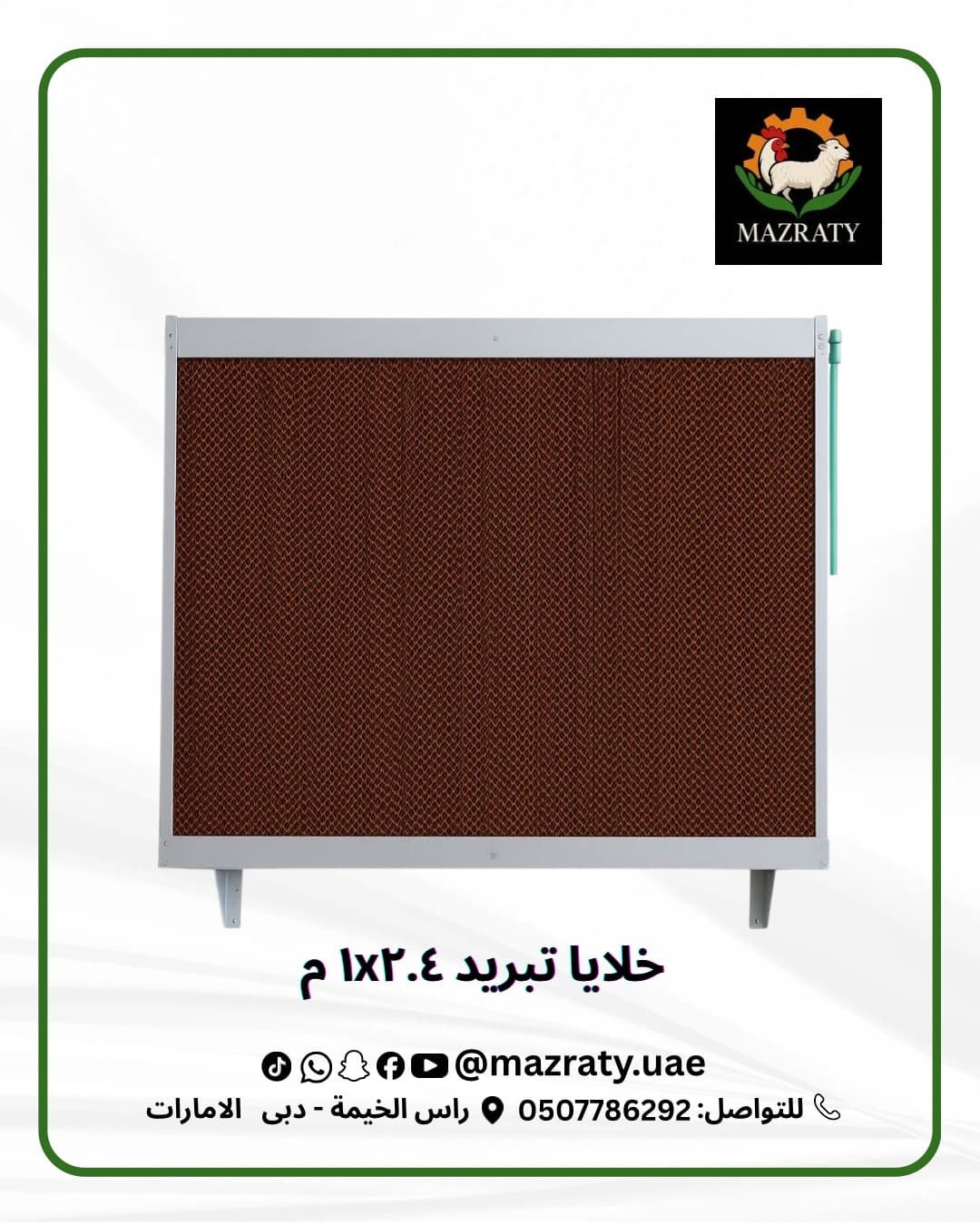
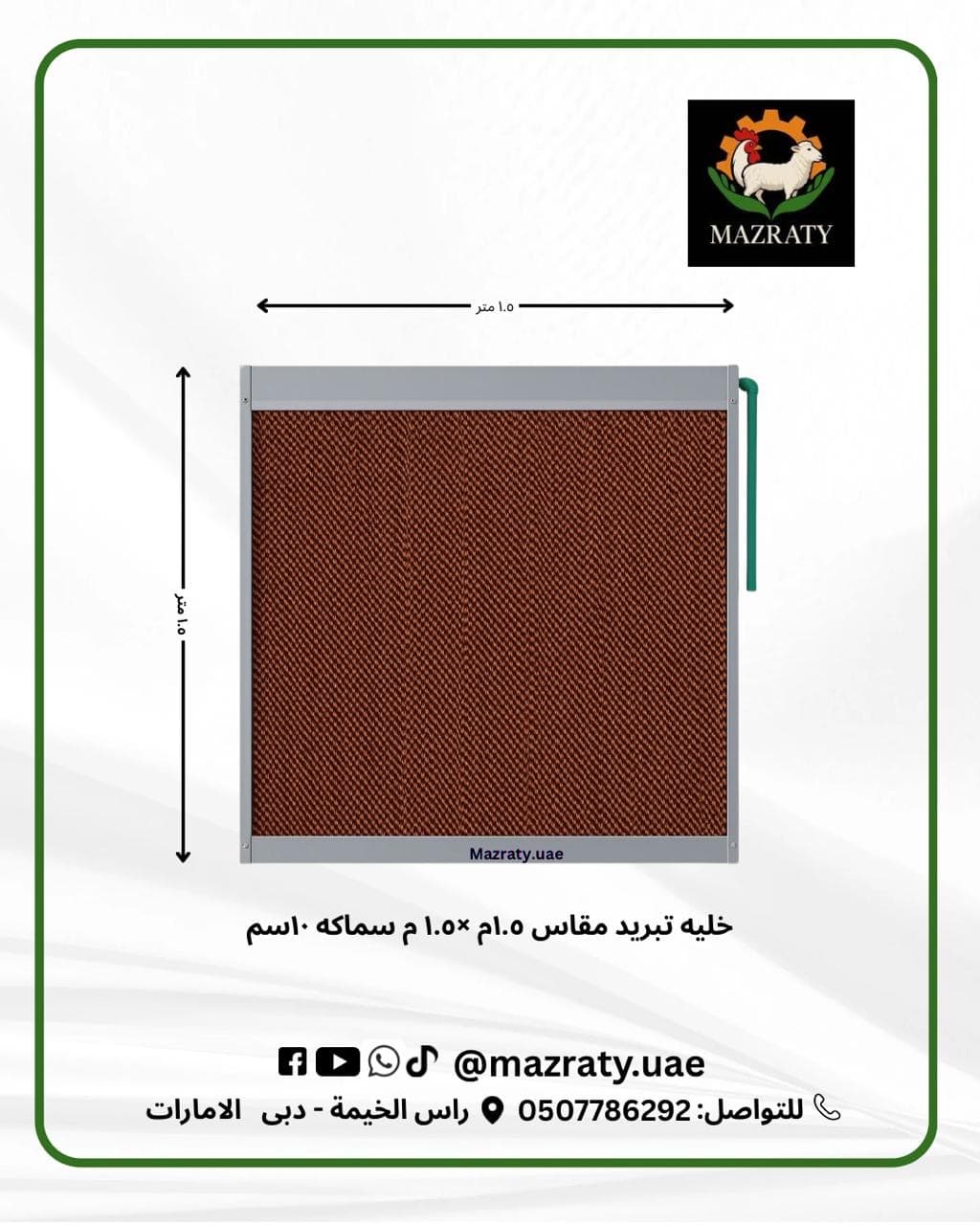
| Evaporative pad (CEL/cooling pads) |
12–15°C dry-bulb reduction |
Maximum effectiveness requires RH <50%; effectiveness drops sharply when RH >70% |
| High-pressure misting + tunnel ventilation combined |
11–15°C combined |
Synergistic; misting cools air that tunnel ventilation distributes |
| Misting + pad + tunnel (full system) |
18–22°C combined |
Near-maximum evaporative potential; achieves house temps of 22–26°C even on extreme days |
The key insight is that misting and pad cooling address different points in the air journey through the house. Pads cool incoming air before it enters. Misting cools air at intervals along the house length, preventing temperature rise as air picks up heat from birds and litter during its traverse. In a 100-metre tunnel-ventilated house, air temperature at the exhaust end can be 6 to 10°C higher than at the inlet — misting addresses precisely this temperature gradient.
Applications Beyond Broiler Houses
Layer Houses
Layer hens are particularly sensitive to heat above 32°C, with egg production falling 5 to 15% per degree above that threshold. High-pressure misting in multi-tier layer cage systems must account for reduced air velocity (compared to broiler tunnel houses) — this makes cycle control even more critical to prevent moisture accumulation in the upper tiers where cage density is highest. Nozzle lines should be positioned in the main aisle rather than between cage rows.
Breeder Houses
Breeder flocks — both broiler breeders and layer breeders — have higher value per bird and lower stocking densities, making individual cooling investment more justifiable. Fertility drops sharply above 38°C in males. High-pressure misting combined with ceiling fans creates a "personal cooling zone" that particularly benefits male birds, which tend to be larger and more heat-vulnerable.
Pigeon Aviaries
Racing and breeding pigeon facilities in the UAE are increasingly using high-pressure misting at reduced flow rates (fewer nozzles, longer OFF cycles) because pigeons are surprisingly heat-tolerant but drinking water consumption — and therefore excreta moisture — rises dramatically above 35°C, creating hygiene management problems. Misting reduces heat-driven drinking behaviour and keeps litter drier.
Rabbit Colonies
Rabbits are among the most heat-sensitive farm animals, with heat stress thresholds as low as 30°C. A 500 m² rabbit facility in Ras Al Khaimah with high-pressure misting running on a 30-second ON / 4-minute OFF cycle can maintain effective temperatures of 28 to 32°C even when outdoor temperatures reach 44°C — the difference between normal production and complete reproductive shutdown.
System Installation: Materials and Protocol
Distribution Tubing
- Stainless steel tubing (316L): Best choice for trunk lines in aggressive environments; resists corrosion from saline water and ammonia; high capital cost but virtually indefinite service life
- Copper tubing: Traditional choice; good pressure rating; moderate cost; can develop pitting corrosion in high-TDS UAE water over 5 to 10 years
- High-pressure nylon (polyamide) tubing: Lowest cost; rated to 100 bar in 6 mm OD sizes; easy to route and cut; adequate for most poultry applications; UV stabilised versions required for exterior runs
For a typical UAE poultry house installation, the recommended approach is stainless steel for the main distribution header (which carries full pump pressure continuously) and high-pressure nylon for the branch lines to each nozzle (where the combination of lower cost, easy installation, and adequate pressure rating is ideal).
Pre-Commissioning Flush Protocol
Before installing nozzles, the entire distribution system must be flushed at high pressure with clean filtered water for a minimum of 10 minutes per zone. This removes pipe-cutting debris, flux residue (in copper systems), and any construction dust that would immediately block the 0.1 mm orifices. Flushing is done with the nozzle ports open and nozzle bodies absent — flush water exits freely at each port. After flushing, nozzle bodies are installed and a second brief flush confirms clean flow from each nozzle before the system is declared ready.
Maintenance Schedule
- Daily during operation: Visual check of all nozzles for blockage or dripping during an ON cycle
- Monthly: Replace pre-pump sediment filters; clean in-line strainers at solenoid valves; check pump oil level (piston pumps)
- Quarterly: Remove and soak nozzle bodies in citric acid solution (10% concentration, 30 minutes) to dissolve mineral scale; inspect pump piston seals; check solenoid valve operation
- Annually: Full system pressure test; replace pump piston seals as preventive maintenance; recalibrate temperature and humidity controllers against reference instruments
Return on Investment: The UAE Poultry Producer's Calculation
System Cost Reference (UAE Market, 2025)
| House Size |
System Scope |
Estimated Installed Cost (AED) |
| 500 m² (small broiler or layer) |
Pump + 70 nozzles + RO + controls + 2 zones |
AED 8,000–14,000 |
| 1,000 m² (medium broiler) |
Pump + 140 nozzles + RO + controls + 3 zones |
AED 14,000–22,000 |
| 2,000 m² (large broiler or layer) |
Dual-head pump + 280 nozzles + RO + controls + 5 zones |
AED 22,000–40,000 |
Value of Mortality Reduction
In a 1,000 m² broiler house stocked at 14 birds/m² (14,000 birds per cycle), a single heat mortality event at 3% losses represents 420 birds. At an average live weight value of AED 35 per bird, that is AED 14,700 in a single event. UAE summer conditions create risk of 2 to 4 such events per season without adequate cooling. A misting system costing AED 18,000 installed pays for itself if it prevents just two average mortality events — a threshold most UAE producers will cross in the first summer of operation.
FCR and Growth Rate Improvement
Beyond mortality, heat stress causes broilers to reduce feed intake (energy conservation response) while simultaneously increasing maintenance energy expenditure (panting, increased circulation). The net effect is a 0.1 to 0.3 point degradation in FCR for every 2°C above the thermoneutral zone. In a 1,000 m² house producing 14,000 birds per cycle at a target FCR of 1.75, a 0.15 FCR penalty represents approximately 1,500 kg of additional feed required to reach market weight — at AED 1.50/kg feed cost, that is AED 2,250 per cycle. Over four cycles per year, FCR improvement alone from effective misting generates AED 9,000 annually — contributing significantly to the payback calculation.
Combined ROI Summary
For a mid-size UAE broiler operation with a properly specified and installed high-pressure misting system:
- Mortality reduction value: AED 14,000–30,000 per season
- FCR improvement value: AED 7,000–12,000 per season
- Combined annual benefit: AED 21,000–42,000
- System payback period: 6 to 18 months
Get Expert Guidance from Mazraty
Choosing the right pressure rating, pump capacity, nozzle type, and zone configuration for your specific poultry house in Ras Al Khaimah requires matching equipment specifications to your house dimensions, stocking density, local water quality, and existing ventilation setup. A system that is correctly specified from the beginning delivers the 8 to 12°C of cooling it promises; one that is undersized or mismatched to your water quality will disappoint and may create the litter problems you were trying to prevent.
Mazraty — the leading farm equipment supplier in Ras Al Khaimah — stocks and supplies high-pressure misting components including stainless steel piston pumps, anti-drip ceramic nozzle assemblies, solenoid zone valves, environmental controllers, and RO pre-treatment units sized for UAE farm conditions. Our technical team conducts on-farm assessments, designs zone layouts, and provides installation support and commissioning to ensure your system performs from day one of the UAE summer.
Contact Mazraty today for a site assessment and quotation tailored to your poultry house: WhatsApp +971 50 535 3412. Don't let the next heat wave catch your flock unprepared.
Reviewed planning sources
These references support operating and welfare principles. Final design and health programs remain site-, strain-, authority- and veterinarian-specific.
Frequently Asked Questions
How can misting avoid wet litter?
Use fine droplets, adequate airflow and staged controls while monitoring litter and humidity instead of relying on a fixed timer.
Can high-pressure misting run without fans?
It should not be planned that way; evaporation and moisture removal depend on controlled air movement.