A complete guide to poultry heat stress management in UAE summers — equipment, nutrition, and holistic practices. Contact Mazraty on WhatsApp for expert solutions.
Heat Stress in Poultry: The Silent Threat of UAE Summers
Heat stress is one of the most severe challenges facing poultry farmers in the United Arab Emirates. During June, July, August, and September, daytime temperatures regularly exceed 45 degrees Celsius, while nighttime temperatures rarely drop below 32 to 35 degrees. This means your birds receive absolutely no thermal recovery period throughout the entire day — a physiological burden that accumulates relentlessly and can lead to devastating production losses, mass mortality events, and complete flock collapse if not properly managed.
At Mazraty, based in Ras Al Khaimah with over 20 years of experience supplying, installing, and maintaining farm equipment across the UAE, we believe partial solutions are simply not enough. Effective heat stress management rests on three integrated pillars: infrastructure and equipment, nutrition and supplementation, and daily management practices. In this comprehensive guide, we walk you through everything you need to protect your flock through the brutal UAE summer.
Thermoneutral Zones by Poultry Species
Understanding each species' thermal comfort zone is the foundation of any effective heat management plan. Here are the critical benchmarks for common poultry types in UAE farms:
- Broiler Chickens: Thermoneutral zone 18-24°C. Stress begins above 28°C, and mortality risk rises sharply above 35°C. Broilers are the most economically vulnerable to heat.
- Layer Hens: Slightly more tolerant, with comfort between 18-27°C. Egg production drops 5-10 eggs per hen per month at sustained high temperatures, with quality deterioration in shell thickness and internal quality.
- Turkeys: Most sensitive to heat among common farm species. Optimal range 16-22°C. Mortality in turkeys during heat waves can be sudden and severe.
- Ducks and Geese: More heat-tolerant but still require ample water access and ventilation, especially for drinking and splashing behaviors that serve as their natural cooling mechanism.
- Quail: Despite their small size, sustained heat above 35°C will halt egg production completely and can cause rapid mortality in confined settings.
In the UAE context, reaching the thermoneutral zone during summer is unrealistic without industrial air conditioning. The practical goal is to minimize the temperature gap and reduce duration of exposure to extreme heat — every degree you bring down inside the house matters enormously.
Recognizing Heat Stress: Early Warning Signs
Early detection allows intervention before crisis sets in. Observe your flock at least twice daily and watch for these indicators:
Early Stage Signs (Compensatory Phase)
- Persistent panting with open beaks — this is the bird's primary thermoregulatory mechanism
- Wings held away from the body to increase surface area for heat dissipation
- Crowding around water sources in large, restless groups
- Reduced activity and lethargy during peak heat hours (10am to 4pm)
- Decreased feed intake accompanied by markedly increased water consumption
Advanced Stage Signs (Danger Phase)
- Watery diarrhea resulting from excessive drinking and electrolyte imbalance
- Trembling, loss of coordination, and difficulty standing
- Pale combs and wattles in chickens (reduced blood circulation to extremities)
- Sharp drop in egg production or complete cessation
- Sudden mortality without prior obvious illness signs
If you observe advanced stage signs, you are in a crisis situation requiring immediate action. Contact Mazraty via WhatsApp at +971 50 535 3412 for urgent consultation and rapid deployment of cooling solutions across all UAE regions.
Infrastructure and Equipment: Your First Line of Defense
White Roof Coatings and Thermal Insulation
One of the highest return-on-investment interventions available is simply painting your poultry house roof white. Dark-colored roofing materials absorb up to 90 percent of solar radiation and convert it directly to heat inside the structure. White reflective paint reflects over 80 percent of that same radiation. The difference in internal temperature can reach 4 to 5 degrees Celsius — a massive margin in UAE conditions.
Adding a layer of insulation beneath the roof (polystyrene boards or rock wool) multiplies the benefit further and reduces long-term electricity costs for cooling. Insulation is a one-time investment that pays itself back within one or two seasons through energy savings alone.
Evaporative Cooling Pad Systems
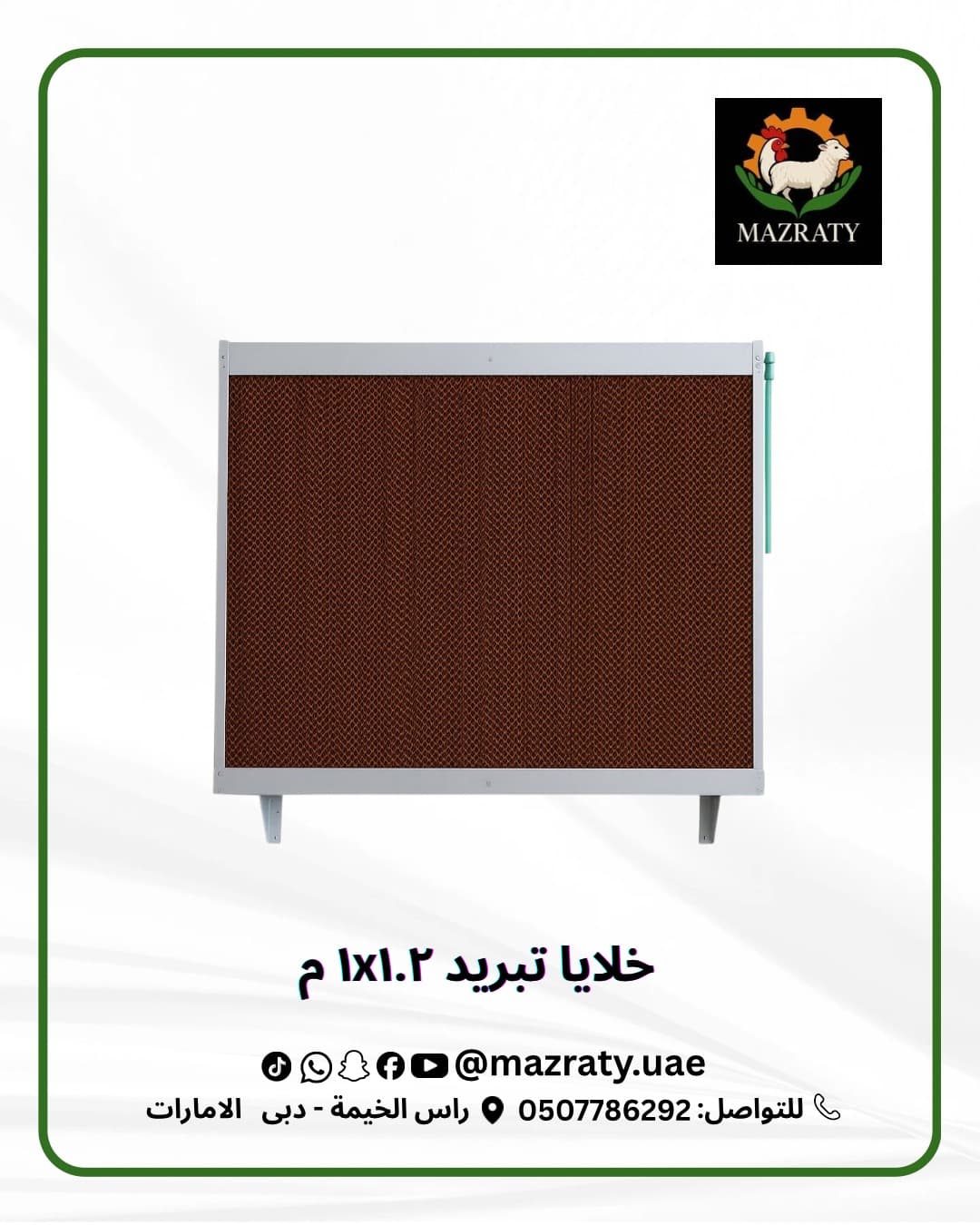
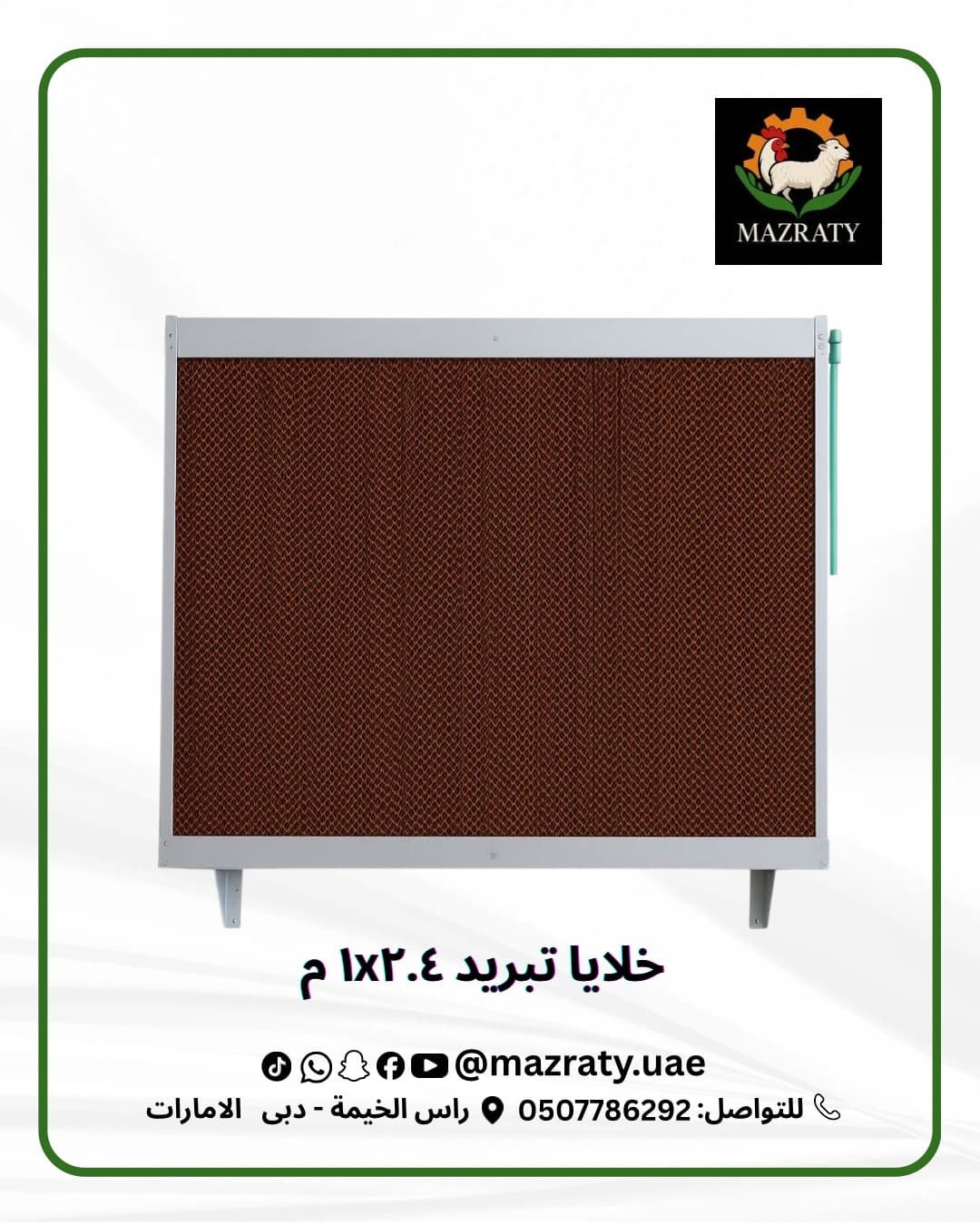
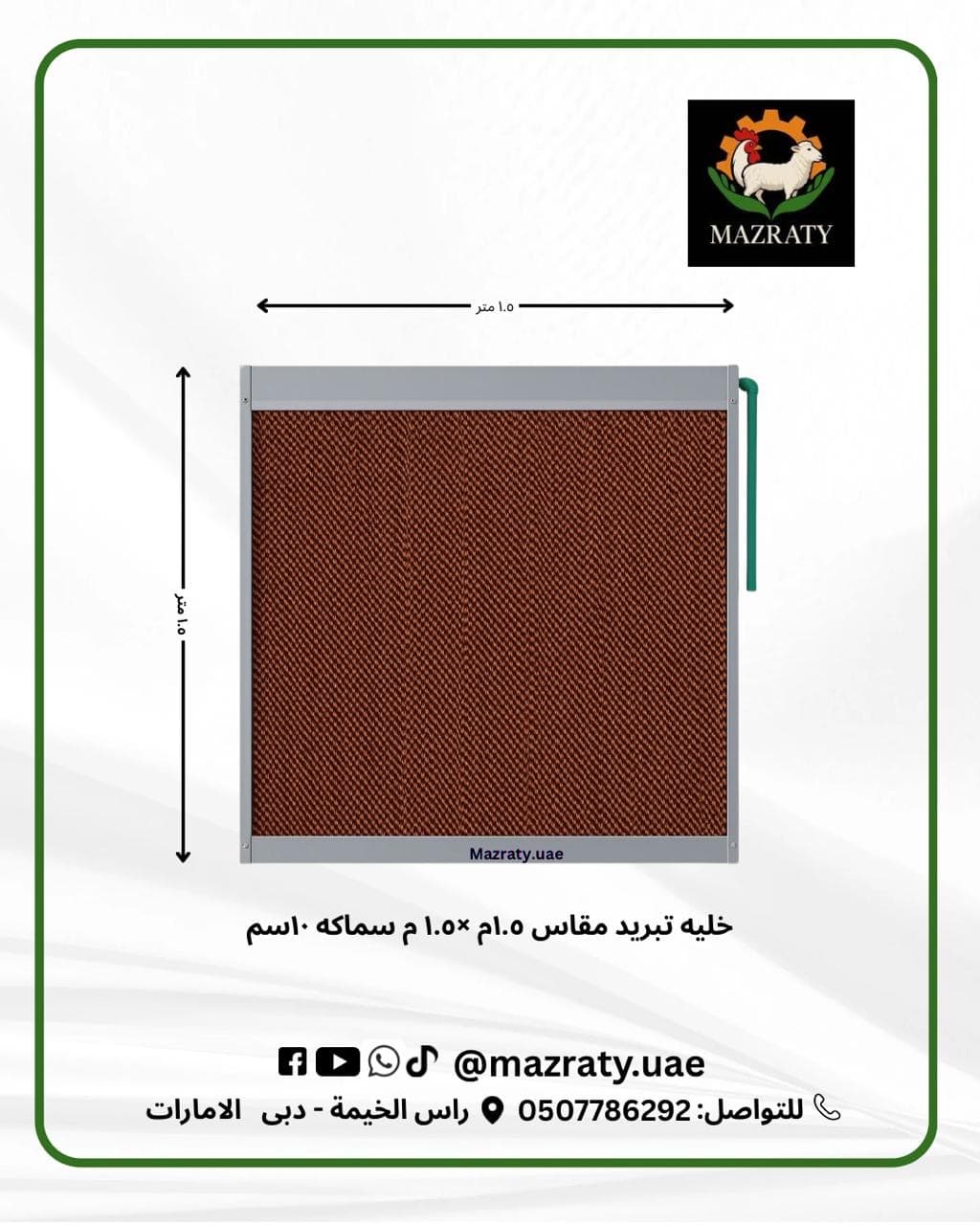
Cooling pad systems (evaporative coolers) are among the most effective and economical cooling solutions for UAE's hot, dry climate — particularly in inland areas like Ras Al Khaimah, Al Ain, and the outskirts of Abu Dhabi. These systems work by drawing hot, dry outside air through water-saturated cellulose or plastic pads, dropping incoming air temperature by 6 to 12 degrees Celsius under favorable conditions. Mazraty supplies and installs cooling pad systems of all sizes, with free delivery across the UAE and a specialist installation team ensuring maximum efficiency. Contact us on WhatsApp +971 50 535 3412 for sizing guidance and pricing in AED.
Industrial Fans and Tunnel Ventilation
Moving air is as important as cooling it. Industrial fans create airflow that helps birds dissipate body heat through evaporative cooling from skin and respiratory surfaces. A well-designed tunnel ventilation system — where fresh air enters from one end and exhausts from the other — should deliver air speeds of 0.5 to 2.5 meters per second depending on bird species and stocking density. Under-powered ventilation is a common and costly mistake in UAE poultry houses.
Roof Sprinkler and Internal Misting Systems
During peak heat hours (noon to 4pm), spraying water on the roof exterior reduces the roof surface temperature and consequently the radiant heat load inside. Internally, a fine misting system positioned high above the birds can add humidity to dry air without directly wetting the birds — direct wetting creates wet litter, bacterial growth, and respiratory problems. These systems are particularly effective as a supplemental measure during extreme heat spikes above 42°C.
Nutrition Adjustments: Non-Negotiable in UAE Summers
Strategic Feed Timing
Rescheduling feed delivery around temperature peaks is one of the simplest and most impactful management changes you can make. Digestion generates significant metabolic heat inside the bird — technically called the heat increment of feeding. Feeding during peak heat hours compounds the bird's thermal burden dangerously.
- Deliver 60 to 70 percent of the daily ration between 4am and 7am when temperatures are at their lowest
- Suspend feeding entirely between noon and 3pm on the hottest days
- Resume feeding after sunset and consider night feeding if lighting systems support it
Feed Composition Adjustments
Heat reduces voluntary feed intake, meaning birds consume fewer calories and nutrients at precisely the time their stress response demands more. Compensate with a more nutrient-dense formulation:
- Increase dietary fat: Raise fat inclusion from 2-3 percent to 4-6 percent. Fats produce significantly less metabolic heat during digestion compared to carbohydrates, making them thermally favorable energy sources in summer.
- Raise protein concentration: Compensate for reduced intake volume by increasing protein percentage so daily amino acid requirements are still met.
- Increase calcium: Particularly critical for layers. Heat suppresses calcium absorption, leading to thin-shelled or shell-less eggs. Raise dietary calcium by 10-15 percent during peak summer months.
- Reduce crude fiber: High-fiber ingredients generate more digestive heat and should be minimized in hot weather formulations.
Vitamin C Supplementation
Under normal conditions, poultry synthesize adequate vitamin C internally. During heat stress, this synthesis pathway is severely impaired. Supplementing vitamin C at 200-500 mg per kilogram of feed has been shown in multiple research studies to:
- Reduce circulating cortisol (the primary stress hormone)
- Improve eggshell quality and thickness during heat stress periods
- Significantly improve survival rates during heat waves
- Support immune function suppressed by chronic heat exposure
Additionally, adding sodium bicarbonate (baking soda) at 0.2-0.3 percent to drinking water helps correct respiratory alkalosis caused by the loss of carbon dioxide during panting — an often-overlooked electrolyte imbalance that impairs performance even when other factors are managed correctly.
Potassium, sodium, and magnesium electrolytes should also be supplemented to replace the heavy losses occurring through excessive water intake and urinary excretion. Ready-mixed poultry electrolyte supplements are widely available in UAE agricultural supply stores at reasonable AED prices.
Water Management: A Life-Critical Priority
In extreme heat, birds drink up to five times their normal water intake. Any failure in your water system during a heat wave is an emergency with potentially catastrophic consequences. Critical requirements include:
- Verify water supply pressure and flow capacity can handle five-fold demand spikes without pressure drops at the drinkers
- Keep water as cool as possible — birds drink significantly less warm water. Store tanks in shade or add insulation wrapping.
- Clean nipple drinkers and water troughs daily. Warm, stagnant water is a bacterial breeding ground that creates secondary health problems during heat stress.
- Maintain minimum nipple density of one nipple per 8 birds, ideally one per 6 during peak summer
- Add supplementary open drinkers in the hottest zones of the house during heat emergencies
For reliable, high-capacity water delivery systems built to withstand UAE conditions, contact Mazraty on WhatsApp +971 50 535 3412. We offer free delivery and installation support across all UAE emirates.
The Overnight Problem: No Recovery in UAE Summers
What makes UAE summer conditions uniquely dangerous compared to many other agricultural regions globally is the absence of meaningful overnight cooling. In most farming climates worldwide, nighttime temperatures drop to 18-22°C, giving birds 8-10 hours of physiological recovery. In the UAE during July and August, overnight temperatures commonly stay between 32 and 35 degrees Celsius. The consequences of this are profound:
- Zero overnight thermal recovery — birds remain in continuous physiological stress
- Cumulative fatigue compounds day after day without relief
- Sudden mass mortality can occur after a prolonged heat wave even when the situation appeared stable, as accumulated damage reaches a critical threshold
- Chronic immune suppression increases vulnerability to respiratory diseases, bacterial infections, and opportunistic pathogens
This reality demands that cooling systems run continuously through the night in July and August — not just during daylight hours. If electricity costs are a concern, the correct response is optimizing system efficiency, not reducing operating hours. The losses from a single overnight mortality event will vastly exceed months of electricity savings.
Early Morning Ventilation Management
The window from 4am to 7am represents the most valuable management hours of the day in UAE summer. These are the coolest hours — typically 28-32°C — offering a brief but critical opportunity:
- Open all possible ventilation inlets to maximize cooler air intake before temperatures rise
- Run fans at full capacity to completely exchange the house air with the cooler outside air
- Deliver the main feed ration during this window to minimize metabolic heat generation during peak hours
- Conduct your daily health inspection — look for any birds showing stress signs and note behavioral changes
- Check and prime all cooling systems to confirm they are operating at full capacity before heat peaks arrive
Farmers who establish a disciplined early morning routine consistently achieve better summer outcomes than those who rely solely on equipment without structured management protocols.
Stocking Density Adjustments for Summer
Every bird in your house is a heat-generating unit. Higher stocking density means higher total heat load inside the building, directly raising ambient temperature. In UAE summers:
- Reduce stocking density by 20-30 percent from winter levels where economically feasible
- Remove underperforming, weak, or sick birds that add heat load without contributing productivity
- Allow more floor space per bird to enable natural behavioral thermoregulation — birds spread out and reduce contact with neighbors when given sufficient space
- For broilers: target 0.09-0.10 square meters per bird in summer versus 0.07-0.08 in winter
Smart Monitoring and Automation
Modern farm management tools remove the guesswork from heat stress monitoring and allow faster, more reliable responses:
- Temperature and humidity sensors connected to smartphone alerts that notify you instantly when critical thresholds are breached
- Remote CCTV cameras allowing behavioral observation without requiring physical presence during dangerous heat periods
- Automated control systems that activate cooling equipment when temperature sensors detect threshold breaches and switch off when conditions normalize
- Daily data logging enabling performance tracking and pattern identification across seasons
A basic monitoring setup costs a few hundred AED and can prevent losses worth thousands in a single prevented mortality event. It is one of the highest-return investments available to UAE poultry farmers.
Emergency Response Protocol for Extreme Heat Events
When temperatures spike above 45°C during exceptional heat waves, having a prepared emergency response protocol makes the difference between a manageable situation and catastrophe:
- Immediately add crushed ice or very cold water to drinking systems to lower water temperature
- Mist the most severely affected birds directly with fine water spray as an emergency measure
- Activate all available cooling and ventilation systems simultaneously at maximum capacity
- Relocate the most heat-stressed birds to the coolest available area of the facility
- Contact a veterinarian immediately if mortality begins
Prevention remains far cheaper and less stressful than emergency response. Contact Mazraty now via WhatsApp +971 50 535 3412 to consult with our specialists on building a complete cooling and management system tailored to your farm scale and budget before the next heat wave arrives.
Economic Analysis: The Case for Investment
Some farmers hesitate to invest in comprehensive cooling infrastructure due to upfront costs. Consider the economics clearly:
- A house of 1,000 broilers without adequate cooling: potential loss of 100-200 birds in a single heat event, representing AED 2,000-5,000 in direct losses
- 30 percent productivity reduction sustained over 4 summer months in a layer operation of 500 hens: significant lost egg revenue
- Increased disease incidence from chronically suppressed immunity: additional veterinary and medication costs
- Against this: a complete cooling pad and fan system for a medium-scale house typically costs AED 3,000-8,000 — recovering its cost within a single summer season
Successful UAE poultry farmers consistently treat cooling infrastructure as a core operating cost equivalent to feed and health management — not as optional equipment to be deferred. The question is not whether to invest, but how to invest efficiently.
Conclusion: Holistic Management is the Only Viable Approach
There is no single solution to heat stress in UAE poultry farming. Success requires simultaneous action across all three management pillars: appropriate infrastructure and equipment, nutrition adjusted for hot weather conditions, and disciplined daily management practices. Weakness in any one pillar undermines the others and leaves your flock vulnerable.
Mazraty provides the complete solution: from house design consultation and ventilation engineering to cooling pad systems, water delivery infrastructure, and monitoring equipment — backed by over 20 years of experience specifically in UAE's demanding climate. Contact us now on WhatsApp +971 50 535 3412 for a free consultation and detailed AED quotation matched to your operation's needs, with free delivery anywhere in the United Arab Emirates.
Reviewed planning sources
These references support operating and welfare principles. Final design and health programs remain site-, strain-, authority- and veterinarian-specific.
Frequently Asked Questions
At what temperature does heat stress begin in poultry?
Heat stress begins at approximately 28°C for broilers, 30°C for layers, and 25°C for turkeys. In UAE summers, these thresholds are exceeded continuously — including overnight — making the cumulative heat burden the primary concern rather than isolated peak temperatures. The absence of overnight recovery makes UAE conditions particularly dangerous compared to other hot climates globally.
Is a cooling pad system sufficient by itself for UAE summer conditions?
Evaporative cooling pads are highly effective but operate best in dry conditions. In humid coastal areas during August and September, when relative humidity exceeds 70 percent, their cooling efficiency drops significantly. For complete protection, combine cooling pads with high-capacity fans, roof insulation, white coatings, and the nutrition and management adjustments described in this guide.
Why is vitamin C supplementation important during heat stress?
Poultry normally synthesize sufficient vitamin C internally, but this process shuts down under heat stress conditions. Supplementing at 200-500mg per kilogram of feed reduces cortisol levels, supports immune function, improves eggshell quality, and demonstrably improves survival rates during heat waves. It is an inexpensive, evidence-based intervention that every UAE poultry farmer should implement from May through October.
Why are overnight temperatures in UAE particularly dangerous for poultry?
In most agricultural climates worldwide, nighttime temperatures drop to 18-22°C, giving birds 8-10 hours of physiological recovery from daytime heat stress. In UAE summers, overnight temperatures stay at 32-35°C, meaning birds remain in continuous stress without any recovery period. This cumulative fatigue leads to immune system collapse, sudden mass mortality events after prolonged heat waves, and dramatically increased disease susceptibility.
How much does a complete poultry cooling system cost in the UAE?
Costs vary significantly based on house size, existing ventilation, and system complexity. A complete cooling pad and ventilation upgrade for a medium-scale house (500-1,000 birds) typically ranges from AED 3,000 to AED 8,000. This investment typically recovers itself within a single summer season through prevented mortality and maintained productivity. Contact Mazraty on WhatsApp +971 50 535 3412 for a free site-specific quote with transparent AED pricing and free delivery across all UAE emirates.