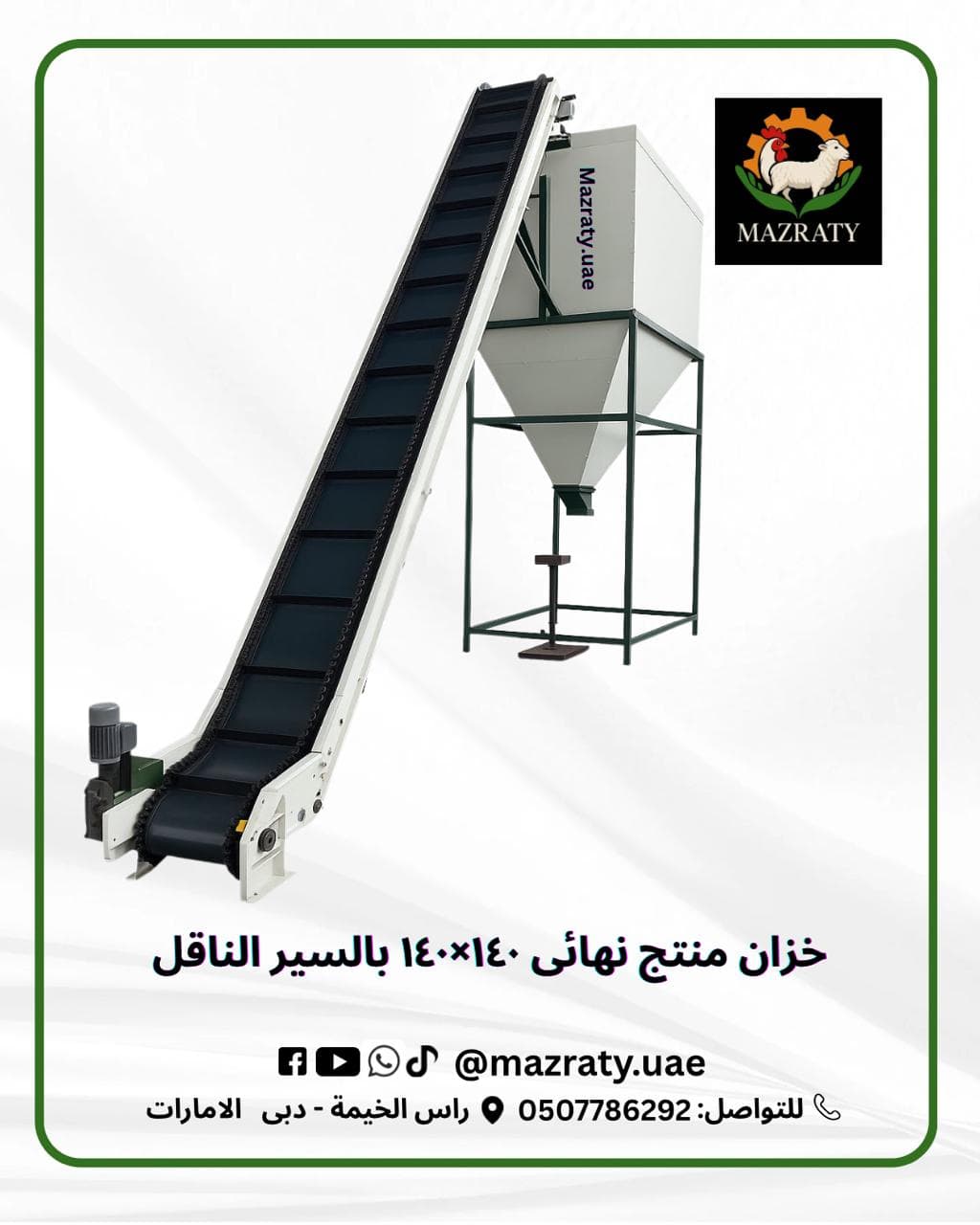
Size feed silos from consumption, stock days and bulk density, then manage moisture, condensation, pests and first-in-first-out rotation.
Beyond spoilage, farms that rely on weekly feed deliveries from distant mills pay a significant logistics premium. A properly sized on-farm silo allowing 21–30 days of buffer stock enables bulk purchasing at mill-gate prices, typically saving AED 40–80 per tonne versus bagged or frequent-delivery formats — a saving that, on a 10,000-bird broiler house consuming 20 tonnes per cycle, pays back a mid-range silo in under three cycles.
Mazraty designs and installs complete storage solutions from single-bin poultry setups to multi-silo dairy complexes, all engineered for Gulf humidity and heat. Every recommendation below reflects UAE field experience, not temperate-zone textbooks.
Silo and Bin Types: Choosing the Right Structure for Your Farm
Three primary construction types dominate UAE on-farm feed storage. Each has a distinct performance envelope, and the right choice depends on tonnage, feed type, site permanence, and budget.
Galvanized Steel Corrugated Silos
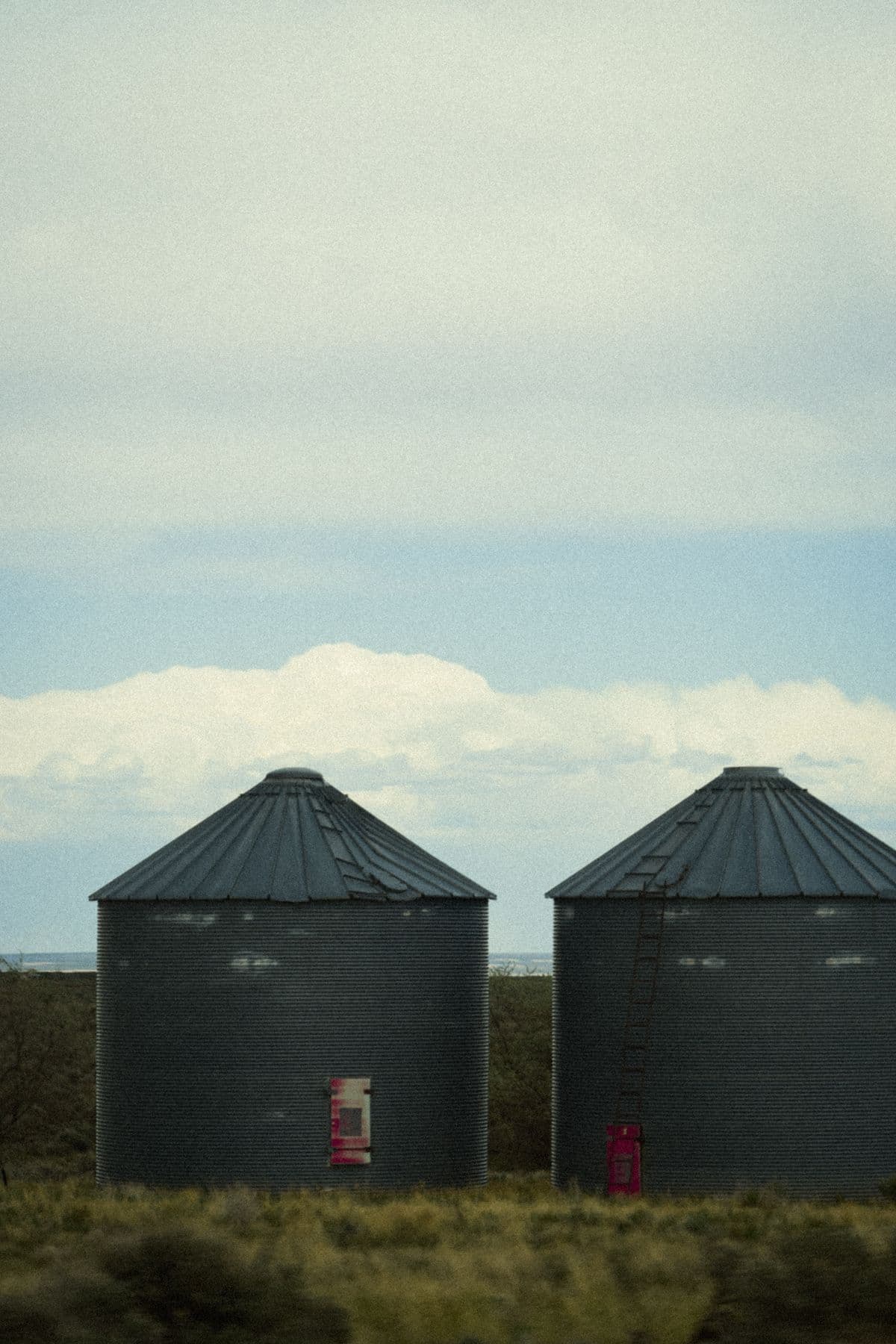
Galvanized corrugated-steel silos are the workhorse of large-scale livestock and poultry operations. Panels are hot-dip galvanized to G90 or G115 standard, providing 25–40 years of corrosion life even in humid coastal air — provided the zinc coating is intact and the silo is re-sealed at penetrations annually. Standard diameters run from 3.5 m to 9 m, with capacities from 15 tonnes to over 500 tonnes for a single bin. In the UAE poultry sector, the most common configurations are:
- 3.5 m diameter, 6-ring, ~35 t capacity — suitable for a 5,000-bird broiler house with a 21-day autonomy on a standard 70 g/bird/day ration.
- 5.5 m diameter, 8-ring, ~120 t capacity — the entry point for a 20,000-bird farm or a 200-head dairy herd on TMR.
- 7.3 m diameter, 10-ring, ~250 t capacity — serves integrated poultry complexes or large sheep/goat herds above 1,000 head.
Steel silos require a reinforced concrete pad (minimum 200 mm thick, 25 MPa) and anchor bolt rings rated to local wind loads — Ras Al Khaimah design wind speed is 45 m/s per UAE structural code. Mazraty handles civil drawings, anchor design, and installation as a turnkey package.
Polyethylene (HDPE) Bins
Rotationally-moulded HDPE bins in the 1–20 tonne range are the preferred option for smaller poultry farms, feed premix storage, and additive handling. Their advantages in the UAE context are significant: seamless construction eliminates the joint-rust and seal-failure mode of bolted steel panels; they are UV-stabilized to handle direct Gulf sun; and they are genuinely portable — a 5-tonne bin can be relocated with a small telehandler as farm layout evolves. Common UAE farm applications include:
- Broiler farms with 2,000–8,000 birds using 5–15 t bins per house.
- Feed additive and premix storage in climate-controlled rooms (bins placed indoors).
- Temporary buffer storage during silo cleaning and fumigation cycles.
The limitation is capacity ceiling: HDPE bins above 20 tonnes become impractical in wall-thickness and cost. For anything above that threshold, galvanized steel is more economical per tonne of capacity.
Concrete Bunker Silos
Reinforced-concrete bunkers — essentially three-sided walled bays sealed with a plastic sheet — are the lowest capital-cost option for farms storing fibrous roughage: alfalfa hay bales, wheat straw, or silage. They are not appropriate for dry compound feed or loose grain because the open-top design gives no protection against rain infiltration or the humidity spikes common during UAE shamal wind events. On camel and goat farms in the Ras Al Khaimah hinterland, concrete bunkers sized at 50–200 tonnes serve roughage storage, while a smaller galvanized silo or HDPE bin handles the concentrate ration separately.
Capacity Sizing: How Much Storage Does Your Farm Actually Need?
Undersizing creates frequent deliveries (cost) and stockout risk. Oversizing creates long residence time (spoilage risk in humid conditions). The calculation is straightforward but often skipped:
| Livestock Type |
Daily Feed/Head or Bird (kg) |
21-Day Buffer (tonnes per 1,000 head/birds) |
30-Day Buffer (tonnes per 1,000 head/birds) |
| Broiler (finisher phase) |
0.12 kg/bird |
2.5 t |
3.6 t |
| Layer hen |
0.115 kg/bird |
2.4 t |
3.45 t |
| Dairy cow (high producing) |
22 kg/head |
462 t |
660 t |
| Sheep / Goat |
1.2 kg/head |
25.2 t |
36 t |
| Camel (working) |
6 kg/head |
126 t |
180 t |
In the UAE context, Mazraty recommends a 21-day buffer as the minimum, not 7 days. Port delays at Saqr Port or Khalifa Port during peak season (Ramadan and Eid preparation) have historically stretched lead times by 10–14 days. A 30-day buffer is preferable for farms that source specialty feed ingredients internationally. The cost of holding an additional week of inventory is negligible compared to the cost of emergency air freight or the animal-performance loss from feed substitution on short notice.
Add 10–15% headroom to your calculated tonnage to account for the cone dead-zone in the hopper bottom and to avoid packing the silo to 100% capacity, which restricts aeration airflow.
The UAE Humidity Challenge: Mycotoxin Risk and Moisture Control
This is the section that separates a UAE-engineered storage system from a generic catalogue purchase. Grain and compound feed are hygroscopic: they absorb or release moisture to reach equilibrium with surrounding air. Safe storage moisture content is 13–14% for maize, 12–13% for wheat, and approximately 11% for compound pellets. In Ras Al Khaimah, ambient dew-point temperatures from June to September regularly reach 28–32°C, meaning that any warm grain surface exposed to cooler night air will condense moisture onto the kernel surface — creating the exact microenvironment that Aspergillus favors.
The sequence of failure is predictable: moisture absorption → mold colonization within 48–72 hours → mycotoxin production, which continues even if the mold colony is killed by subsequent drying. Mycotoxins are heat-stable and do not denature at pelleting temperatures. Once present, they cannot be removed by drying or re-processing. Prevention is the only strategy.
Aeration Systems
An active aeration system — one or more centrifugal fans forcing ambient or conditioned air up through the grain mass via perforated floor ducts — is non-negotiable for any silo above 10 tonnes in the UAE. The design standard is 0.10–0.15 m³/min per tonne of grain for maintenance aeration, or 0.25–0.50 m³/min per tonne for rapid cooling after a warm delivery. Fan sizing for a 100-tonne silo: 10–15 m³/min minimum, with a static pressure capacity of at least 250 Pa to overcome grain-column resistance.
For summer operation, aeration with ambient 45°C air provides limited benefit. Mazraty offers systems integrating evaporative pre-coolers on the fan inlet — reducing inlet air temperature by 8–12°C using UAE water costs of approximately AED 0.02/litre — which meaningfully extends safe storage time. Alternatively, mechanical refrigeration of the silo headspace (chiller coil in the cone cap) maintains headspace temperature at 18–22°C regardless of ambient, fully suppressing mold growth at a higher capital cost but the lowest operational risk.
Temperature and Moisture Monitoring
Modern grain management requires real-time data, not monthly manual sampling. Mazraty installs cable-mounted thermocouple strings (3–5 sensors per cable, 1 cable per 50 tonnes of grain) that feed a wall-mounted display or cloud dashboard. Temperature rise of more than 2°C above baseline in a 24-hour period is the actionable alarm threshold — run aeration immediately and sample for moisture content. Combine temperature monitoring with a resistance-based grain moisture sensor in the discharge cone, and you have a complete picture of grain condition without opening the silo hatch in summer heat.
Discharge Systems: Auger Extraction vs. Gravity Flow
How feed exits the silo matters as much as how it enters. Two systems dominate:
Bottom Sweep Auger (Mass-Flow Extraction)
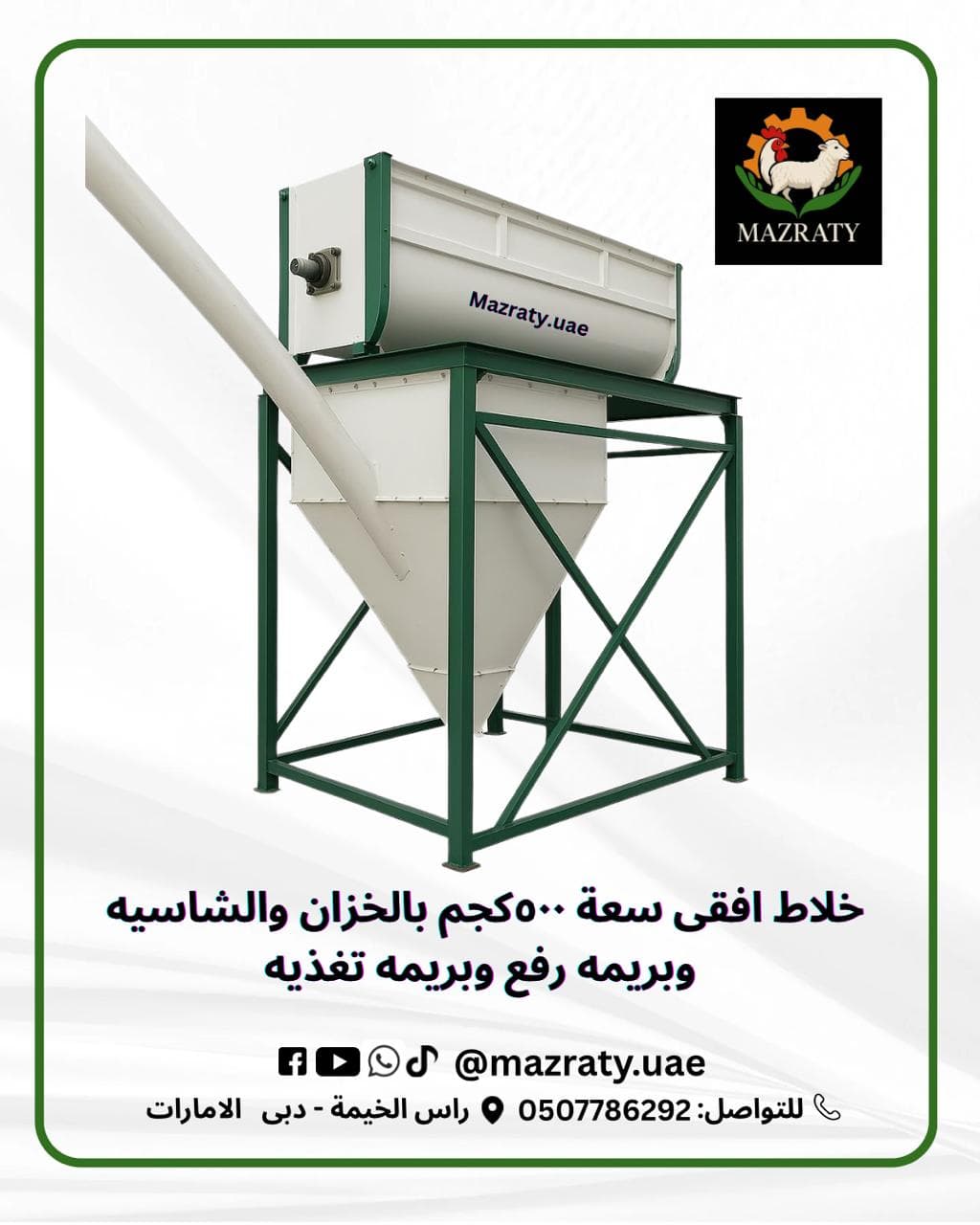
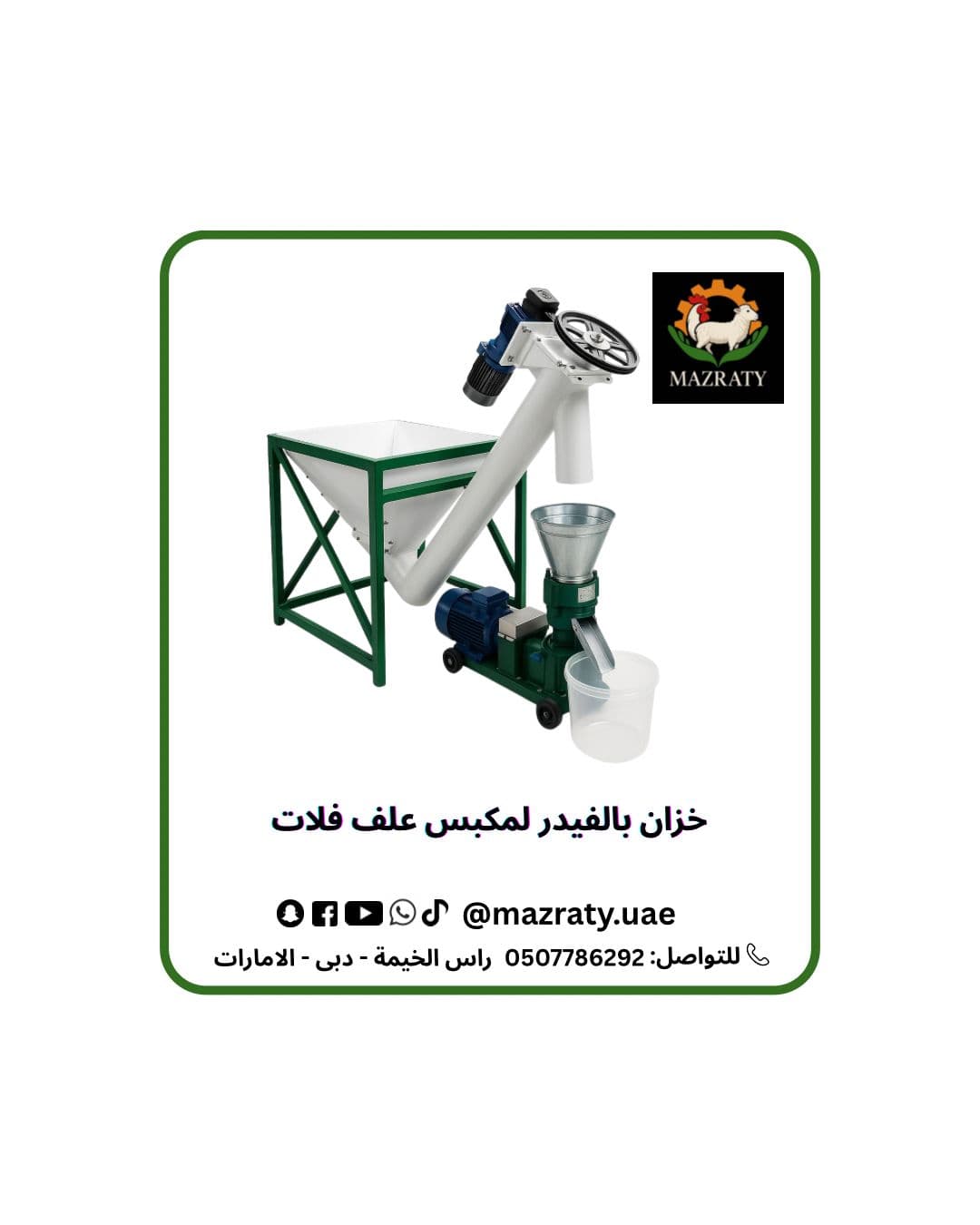
A motor-driven horizontal auger mounted at the silo floor sweeps grain from the outer wall to a central sump, from which a vertical auger or air slide conveys it to the feeding system. This design achieves true mass-flow discharge — the entire grain mass descends uniformly, preventing the "rat-hole" channeling that leaves stagnant feed against the silo wall for weeks. Mass flow is critical for FIFO (first-in, first-out) inventory discipline. Without it, the oldest feed in the silo periphery can sit for months, accumulating mycotoxins regardless of how well the aeration system manages the active grain mass. Mazraty supplies bottom auger assemblies from 2.2 kW (small HDPE bin) to 22 kW (large 300-tonne steel silo).
Gravity-Flow (Hopper-Bottom) Discharge
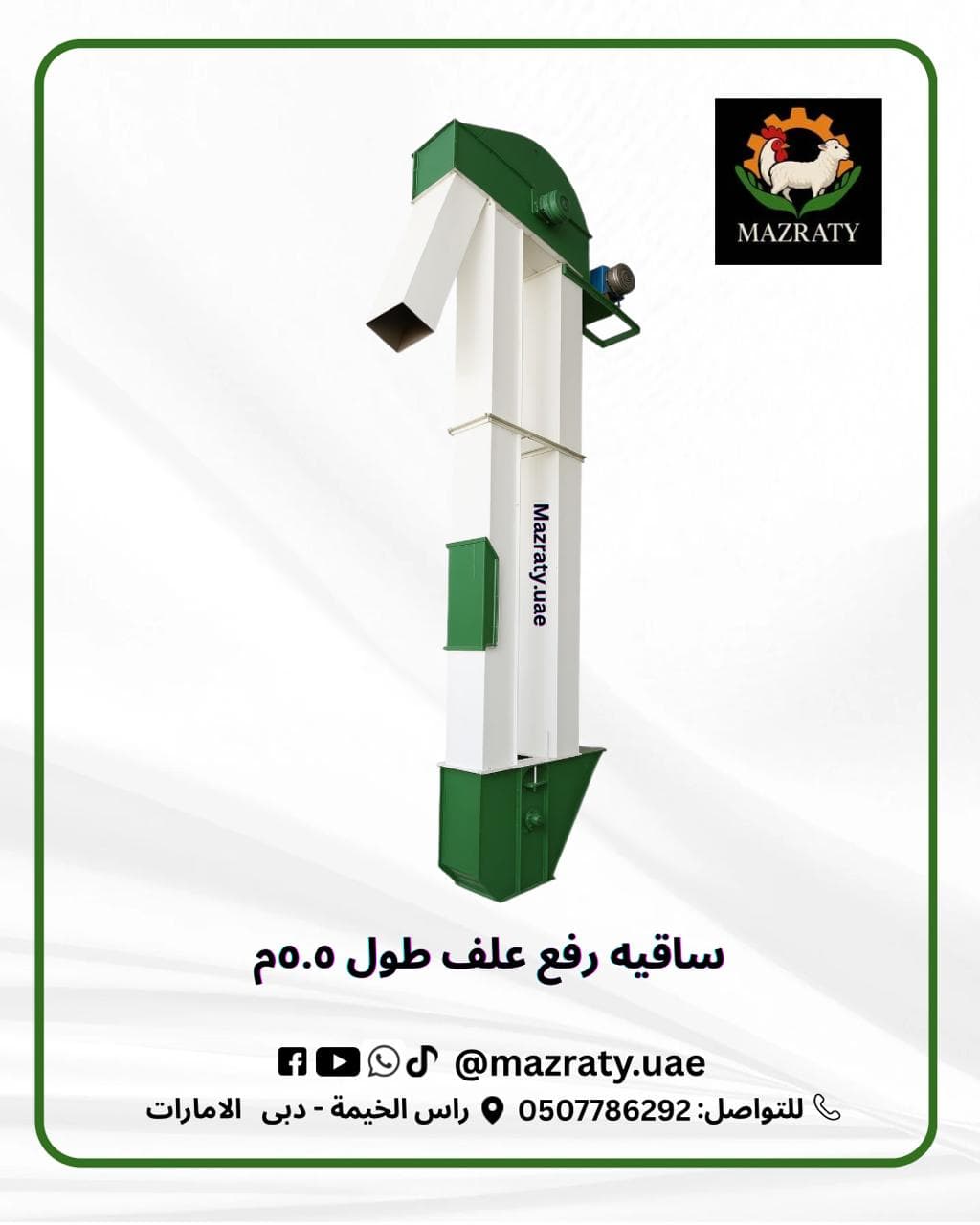
A steep conical hopper bottom — 45° or 60° half-angle — allows feed to flow by gravity through a slide gate or rotary valve directly into a bucket elevator, conveyor, or feed-mill intake. Hopper-bottom silos are simpler and require no moving parts inside the bin. The trade-off is that steep cones are expensive to fabricate in large diameters: a 7-metre diameter 60° hopper requires significant eave height, driving up the steel structure cost. They work best in diameters up to 4.5 m. For larger silos, the sweep auger is more cost-effective.
In UAE poultry farms, the most common configuration Mazraty installs is a hopper-bottom silo with a 45° cone feeding directly into a chain conveyor that runs to the feed pan line — no additional equipment required in the feed room. The system is simple, reliable, and has minimal maintenance points in a dusty desert environment.
Silo Placement and Truck-Access Design
Site planning is frequently an afterthought and becomes an expensive retrofit problem. Follow these placement principles from the start:
- Minimum 6-metre clearance from any building or fence on the fill side to allow a 10-metre pneumatic tanker truck to pull directly under the silo fill inlet — typically at 8–10 metres above grade for a standard ring-count silo.
- Hardstand pad of at least 8 × 15 m in reinforced concrete (C25, 250 mm) under the truck approach to handle 32-tonne GVW tanker loads on UAE summer soil conditions.
- Prevailing-wind orientation: in Ras Al Khaimah, the dominant summer wind (shamal) blows NNW. Place the silo fill cap exhaust vent on the downwind side to prevent positive pressure from blowing chaff back into the fill pipe during auger transfer.
- Shadow and shading: where possible, use a north-facing wall or shade structure to reduce direct solar radiation on the silo skin. A shaded silo skin can be 10–15°C cooler than an unshaded one, directly reducing the temperature gradient that drives moisture condensation inside.
- Overflow inspection pipe: run a 75 mm PVC pipe from the silo overfill port to a ground-level indicator visible from the cab of the delivery truck. This prevents costly overfill spills and the dangerous pressure buildup that damages silo rings.
Pest Control: Rodents, Weevils, and Moths
A silo that stores feed efficiently is also a high-value target for grain pests. UAE grain storage faces three primary threats:
Rodents (Rattus rattus, Mus musculus)
Black rats and house mice contaminate far more feed than they consume — a single rat produces approximately 25,000 fecal pellets per year. In the UAE, rodent populations spike after harvest season (November–January) when outdoor food sources diminish. Galvanized steel silos are inherently rodent-proof if all cable penetrations and manhole gaskets are maintained. The vulnerable points are: the fill cap seal, aeration fan inlet (fit a 3 mm stainless mesh guard), and the base skirt seal to the concrete pad. Mazraty installs a bead of polyurethane expanding foam at the skirt interface during commissioning — re-inspect and re-seal annually. Place tamper-resistant bait stations (TBS) at 10-metre intervals around the silo perimeter; never inside or adjacent to the bin discharge.
Stored-Grain Insects: Weevils and Grain Borers
Sitophilus granarius (grain weevil) and Rhyzopertha dominica (lesser grain borer) are endemic in the Gulf and survive UAE summer heat in thermally buffered grain masses. Their life cycle accelerates above 25°C: at 35°C, a full generation completes in 3–4 weeks. Control strategy is three-tiered: (1) Source-control — request phytosanitary certificates from your feed mill and reject deliveries showing live insect activity on arrival. (2) Physical control — continuous aeration keeps grain below 15°C in the cooler months; temperatures below 10°C are lethal to most stored-grain insects within 14 days. (3) Chemical control — approved phosphine (aluminium phosphide) fumigation during the empty-bin clean cycle, executed by a licensed UAE pest-control operator. Phosphine is the only fumigant proven to penetrate large grain masses; heat treatment (>50°C) is an emerging alternative but requires specialized recirculating equipment.
Moths (Ephestia kuehniella, Plodia interpunctella)
Moth larvae spin webbing mats on the grain surface, creating a physical crust that impedes aeration and promotes hot-spot formation. Pheromone traps hung inside the silo headspace provide early warning (10+ moths per trap per week = threshold for action). Ultraviolet light traps at aeration fan inlets reduce adult moth entry. For severe infestations, contract fumigation is required; do not attempt DIY fumigation inside a silo — phosphine gas is lethal at 11 ppm and produces no detectable odor at sub-lethal concentrations.
FIFO Inventory Management in Multi-Bin Systems
First-in, first-out (FIFO) discipline prevents the silent accumulation of aged feed in partially filled silos. On farms with two or more bins, the protocol is simple: dedicate one bin to "active draw" and exhaust it before receiving a new delivery into the second bin. Tag each bin with the fill date and ingredient lot numbers using a weatherproof marker board at the base ladder. When the active bin empties, physically inspect the cone for residual bridging or caked feed before switching to the next bin.
Digital inventory tracking — even a simple spreadsheet updated at each delivery — enables you to calculate average daily consumption, project the next delivery date, and flag consumption anomalies that may indicate feed wastage or leakage in the conveyor system. Mazraty's instrumented silos with weight-based load cells (optional upgrade) provide live tonnage readouts, eliminating estimation errors and enabling direct integration with farm management software.
Maintenance and Cleaning Protocols
A maintenance calendar extends silo life and protects animal health. Mazraty recommends the following schedule:
- After every empty cycle: inspect interior cone and walls for caking, residual grain, or mold patches. Vacuum or brush out residual dust. Inspect the sweep auger shear bolt and bearing for wear.
- Quarterly: check all gaskets on manholes, fill caps, and aeration ducts. Tighten all external ring bolts to the specified torque (check Mazraty's installation manual — typically 45–55 Nm for M16 bolts). Lubricate auger gearbox per OEM specification.
- Annually (pre-summer): full interior inspection with confined-space protocols (UAE OSH Law requirements). Apply food-grade sealant to any exposed zinc areas showing white rust (zinc hydroxide). Test aeration fan motor amperage — a motor drawing 15%+ above rated current indicates a blocked duct or failing bearing. Replace fan inlet filters.
- Every 5 years: professional structural inspection. Check anchor bolt torque, assess panel galvanizing integrity with a zinc-thickness gauge (minimum 85 µm remaining for continued warranty).
Concrete bunkers and HDPE bins have simpler maintenance requirements but should still be swept, inspected for cracks, and treated with a food-safe disinfectant (quaternary ammonium or citric acid spray) after each full empty-out.
Economic Case: ROI on Proper Feed Storage in the UAE
Consider a 20,000-bird broiler farm currently receiving weekly bagged feed deliveries at AED 1,350/tonne delivered. Installing a 120-tonne galvanized silo (AED 85,000 installed, including civil works) and switching to bulk truck delivery at AED 1,270/tonne reduces feed cost by AED 80/tonne. At 20 tonnes per cycle × 6 cycles per year = 120 tonnes per year, the saving is AED 9,600 per year. The silo pays back in approximately 9 years on price saving alone — but this ignores the larger benefit: eliminating one mycotoxin event that would cost AED 30,000–60,000 in dead birds, condemned carcasses, and production losses means the effective payback is under 3 years in most UAE farm scenarios.
Add the value of reduced delivery frequency (driver time, gate management, vehicle wear), the ability to purchase forward when prices dip, and the farm's improved biosecurity profile (fewer truck movements = fewer disease vectors), and the investment case is compelling for any UAE farm above 5,000 birds or 100 head of livestock.
Complete Storage Solutions from Mazraty
Mazraty is Ras Al Khaimah's specialist supplier for farm feed storage infrastructure. Our portfolio covers galvanized corrugated-steel silos (15 t to 500 t), HDPE polyethylene bins (1 t to 20 t), hopper-bottom and flat-bottom configurations, sweep auger and air-slide discharge systems, aeration fans and temperature monitoring cables, load-cell weight systems, and all associated civil design documentation for UAE municipality submission. We source from ISO 9001-certified manufacturers, supply genuine spare parts, and offer annual maintenance contracts that protect your storage investment throughout the harsh Gulf operating cycle.
If you are planning a new storage installation, expanding an existing system, or troubleshooting a spoilage or pest problem, contact the Mazraty team today. Reach us on WhatsApp at +971 50 535 3412 for a free on-site assessment and storage capacity calculation tailored to your farm's livestock numbers and feed consumption profile. We serve farms across Ras Al Khaimah, Fujairah, Sharjah, Abu Dhabi, and the entire UAE.
Reviewed planning sources
These references support operating and welfare principles. Final design and health programs remain site-, strain-, authority- and veterinarian-specific.
Frequently Asked Questions
How is feed-silo capacity calculated?
Multiply daily consumption by target stock days, add delivery margin, and allow for bulk density and safe headspace.
What is the main storage risk?
Moisture, condensation and old-feed build-up; use first-in-first-out and monitor temperature, hygiene and pests.