A feed chopper is the beating heart of feed preparation on any farm. Discover how to choose the right chopper for your farm size and feed types in the UAE climate.
Why No Farm Can Afford to Operate Without a Quality Feed Chopper
In the livestock world, good feed is half the battle. But even premium raw materials deliver limited value if they aren't processed to the right size and consistency. That's where a feed chopper earns its place as one of the most essential machines on any farm. It transforms long alfalfa stems, dense grasses, and bulky crop residues into small, uniform pieces that animals digest efficiently and absorb fully.
A UAE farmer who invests in a quality feed chopper doesn't just save money by reducing feed waste — they also improve animal health and productivity. Properly chopped feed digests faster, reduces gastrointestinal problems, and can be uniformly mixed with supplements and additives. Put simply, a feed chopper isn't just a machine — it's an investment in your entire farm's efficiency.
Types of Feed Choppers Available on the Market
Rotary Blade Choppers
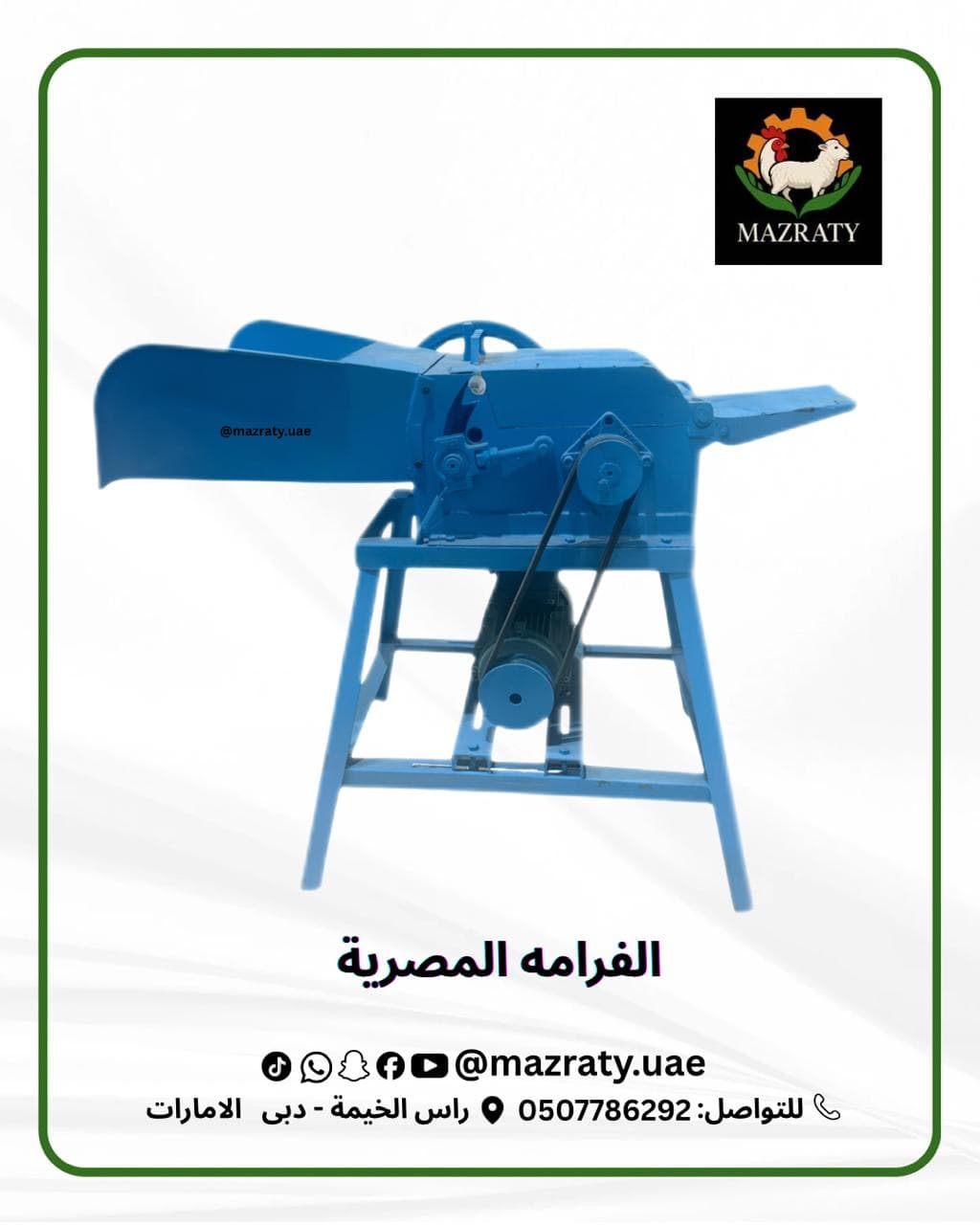
Rotary blade feed choppers are the most common type found on small and medium farms. They use sharp blades spinning at high speed to slice feed materials into small pieces. Blade choppers are valued for their simplicity, reasonable price, and easy maintenance. They handle fresh alfalfa, green grasses, and soft corn stalks effectively.
Hammer Mill Choppers
Hammer choppers use rotating metal arms that strike materials with considerable force to break them down. This type is more robust and durable than blade choppers and handles harder materials like dried corn stalks and tough crop residues. Hammer choppers suit farms that process coarse and varied materials regularly.
Kneading and Chopping Machines
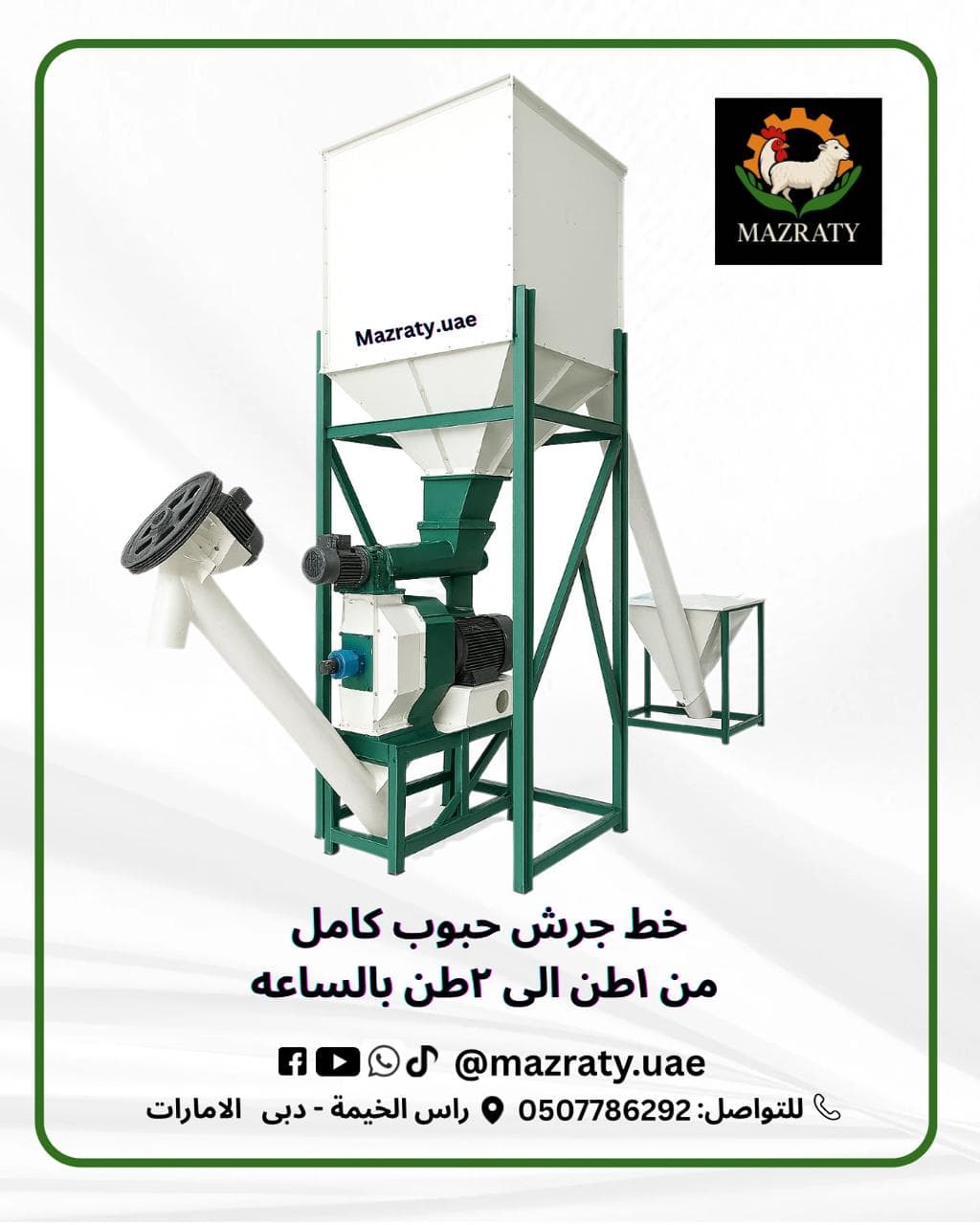
These advanced machines don't just chop — they also knead materials into a fine, homogeneous consistency. They're ideal for preparing silage or compound feed mixes that require thorough blending. Production capacity is higher, ranging from 1,000 kg per hour for smaller models to 10,000 kg per hour for industrial units.
Multi-Purpose Choppers
Some modern feed choppers are engineered to handle multiple material types — from fresh grasses to dry grains to crop residues. They come with interchangeable screens that control final cut size. This type is ideal for diversified farms raising different animal species with varying feed requirements.
Technical Specifications You Need to Understand Before Buying
Power Source
Feed choppers operate on four types of power sources:
- Electric: The most common choice for farms with reliable power supply. Clean, relatively quiet, and easy to operate. Power ratings typically range from 3 to 20 horsepower.
- Diesel: Suitable for remote farms without electricity or as backup during power outages. Generally more powerful than electric models but noisier and more maintenance-intensive.
- Gasoline: A portable, lightweight option that is less economical for continuous heavy use.
- PTO (Power Take-Off): Attaches to a tractor and draws power from its engine. Best suited for large farms that already own tractors.
Production Capacity
Feed chopper capacity varies widely by size and type. Small choppers produce 400 to 1,000 kg per hour and suit small farms. Medium choppers produce 1,000 to 3,000 kg per hour for medium operations. Large industrial choppers produce 3,000 to 10,000 kg per hour for commercial-scale production. Choose capacity based on your animal count and daily consumption, plus a buffer margin.
Cut Length Control
The ability to adjust cut length is a critical feature. Different animals need different cut sizes: cattle prefer 2-5 cm pieces, sheep and goats need 1-3 cm cuts, and poultry require very fine chopping. Quality choppers come with multiple interchangeable screens or adjustable settings to control output size precisely.
Core Components
Every quality feed chopper consists of: a feeding hopper for raw material input, a feed roller that draws materials toward the cutting mechanism, rotating blades or hammers for chopping, an outer casing with fixed knives welded to it, a screen that controls final cut size, and a sturdy base frame supporting the entire assembly. Understanding these components helps you evaluate build quality and maintenance accessibility.
UAE-Specific Considerations for Feed Chopper Use
Working with Local Feed Materials
UAE farms work with raw materials that differ from temperate regions. Imported alfalfa, Rhodes grass, local grasses, dates, and vegetable waste all present different textures and moisture levels. Choose a versatile feed chopper if you process varied materials, and verify that it handles the full range of feedstocks you plan to use.
Heat and Engine Performance
Operating a feed chopper in UAE summer heat increases engine temperature significantly. Ensure your chopper has adequate engine cooling, and avoid running it in direct sunlight when possible. Scheduling rest periods between extended sessions prevents overheating and extends engine life considerably.
Dust and Maintenance
The fine dust pervasive in the UAE environment infiltrates chopper components and accelerates wear. Clean the machine after every use, check the air filter regularly, and lubricate moving parts according to the manufacturer's recommended schedule.
How to Choose the Right Feed Chopper for Your Farm
Step One: Define Your Requirements
Ask yourself these questions: What materials will you be chopping? How many kilograms do you need processed daily? Do you have reliable electricity on your farm? What is your available budget? The answers will point you directly toward the right type and size.
Step Two: Compare Options
Don't buy the first chopper you see. Compare at least 3 to 4 options based on production capacity, build quality, spare parts availability, and the supplier's reputation in the UAE market.
Step Three: Request a Live Demonstration
A reputable supplier will let you see the chopper in action before purchasing. Request a hands-on demonstration using the same materials you'll process on your farm to confirm performance meets your expectations.
Step Four: Verify Warranty and Support
A feed chopper works hard and needs regular maintenance. Confirm that the supplier offers a written warranty, ready spare parts, and technical support you can count on when needed.
Routine Maintenance Schedule for Feed Choppers
Regular maintenance is the key to extending your chopper's lifespan and ensuring peak performance. Here is the recommended schedule:
- After every use: Clean residual material from the hopper, blades, and screen. Remove any stuck material.
- Weekly: Inspect blade condition and sharpen if necessary. Check that all bolts and fasteners are tight.
- Monthly: Lubricate bearings and moving parts. Inspect belts for wear and replace if showing deterioration.
- Every 3 months: Comprehensive engine and cooling system inspection. Replace filters as needed.
- Annually: Full overhaul including blade replacement and testing of all systems.
Common Mistakes When Using Feed Choppers
- Feeding excessively wet material: Soggy material sticks to blades and clogs screens. Partially dry materials before chopping.
- Overloading the hopper: Don't force large quantities in at once. Feed materials gradually to prevent jamming.
- Neglecting blade sharpening: Dull blades increase energy consumption and reduce chop quality. Sharpen regularly.
- Running without a screen: The screen isn't optional — it's what ensures consistent output size.
- Not inspecting materials before feeding: Stones, wires, and small metal pieces can destroy blades and cause serious damage to the machine.
Feed Choppers from Mazraty
At Mazraty showroom in Ras Al Khaimah, we stock a diverse range of feed choppers suited for every farm size — from compact household units to high-output industrial models. Every chopper we carry is carefully selected from trusted manufacturers and comes with a warranty and available spare parts. We also provide delivery, installation, and operator training throughout the UAE. Browse our feed chopper collection or contact us for personalized advice.
Reviewed planning sources
These references support operating and welfare principles. Final design and health programs remain site-, strain-, authority- and veterinarian-specific.
Frequently Asked Questions About Feed Choppers
What is the difference between a feed chopper and a grain crusher?
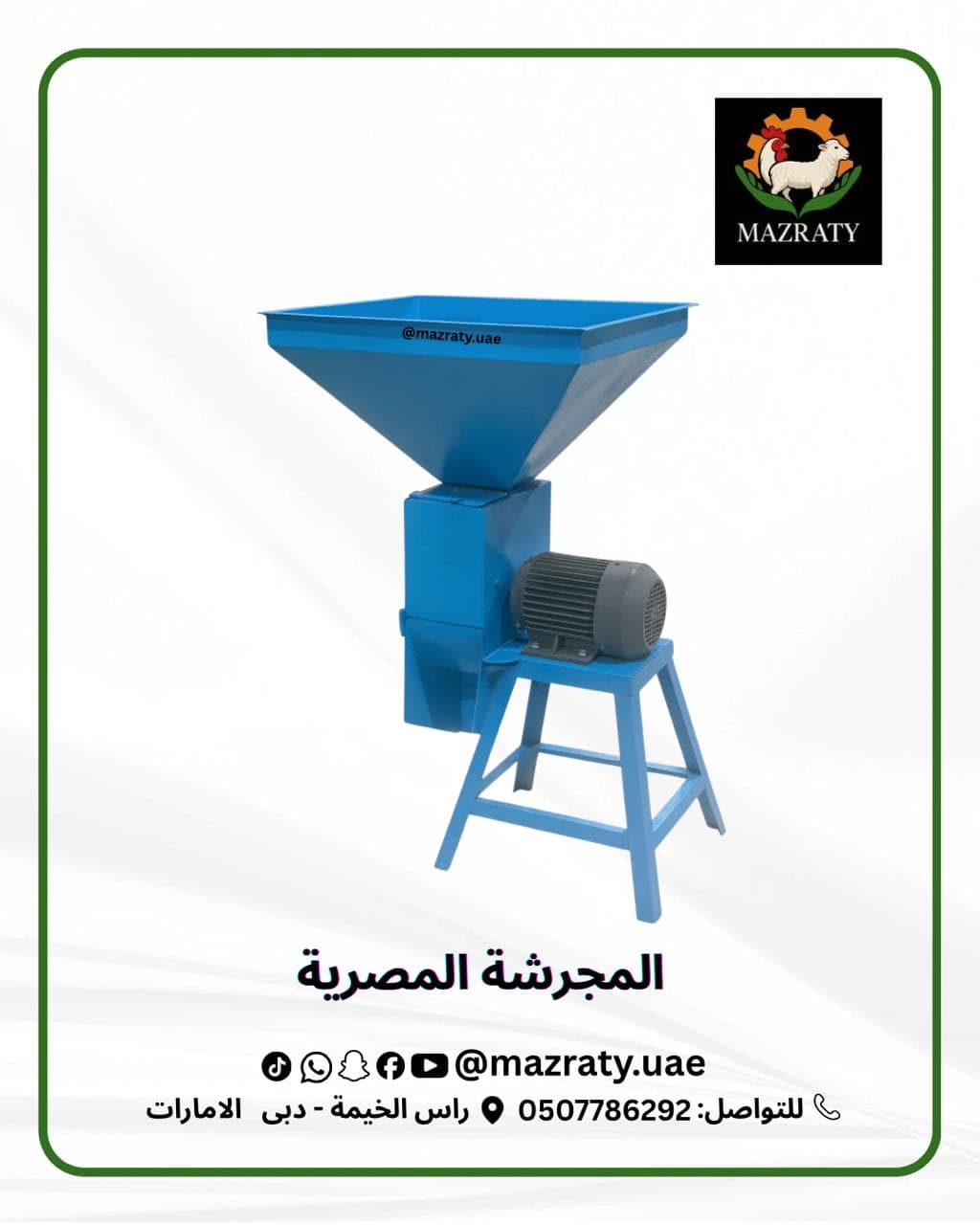
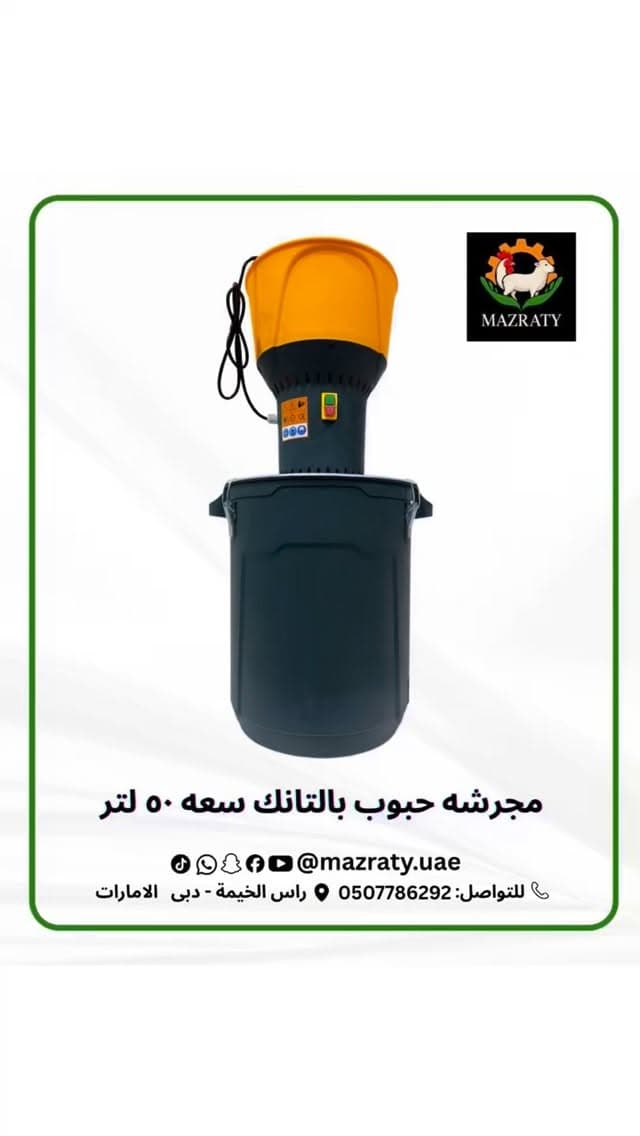
A feed chopper specializes in cutting long, fibrous materials like alfalfa and grasses into small pieces. A grain crusher specializes in grinding dry grains like corn, wheat, and barley into powder or fine particles. Some farms need both machines, and some modern models combine both functions in a single unit.
How much does a feed chopper cost in the UAE?
Prices vary considerably based on size and type. Small household choppers start at accessible price points, while high-output industrial models cost significantly more. Contact Mazraty for a customized quote based on your specific requirements.
Can a feed chopper process dates and vegetable waste?
Yes, certain multi-purpose choppers are designed to handle diverse materials including dates and vegetable waste. Make sure to select a versatile model with appropriate screens. Very wet materials like watermelon residue should be partially dried before processing to prevent clogging.
How often should chopper blades be replaced?
This depends on usage intensity and the type of material being processed. Generally, blades need sharpening every 50 to 100 operating hours and full replacement every 300 to 500 hours. Dry, hard materials wear blades faster than soft materials. Always keep a spare blade set on hand.