In the UAE's hot climate, cooling pads are not a luxury but a necessity. Learn how to select and install an effective cooling system that protects your animals and maintains productivity.
Why Cooling Pads Are the Most Important Investment on Any UAE Farm
Ask any successful farmer in the UAE about the most critical piece of equipment in their operation, and they probably won't mention cages, feeders, or even the animals themselves — they'll point to their cooling system. In a country where temperatures exceed 50 degrees Celsius during peak summer, cooling pads are not a comfortable addition but literally the difference between a thriving, productive farm and one suffering devastating losses.
Extreme heat kills poultry and rabbits directly, reduces egg production by up to 40 percent, slows animal growth, weakens immune systems, and increases disease susceptibility. Every one of these problems can be prevented with a well-planned investment in an effective cooling pad system sized appropriately for your farm.
How Does Evaporative Cooling Work?
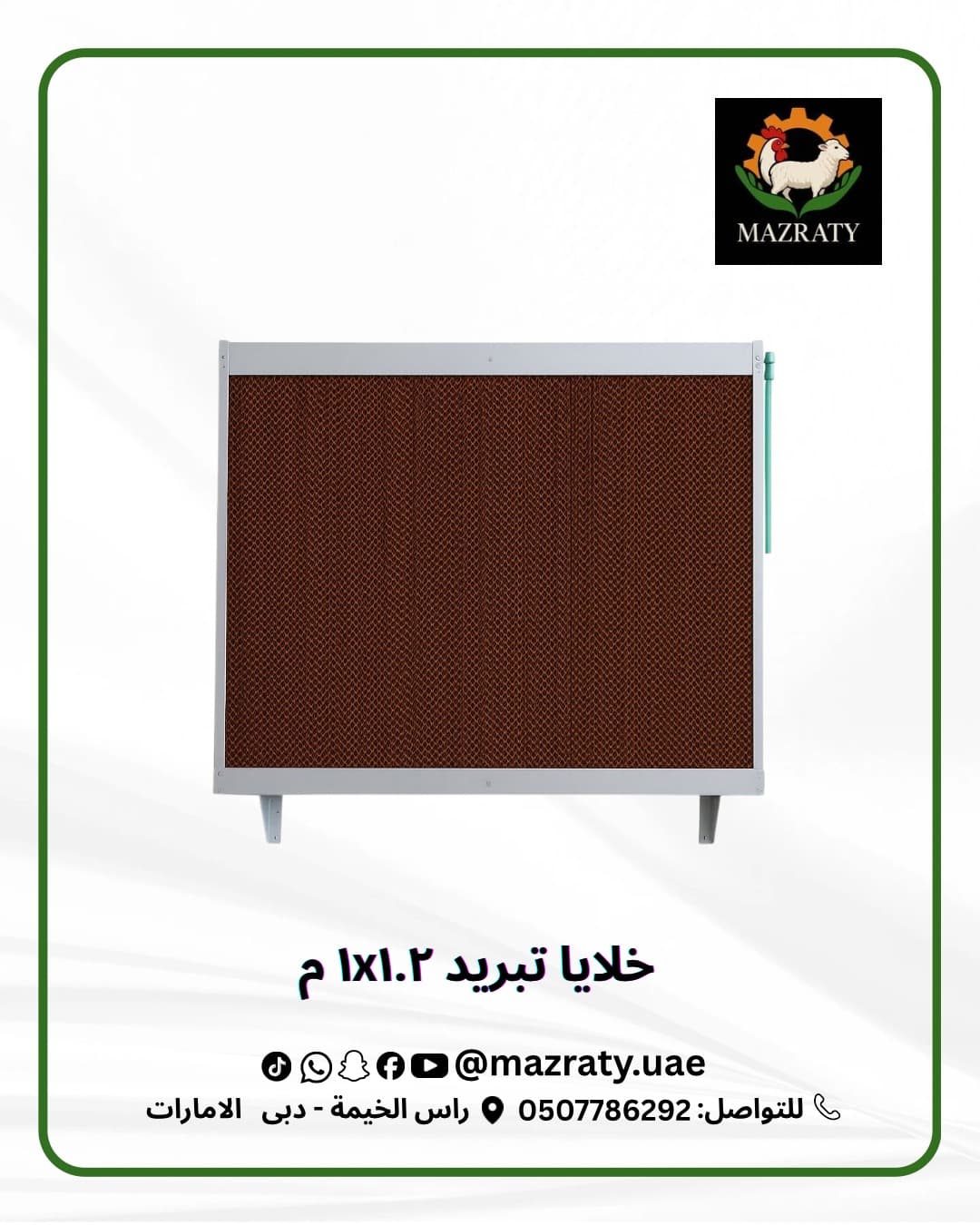
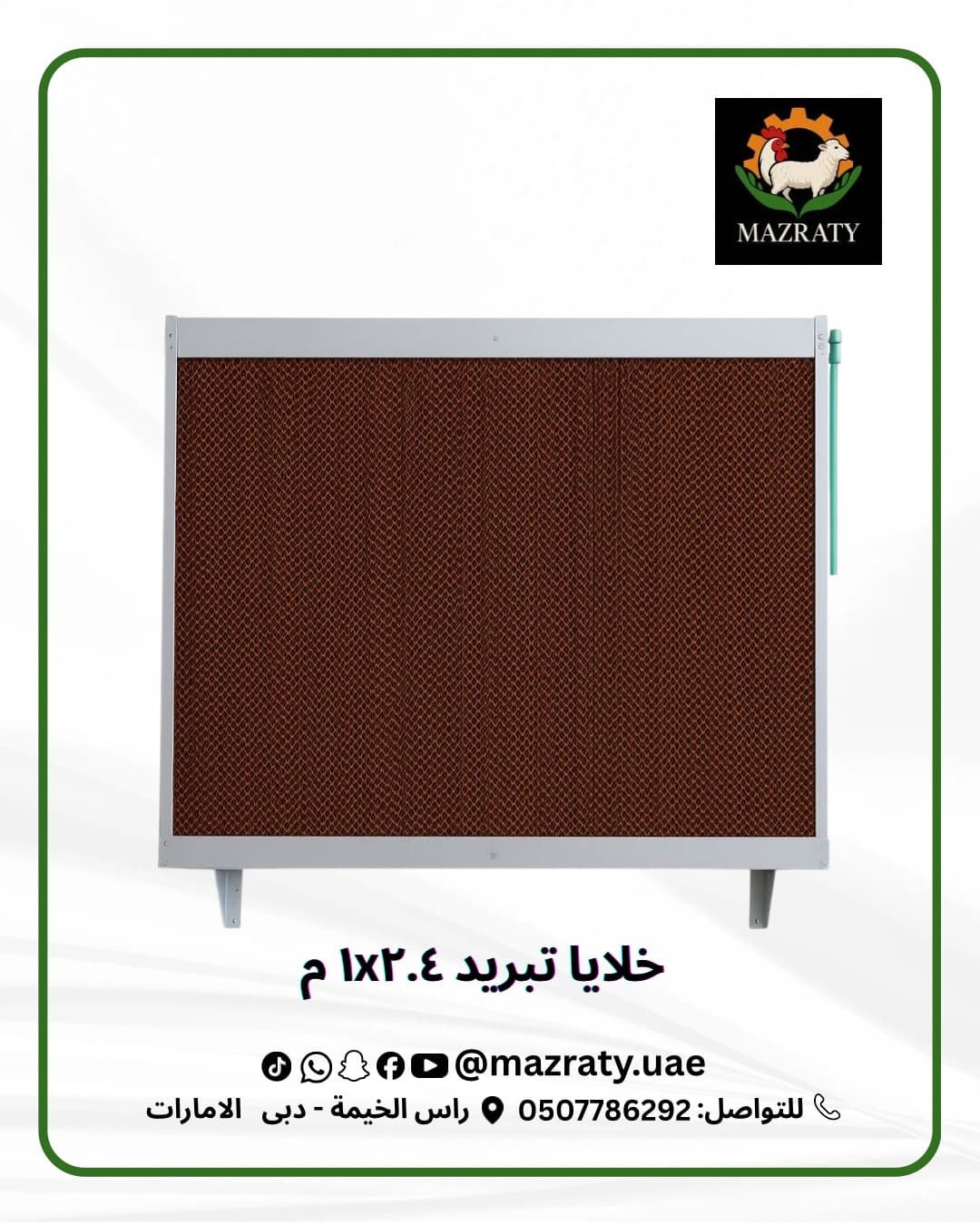
The operating principle behind cooling pads is simple but remarkably effective. Cooling pads are panels made from chemically treated cellulose paper arranged in a cross-fluted pattern that maximizes surface area. Water flows from the top of each panel through a distribution pipe and cascades across the entire pad surface. Large exhaust fans on the opposite wall draw hot outside air through the water-saturated pads. As hot air passes through the water, some water evaporates and absorbs heat energy from the air, so the air entering the farm arrives cooler and more humid.
The efficiency of this system is impressive — cooling effectiveness can reach 80 percent, meaning temperature reductions of 10 to 15 degrees Celsius under dry conditions. In the UAE's predominantly dry climate, this system operates at high efficiency while consuming 80 percent less energy than conventional air conditioning systems.
Types of Cooling Pads Available
Cellulose Cooling Pads
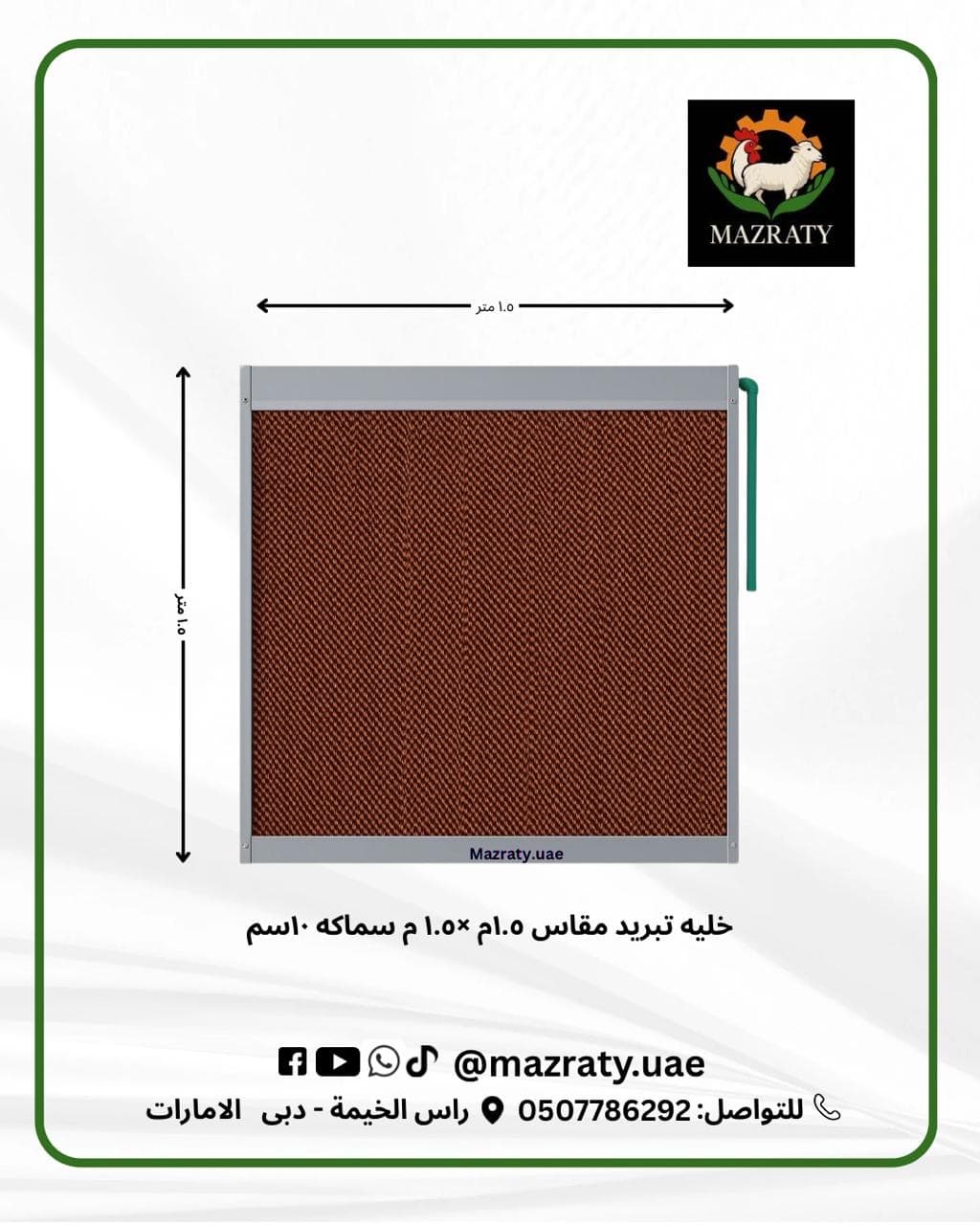
This is the most common and effective type for UAE farms. Cellulose cooling pads are made from specially engineered paper chemically treated to resist deterioration, bacteria, and mineral scaling. The cross-fluted design with unequal angles promotes optimal air-water mixing for maximum cooling. Standard thicknesses are 10cm and 15cm — thicker pads deliver more cooling but require greater air pressure from fans.
Plastic Cooling Pads
Plastic cooling pads are less common but offer a longer lifespan and higher resistance to water damage and mineral scaling. They're suitable for areas with highly saline or mineral-rich water. However, their cooling efficiency is typically slightly lower than cellulose.
Glass Fiber Cooling Pads
Used in specialized applications, glass fiber pads offer excellent corrosion resistance and long service life. More expensive than cellulose and plastic, but potentially more economical long-term in harsh environments.
Technical Specifications of Cooling Pads
Dimensions and Thickness
Cooling pads are available in heights of 150cm and 180cm (5 or 6 feet), with widths of one meter or more. The standard 10cm thickness suits most applications, while 15cm thickness provides deeper cooling for farms in the hottest areas. Pads can be cut to match specific wall opening dimensions.
Cooling Efficiency
Cooling efficiency depends on pad thickness, air velocity, and outdoor humidity. Under ideal conditions (low humidity), efficiency reaches 80 to 90 percent. On humid days, efficiency drops because moist air allows less evaporation. In the UAE, cooling pads work excellently most of the year and may need supplementation with AC during brief high-humidity periods.
Installation Frame
Cooling pads are mounted in corrosion-resistant aluminum or stainless steel frames. A quality frame ensures pad stability, prevents air leakage around edges, and lasts 10 years or more even under high-humidity conditions.
How to Calculate Your Cooling Pad Requirements
Calculating Required Air Volume
The basic rule: Required air volume (cubic meters per minute) = Farm volume (length x width x height) multiplied by air changes per minute. In summer, you need at least one complete air change every minute.
Calculating Cooling Pad Area
The required cooling pad area depends on the needed air volume and the ideal air velocity through the pads (1.5 to 2 meters per second). Pad area (square meters) = Air volume (cubic meters per second) divided by air velocity through pads (meters per second).
Calculating Fan Count
The number of fans depends on total required air volume divided by individual fan capacity. A 140cm farm exhaust fan moves approximately 40,000 to 50,000 cubic meters per hour. If you're unsure about calculations, contact our technical team at Mazraty to design a custom system for your farm.
Steps for Proper Cooling Pad Installation
- Select position: Install cooling pads on the farm wall facing prevailing winds, and designate the opposite wall for exhaust fans.
- Mount frames: Secure aluminum or stainless steel mounting frames into the wall openings.
- Seal openings: Ensure all other openings in the farm are sealed so air flows exclusively through the pads.
- Connect water system: Install a water system with pump and reservoir to ensure continuous, even flow across the entire pad surface.
- Install collection basin: Place a basin below the pads to collect and recirculate water.
- Install exhaust fans: Mount fans on the opposite wall and ensure pad area is balanced with fan count and power.
- Test and calibrate: Run the system and verify even water distribution and optimal air velocity through the pads.
Cooling Pad Maintenance
Regular maintenance is essential to keep cooling pads effective:
- Daily: Verify even water distribution across the entire pad surface.
- Weekly: Clean the water collection basin of sediment and algae. Inspect the pump and distribution pipes.
- Monthly: Flush pads with clean water to remove accumulated salts and mineral deposits.
- Seasonally: Before summer begins, inspect all pads thoroughly and replace damaged ones. Service exhaust fans.
- Annually: Comprehensive system performance evaluation and replacement of pads with reduced efficiency.
Cooling Pads from Mazraty
At Mazraty, we supply cooling pads in all types and sizes suited for UAE farms. From premium cellulose cooling pads to economical options for smaller projects. We also carry exhaust fans, pumps, and all cooling system accessories. Our technical team visits your site, designs the appropriate system, and handles installation and commissioning. Browse our cooling pads and exhaust fans.
Reviewed planning sources
These references support operating and welfare principles. Final design and health programs remain site-, strain-, authority- and veterinarian-specific.
Frequently Asked Questions About Cooling Pads
How long do cellulose cooling pads last?
High-quality cellulose cooling pads last 3 to 5 years with proper maintenance, and may reach 7 years under ideal conditions. Their lifespan depends heavily on water quality — highly saline or mineral-rich water shortens it significantly.
Can cooling pads work in humid coastal areas of the UAE?
Yes, but their efficiency drops on very humid days. In coastal areas like Dubai and Abu Dhabi, some farmers use a hybrid system relying on cooling pads most of the year and supplementing with AC during peak humidity periods.
How much does a complete cooling pad system cost for a medium farm?
Cost depends on farm size, pad type, and fan specifications. Contact Mazraty for a site visit and customized quote including supply, installation, and commissioning.
What is the price difference per meter between cooling pad types?
Cellulose cooling pads are the most affordable and effective for most applications. Plastic pads cost slightly more but last longer. Glass fiber pads are the most expensive but longest-lasting. The right choice depends on your budget and local water quality.