In the UAE summer, an uninsulated poultry house is a thermal disaster. Steel roofs reach 70–80°C by midday, radiating heat downward and pushing internal temperatures well above the 32°C threshold where broiler mortality and feed conversion collapse. Insulation is the single highest-return capital investment available to UAE poultry producers: independent field measurements across Ras Al Khaimah and Al Ain farms show that proper roof insulation alone reduces internal building temperature by 8–12°C, cuts evaporative cooler runtime by 35–45%, and drops electricity bills by AED 18,000–45,000 per year on a standard 1,500 m² house. Every AED spent on quality roof insulation saves AED 3–5 in cooling costs over the insulation's lifetime. This comprehensive guide covers the four main insulation material types — PUF sandwich panels, rockwool batts, reflective foil barriers, and rigid polystyrene boards — alongside cool roof coatings, wall and floor insulation strategies, vapor barrier placement, thermal bridging prevention, and full ROI calculations. All materials and professional installation services are available through Mazraty. WhatsApp +971 50 535 3412.
The UAE summer is unforgiving. From May through September, ambient air temperatures in Ras Al Khaimah regularly hit 43–47°C by early afternoon, and solar irradiance on a horizontal surface peaks at over 950 W/m². For a poultry farm with a bare steel roof, these numbers translate directly into catastrophic internal conditions: uninsulated steel roofs reach surface temperatures of 70–80°C by 1 PM, and the radiant heat pouring downward into the house can raise internal air temperatures to 38–42°C — a range that causes severe heat stress, depresses feed intake by up to 30%, and pushes daily mortality rates above 1% per day in broilers.
Insulation breaks this chain. Properly installed roof insulation on a UAE poultry house achieves an 8–12°C reduction in internal temperature, reduces evaporative cooling energy consumption by 35–45%, and extends the life of your cooling equipment by 3–5 years by lowering operating hours. The economics are straightforward: every AED 1 invested in quality roof insulation returns AED 3–5 in saved cooling costs over a ten-year period.
This guide covers every practical insulation option available in the UAE market today, with real cost figures, heat load calculations, installation guidance, and a full return-on-investment analysis. All materials and professional installation are handled by Mazraty — WhatsApp +971 50 535 3412.
1. Heat Transfer Fundamentals for Farm Buildings
Heat enters a poultry house through three physical mechanisms. Understanding all three is essential to selecting the right insulation strategy.
Conduction
Conduction is heat moving through a solid material. Steel — the dominant roofing material in UAE farm construction — is an excellent conductor, with a thermal conductivity of 50 W/m·K. When the outer surface of an uninsulated steel roof panel reaches 75°C and the inside is 35°C, heat flows through the steel almost instantaneously. A 0.5 mm steel sheet has essentially zero thermal resistance (R-value ≈ 0.00001 m²·K/W). By contrast, 100 mm of polyurethane foam has an R-value of 6–8 m²·K/W — six thousand times more resistance per unit area.
Convection
Convection is heat carried by moving air. Hot air rising from the roof surface creates convective currents inside the house that mix the superheated boundary layer near the ceiling with the birds' breathing zone. Ceiling insulation eliminates the hot surface and reduces the ceiling-to-floor temperature gradient, which in a well-insulated house stays within 2–3°C rather than the 8–12°C gradient seen in bare steel buildings.
Radiation
Radiation is the dominant heat load in UAE farm buildings and is the most misunderstood. A steel roof at 75°C emits infrared radiation at approximately 2,400 W/m² toward the flock below — the Stefan-Boltzmann law is pitiless. Industry measurements show that radiant heat from the roof accounts for 40–60% of the total heat load inside UAE poultry houses during peak summer hours. This is why radiant barriers — even thin reflective foil — can produce dramatic temperature reductions, and why roof insulation yields far more benefit per AED than wall or floor insulation.
2. Roof Insulation Options: Detailed Comparison
Five main roofing insulation systems are available in the UAE market. The table below summarizes key parameters, followed by detailed analysis of each.
| Material |
R-value per 100mm (m²·K/W) |
Approx. UAE price (AED/m²) |
Moisture resistance |
Best use case |
| PUF Sandwich Panel (100mm) |
6.0–8.0 |
40–55 |
Excellent |
New builds, complete roof replacement |
| Rockwool/Glass Wool Batts (100mm) |
2.5–3.5 |
12–20 |
Poor (must be faced) |
Low-budget new builds, retrofit with liner |
| Reflective Foil (single layer + air gap) |
Equivalent 1.5–2.0 |
4–8 |
Excellent |
Secondary barrier, retrofit under metal roof |
| Rigid XPS Board (50mm) |
1.75–2.5 (at 50mm) |
18–28 |
Excellent |
Retrofit: glued to underside of existing roof |
| Cool Roof Elastomeric Coating |
N/A (reduces surface temp) |
6–12 per m² |
Excellent |
Lowest-cost retrofit, combined with other methods |
Polyurethane Foam (PUF) Sandwich Panels
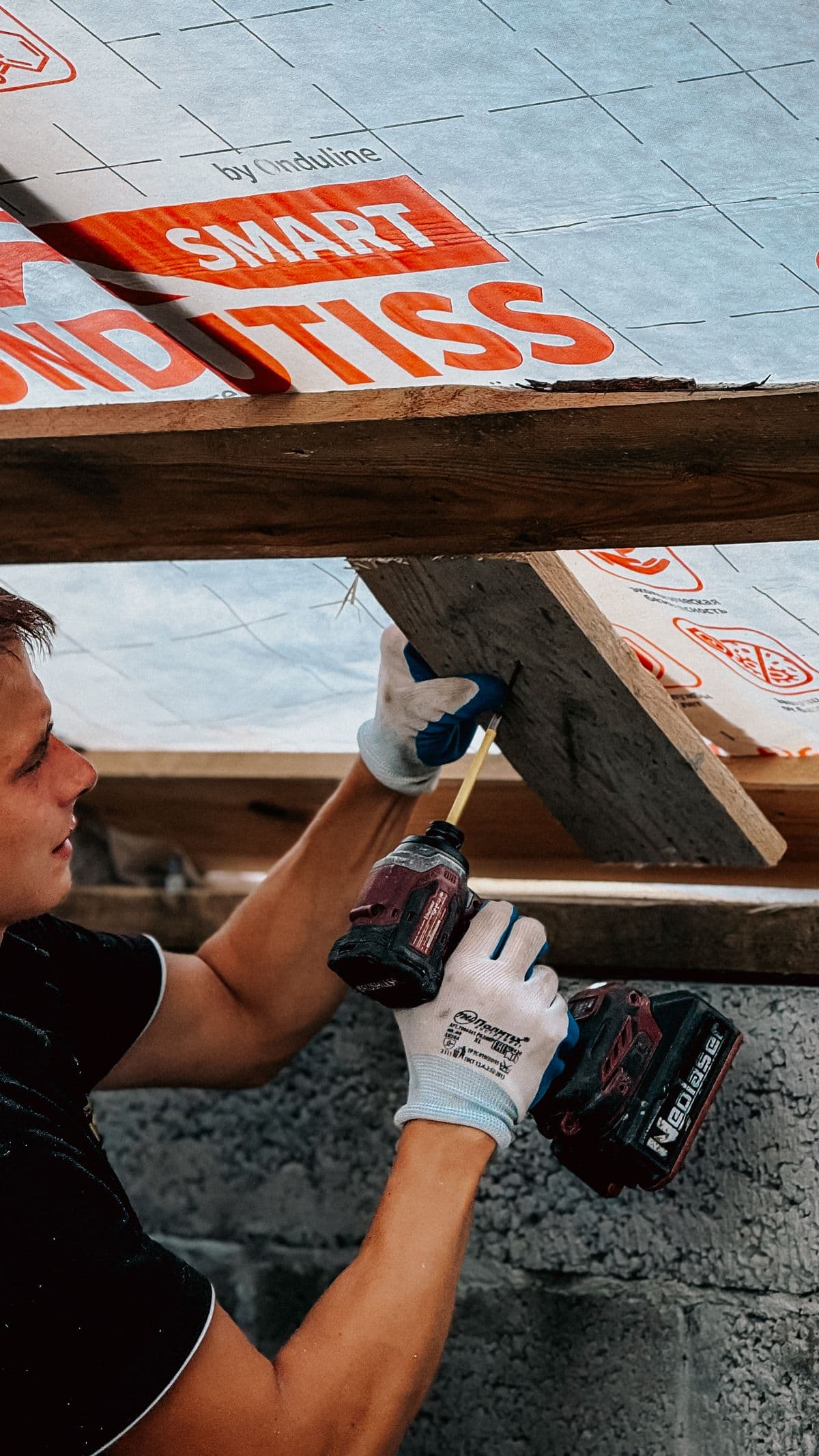
PUF sandwich panels consist of two steel skins with an injected polyurethane foam core. They are factory-manufactured under controlled conditions, which means the foam density and bond quality are consistent — a critical advantage over site-applied foam in the UAE's humid summer conditions.
- Thermal performance: R-value of 6–8 per 100mm of core thickness. A standard 100mm panel provides more than three times the insulation of 100mm rockwool at a fraction of the moisture risk.
- Installation speed: A crew of four can install 500–700 m² of PUF roofing per day on a prepared structure. For a 1,500 m² house, the roof is typically complete in 3–4 days.
- Structural role: PUF panels are structural, replacing the separate purlin-and-sheet approach. This simplifies the build and eliminates many thermal bridge points.
- Cost: AED 40–55 per m² supply and install in Ras Al Khaimah. Most expensive upfront but delivers the best return on investment over a 10–15 year lifecycle.
- Limitation: Higher initial capital cost; not suitable for partial retrofit over an existing steel sheet roof without structural modification.
Rockwool and Glass Wool Batts
Mineral wool products (rockwool, glass wool) are manufactured by melting basalt rock or recycled glass and spinning the melt into fibers. They are inert, non-combustible, and relatively cheap.
- Thermal performance: R-value 2.5–3.5 per 100mm. Acceptable but substantially lower than PUF for the same thickness.
- Cost: AED 12–20 per m² for 100mm batts, making them the most affordable mass-insulation option.
- Critical limitation in poultry buildings: Mineral wool absorbs moisture from condensation and bird respiration. Wet mineral wool loses 30–50% of its insulating value and becomes a habitat for mold and bacteria. In UAE poultry buildings, rockwool must always be installed between a vapor barrier on the warm side and a rigid liner board on the cold side. Without this protection, it will fail within 2–3 seasons.
- Bird safety: Exposed rockwool fibers cause respiratory irritation in birds. The material must be fully enclosed — never left bare inside the house.
Reflective Foil Radiant Barrier
Radiant barriers are thin sheets of aluminum foil — either standalone or laminated to a substrate like kraft paper or bubble wrap. They work by reflecting infrared radiation rather than absorbing and slowing its conduction.
- Mechanism: A polished aluminum surface reflects 95–97% of incident infrared radiation. When installed beneath a steel roof with a minimum 25mm air gap between the foil and the roof, the barrier can reduce radiant heat transmission by up to 90%.
- Critical requirement: The air gap is non-negotiable. A reflective foil in direct contact with a surface provides no benefit — it must face an air space to function.
- Cost: AED 4–8 per m² for double-sided foil with bubble core. This makes it the lowest-cost insulation option per m², and it is highly suited to UAE conditions because it targets the dominant radiant heat load.
- Best application: As a secondary layer installed on the underside of an existing steel roof. Combined with a 50mm XPS board below it, you can achieve a retrofit system for AED 22–35 per m² that approaches PUF panel performance.
- Limitation: Provides minimal resistance to conductive heat transfer. In extreme UAE summer conditions, reflective foil alone is insufficient — it should be combined with a mass insulation layer.
Rigid Polystyrene Boards (EPS and XPS)
Expanded polystyrene (EPS) and extruded polystyrene (XPS) boards are rigid foam panels that are lightweight, easy to cut, and highly moisture-resistant. XPS has a closed-cell structure and significantly outperforms EPS in humid conditions.
- Thermal performance: XPS: R-value 3.5–5 per 100mm; EPS: 3.5–4 per 100mm.
- Moisture resistance: XPS absorbs less than 0.3% moisture by volume — essential in a poultry house environment where relative humidity regularly exceeds 70%.
- Retrofit suitability: Boards can be cut on-site with a hot wire or hand saw and bonded directly to the underside of an existing steel roof using polyurethane adhesive. A 50mm XPS board adds R-value ≈ 2.0 and costs AED 18–28 per m² installed.
- Fire resistance: Standard EPS/XPS is combustible — in poultry buildings, use graphite-enhanced EPS (grey EPS) or FR-rated XPS with a fire-retardant coating or covered by a gypsum liner board.
Cool Roof Elastomeric Coatings
Cool roof coatings are thick, flexible, white or light-colored elastomeric paints applied directly to the outer surface of the metal roof. They work by dramatically increasing solar reflectance (from the 5–10% of bare Galvalume steel to 80–85%) and increasing thermal emittance.
- Temperature reduction: A cool roof coating on a UAE farm roof reduces outer surface temperature from approximately 75°C to 40–45°C at solar noon. This 30–35°C reduction in surface temperature cuts the conductive and radiant heat load by approximately 65%.
- Cost: AED 6–12 per m² for professional application of two coats. At this price, cool roof coating is the lowest-cost retrofit option available and can be applied to an occupied house in 1–2 days without disrupting the flock.
- Limitation: It is a surface treatment, not a thermal mass or resistive insulation. It reduces the heat entering the roof but does not stop conduction through the steel once the roof heats up. For best results, combine with a reflective foil underlay or XPS board layer.
- Durability: Quality elastomeric coatings carry 10-year warranties and withstand UAE UV exposure and thermal cycling well.
3. Calculating Heat Load Reduction: Before and After for a 15×100m House
Consider a standard UAE broiler house: 15m wide × 100m long = 1,500 m² floor area, housing 25,000 broilers at 20 kg/m² stocking density. Roof area (with typical 15° pitch): approximately 1,560 m².
Before Insulation (bare 0.5mm Galvalume steel roof)
- Outer roof surface temperature at 1 PM: 76°C
- Thermal resistance of bare steel: R = 0.00001 m²·K/W (negligible)
- Radiant heat flux into house: ~2,200 W/m²
- Total radiant heat load from roof: 1,560 m² × 2,200 W/m² = 3,432 kW
- Internal air temperature (with evaporative coolers running): 38–40°C
- Evaporative cooler electricity consumption: ~180 kWh per day
After PUF Sandwich Panel Insulation (100mm, R = 7)
- Outer roof surface temperature: 76°C (unchanged — determined by solar load)
- Heat flux through insulated panel: (76 − 30) / 7 = 6.6 W/m²
- Total conducted heat load from roof: 1,560 × 6.6 = 10.3 kW (reduction of 99.7%)
- Internal air temperature (with same coolers): 27–30°C
- Temperature reduction achieved: 9–12°C
- Evaporative cooler electricity consumption: ~105 kWh per day (41% reduction)
- Electricity saving per day: 75 kWh × AED 0.38/kWh = AED 28.5/day
- Annual electricity saving (180 peak days): AED 5,130 from electricity alone, plus dramatically improved FCR and reduced mortality.
For a 3,000 m² house (30×100m, 50,000 birds), multiply these figures by approximately 2: annual electricity savings of AED 10,000–18,000, plus production gains from improved FCR that typically represent an additional AED 15,000–30,000 per year in improved margin.
4. Wall Insulation: South and West Faces Are Priority
While the roof contributes 40–60% of total heat load, walls — particularly the south-facing and west-facing walls — contribute a significant additional load, especially in late afternoon when the sun angle is low and solar gain on vertical surfaces peaks.
Cavity Wall with EPS Fill
For new builds or major renovations, constructing cavity block walls with the 50mm cavity filled with EPS board reduces wall U-value from 3.5 W/m²·K (single hollow block) to approximately 0.6 W/m²·K — an 83% improvement. Cost premium over a single-skin wall: approximately AED 35–50 per m².
Reflective Foil on Existing Walls
For existing concrete block walls, fixing reflective foil with a 25mm standoff on the interior surface of south and west walls reduces afternoon solar gain by 70–80%. This is an especially cost-effective retrofit for late-afternoon problem zones. Cost: AED 8–14 per m² installed.
Exterior Wall Color
A simple but measurable intervention: painting exterior walls white or light cream reduces wall surface temperature by 15–20°C on a sunny afternoon. For a 15×100m house with 3m walls, the south and west faces total approximately 360 m². Exterior masonry paint costs AED 3–5 per m² — a total of AED 1,080–1,800 for a meaningful reduction in afternoon heat load with zero disruption to the flock.
5. Floor Insulation: Critical for Brooder Areas
Floor insulation is often overlooked in UAE farm design, but it serves two important functions in brooder houses: it prevents ground cold from chilling day-old chicks during the winter and transition months, and it eliminates the condensation that forms when warm humid air contacts a cold concrete slab — a major litter quality and disease risk.
- Specification: 50mm XPS board laid on compacted hardcore, covered by a 150-micron damp-proof membrane, then 100mm reinforced concrete slab.
- Thermal benefit: Reduces floor surface temperature variance to within 2°C of ambient air temperature, eliminating condensation points.
- Cost: AED 25–35 per m² for XPS board supply and lay — applicable only to new builds or complete slab replacement.
- Retrofit option: In existing brooder areas, install 25mm XPS tiles under rubber mats in the first 10m of the house (the brooder zone). This is non-structural but provides local insulation exactly where day-old chicks need it most.
6. Ridge Ventilation vs. Sealed Insulated Roof: The Hybrid Approach
A common misconception in UAE farm design is that insulation and ventilation are alternatives. They are not — they work best together, and poorly managed insulation without ventilation creates serious moisture problems.
The Problem with a Fully Sealed Insulated Roof
A poultry house with 20,000 broilers at day 35 produces approximately 200–250 liters of water vapor per hour through respiration and litter evaporation. In a sealed insulated roof with inadequate ridge ventilation, this moisture rises, contacts the cold underside of the insulation, and condenses. Wet insulation loses effectiveness, promotes mold growth, and — in mineral wool — collapses structurally within two to three seasons.
The Hybrid Approach
- Install full roof insulation (PUF panels or XPS + foil combination).
- Maintain a continuous ridge vent opening of 100–150mm per meter of ridge length. For a 100m house, this means 10–15 m² of continuous ridge ventilation.
- The ridge vent releases moisture-laden air before it reaches condensation point on the insulation surface.
- Install the vapor barrier on the warm side (interior face) of the insulation — not the cold side. This prevents warm humid air from penetrating the insulation body in the first place.
- Slope insulation slightly (even 1°) so any incidental condensate drains toward the wall rather than pooling mid-span.
7. Installation Guidelines: Vapor Barriers, Thermal Bridges, and Condensation Management
Vapor Barrier Placement
The vapor barrier must always be on the warm-in-winter side of the insulation — which in a UAE poultry house is the interior face (since the house is kept warm for the flock even in winter). Use 250-micron polyethylene sheeting or purpose-made foil-faced vapor retarder. All joints must be overlapped by 150mm and taped with vapor-barrier tape. Any puncture, hole, or untaped join becomes a moisture entry point.
Thermal Bridges at Purlins
Steel purlins in a roof structure are thermal bridges — they conduct heat directly from the hot outer roof skin through the insulation layer. In practice, a 150mm wide steel purlin at 1.5m spacing reduces the effective R-value of the roof assembly by 15–25% compared to the nominal insulation R-value. The solution is thermal break strips: 10–15mm thick polyamide or rigid EPS strips placed between the purlin flange and the steel roof sheet or PUF panel. These are inexpensive (AED 2–4 per linear meter) and reduce thermal bridge losses by 70–80%.
Penetrations and Sealing
Every fan sleeve, cable conduit, and lighting fixture that penetrates the insulated roof plane is a potential thermal bridge and moisture entry point. All penetrations must be:
- Fitted with pre-formed insulation collars (typically 50mm XPS cut to shape)
- Sealed with expanding foam or sealant tape at the air barrier plane
- Capped on the exterior with purpose-made weatherproof sleeves
8. UAE Procurement: Local Suppliers and Typical Pricing
The UAE market for agricultural and industrial insulation materials is mature, with multiple suppliers in Dubai, Sharjah, and Abu Dhabi stocking items for next-day delivery to Ras Al Khaimah farms. Typical current market pricing (2024–2025):
| Material |
Specification |
Supply-only AED/m² |
Supply + Install AED/m² |
| PUF Sandwich Panel |
100mm, 0.5mm steel skins |
32–42 |
45–58 |
| Rockwool Batt (faced) |
100mm, foil-faced one side |
10–16 |
18–26 |
| Reflective Foil (double bubble) |
6mm bubble core, double foil |
3–6 |
7–12 |
| XPS Board |
50mm, 600×1200mm sheets |
14–20 |
20–28 |
| EPS Board (graphite) |
100mm, grey EPS |
16–22 |
24–32 |
| Cool Roof Coating |
Elastomeric, 2 coats |
4–8 |
8–14 |
Mazraty coordinates full procurement and installation across Ras Al Khaimah, Fujairah, and the Northern Emirates. Contact via WhatsApp +971 50 535 3412 for a site-specific quotation including material delivery and installation scheduling.
9. ROI Calculation: 3,000 m² PUF Panel Roof
The following analysis applies to a 30×100m broiler house (3,000 m² floor, ~3,120 m² roof) housing 50,000 birds, currently operating with a bare steel roof and six 1.5 kW evaporative cooling pads per side.
Investment
- PUF sandwich panel roofing (3,120 m² × AED 45/m²): AED 140,400
- Vapor barrier and ridge vent upgrade: AED 12,000
- Thermal break strips at purlins: AED 8,500
- Total investment: AED 160,900
Annual Savings
- Electricity reduction (40% of AED 28,000 annual cooling bill): AED 11,200/year
- Reduced mortality (0.3% per cycle reduction × 8 cycles × 50,000 birds × AED 18/bird): AED 21,600/year
- Improved FCR (0.05 FCR improvement × 50,000 birds × 2.5 kg × AED 1.80/kg feed saved): AED 11,250/year
- Extended cooler lifespan (deferred replacement of AED 45,000 cooler system by 3 years): AED 15,000/year equivalent
- Total annual benefit: AED 59,050/year
Payback Period
AED 160,900 ÷ AED 59,050 per year = 2.7 years simple payback. Net present value over 15-year panel life (at 5% discount rate): approximately AED 445,000 net benefit. Return on investment: 277%.
Even on the most conservative estimate — electricity savings alone — the payback period is under 14 years. Including production benefits, most UAE farms recover the full investment within 2–3 production years.
10. Retrofit vs. New Build: Priority Sequence for Existing Farms
If your farm currently has no insulation and you cannot afford a complete rebuild, follow this priority sequence to maximize return per AED spent:
- Cool roof coating on the exterior (immediate, lowest cost): AED 8–14/m². Apply two coats of white elastomeric coating to the existing roof. Achieves 60–65% of the radiant heat reduction of a full insulation system for 15–20% of the cost. Can be done in one week without disturbing the flock.
- Reflective foil barrier on the underside of the existing roof: AED 7–12/m². Install in the off-season (house empty between flocks). Requires 25mm standoff battens. Combined with the cool coating, this achieves approximately 75–80% of the benefit of a PUF panel roof.
- 50mm XPS boards bonded to inside of roof on the south half of the house: The south face receives the highest solar load. Insulating the south-facing roof panels first (typically 50% of total area) captures 70% of the total insulation benefit for 50% of the cost.
- Prioritize south and west wall reflective foil: Afternoon heat on west-facing walls is the second-biggest contributor after the roof. Install foil on interior face of west wall before east or north walls.
- Full PUF panel roof replacement: At the next scheduled major maintenance (every 12–15 years for most UAE farm roofs), replace the entire roof with PUF sandwich panels rather than bare steel sheets. The incremental cost versus a steel-only replacement is AED 20–35/m², and this is the point at which the system becomes financially optimal.
Contact Mazraty for Insulation Supply and Installation
Mazraty is the leading farm equipment and materials supplier in Ras Al Khaimah, UAE. We supply and install the full range of poultry farm insulation systems described in this guide: PUF sandwich panels, rockwool batts, reflective foil barriers, XPS and EPS rigid boards, and cool roof coatings. Our installation teams operate across Ras Al Khaimah, Fujairah, Umm Al Quwain, and Sharjah, with material delivery typically within 48 hours.
Whether you are planning a new house, retrofitting an existing facility, or looking for the single most cost-effective first intervention, our technical team will assess your specific site, calculate your heat load, and provide a written ROI analysis before you commit to any expenditure.
Contact Mazraty today — WhatsApp +971 50 535 3412 — and reduce your internal building temperature by 8–12°C before the next UAE summer.
Reviewed planning sources
These references support operating and welfare principles. Final design and health programs remain site-, strain-, authority- and veterinarian-specific.
Frequently Asked Questions
Which insulation is best for a poultry house?
It depends on roof and wall construction, fire and moisture performance, installation and maintenance, not thermal value alone.
How should insulation impact be measured?
Compare surface and indoor temperatures, ventilation load and energy use before and after under similar conditions.