An honest guide to camel shelter cooling in the UAE — when it is genuinely worth the cost (racing, dairy, calving) and when shade and airflow alone are enough. Contact Mazraty: +971505353412
Do Camel Shelters Actually Need Cooling Pads?
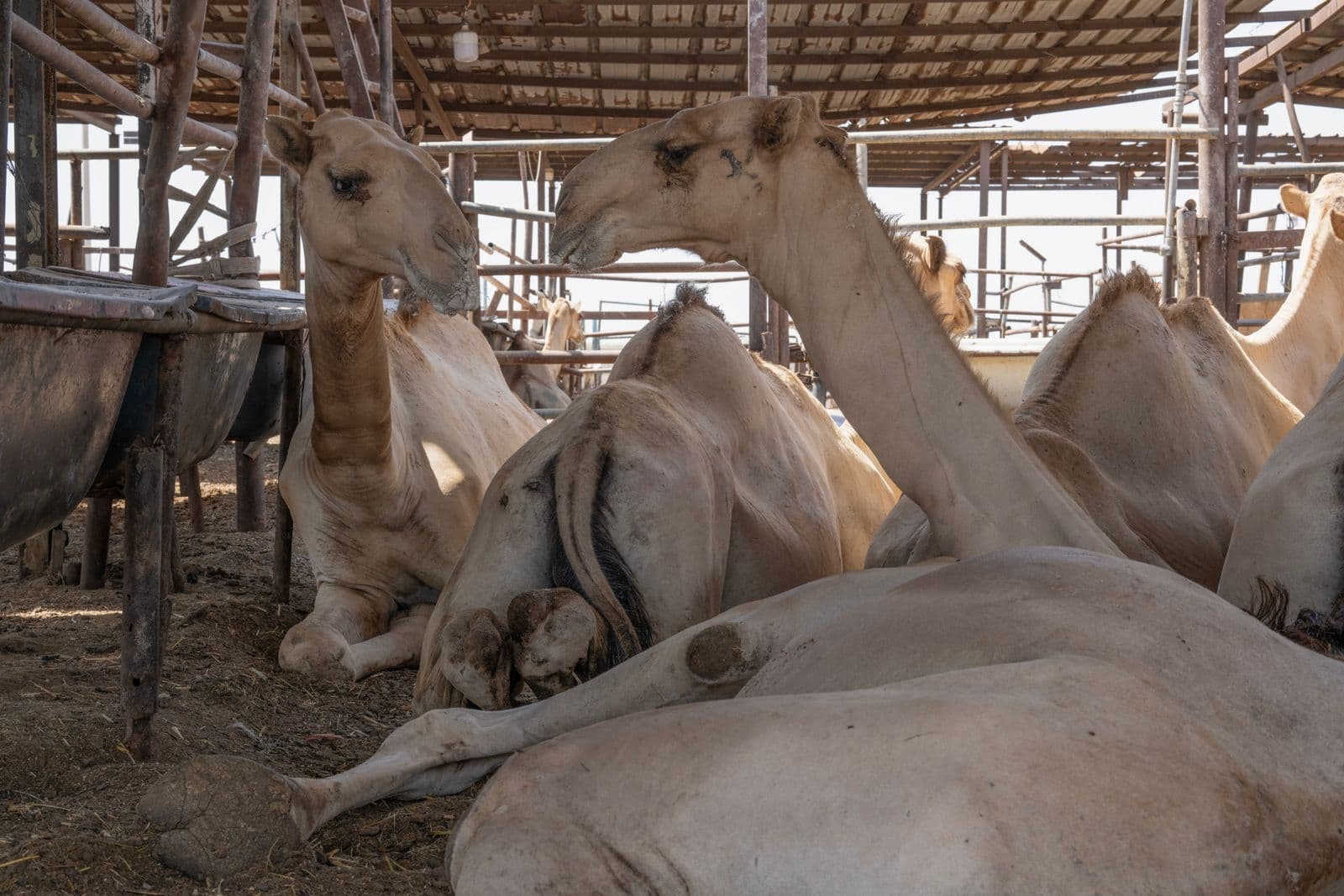
This is worth answering honestly before selling you anything: dromedary camels are among the most heat-adapted large mammals on earth. A healthy adult camel resting in a shaded, well-ventilated paddock does not need mechanical cooling to survive a UAE summer the way an imported dairy cow or a broiler house full of chickens does. Camels tolerate wide swings in core body temperature, sweat far less than cattle, and their coat and hump fat distribution are built for exactly this climate. If your only goal is keeping working or breeding camels alive through summer, shade structures and open airflow are usually sufficient, and Mazraty will tell you that plainly rather than sell you equipment you do not need.
That said, there are specific, real operations in the UAE where camel cooling infrastructure earns its cost: racing camel training and recovery stables, camel dairy operations aiming for consistent year-round milk yield, veterinary and quarantine facilities, and calving barns for young calves that are far less heat-tolerant than mature animals. This guide covers cooling pad and shade-barn systems for exactly those use cases, using the same cellulose cooling pad and exhaust fan equipment Mazraty supplies for poultry and livestock barns, sized and positioned appropriately for camels. For a site assessment, contact Mazraty on WhatsApp at +971 50 535 3412.
Where Camel Cooling Genuinely Pays Off
Racing Camel Recovery Stalls
UAE camel racing runs from October to April specifically because neither camels nor spectators do well in peak summer heat, but professional racing camels train and condition year-round, including through summer, using treadmills, swimming pools, and controlled exercise. After exertion, camels are moved to shaded recovery pens for monitoring. A cooled recovery stall — even a small one covering just the rest area rather than the whole stable — helps bring core temperature and respiration rate down faster after training sessions, which matters for a camel worth far more than the cost of the equipment.
Camel Dairy Operations
Commercial camel dairies producing milk year-round, following the model pioneered by large UAE operations, manage their animals more like a dairy herd than free-ranging camels — higher stocking density, controlled feeding schedules, and a milking routine that benefits from a calm, temperature-stable barn environment. While camels tolerate heat better than cattle, milk let-down and daily yield in an intensive dairy setting still respond positively to a cooler, calmer barn during the hottest hours.
Calving Barns and Young Calves
Camel calves, like most young mammals, have far less thermoregulatory capacity than adults. A shaded, ventilated, and where needed actively cooled calving and nursery area reduces heat stress risk during the vulnerable first weeks, particularly for calves born in the hotter months.
How the System Works
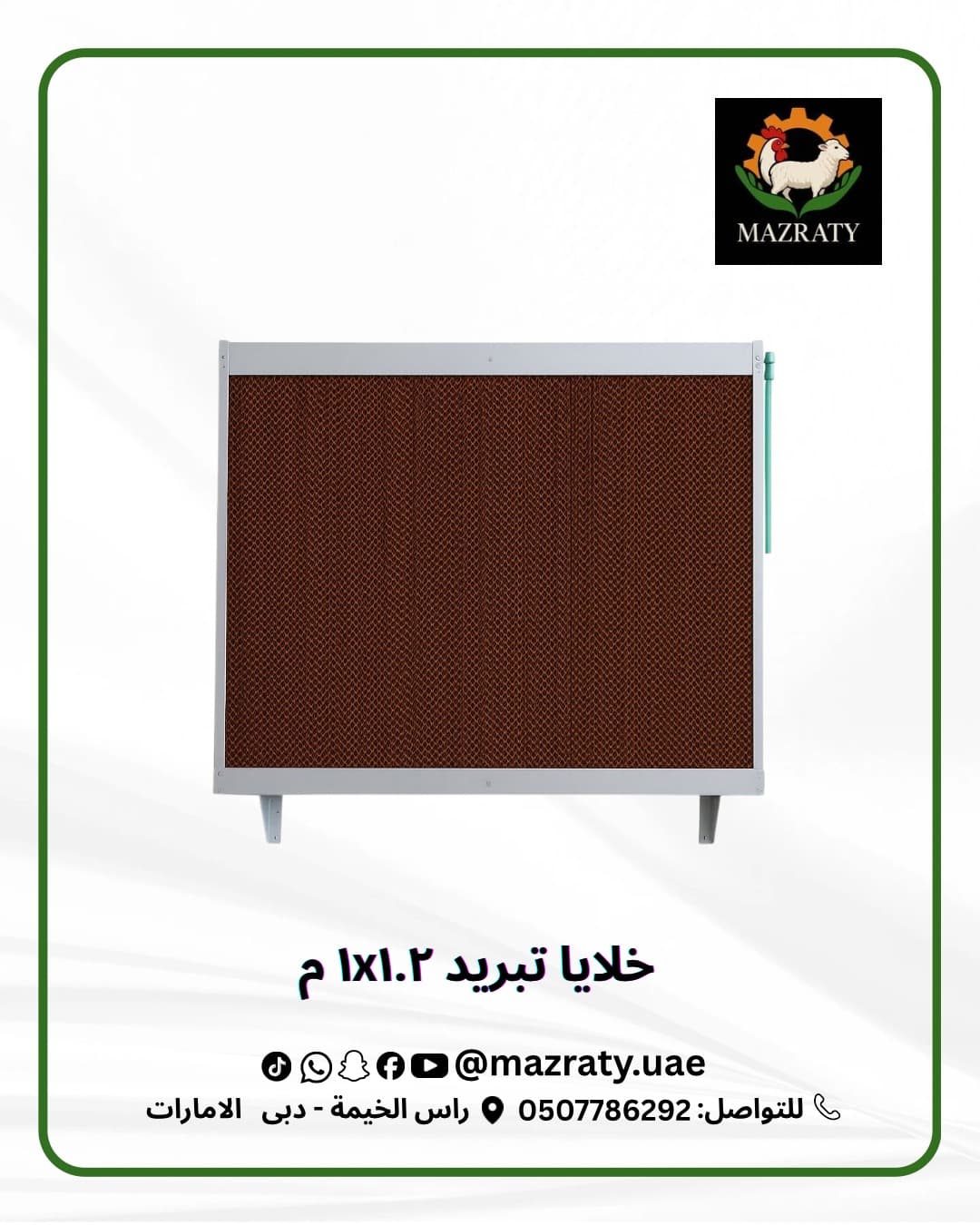
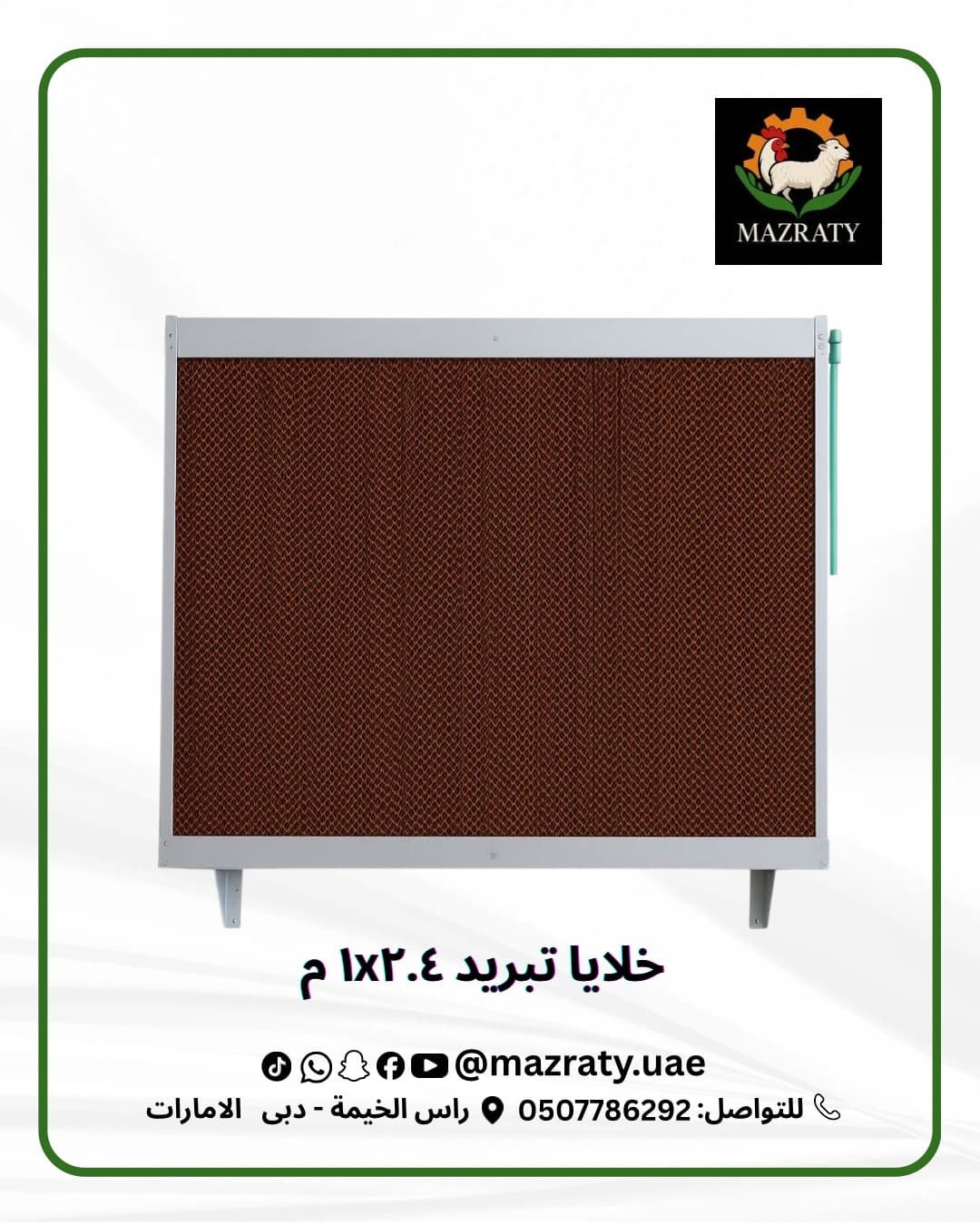
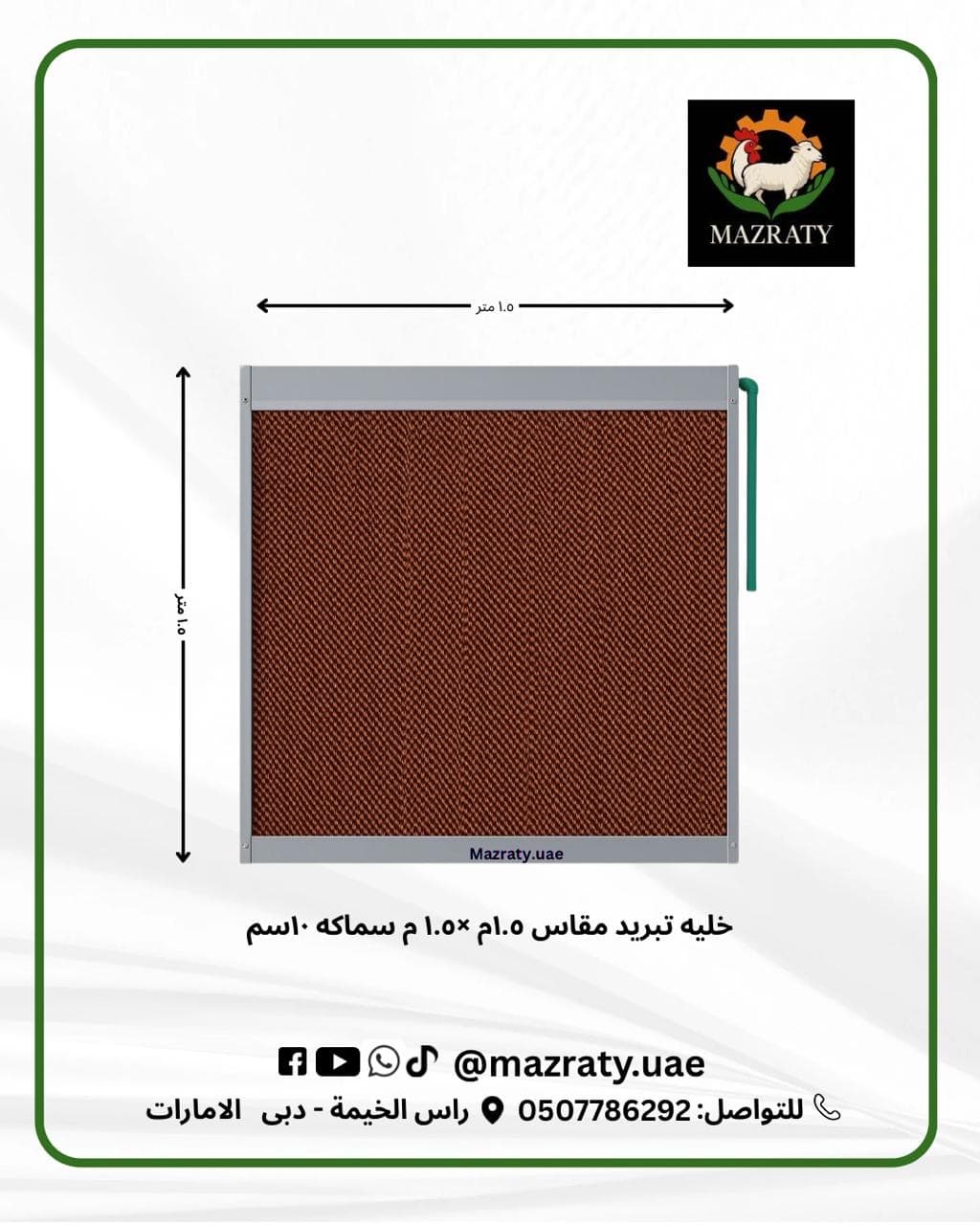
The equipment is the same evaporative cooling technology used in poultry and livestock barns: cellulose pads mounted in an aluminium frame on one side of the shelter, with exhaust fans on the opposite side pulling outside air through the water-saturated pads. As the air passes through, evaporation absorbs heat, delivering air that is typically 6 to 10°C cooler than ambient. For camel applications, this is almost always installed as a partial enclosure — cooling just the recovery stall, milking parlour, or calving pen — rather than converting an entire open paddock into an enclosed structure, since camels generally prefer and do better with open-sided shelters and free airflow outside these specific zones.
Sizing for Camel Body Mass
An adult dromedary weighs 400 to 600 kilograms, considerably more than a dairy cow, and while there is less published engineering data specifically for camel barn ventilation than for cattle, sizing is reasonably estimated by scaling cattle per-head airflow figures upward in proportion to body mass and metabolic rate — in practice, this typically works out to roughly 35 to 55 cubic metres per minute of fresh air per animal in a cooled recovery or dairy stall, with air velocity across the resting area in the 1.5 to 2.5 metres per second range. Because these installations usually cover a partial zone housing a handful of animals at a time (a recovery stall, a milking stand area, or a calving pen) rather than a full herd barn, actual system size is often modest — a small pad wall of 8 to 15 square metres with 1 to 2 exhaust fans is typical for a stall covering 4 to 8 camels.
Cooling Paper Thickness: 10cm vs 15cm
Mazraty supplies cooling paper in 10cm and 15cm thickness, cut to 60cm x 200cm sheets and framed to your shelter's exact opening dimensions. For the smaller, partial-enclosure installations typical of camel stalls, 10cm thickness is usually sufficient and keeps fan pressure requirements modest. The 15cm option suits larger dairy parlour installations or facilities in the hottest inland areas where maximum cooling effect matters more than installation cost.
Installation Considerations for Open-Sided Shelters
- Define the cooled zone: Identify exactly which area needs active cooling — a recovery stall, milking stand, or calving pen — rather than attempting to cool an entire open paddock.
- Partial cladding: Close in just enough of the structure to create a functional airflow path between the pad wall and the fan wall, leaving the rest of the shelter open as camels prefer.
- Pad wall and water system: Mount pads in an aluminium frame with a header pipe distributing water evenly across the top, feeding from a small pump and reservoir sized for the limited zone.
- Fan placement: Position 1 to 2 exhaust fans on the opposite side, sized to the calculated airflow for the number of animals using the zone at one time.
- Commissioning: Test for 24 to 48 hours before use, confirming an even temperature drop across the resting area with a handheld thermometer.
Maintenance Schedule
- Daily: Check water flow across the pad and confirm fans are running during operating hours.
- Weekly: Clean the collection sump and check for dust accumulation, common near open desert paddocks.
- Monthly: Flush pads with clean water against mineral scale from the UAE's hard groundwater.
- Seasonally: Inspect pad condition before the racing or calving season begins, replacing any degraded sections.
Cost Estimates in AED
A partial-enclosure cooling system for a camel recovery stall or small milking area, covering 4 to 8 animals with a pad wall of roughly 10 square metres and 1 to 2 exhaust fans, typically costs AED 8,000 to AED 15,000 for materials, with installation quoted separately. Larger camel dairy parlour installations scale up from there depending on stall count. Contact Mazraty for a free site visit and an itemised quotation matched to your specific facility.
Reviewed planning sources
These references support operating and welfare principles. Final design and health programs remain site-, strain-, authority- and veterinarian-specific.
Frequently Asked Questions
Do all camels need cooling shelters in the UAE summer?
No. Healthy adult camels in open, shaded paddocks with good airflow generally do not require mechanical cooling. Cooling systems make the most sense for racing recovery stalls, dairy operations, calving areas, and veterinary facilities where performance, production, or vulnerable young animals are involved.
What's different about camel cooling versus cattle or poultry cooling?
The underlying pad-and-fan technology is identical, but camel installations are almost always smaller, partial-enclosure systems covering a specific functional zone rather than a full barn, sized upward from cattle per-head figures to account for camels' larger body mass.
Can this be added to an existing open shelter?
Yes — most camel shelters in the UAE are open-sided, and Mazraty designs partial cladding for just the pad and fan walls around the specific zone that needs cooling, without enclosing the whole structure.
Does cooling actually improve racing performance or milk yield?
Faster recovery after exertion and a calmer, more stable barn environment during milking are the practical benefits reported by operations using these systems, though camel-specific published data is more limited than the extensive cattle research available.
Why Mazraty for Your Camel Facility
Mazraty, based in Ras Al Khaimah with more than 20 years supplying UAE farms, applies the same proven cooling pad and exhaust fan technology used across poultry and livestock barns to camel racing stables, dairies, and calving facilities — sized honestly for what your specific operation actually needs. We visit your site, recommend the right scope, and handle supply and installation across all seven emirates. Contact Mazraty on WhatsApp at +971 50 535 3412 for a free consultation.