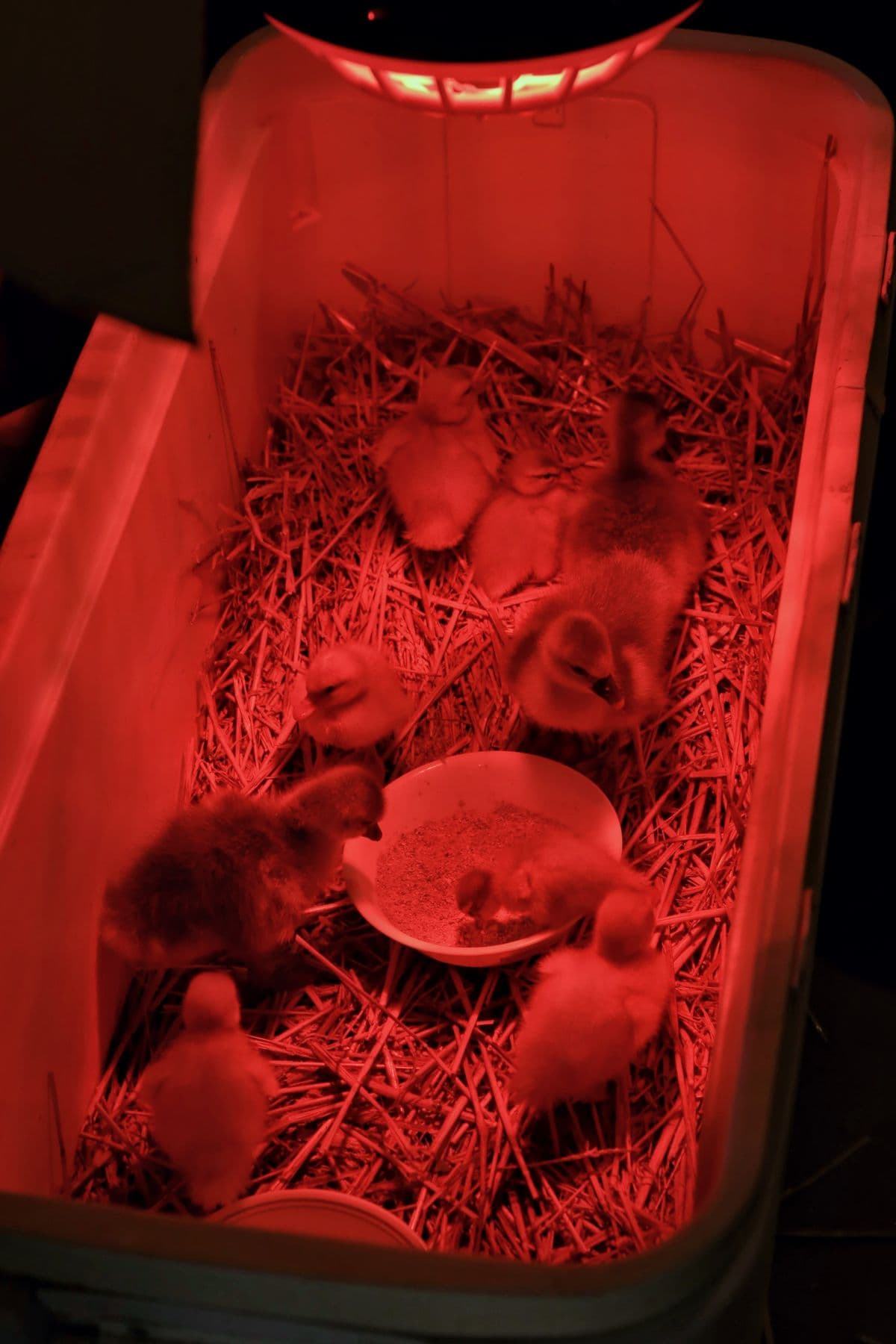
Brooding chicks in the UAE demands precision — not just warmth, but the right kind of warmth delivered consistently in a climate where ambient temperatures swing wildly between seasons. Whether you are raising broilers, layers, or backyard flock chicks, the first four weeks of life determine everything: growth rate, feed conversion, immune resilience, and mortality. Get the brooder temperature wrong by even 3°C and you face a cascade of problems — piling, chilling, respiratory infection, or heat stress — all of which translate directly into lost profit. This guide cuts through the noise and tells UAE farmers exactly what brooding equipment to buy, how to size it for your flock, what fuel source makes economic sense under local energy prices, and how to read your chicks' behavior as a live thermometer. All products discussed are available at Mazraty in Ras Al Khaimah — the UAE's most trusted farm equipment supplier. Call or WhatsApp +971 50 535 3412 to order today.
Brooder Temperature Requirements by Age: The Precise Schedule
Chick thermoregulation is non-functional at hatch. The bird cannot shiver effectively, cannot generate sufficient metabolic heat, and relies entirely on external heat sources for the first two weeks. The industry standard temperature schedule, verified by UAE extension services and adapted for local conditions, is as follows:
| Week | Brooder Zone Temperature | Ambient House Temperature |
|---|
| Week 1 (Days 1–7) | 35°C at litter level | 28–30°C |
| Week 2 (Days 8–14) | 32°C at litter level | 26–28°C |
| Week 3 (Days 15–21) | 29°C at litter level | 24–26°C |
| Week 4 (Days 22–28) | 26°C at litter level | 22–24°C |
| Week 5+ | Brooder off or minimal | 18–24°C |
The critical measurement point is litter level — not air temperature at shoulder height. A common mistake is hanging a thermometer at the farmer's eye level and reading a comfortable 28°C while the litter surface where the chick actually rests is 6–8°C cooler. Always measure at chick height, 5 cm above the litter surface, directly under the brooder heat source.
Humidity also matters. UAE outdoor relative humidity averages 60–80% in summer but drops to 30–40% in winter. Optimal brooding humidity is 55–65%. Low humidity in winter causes dehydration, poor yolk absorption, and respiratory irritation in new chicks. Consider pairing your heating system with a fogging line or ultrasonic humidifier — both available from Mazraty.
Gas Radiant Brooders: The Workhorse for Large Flocks
Gas radiant brooders — also called umbrella brooders or canopy brooders — are the dominant choice for commercial broiler farms raising 5,000+ chicks per house in the UAE. They run on LPG or CNG, emit infrared radiation from a ceramic or stainless-steel burner element, and heat the floor zone beneath a reflective canopy hood typically 120–150 cm in diameter.
How Gas Radiant Brooders Work
The burner heats a catalytic element to approximately 900°C, which then radiates long-wave infrared energy downward. This heats the litter and the chicks directly without warming the entire house volume. The efficiency advantage is significant: you are heating where the chick stands, not the cubic meter of air above it. In a high-ceiling UAE poultry house with 4-meter sidewalls, this saves substantial fuel costs compared to space heaters.
Coverage and Sizing
A standard 5-kW gas radiant brooder covers approximately 500–600 chicks in week one. For a house of 10,000 chicks, plan for 17–20 brooders arranged in a grid pattern, with no chick more than 1.5 meters from a heat source. Brooder height is adjusted on a chain: start at 45 cm above litter in week one, raise to 60 cm in week two, 90 cm in week three, and remove or raise fully by week four.
Gas Cost in UAE Context
LPG prices in the UAE are regulated and relatively stable. A 45-kg cylinder costs approximately AED 55–75 depending on supplier. A single 5-kW gas brooder running 18 hours/day in week one consumes roughly 1.2–1.5 kg of LPG per day. For 20 brooders over a 28-day brooding period, total gas cost is approximately AED 800–1,100 per cycle — or roughly AED 0.08–0.11 per chick in a 10,000-bird house. This is the lowest variable cost of any brooding method for large flocks.
Infrared Spot Heaters: Precision Heating for Small to Medium Flocks
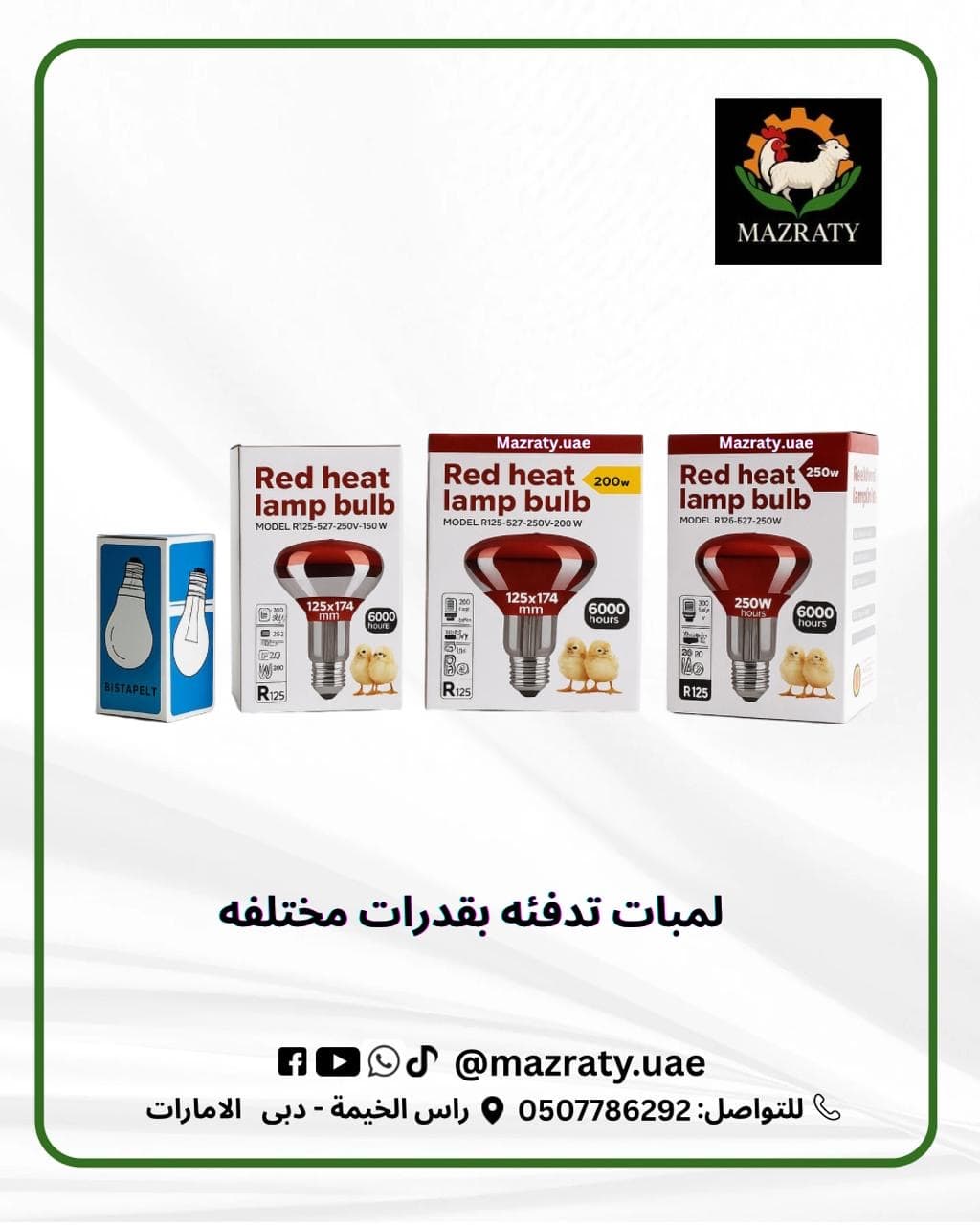
Infrared brooder lamps — whether traditional red heat bulbs (175W or 250W) or the newer ceramic infrared emitters — are the go-to solution for UAE farms raising 100–2,000 chicks at a time. They are inexpensive to purchase, easy to install, and provide targeted radiant heat with a visible or non-visible light spectrum depending on bulb type.
Red Heat Bulbs vs. Ceramic Infrared Emitters
Red heat bulbs (175W/250W): Emit visible red light alongside heat. The red spectrum suppresses pecking behavior, which is useful in dense brooding. Lifespan is typically 1,000–2,000 hours. Cost per bulb: AED 15–35. For 500 chicks, use two 250W bulbs in a double-lamp brooder guard ring, suspended at 45 cm above litter.
Ceramic infrared emitters (150W/250W): Emit heat only — no light — which allows normal day/night cycles and reduces stress. Lifespan extends to 8,000–10,000 hours, making them significantly more cost-effective over time despite a higher upfront cost (AED 60–120 per emitter). UAE farms running multiple brooding cycles per year save meaningfully on replacement costs. Mazraty stocks both types with compatible porcelain lamp holders rated for continuous high-temperature use.
Coverage and Safety Considerations
One 250W infrared emitter covers approximately 80–120 chicks depending on ambient temperature. In a UAE winter setup at 15°C ambient, you need more emitters per chick than in a 30°C ambient summer house. Always use a metal brooder guard ring (diameter 90–120 cm) around each lamp cluster during week one to prevent chicks from wandering away from the heat zone and chilling. Remove guards by day 10–14 as chicks become mobile and self-regulating.
Fire safety is non-negotiable: never use infrared lamps over deep loose straw without a metal guard. Use pine shavings or rice husk litter with a minimum depth of 8–10 cm, which provides insulation and reduces direct heat demand on the brooder.
Electric Panel Brooders: The Modern Solution for Intensive UAE Farms
Electric panel brooders — flat heating panels suspended 5–8 cm above chick head height — represent the newest generation of brooding technology and are rapidly gaining adoption in UAE intensive poultry operations. Instead of radiating heat downward from a height, these panels create a warm microclimate zone by gentle contact heating and low-level radiant emission.
How Panel Brooders Differ
A panel brooder mimics the brooding hen: the chick can move under or away from the panel freely. Panel temperature is maintained at 38–42°C on the panel surface, producing a zone directly beneath it of 34–36°C — exactly what the chick needs. This "hen contact" effect improves gut development, reduces stress vocalizations, and has been shown in University of Wageningen trials to improve 7-day bodyweight by 4–7% compared to overhead radiant heating.
Sizing and Electricity Cost
Panel brooders typically consume 40–150W depending on size. A 60cm × 60cm panel (60W) covers 40–60 chicks. For 500 chicks, you need 9–12 panels. Running cost: at UAE residential/agricultural tariff of AED 0.23/kWh, a 60W panel running 24 hours costs AED 0.33/day. For 12 panels over 28 days: approximately AED 110 in electricity per cycle. This is extremely competitive, especially for small farms where LPG cylinder management is inconvenient.
Panel brooders require no open flame, have no combustion risk, and are the safest option for indoor hobby farms and quarantine pens. Mazraty carries panel brooders with built-in thermostatic control and adjustable leg heights to accommodate growth.
Heat Mats: Supplemental Ground-Level Heating for Day-Old Chicks
Heat mats — waterproof flexible heating pads placed under litter in a defined zone — are used as supplemental ground heating during the first 72 hours. Day-old chicks that have traveled through the postal system or arrived stressed from a hatchery have depleted yolk energy and need immediate floor warmth more than overhead heat. A heat mat zone of 35°C under 5 cm of litter provides this comfort without the risk of chilling from cold concrete floors.
Heat mats are not a standalone brooding system — they work in combination with an overhead heat source. They are particularly valuable for UAE farms using concrete-floored steel sheds where floor temperatures can drop to 18–22°C in January, drawing heat away from chicks even when overhead brooders are correctly set.
Brooder Size Calculations: Getting the Numbers Right
Undersizing brooders is one of the most expensive mistakes a UAE farmer can make. The standard calculation is:
- Gas radiant brooder (5 kW): 1 brooder per 500–600 chicks in week 1; re-evaluate at week 2 as heat zones can be merged
- 250W infrared lamp: 1 lamp per 80–100 chicks in week 1 (winter); 1 lamp per 100–120 chicks (summer)
- 60W electric panel: 1 panel per 40–50 chicks at all seasons
Always oversize by 15–20% to account for cold nights, power fluctuations, or equipment failure. The marginal cost of one extra gas brooder (~AED 350) is nothing compared to the mortality cost of 200 chilled chicks at AED 6–12 each.
Floor space requirements are equally important: allow a minimum of 0.05 m² per chick in week 1, expanding to 0.1 m² by week 4. Overcrowding generates ammonia, suppresses immunity, and creates fatal temperature gradients where some chicks are too hot and others too cold simultaneously.
Litter Management: The Foundation Under Your Brooder
No brooding system performs well on poor litter. UAE farms most commonly use rice husk (readily available from Oman and India) or pine wood shavings (imported, costlier but superior moisture absorption). Avoid:
- Sawdust: too fine, causes respiratory problems and compacts into cold patches
- Sand: conducts heat away from chicks and cannot absorb moisture
- Newspaper: slippery surface causes leg deformities (splayed leg) in first week
Ideal litter depth is 8–10 cm on a concrete floor, or 5–6 cm on an insulated wooden floor. Litter must be pre-warmed before chick placement: run your brooders for 24–48 hours before the arrival day to bring litter temperature to 30–32°C. In UAE summers, this pre-warming happens naturally, but in January it is essential.
Litter moisture control under UAE conditions: in humid summer months (July–September), litter can absorb atmospheric moisture and become caked even without drinker spillage. Add a ventilation cycle and consider food-grade lime (calcium hydroxide) at 0.5 kg/m² under the initial litter layer to buffer moisture and reduce ammonia production.
Reading Your Chicks: Behavior as a Living Thermometer
The most accurate thermometer in your brooding house is the flock itself. Train yourself to read these behavioral signals within 30 seconds of entering the house:
| Behavior | Diagnosis | Action |
|---|
| Chicks huddled directly under brooder in a tight pile | Too cold — brooder zone inadequate | Lower brooder height, add supplemental heater, check gas pressure |
| Chicks spread uniformly across floor, active feeding | Correct temperature | No action needed |
| Chicks pressed against the outer guard ring wall, away from brooder | Too hot — brooder overheating | Raise brooder height, reduce gas flow, check thermostat |
| Chicks huddled to one side of the house | Draught from one direction | Block the cold air source, check ventilation inlets |
| Chicks peeping loudly and continuously | Discomfort — usually cold, thirst, or illness | Check temperature, water supply, and biosecurity |
Professional farmers walk through the house at midnight at least twice in the first week. Night temperatures in UAE winter drop fastest between 2:00 AM and 5:00 AM, and this is when gas brooder regulators may also freeze up in unusually cold snaps.
Common Brooding Mistakes That Kill Chicks in UAE Summers
Summer brooding in the UAE introduces a set of unique failure modes not seen in temperate countries:
1. Over-ventilating the Brooder Zone
Farmers run tunnel ventilation fans to cool the house, not realizing that 3 m/s airflow at litter level creates a wind-chill effect that can drop effective temperature by 5–7°C beneath an otherwise correctly set brooder. During summer brooding, use minimum ventilation mode for the first 5 days and only ramp up fans when internal CO2 exceeds safe limits (2,000 ppm).
2. Assuming Summer Means No Brooder Needed
At 45°C outside, the inside of an uninsulated steel shed can reach 50°C. Paradoxically, when you run cooling systems to bring this down to 28–30°C for bird comfort, the chicks in week 1 still need 35°C in their local zone. Day-old chicks need a brooder even in July.
3. Water Temperature Management Failure
In summer, nipple drinker water sitting in exposed pipe runs can reach 45–50°C — scalding for chicks and causing them to stop drinking. Install insulated water lines or use a chilled water header tank. Water consumption at 35°C ambient is 1.8× the rate at 20°C: ensure your drinker system can deliver this volume.
4. Using Undersized Gas Cylinders Without Pressure Regulators
A 12-kg LPG cylinder connected directly to a gas brooder without a staged regulator will freeze-up and cut gas flow within 2–3 hours under heavy draw in cold weather. Always use a 45-kg cylinder minimum for each brooder, or connect two 12-kg cylinders in parallel through a two-stage regulator. Mazraty carries complete gas line kits including regulators, flexible hoses, and manifold connectors for multiple-brooder setups.
Transitioning Chicks to Grow-Out Pens
The transition from brooding area to the full house should be gradual. The standard protocol for UAE broiler farms:
- Day 15–18: Open one side of the brooder guard ring to allow chicks to explore adjacent floor area while retaining access to the heat zone
- Day 18–21: Remove all brooder guards; chicks now occupy the full house floor
- Day 21–25: Begin raising brooder height by 10 cm every 2 days
- Day 28: Switch off brooders if house temperature is maintained at 24°C+; leave one brooder on standby in case of night cold
For layer chicks being moved to cage systems, ensure cage wire floors are covered with rubber mats during the first week post-transfer. The sudden loss of litter insulation combined with cooler metal cage surfaces creates a rapid chill risk even in mid-season UAE weather.
Cost Comparison Per Chick: Which System Wins?
Based on current UAE market prices and a 10,000-bird broiler cycle of 35 days:
| System | Capital Cost (10,000 chicks) | Running Cost/Cycle | Cost Per Chick/Cycle |
|---|
| Gas radiant (20 brooders) | AED 7,000 | AED 1,100 | AED 0.11 |
| Infrared lamps (100 × 250W) | AED 3,500 | AED 2,400 (electricity) | AED 0.24 |
| Electric panel (200 × 60W) | AED 18,000 | AED 750 (electricity) | AED 0.075 |
| Ceramic infrared (50 × 250W) | AED 6,000 | AED 1,200 (electricity) | AED 0.12 |
Gas radiant wins on total cost-per-cycle for large commercial operations. Electric panels win on long-term running cost once capital is amortized over 3+ years. Infrared lamps win on upfront capital for small farms but lose on running cost at scale. For most UAE farm sizes of 500–5,000 chicks, a hybrid approach — gas radiant for the base heat zone plus ceramic infrared lamp supplemental heat — provides the best risk-adjusted outcome.
Emergency Backup Heating: Plan Before You Need It
UAE power outages, though infrequent, do occur — and a 4-hour cold snap on night 3 of brooding can kill 30–50% of your flock. Every serious UAE farm should maintain:
- One gas brooder per 1,000 chicks as backup to electric primary systems
- A generator capable of running minimum ventilation fans and 50% of electric brooder capacity
- Spare gas cylinders: minimum 2 × 45 kg cylinders fully charged at all times during brooding
- Spare infrared bulbs: minimum 10% of total lamp count
- A battery-powered temperature alarm with SMS alert capability — UAE farms with absentee owners are particularly vulnerable to silent overnight temperature drops
Mazraty can advise on complete emergency heating packages tailored to your farm size and layout.
Get the Right Brooding System from Mazraty Today
Whether you are setting up a new brooding house, upgrading ageing infrared lamps, or scaling your flock from 500 to 5,000 chicks, Mazraty is the UAE's leading supplier of poultry brooding equipment in Ras Al Khaimah. Our team understands the specific demands of Gulf climate brooding — the winter nights, the summer paradox, the LPG logistics, the water temperature challenges — and can help you choose, size, and install the right system for your operation. We stock gas radiant brooders, ceramic infrared emitters, electric panel brooders, heat mats, brooder guard rings, thermostats, gas regulators, and all associated accessories. Visit us in Ras Al Khaimah or contact us directly on WhatsApp +971 50 535 3412 for a free consultation and same-day quotation. Your chicks cannot wait — and neither should you.
Reviewed planning sources
These references support operating and welfare principles. Final design and health programs remain site-, strain-, authority- and veterinarian-specific.
Frequently Asked Questions
How do you know brooding temperature is suitable?
Observe chick distribution and behaviour while measuring air and floor temperature; tight huddling or strong avoidance requires adjustment.
Is heating enough without ventilation?
No. Maintain fresh-air minimums without a direct draft and monitor humidity and waste gases.