Protecting your poultry flock in the UAE's extreme climate demands more than the right vaccine — it demands the right equipment to deliver that vaccine accurately, consistently, and within a verified cold chain. From coarse-spray cabinets for Marek's disease at the hatchery to precision eye droppers for infectious bronchitis in broiler houses, every route of administration requires a specific tool calibrated for the job. UAE summer temperatures regularly exceed 45 degrees Celsius outdoors, making cold-chain failure the single largest cause of vaccine breakdown before a single bird is ever dosed. This guide covers every category of poultry vaccination equipment available through Mazraty in Ras Al Khaimah — spray systems, dosing guns, multidose injectors, wing-web punches, drinking-water reconstitution kits, and hatchery-grade cabinet sprayers — alongside UAE-registered vaccination schedules, calibration procedures, and the most common administration mistakes that silently destroy flock immunity. Whether you manage a 10,000-bird broiler shed or a 500,000-bird commercial layer complex, the right accessories mean the difference between full protection and catastrophic outbreak losses.
Understanding Live vs Killed Vaccines: Equipment Implications
Before selecting any piece of equipment, farm managers must understand the fundamental difference between vaccine types, because each demands a completely different handling protocol and a different category of delivery hardware.
Live Attenuated Vaccines
Live vaccines — covering Newcastle Disease (ND), Infectious Bronchitis (IB), Infectious Bursal Disease (IBD/Gumboro), and Infectious Laryngotracheitis (ILT) — contain viable virus or bacteria that must survive the delivery process intact. They must be stored at +2 degrees C to +8 degrees C and used within 1 to 2 hours of reconstitution. They are compatible with spray, eye-drop, drinking-water, and intranasal routes. Critical point: never expose reconstituted live vaccines to direct sunlight, disinfectants, or chlorinated water — all will inactivate the organism within minutes.
Killed (Inactivated) Vaccines
Killed vaccines — used for Avian Influenza (AI H5/H9), certain ND boosters, Mycoplasma, and Egg Drop Syndrome — are oil-emulsion formulations requiring subcutaneous or intramuscular injection only. They must never be frozen; ice crystal formation ruptures the emulsion and renders the vaccine useless. Storage at +2 degrees C to +8 degrees C is mandatory, but even brief freezing during transport — common when dry-ice logistics go wrong — destroys the product. Dosing guns and automatic injectors with calibrated syringes are the only appropriate delivery hardware for this category.
Spray Vaccination Systems: Coarse vs Fine Droplet Technology
Spray vaccination is the most widely used mass application method in commercial poultry production, covering entire houses in minutes. However, the single most misunderstood aspect of spray vaccination is droplet size, and getting it wrong causes either vaccine failure or respiratory damage to the flock.
Coarse Spray (over 100 Microns): Marek's Disease and Primary IB
Coarse spray produces droplets larger than 100 microns — visible as a light mist that settles quickly. These droplets deposit on feathers, eyes, and nares without penetrating deep into the respiratory tract. This is the correct droplet size for Marek's disease vaccination in day-old chicks at the hatchery and for primary IB priming in young pullets. Hatchery spray cabinets — closed chambers that expose chicks in transport trays to a precisely timed coarse spray — are the gold standard for this application. Mazraty supplies cabinet sprayers calibrated to deliver 0.2 ml per chick at a chamber humidity maintained above 65 percent to prevent premature droplet evaporation.
Fine Spray (30 to 100 Microns): Newcastle Disease Mass Vaccination
Fine spray droplets in the 30 to 100 micron range penetrate the upper respiratory tract, making them ideal for ND vaccination in broiler houses using strains like La Sota, Clone 30, or V4. The spray is applied from overhead booms or handheld sprayers while birds are calm — typically early morning before the UAE heat peaks. In summer, vaccination windows should be restricted to 05:00 to 08:00, as higher temperatures accelerate droplet evaporation and shift effective droplet size unpredictably. Sprayer nozzle selection, pressure (typically 2 to 3 bar), and walking speed across the house all affect droplet size consistency. Mazraty stocks replacement nozzle sets, pressure gauges, and backpack spray units with stainless-steel components that resist corrosion from saline diluents.
Spray Cabinet Specifications for UAE Hatcheries
| Parameter | Recommended Value | UAE Adjustment |
|---|
| Droplet size (Marek's) | Over 100 microns | Increase 10 to 15 percent in summer to offset evaporation |
| Dose per chick | 0.2 ml | No adjustment |
| Cabinet temperature | 18 to 22 degrees C | Pre-cool to 16 degrees C before use in summer |
| Exposure time | 45 to 60 seconds | Standard |
| Reconstituted vaccine life | 2 hours | Reduce to 90 minutes in ambient over 30 degrees C |
Eye Dropper Vaccination: Precision Delivery for IB and ILT
For vaccines where exact mucosal stimulation of the conjunctiva or Harderian gland is critical — particularly Infectious Bronchitis (IB) and Infectious Laryngotracheitis (ILT) — the eye dropper remains the most reliable method for small to medium flocks and for precise dose delivery in research or breeder operations.
A correctly designed poultry eye dropper delivers exactly 0.03 ml (30 microliters) per drop. This precision is non-negotiable: a dropper that delivers 0.05 ml per drop will under-dose birds when the reconstituted volume is calculated for 0.03 ml doses. Mazraty supplies calibrated eye droppers with standardized tip diameters, along with calibration cups so farm workers can verify drop volume before each vaccination session.
Correct Eye-Drop Technique
- Hold the bird gently with one hand, supporting the body against the forearm.
- Tilt the head to expose one eye fully — the cornea should face upward.
- Hold the dropper vertical, 1 to 2 cm above the eye — never touch the cornea.
- Release one drop and wait 2 to 3 seconds to confirm the bird blinks and absorbs the vaccine.
- Vaccinate in shaded, cool conditions — never in direct UAE sunlight where ambient surface temperature can exceed 55 degrees C on exposed metal surfaces.
- Replace eye droppers after every 5,000 birds or if the tip becomes deformed.
Wing-Web Puncture for Fowl Pox Vaccination
Fowl Pox vaccination is the only routine immunization that requires skin scarification via the wing-web punch (double-needle applicator). The wing-web — the thin membrane between the upper arm and forearm of the wing — is punctured with the twin needles dipped in vaccine suspension. This creates a localized skin reaction (a visible scab or take) that confirms successful vaccination.
Selecting the Correct Wing-Web Punch
Wing-web punches are available in two configurations: single-needle (for small operations) and double-needle (for commercial production). The double-needle design delivers consistent vaccine volume and reduces the number of no-take results. Needles must be stainless steel, 1.5 to 2 mm in diameter, and inspected before each use for burrs or bends. Mazraty stocks complete wing-web vaccination kits including the applicator, vaccine dish, and replacement needles.
Reading the Take at 7 Days
A successful pox vaccination take — a raised, crusty nodule — should be visible at the puncture site within 5 to 7 days. UAE farm managers should sample 30 birds per house and target a take rate of 95 percent or higher. A take rate below 85 percent indicates either vaccine failure (cold-chain break), incorrect technique, or maternal antibody interference.
Drinking Water Vaccination: Reconstitution and Buffer Systems
Water-based vaccination delivers live vaccines — ND, IB, IBD — to entire flocks via automatic drinking lines. It is the lowest-labor mass vaccination method, but it is also the most prone to silent failure if water quality, volume calculation, and buffer chemistry are not precisely managed.
Water Calculator and Volume Formula
The standard UAE formula for broiler drinking water vaccination:
- Day 1 to 7: 10 ml per bird
- Day 8 to 21: 20 ml per bird
- Day 22 and older: 30 ml per bird
These volumes must be consumed within 1 to 2 hours of system activation. Withhold water for 1 to 2 hours before vaccination to create mild thirst — but never exceed 2 hours in UAE summer heat, as heat stress dehydration is a welfare and mortality risk above 38 degrees C wet-bulb.
Skimmed Milk Powder Buffer
Chlorine, heavy metals, and high pH (common in UAE groundwater, which often registers pH 7.5 to 8.2) rapidly inactivate live vaccines. The industry-standard buffer is 2.5 g of non-fat skimmed milk powder per liter of water, added 30 minutes before vaccine reconstitution. The milk proteins bind chlorine and create a protective protein matrix around vaccine particles. Never use full-fat or flavored milk. Mazraty supplies pharmaceutical-grade skimmed milk powder in 500 g sachets specifically packaged for field reconstitution.
Cleaning Drinking Lines Before Water Vaccination
Biofilm in nipple drinker lines harbors disinfectant residues and pathogens that destroy vaccines. Flush lines with clean, unchlorinated water for 30 minutes before introducing the vaccine solution. After vaccination, flush again with plain water to prevent residue buildup that would inactivate the next vaccination round.
Automated Dosing Guns and Multidose Injectors
Killed oil-emulsion vaccines — AI (H5N1, H9N2), ND inactivated boosters, Mycoplasma gallisepticum, and IB killed — require precise injection into subcutaneous tissue or muscle. Manual syringes are too slow and too inconsistent for commercial flocks. Automated dosing guns are the only viable solution at scale.
Subcutaneous vs Intramuscular Injection Sites
| Vaccine Type | Route | Site | Dose Volume |
|---|
| AI H5/H9 (killed) | Subcutaneous | Back of neck | 0.5 ml |
| ND (killed booster) | Subcutaneous or IM | Neck or breast | 0.5 ml |
| Mycoplasma (killed) | Subcutaneous | Back of neck | 0.5 ml |
| IB (killed) | Subcutaneous | Back of neck | 0.5 ml |
| IBD (killed) | Intramuscular | Breast muscle | 0.5 ml |
Calibrating the Dosing Gun
Calibration must be performed at the start of every vaccination session, not just when a new gun is unpacked. The procedure:
- Fill the gun reservoir with sterile saline or water at vaccine temperature.
- Trigger 10 consecutive doses into a calibrated measuring cylinder.
- Total volume should equal 10 times the stated dose volume within plus or minus 5 percent.
- If outside this range, adjust the dose screw and repeat.
- Replace needles — 18 gauge by 16 mm for neck subcutaneous, 19 gauge by 25 mm for breast intramuscular — after every 500 injections.
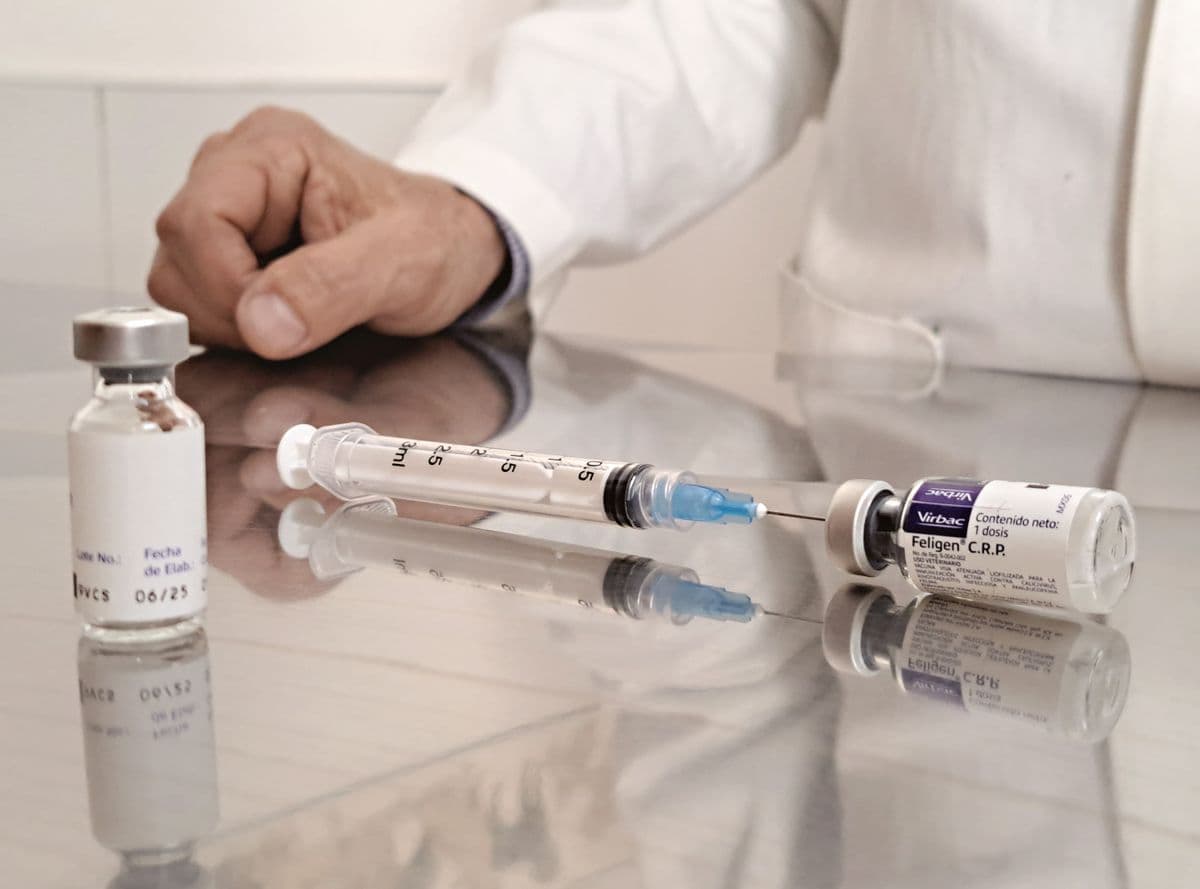
Mazraty supplies a full range of dosing guns from 0.2 ml to 1.0 ml dose capacity, along with calibration cylinders, replacement needles in bulk packs, and silicone tubing for gravity-feed reservoirs.
UAE-Registered Vaccination Schedule for Commercial Poultry
The UAE Ministry of Climate Change and Environment (MOCCAE) maintains an approved vaccination schedule for commercial broilers and layers. The schedule below reflects current registered programs and UAE-specific disease pressure:
| Age | Vaccine | Route | Equipment Required |
|---|
| Day 0 (hatchery) | Marek's (HVT + SB-1) | Coarse spray or subcutaneous | Spray cabinet or dosing gun |
| Day 1 | ND + IB (live) | Coarse spray | Spray cabinet |
| Day 7 | IBD (intermediate live) | Drinking water | Water line system plus milk buffer |
| Day 10 to 12 | ND + IB (live booster) | Eye drop or fine spray | Eye dropper or sprayer |
| Day 14 to 16 | IBD (boost) | Drinking water | Water line system |
| Day 18 | AI H9 (killed) | Subcutaneous injection | Dosing gun, 18G needle |
| Day 21 | ND (killed booster) | Subcutaneous injection | Dosing gun |
| Day 28 | Fowl Pox (live) | Wing-web puncture | Wing-web punch |
| Day 35 | ILT (if required) | Eye drop | Calibrated eye dropper |
| Breeders only | AI H5 (killed) | Intramuscular injection | Multidose injector |
Important: Avian Influenza vaccination in the UAE is regulated under MOCCAE Circular No. 3/2024. All AI vaccines must be sourced from approved suppliers and administered under veterinary supervision. Farms must maintain vaccination records for a minimum of 3 years for compliance audits.
Cold Chain Management in UAE Conditions
The UAE's ambient temperature profile creates one of the world's most demanding cold-chain environments for biologicals. Maintaining vaccine viability from manufacturer to bird requires discipline at every link in the chain.
Transport Cold Chain
- Use validated insulated vaccine carriers with gel packs pre-conditioned to plus 4 degrees C — never dry ice for live vaccines, never loose ice cubes that create freeze pockets.
- Monitor internal carrier temperature with a data logger during every transport journey exceeding 30 minutes. Discard any shipment where the data log shows temperatures above plus 10 degrees C for more than 15 minutes or below 0 degrees C at any point.
- In summer, vehicle air conditioning must be verified before departure — ambient in a parked UAE vehicle can exceed 70 degrees C within 10 minutes.
- Never place vaccines in car trunks without insulated carrier protection.
On-Farm Cold Storage
Dedicated pharmaceutical-grade refrigerators — not domestic fridges — must be used for vaccine storage. Domestic fridges cycle between plus 1 degree C and plus 10 degrees C; pharmaceutical models maintain plus 2 degrees C to plus 8 degrees C with plus or minus 0.5 degrees C precision. Minimum on-farm requirements:
- Two refrigerators per site (one primary, one backup with UPS power supply).
- Digital min/max thermometer with twice-daily logging.
- No food, drinks, or non-vaccine biologicals stored in vaccine refrigerators.
- Vaccines stored on middle shelves — never in the door (temperature fluctuates) or on the bottom shelf (risk of freezing from compressor cycling).
Mazraty supplies portable insulated vaccine carriers, gel packs, digital data loggers, and can advise on pharmaceutical refrigerator sourcing for UAE farm operations.
Common Mistakes That Cause Vaccine Failure
Even with premium-quality vaccines and correct equipment, the following errors — all documented in UAE farm audits — silently destroy herd immunity:
- Using tap water without dechlorination: UAE municipal water contains 0.5 to 1.0 mg/L free chlorine — sufficient to inactivate live vaccines within 5 minutes.
- Incorrect spray droplet size: Using a fine-spray nozzle for Marek's at the hatchery drives vaccine into the deep lung, causing respiratory stress without systemic protection.
- Not calibrating dosing guns: A gun drifting 20 percent low on dose delivers 0.4 ml instead of 0.5 ml — a 20 percent reduction in antigen load that may drop birds below the protective threshold.
- Vaccinating stressed or sick birds: Heat-stressed birds (core temperature above 42 degrees C) have suppressed immune function. Vaccination during UAE summer heat peaks — between 11:00 and 16:00 — produces significantly lower antibody titers.
- Freezing killed vaccines: A single freeze-thaw cycle ruptures the oil-water emulsion and renders AI or ND killed vaccines completely ineffective. Always check for emulsion separation (two distinct layers in the vial) before use — discard if present.
- Reusing needles excessively: Blunt needles cause tissue trauma, vaccine leakage, and abscess formation at injection sites. Replace per the schedule above without exception.
- Mixing vaccines without veterinary guidance: Some strains of IB (793/B, M41, 4/91) are incompatible with certain ND strains when co-administered by spray. Consult your flock veterinarian before combining vaccines in a single spray session.
Hatchery Vaccination Equipment: A Specialized Category
Hatcheries operate at the highest volume and the tightest margins in poultry production. A single malfunction of hatchery vaccination equipment can affect hundreds of thousands of chicks per day. Mazraty supplies or can source the following hatchery-grade systems:
- Automated spray cabinets: Programmable chambers for Marek's and IB/ND combination spray at Day 0, with stainless-steel interior surfaces and HEPA-filtered air circulation.
- In-ovo vaccination adapters: For operations using in-ovo delivery of Marek's or IBD vaccines at Day 18 of incubation.
- Multi-head dosing arrays: Simultaneous subcutaneous injection into multiple chicks in one automated stroke — used for Marek's subcutaneous delivery.
- Chick counter-sorter integration: Dose-tracking systems that log the number of birds vaccinated per batch for regulatory compliance.
Mazraty: Your Complete Vaccination Equipment Supplier in Ras Al Khaimah
Mazraty is the UAE's trusted farm accessories supplier, stocking the full spectrum of poultry vaccination equipment — spray cabinets, coarse and fine-spray nozzle sets, calibrated eye droppers, wing-web punch kits, dosing guns from 0.2 ml to 1.0 ml, multidose injectors, replacement needles in bulk packs, pharmaceutical-grade skimmed milk powder, insulated vaccine carriers, gel packs, and digital temperature data loggers. Every product we stock is selected for UAE field conditions: heat-resistant materials, corrosion-proof construction, and compatibility with registered vaccine formulations. Our team can advise on equipment selection for your specific flock size, vaccination schedule, and housing type — whether you manage a small village flock or a large integrated commercial operation. Contact Mazraty today on WhatsApp +971 50 535 3412 to place an order, request a product catalog, or arrange a technical consultation with our poultry vaccination equipment specialists. Protect your flock from the first dose to the last — with the right tools, every time.
Reviewed planning sources
These references support operating and welfare principles. Final design and health programs remain site-, strain-, authority- and veterinarian-specific.
Frequently Asked Questions
How is vaccination equipment selected?
Match it to the vaccine, administration route, bird age, veterinary direction and manufacturer instructions.
What must be checked before use?
Verify calibration, hygiene, cold chain and dose, and record batch number, time and operator.