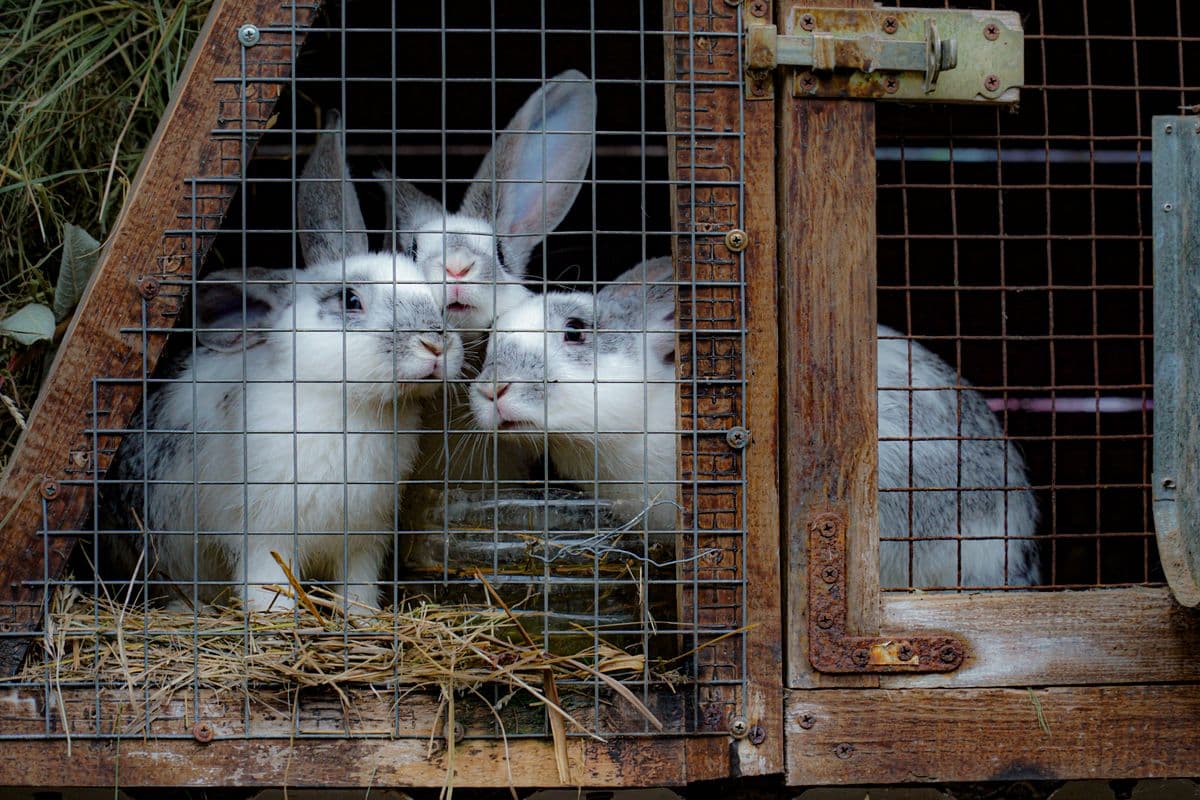
Rabbit farming in the UAE is one of the most accessible and profitable small-scale livestock ventures available to beginners today. With relatively low startup costs, a fast reproduction cycle, and growing demand for halal rabbit meat and pet rabbits across Ras Al Khaimah and the wider Emirates, the opportunity is real and reachable. The key to success lies in choosing heat-tolerant breeds suited to UAE temperatures that regularly exceed 40°C in summer, selecting the right battery cage system to keep animals healthy and productive, and following a proven feeding and management routine. This guide covers everything a first-time rabbit farmer needs to know: the best breeds, correct cage dimensions, doe-to-buck ratios, daily feeding quantities, the 28-day gestation cycle, weaning schedules, heat-stress management strategies, common disease prevention, and a realistic profitability calculation for a 20-doe starter operation. All equipment referenced in this guide — including galvanized wire battery cages, feeders, and drinkers — is available from Mazraty, Ras Al Khaimah's leading farm equipment supplier. WhatsApp: +971 50 535 3412.
This guide is designed to take you from zero knowledge to operational confidence. Every section covers a decision you will actually face, with specific numbers rather than vague advice.
Choosing the Right Breeds for UAE Climate
Breed selection is the single most important decision you will make. UAE summer temperatures regularly exceed 40°C outdoors and sustain 35–38°C even in shaded farm structures. Rabbits are highly sensitive to heat — chronic heat stress above 32°C suppresses reproduction, reduces feed conversion, and increases mortality. This means you must start with breeds that have demonstrated heat tolerance, then layer management strategies on top.
New Zealand White
The New Zealand White is the global standard for commercial rabbit farming and performs well in UAE conditions when housed with ventilation. Adults reach 4–5 kg at market weight, does are prolific (6–10 kits per litter), and the breed has a calm temperament that makes handling straightforward for beginners. White fur reflects heat slightly better than dark-coated breeds. This is the recommended primary breed for meat production in your first year.
California Rabbit
The California rabbit (white body with dark points) is a slightly smaller breed at 3.5–4.5 kg but is widely regarded as having superior meat-to-bone ratio and excellent mothering instincts. Does are attentive and rarely abandon litters — a critical trait in high-stress environments. The breed adapts well to battery cage systems and tolerates UAE's hot-season humidity spikes (July–September can reach 85–90% relative humidity in coastal areas).
Rex Rabbit
The Rex breed is valued for its dense, velvety fur and calm nature, making it suitable for both meat production and the pet market. Rex rabbits are slightly less prolific than New Zealand Whites but command a premium price in UAE pet shops and from individual buyers. If you plan a mixed operation — meat plus pet sales — adding 4–5 Rex does to your initial 20-doe herd creates a higher-margin revenue stream.
Breeds to Avoid as a Beginner
Angora and Lionhead breeds are high-maintenance fur breeds requiring daily grooming and are poorly suited to UAE heat. Flemish Giants, while impressive in size, generate excessive metabolic heat and suffer disproportionately in summer. Stick to the three recommended breeds above until you have at least one full production cycle of experience.
Battery Cage Systems: Dimensions, Materials, and Setup
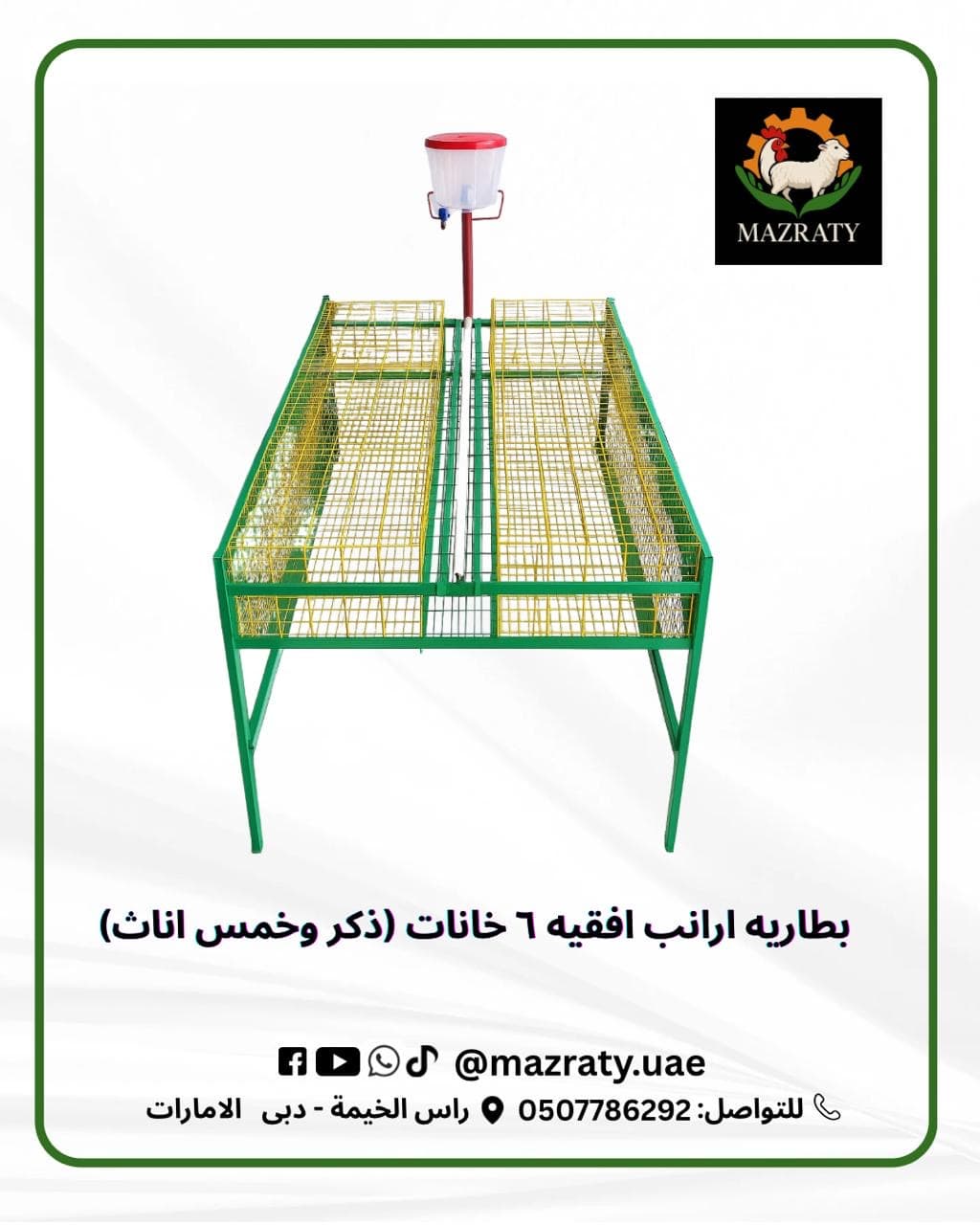
The battery cage is the backbone of your operation. A correctly sized, properly ventilated cage protects rabbit health, simplifies waste management, and allows you to scale your operation by stacking tiers without expanding your floor footprint. Mazraty supplies commercial-grade battery cage systems designed specifically for the UAE climate, and selecting the right configuration from the start prevents costly retrofitting later.
Minimum Cage Dimensions
The minimum accepted dimensions for a single adult rabbit in a commercial battery cage are 60 cm long × 30 cm wide × 40 cm tall. For a doe with a litter, the cage should be extended to at least 90 cm × 50 cm × 40 cm to accommodate the nest box (35 × 25 × 25 cm) without crowding the doe. Overcrowding is one of the leading causes of kit mortality and stress-induced aggression.
| Animal Category | Minimum Length | Minimum Width | Minimum Height |
|---|
| Single adult (dry doe or buck) | 60 cm | 30 cm | 40 cm |
| Doe with litter (to weaning) | 90 cm | 50 cm | 40 cm |
| Grow-out pen (4–6 juveniles) | 120 cm | 60 cm | 40 cm |
| Buck housing | 75 cm | 45 cm | 45 cm |
Galvanized Wire vs. Plastic-Coated Wire
Galvanized wire cages are the industry standard for commercial rabbit farming. Hot-dip galvanized wire (14 or 16 gauge, 1.5 × 1.5 cm mesh for floors and 2.5 × 5 cm for sides) is durable, easy to sanitize with high-pressure water, and resistant to the corrosive combination of ammonia from rabbit urine and coastal humidity. Galvanized wire cages typically last 8–12 years with basic maintenance.
Plastic-coated wire cages are gentler on rabbit feet and reduce the incidence of sore hocks (ulcerative pododermatitis), which is a common problem in heavy breeds. However, plastic coating degrades faster under UAE UV exposure and is harder to fully disinfect. For a commercial meat operation, galvanized wire with rubber resting mats in 20% of the cage floor area is the optimal compromise. For pet rabbit housing where animal welfare is the priority, plastic-coated cages are appropriate.
Three-Tier vs. Two-Tier Stacking
Most UAE hobby and small commercial farms use two-tier battery cage systems. Three-tier systems exist but create heat stratification issues in UAE climates — the top tier can be 4–6°C hotter than the bottom tier during summer, putting top-tier does at greater reproductive risk. Unless your shed has industrial ceiling fans and effective cross-ventilation, stay with two-tier systems and expand horizontally rather than vertically.
Waste management in stacked systems uses a urine deflector between tiers (angled galvanized sheet at 30–35 degrees) and a collection trough or removable plastic tray at the base. Daily removal of waste prevents ammonia buildup, which suppresses immune function and invites respiratory disease. Mazraty supplies complete cage sets including deflectors, drip trays, J-feeders, and nipple drinkers — contact via WhatsApp +971 50 535 3412 for a customized quote based on your doe count and shed dimensions.
Doe-to-Buck Ratio and Breeding Management
For a 20-doe starter operation, you need 3 bucks minimum — a ratio of approximately 8:1 (does to bucks). Some commercial operations run 10:1 but this reduces conception rates when multiple does are in heat simultaneously. Three bucks also provides redundancy if one becomes temporarily infertile due to heat stress (bucks above 32°C show reduced sperm motility within 72 hours and can take 6–8 weeks to fully recover fertility).
House bucks in individual cages at all times — rabbits have no dominance hierarchy tolerance and two bucks will fight severely if housed together. Rotate which buck services which does to prevent inbreeding if you plan to retain replacements from your own herd. Mark each doe's cage with a breeding card recording: mating date, expected kindling date (mating date + 28 days), litter size, and kit weights at weaning.
Confirming Pregnancy
Palpation at day 10–12 post-mating allows an experienced handler to confirm pregnancy by feeling marble-sized embryos along the uterine horns. Beginners can use the re-mating test instead: if a doe aggressively rejects the buck 3 days after mating (growling, thumping, biting), she is likely pregnant. Place the nest box in the cage at day 25 — the doe will begin pulling fur to line it within 24–48 hours of kindling.
Feeding: Quantities, Types, and Water Management
Nutrition is where most beginners either overspend (wasting premium feed on poor genetics) or undercut (saving on feed costs while destroying growth rates and reproduction). Follow these benchmarks and you will stay on the productive side of both errors.
Adult Maintenance (Dry Does and Bucks)
A standard adult rabbit at 3–5 kg requires 120–150 grams of commercial pellet feed per day. Pellets should contain a minimum of 16% crude protein, 14–18% crude fiber, 2–3% fat, and be formulated for rabbits specifically — do not substitute poultry or goat pellet. Supplemental hay (timothy, oat, or Sudan grass) improves gut motility and should be available ad libitum via the hay rack attached to the cage door. Limit fresh greens for commercial operations as they increase enteritis risk when fed in excess.
Lactating Does
A lactating doe nursing 6–8 kits is producing milk equivalent to 3–4× her normal metabolic demand. Increase pellet allowance to 250–300 grams per day from kindling through weaning at day 28. Fresh, clean water is non-negotiable — a lactating doe that runs dry for even 4 hours will cannibalize or abandon her litter. Nipple drinkers connected to a gravity or pressure-fed line are far superior to open bowls, which rabbits contaminate and tip constantly.
Growing Kits (Weaning to Market)
From weaning (day 28) to slaughter weight (approximately day 70–75 for New Zealand Whites at 2–2.5 kg), growing rabbits consume 80–120 grams of pellet per day per animal on an ad libitum basis — meaning free access feeders. The feed conversion ratio for well-managed growing rabbits is approximately 3:1 (3 kg feed per 1 kg live weight gain). This is the metric that determines whether your operation is profitable: anything above 4:1 signals a problem with feed quality, disease, or stocking density.
Water Requirements in UAE Climate
In UAE summer, a lactating doe can drink 1–2 liters of water per day. Growing kits each require 200–300 ml. An operation of 20 does with average litter sizes will need a minimum 60–80 liters of water available daily in peak summer. If your water supply runs warm (above 28°C), rabbits will reduce intake and suffer heat stress compounding — consider insulating water lines or using chilled water lines in the hottest months.
Reproduction Cycle: From Mating to Market
Understanding the rabbit's reproduction timeline is what allows you to plan production batches, project income, and manage cage utilization efficiently. The core numbers are:
- Gestation period: 28–31 days (average 30 days)
- Average litter size: 6–8 kits for New Zealand White and California; 5–7 for Rex
- Weaning age: 28 days post-kindling
- Post-weaning re-mating: Does can be re-mated 24–48 hours after weaning for maximum productivity, or at 14 days post-weaning for semi-intensive systems
- Litters per doe per year: 4–6 (semi-intensive management in UAE heat conditions allows 4–5 realistically)
- Market weight: 2.0–2.5 kg live weight at 10–12 weeks for meat breeds
- Does entering production: First mating at 4.5–5 months of age
For your 20-doe herd producing 5 litters per year with an average of 6 kits per litter and 85% survival to weaning: 20 × 5 × 6 × 0.85 = 510 rabbits per year. At a market price of AED 35–50 per kg live weight (UAE halal butcher market), a 2.2 kg average market weight yields AED 77–110 per animal, or AED 39,270–56,100 gross annual revenue from meat sales alone. This is before adding pet rabbit premium sales or herd replacement sales.
Heat Stress Management: Critical for UAE Operations
Heat stress is the primary production killer in UAE rabbit farming. When ambient temperature exceeds 32°C, does stop cycling, bucks become temporarily infertile, kits die from hyperthermia, and feed intake drops sharply. Above 35°C, adult mortality risk rises significantly. UAE farms face this risk for 5–6 months per year (May through October). Your heat management infrastructure is not optional — it is as important as the cages themselves.
Structural Cooling
Orient your rabbit shed with the long axis running east-west so the prevailing UAE north-northwest winds (shamal) pass through the length of the shed. Install a roof with minimum 30 cm air gap between the inner ceiling and the outer roofing sheet. Paint or coat the outer roof with reflective white paint or aluminum foil laminate — this alone can reduce radiant heat load by 30–40%.
Active Cooling Methods
- Evaporative cooling pads (cellulose pad + exhaust fan system): Reduces shed temperature by 8–12°C in dry conditions. Less effective during July–September coastal humidity peaks.
- Misting fans: Fine-mist nozzles at cage height reduce localized temperature by 5–8°C. Avoid wetting rabbit fur directly — damp rabbits in humid conditions develop skin infections.
- Frozen water bottles: Place 1.5-liter frozen bottles in doe cages during peak afternoon heat (12:00–16:00). Does press against them and kits huddle near them. This low-tech intervention measurably reduces kit mortality in heat waves.
- Chilled drinking water: Connecting drinker lines to an insulated reservoir with ice or a small water chiller maintains water temperature below 20°C, sustaining intake during heat stress periods.
Scheduling Around Heat
Plan feeding, cleaning, and handling activities for before 08:00 and after 18:00 during summer months. Disturbing rabbits during peak heat adds thermal stress to the baseline. Time matings for early morning when both buck and doe are most responsive. Adjust your kindling timing so that does with young litters are not peaking in lactation demand during the hottest weeks — this requires backward-planning your breeding calendar by 4–5 months.
Common Diseases and Prevention Protocol
A consistent biosecurity and health monitoring routine prevents the diseases that most commonly destroy beginner rabbit operations. The five conditions to understand and actively prevent are:
1. Coccidiosis
Caused by Eimeria species protozoa; the leading cause of death in growing rabbits aged 4–12 weeks. Symptoms: diarrhea (often bloody), lethargy, pot-bellied appearance, weight loss. Prevention: wire-floor cages that prevent fecal-oral contact, daily droppings removal, coccidiostat-medicated feed or water treatment during the growing phase. UAE's heat accelerates oocyst sporulation — clean cages every 24 hours without exception.
2. Snuffles (Pasteurellosis)
Bacterial infection (Pasteurella multocida) presenting as nasal discharge, sneezing, and in severe cases ear tilt and pneumonia. Spreads rabbit-to-rabbit through aerosol and direct contact. Prevention: quarantine all new animals for 14 days before introducing to your herd, maintain good ventilation, avoid ammonia buildup. Culling carrier animals is often more economical than antibiotic treatment in commercial settings.
3. Sore Hocks (Ulcerative Pododermatitis)
Wire floor pressure ulcers on the hock joints, especially in heavy breeds (above 4 kg). Prevention: correct wire gauge (14G minimum), rubber resting mats in 20% of cage floor, regular inspection of hocks twice weekly. Early-stage sore hocks (redness, hair loss) reverse with mat introduction; advanced cases (open wounds) require topical treatment and are a welfare concern.
4. Myxomatosis and VHD
Both are viral diseases with high mortality rates. Myxomatosis is transmitted by biting insects (mosquitoes, fleas, mites) — UAE's warm year-round temperatures sustain insect vectors. Vaccination is available and recommended for all does and bucks annually. VHD (Viral Hemorrhagic Disease) vaccination is equally important; unvaccinated herds can lose 80–100% of adults within days of exposure.
5. Mastitis
Bacterial infection of the mammary glands in lactating does, presenting as hot, swollen, blue-tinged mammary tissue. Caused by Staphylococcus or Streptococcus species entering via wounds from kit scratching. Prevention: keep cage floors smooth, trim kit toenails at day 14, ensure does are not over-producing beyond kit demand. Affected does should be treated immediately or litter fostered to another doe to prevent kit starvation.
UAE Market Demand and Selling Channels
UAE market demand for rabbit products has multiple distinct channels, each with different pricing and logistics:
- Halal butchers and meat shops: Live rabbits sold at AED 35–50/kg. Ras Al Khaimah, Sharjah, and Dubai have established halal rabbit meat buyers. Rabbits must be slaughtered halal — consider establishing a relationship with a licensed abattoir or butcher who handles this.
- Supermarkets and restaurants: Processed rabbit meat commands AED 60–85/kg for whole dressed carcasses. Requires food safety certification and consistent supply — suitable for farms that reach 50+ does.
- Pet shops: Young rabbits (6–8 weeks) of Rex, Dutch, or lop breeds sell for AED 80–250 each. Pet shops in UAE generally purchase on consignment or buy outright at 40–60% of retail. Requires clean, well-socialized animals with no health issues.
- Direct consumer sales: Social media (Instagram, Facebook Marketplace) allows direct sale of both meat rabbits and pet rabbits at full retail pricing. A simple WhatsApp business number and regular posting generates consistent demand within 2–3 months of consistent activity.
- Manure sales: Rabbit manure is a premium organic fertilizer selling for AED 2–5 per kg dried and bagged. A 20-doe herd produces approximately 80–100 kg of fresh manure per week — a secondary income stream that most beginners overlook.
Profitability Calculation: 20-Doe Startup Operation
This calculation uses conservative assumptions suitable for a first-year UAE operation:
| Item | Detail | Cost/Revenue (AED) |
|---|
| STARTUP COSTS | | |
| Battery cages (20 doe + 3 buck + grow-out) | 30 units × AED 180 | 5,400 |
| Breeding stock (20 does + 3 bucks) | 23 animals × AED 60 avg | 1,380 |
| Feeders, drinkers, nest boxes | Lump sum | 800 |
| Shed ventilation setup | Fans + evaporative pads | 2,500 |
| Vaccines (initial) | Myxo + VHD | 400 |
| Total Startup | | 10,480 |
| ANNUAL RUNNING COSTS | | |
| Feed (breeding stock) | 23 animals × 135g/day × 365 × AED 3.5/kg | 4,163 |
| Feed (510 growing rabbits × 45 days × 100g/day) | | 8,018 |
| Veterinary + vaccines annual | | 600 |
| Water + electricity | | 1,800 |
| Total Annual Costs | | 14,581 |
| ANNUAL REVENUE | | |
| Meat rabbits (510 × 2.2 kg × AED 40/kg) | | 44,880 |
| Manure sales | | 3,000 |
| Total Annual Revenue | | 47,880 |
| Net Annual Profit (Year 1) | Revenue – Running Costs – Startup Amortized | ~30,879 |
Year 2 and beyond, with startup costs recovered, net profit improves to approximately AED 33,000–35,000 per year from a 20-doe operation requiring roughly 2–3 hours of daily management. Scaling to 50 does triples revenue while fixed costs grow more slowly, improving margins substantially.
Cage Selection Guide: What to Order and Why
When purchasing your initial cage setup from Mazraty, consider these specifications as your baseline order:
- Floor mesh: 14-gauge hot-dip galvanized, 1.5 × 1.5 cm square — small enough to prevent kit leg entrapment, strong enough for adult weight without deflection
- Side and top mesh: 14-gauge galvanized, 2.5 × 5 cm — allows ventilation and easy inspection without wasting material
- Frame: 16-gauge galvanized tube framing or heavy-gauge wire welded construction
- Urine deflector sheets: Angled galvanized sheet between tiers, sloped 30–35 degrees toward a center or rear drain channel
- Drip tray: Removable galvanized or HDPE tray below each tier — pull daily for cleaning
- Feeder: J-style feeder welded to the front wall, holds 500g–1kg of pellet, reduces feed waste significantly versus open-top feeders
- Nipple drinker: Stainless steel nipple on 3/8-inch push-fit line — one per cage, positioned at shoulder height for the animal
Mazraty stocks all of the above in Ras Al Khaimah with same-week availability for standard configurations. Custom cage dimensions for specific shed layouts can be ordered with 7–10 day lead time. Ask for the rabbit battery cage complete set when you contact the team — it includes the cage, deflector, tray, J-feeder, and nipple drinker as a single package, which simplifies procurement and ensures all components are matched in specification.
Get Started with Mazraty Today
Starting a rabbit farm in the UAE is a realistic, rewarding project when you have the right equipment from day one. Cutting corners on cage quality, ventilation, or drinker systems creates problems that cost far more to fix than they saved at purchase. Mazraty has supplied farms across Ras Al Khaimah and the UAE with battery cage systems, feeders, drinkers, and complete farm setup packages designed for local conditions. Our team understands the specific demands of UAE rabbit farming — the heat, the humidity, the space constraints, and the production targets — and can advise you on the correct setup for your herd size and budget. Whether you are setting up 10 cages in a backyard or 200 cages in a commercial shed, we have the equipment and the expertise to get you operational quickly. Contact Mazraty on WhatsApp +971 50 535 3412 today to discuss your project, request a quote, or arrange to visit our location in Ras Al Khaimah and see the cage systems in person.
Reviewed planning sources
These references support operating and welfare principles. Final design and health programs remain site-, strain-, authority- and veterinarian-specific.
Frequently Asked Questions
What comes first in a small rabbit project?
Start with cleanable housing, reliable water, ventilation and a heat plan, then define breeders, isolation and workflow.
Is first-year profitability guaranteed?
No. It depends on mortality, fertility, feed, energy and market price; model current local costs and start manageable.