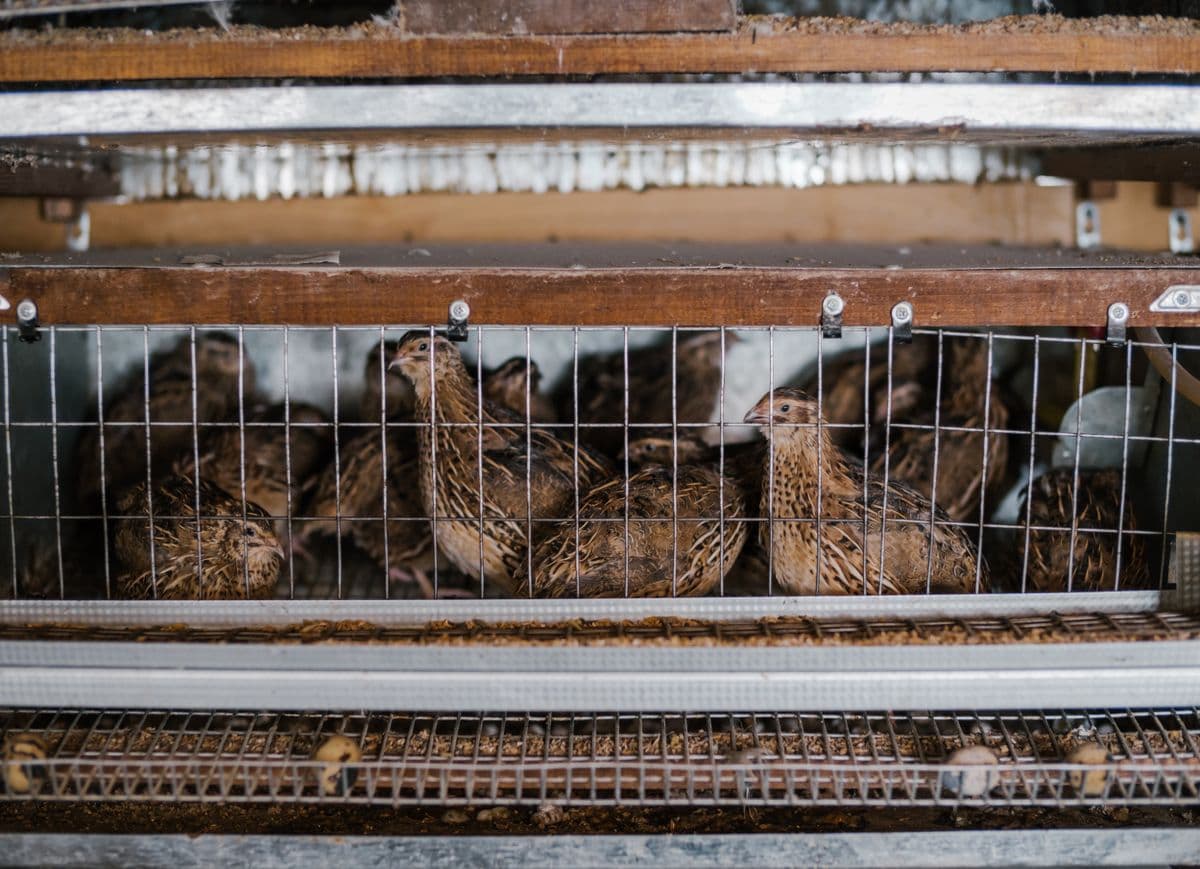
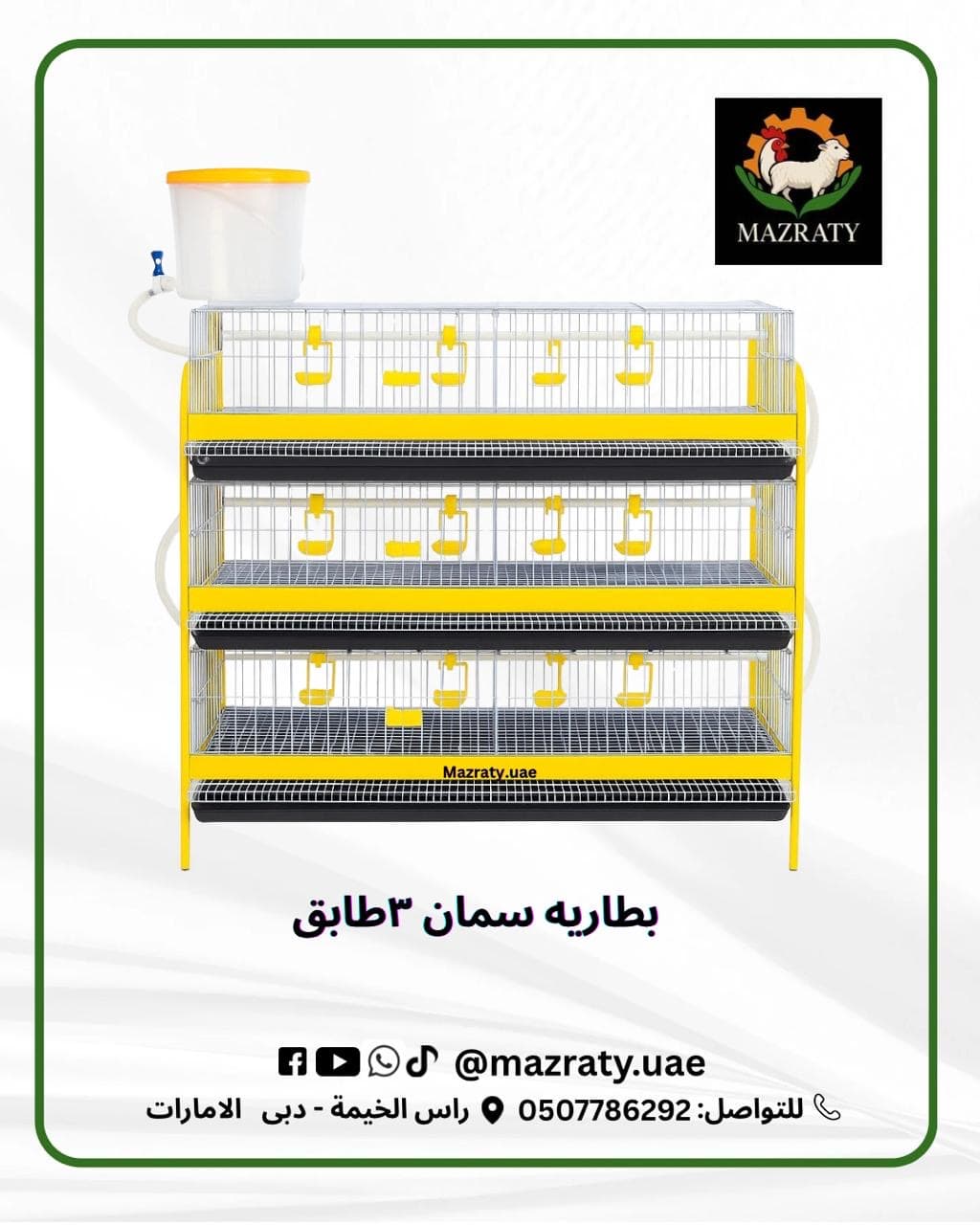
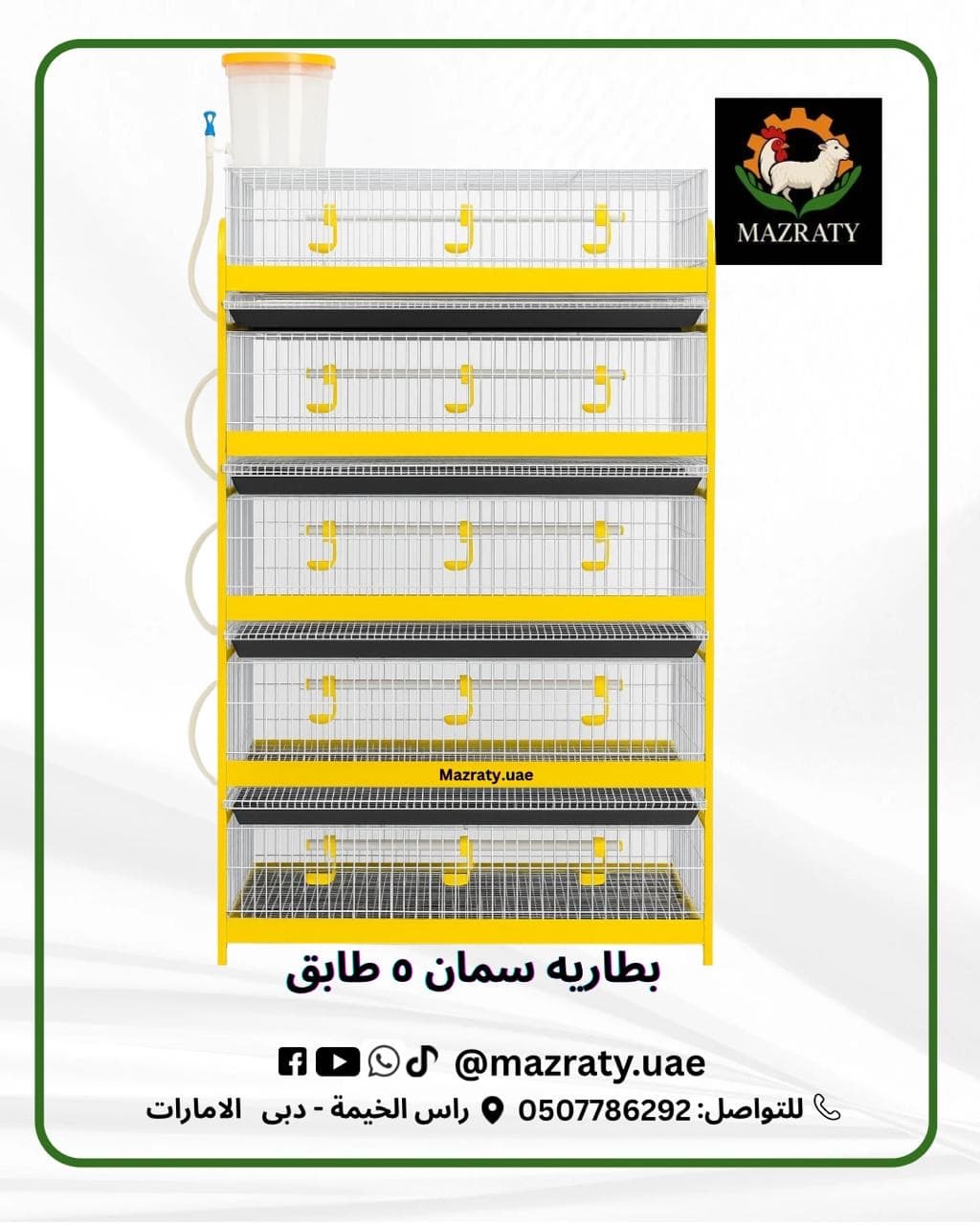
Plan housing for 1,000 quail: usable cage capacity, water and feeder access, ventilation, lighting, manure handling and service aisles.
Quail housing requirements for 1,000 birds cannot be reduced to cage count. Allow operating headroom and coordinate drinking points, feeders, ventilation, lighting, manure handling and service aisles.
Why Quail Farming Makes Commercial Sense in the UAE
The UAE imports more than 85% of its food supply, and within that gap, quail eggs represent a premium, undersupplied niche. Hotels in Dubai, Abu Dhabi, and Ras Al Khaimah regularly source quail eggs at AED 0.80–1.20 per egg for buffet and fine-dining applications. Health food retailers sell them at AED 15–25 per tray of 20. The local production base is thin, meaning a well-run operation of 5,000 birds can build long-term supply contracts with hospitality buyers within its first quarter of production.
Beyond market opportunity, the biology of the quail is uniquely suited to UAE commercial farming. Japanese Coturnix quail begin laying at 42 days of age — compared to 18–20 weeks for a commercial layer hen. Feed conversion is efficient: 2.5–3 kg of feed per kilogram of eggs produced. The birds require far less floor space than chickens, and their small body mass means they shed metabolic heat more quickly, an advantage in a climate where thermal management is the central engineering challenge.
Mazraty supplies purpose-built quail battery cages to farmers across Ras Al Khaimah and the wider UAE, and this guide reflects the production parameters we have seen work in Gulf conditions.
Japanese Coturnix vs. Pharaoh Quail: Choosing Your Strain
Two strains dominate commercial production in the Gulf: the Japanese Coturnix (white or tuxedo color) and the Pharaoh quail, a heavier brown-feathered strain selectively developed for egg yield.
| Parameter |
Japanese Coturnix |
Pharaoh Quail |
| Body weight (female, mature) |
130–160 g |
180–230 g |
| Age at first egg |
42–45 days |
45–50 days |
| Annual egg production |
250–280 eggs/hen |
280–320 eggs/hen |
| Average egg weight |
10–12 g |
12–15 g |
| Feed intake/day |
25–28 g |
28–32 g |
| Heat tolerance |
Moderate |
Slightly lower |
| UAE market preference |
Restaurant (visual uniformity) |
Retail (egg size) |
For a new UAE operation targeting hotels and restaurants, Japanese Coturnix is the recommended starting strain. The smaller egg weight is consistent, buyers appreciate uniformity, and the slightly better heat tolerance reduces summer management stress. Pharaoh quail are worth considering when your buyer base is retail health stores that can sell on egg-size differentiation and charge a premium.
Cage Density: The Foundation of Every Production Target
Overcrowding is the single most common cause of production collapse in Gulf quail operations. Birds that lack personal space exhibit stress-induced behaviors — feather pecking, reduced feeding time, and reproductive suppression — that can drop lay rate by 20–30 percentage points within two weeks.
The commercially validated density for UAE quail battery cages is 60–80 birds per square meter of floor space, with the following practical breakdown:
- 60 birds/m² — optimal for peak summer (June–September) when heat load is highest; birds need more air circulation per individual
- 70 birds/m² — standard year-round target in climate-controlled housing
- 80 birds/m² — acceptable maximum in well-ventilated, evaporative-cooled units during cooler months (November–March)
Mazraty quail battery cages are engineered with wire-mesh floors at 1 cm × 1 cm gauge, sloped at 8–10 degrees to roll eggs forward into the collection tray without cracking. Each tier is 20–22 cm in internal height — enough for full standing posture without wasted air volume. Standard cage units come in 4-tier and 5-tier configurations, with each tier measuring 120 cm × 60 cm, giving 0.72 m² of floor space per tier. At 70 birds/m², that is 50 birds per tier, a number that is easy to batch-manage.
Lighting Program: The Single Most Powerful Lever for Egg Production
Light duration directly controls the hypothalamic-pituitary-gonadal axis in quail. Without adequate light stimulation, hens suppress ovulation regardless of nutrition quality. Getting lighting right is non-negotiable.
Recommended UAE Lighting Schedule
- Grow phase (Day 1–35): 24 hours light for the first 7 days (chick orientation), then 8 hours light / 16 hours dark to suppress early laying and build body condition
- Transition (Day 35–42): Increase to 14 hours light / 10 hours dark over one week
- Peak production (Day 42 onward): 16–17 hours light / 7–8 hours dark — this is the commercial target for UAE operations
Light intensity should be maintained at 10–20 lux at bird-eye level across all cage tiers. In multi-tier cage systems, the bottom tier typically receives less light than the top. Install LED strip lights at mid-cage height on both sides of the aisle, not just overhead, to achieve even distribution. Warm-white LEDs (2,700–3,000K) at 8–10 watts per meter are sufficient and produce minimal additional heat — a critical consideration in UAE summer.
Use a programmable digital timer. Manual switching introduces inconsistency and is one of the leading causes of production drops that farmers wrongly attribute to disease or nutrition. A ±15-minute deviation from schedule on two consecutive nights is enough to disrupt lay cycle in sensitive strains.
Supplemental Lighting in UAE Poultry Houses
UAE natural daylength varies from approximately 11 hours in December to 14 hours in June. This means your supplemental lighting requirement varies seasonally. In winter, you will be adding 5–6 hours of artificial light; in summer, only 2–3 hours. Consistent total photoperiod is more important than the source — birds do not distinguish natural from artificial light.
Nutrition: Feeding for 90%+ Lay Rate and Strong Shell Quality
Quail have higher nutrient density requirements than chickens relative to their body weight. A commercial quail layer diet in the UAE should meet the following specifications:
| Nutrient |
Target Level |
Why It Matters |
| Crude Protein |
24% |
Supports daily egg albumen synthesis; drop below 22% and lay rate falls within 10 days |
| Metabolizable Energy |
2,500 kcal/kg |
Energy for thermoregulation in UAE heat; below this, birds divert calories from reproduction |
| Calcium |
3.5% |
Shell quality; thin shells and floor eggs increase when Ca drops below 2.8% |
| Available Phosphorus |
0.45% |
Ca:P ratio must stay at ~7:1 for proper shell mineralization |
| Methionine |
0.55% |
First limiting amino acid; directly affects egg weight and yolk color |
| Lysine |
1.1% |
Supports breast meat in dual-purpose Pharaoh strains |
| Vitamin D3 |
3,000 IU/kg |
Critical for Ca absorption; birds kept indoors receive no UV synthesis |
Daily Feed Intake and Water Requirements
Feed intake for laying quail in the UAE ranges from 25–30 g per bird per day, with the upper end occurring during summer when energy expenditure from panting and thermoregulation increases. Offer feed in two meals — 60% in the morning (post light-on) and 40% in the afternoon — which aligns with the two natural peak feeding periods in the quail's diurnal cycle.
Water consumption is approximately 50–80 ml per bird per day, doubling during heat stress events. The drinker system is critical: nipple drinkers rated for quail (low-flow nipples, 20–40 ml/minute) are strongly preferred over cup drinkers, which foul rapidly in UAE dust and humidity conditions. Space nipple drinkers at one per 5–6 birds in each cage section. Water temperature should stay below 25°C; insulate supply lines running through exposed roof areas.
Managing Heat Stress: The UAE's Primary Production Enemy
At ambient temperatures above 35°C, quail begin diverting metabolic resources from reproduction to thermoregulation. Lay rate drops, shell quality deteriorates (reduced time at the shell gland), and feed intake falls — creating a compounding deficit. At 40°C, mortality risk rises sharply in high-density housing.
Heat Management Protocol for UAE Quail Units
- Evaporative cooling: Install cellulose evaporative cooling pads on the inlet wall and exhaust fans on the opposite wall. Target house temperature of 20–25°C; this is achievable in RAK even in July if fan capacity matches house volume (target 1.5–2 m/second air speed at bird level)
- Insulated roofing: Sandwich panel or reflective foil insulation reduces radiant heat load by 30–40% compared to bare metal sheeting
- Electrolyte supplementation: Add vitamin C (200 mg/L) and sodium bicarbonate (0.3%) to drinking water during heat stress periods (May–September). Vitamin C buffers the cortisol response; bicarbonate compensates for respiratory alkalosis from panting
- Reduced stocking density: Drop from 70 to 60 birds/m² during peak summer. This is the most effective single intervention
- Feeding time shift: Move the larger morning meal to within 30 minutes of lights-on (typically 04:30–05:00) when temperatures are lowest. Avoid heavy feeding at midday
Production Cycle, Molt Management, and Flock Replacement
A well-managed quail flock follows a predictable production arc:
- Day 42–56: Lay rate climbs from 0% to 70–80%
- Day 56–180: Peak production phase, 85–95% lay rate with correct lighting and nutrition
- Day 180–300: Gradual decline to 70–80% as individual hens begin natural molt
- Day 300+: Flock-wide production drops below economic threshold (typically 65%)
Forced molt can extend flock productive life by 8–10 weeks. Reduce light to 8 hours for 14 days and withdraw feed for 48–72 hours (water always available). Birds drop into molt rapidly, then recover. However, in UAE commercial operations with consistent chick supply, most producers choose full flock replacement at Day 280–300 rather than managing molt, because the recovery lag costs more than the pullet replacement cycle. Calculate your cost-per-egg at both scenarios to make the right choice for your operation scale.
Male Inclusion: All-Female vs. Mixed Flock
Quail hens produce eggs without males (no fertilization required for table eggs). Two operational models apply:
- All-female operation: Simpler management, no male-to-female aggression, all cage space allocated to productive birds. Preferred for commercial egg production
- Mixed flock (1 male per 4 females): Required if selling fertilized hatching eggs. Males add noise and minor stress. Only viable if you have a hatchery buyer or are supplying a grow-out operation
Egg Collection, Grading, and UAE Market Access
Quail eggs should be collected at minimum twice daily — morning and afternoon — to prevent cracking, soiling, and floor-laying behavior. In summer, increase to three collections per day as heat accelerates yolk deterioration in floor-laid eggs.
UAE market price benchmarks (2024–2025):
- Hotel and restaurant direct supply: AED 0.80–1.20 per egg (240–360 AED per tray of 300)
- Retail health food stores: AED 15–25 per tray of 20 eggs
- Wholesale to distributors: AED 0.50–0.70 per egg
Food safety requirements for UAE market: eggs must be produced in a unit registered with the relevant emirate's municipality, stored at below 18°C post-collection, and delivered within 21 days of lay. Establish a cold chain from Day 1 — a small chest freezer repurposed as a 4–8°C egg storage unit is sufficient at the 1,000–5,000 bird scale.
Financial Model: 1,000, 5,000, and 10,000 Bird Operations
The following model uses UAE-specific input costs and conservative market pricing (AED 0.80/egg wholesale). Feed cost assumes AED 1.20/kg for a commercial quail layer ration.
| Parameter |
1,000 Birds |
5,000 Birds |
10,000 Birds |
| Annual egg production (85% lay rate) |
310,250 eggs |
1,551,250 eggs |
3,102,500 eggs |
| Annual feed cost |
AED 13,140 |
AED 65,700 |
AED 131,400 |
| Annual chick/pullet cost |
AED 3,000 |
AED 15,000 |
AED 30,000 |
| Utilities and labor (est.) |
AED 18,000 |
AED 42,000 |
AED 72,000 |
| Total annual operating cost |
AED 34,140 |
AED 122,700 |
AED 233,400 |
| Annual revenue (AED 0.80/egg) |
AED 248,200 |
AED 1,241,000 |
AED 2,482,000 |
| Gross annual profit |
AED 214,060 |
AED 1,118,300 |
AED 2,248,600 |
Note: Cage capital cost amortized over 10 years is not included above. At the 5,000-bird scale, Mazraty battery cage systems typically recoup their hardware cost within the first 6–8 months of peak production. The 10,000-bird scale achieves the best unit economics and is the threshold at which securing direct hotel contracts becomes commercially practical.
Start Your Quail Operation with Mazraty
Mazraty is Ras Al Khaimah's specialist supplier of quail battery cages, poultry equipment, and farm infrastructure. Our quail cages are built from hot-dip galvanized wire, sized and sloped to UAE commercial production standards, and available in 4-tier and 5-tier configurations to match any house layout. We supply nipple drinker systems, automated egg belts, ventilation equipment, and LED lighting kits calibrated for the 16–17 hour photoperiod described in this guide. Whether you are setting up a 1,000-bird starter unit or a 10,000-bird commercial farm, our team will calculate the cage count, ventilation sizing, and equipment layout before you commit to any purchase. Contact Mazraty today on WhatsApp +971 50 535 3412 to book a free consultation and get a complete quail farm equipment quotation tailored to your site and production target.
Reviewed planning sources
These references support operating and welfare principles. Final design and health programs remain site-, strain-, authority- and veterinarian-specific.
Frequently Asked Questions
How should housing for 1,000 quail be planned?
Include usable cage capacity, drinking and feeding points, airflow, lighting, manure handling, service aisles and isolation.
What commonly reduces egg output?
There is no single cause; review age, nutrition, light, water, temperature and health together using daily records.