Guide to poultry drinkers in UAE farms: manual units, cups and nipple lines, with practical selection, flow checks, pressure and cleaning.
Choosing poultry drinkers starts with bird age and count, flow at each drinking point, line pressure, flushing access and a backup plan during maintenance.
Why Your Drinking System Is the Most Important Thing After Cooling
Water is life — this truism takes on deeper meaning when we talk about raising poultry in the UAE's hot climate. A chicken drinks roughly twice what it eats by weight, and in hot summer conditions that amount doubles again. Any interruption in water supply, even for a few hours, can cause a sharp drop in egg production, and prolonged interruptions can lead to mass mortality.
But it's not just about water availability — water quality, cleanliness, and delivery method all directly affect flock health. Old-style open drinkers caused catastrophic water contamination and disease spread. Today, modern poultry watering systems have solved most of these problems and become an integral part of any successful farm operation.
Types of Poultry Drinkers and Watering Systems
Nipple Drinkers
Nipple drinkers are the most advanced and widespread drinking system in modern poultry farms worldwide, and the optimal choice for UAE operations. They work on a simple principle: a stainless steel nipple containing a valve opens when the bird pecks at it, delivering water directly into its beak. When the bird stops pecking, the valve closes automatically and water flow stops.
The advantages of nipple systems are numerous: water remains completely clean since it never contacts air or dust, there is zero water waste, no excess moisture in bedding, and disease transmission through water is virtually eliminated. In the UAE climate where water hygiene is critical due to rapid bacterial growth in heat, the nipple system is the gold standard.
Bell Drinkers
Bell drinkers are circular hanging bowls that fill automatically via a float valve. Water sits exposed in the bowl and birds drink directly from it. Despite their simplicity and low cost, bell drinkers suffer from contamination problems — dust, droppings, and feed fall into the water and contaminate it quickly, especially in the UAE's hot, dusty climate.
Manual Poultry Drinkers
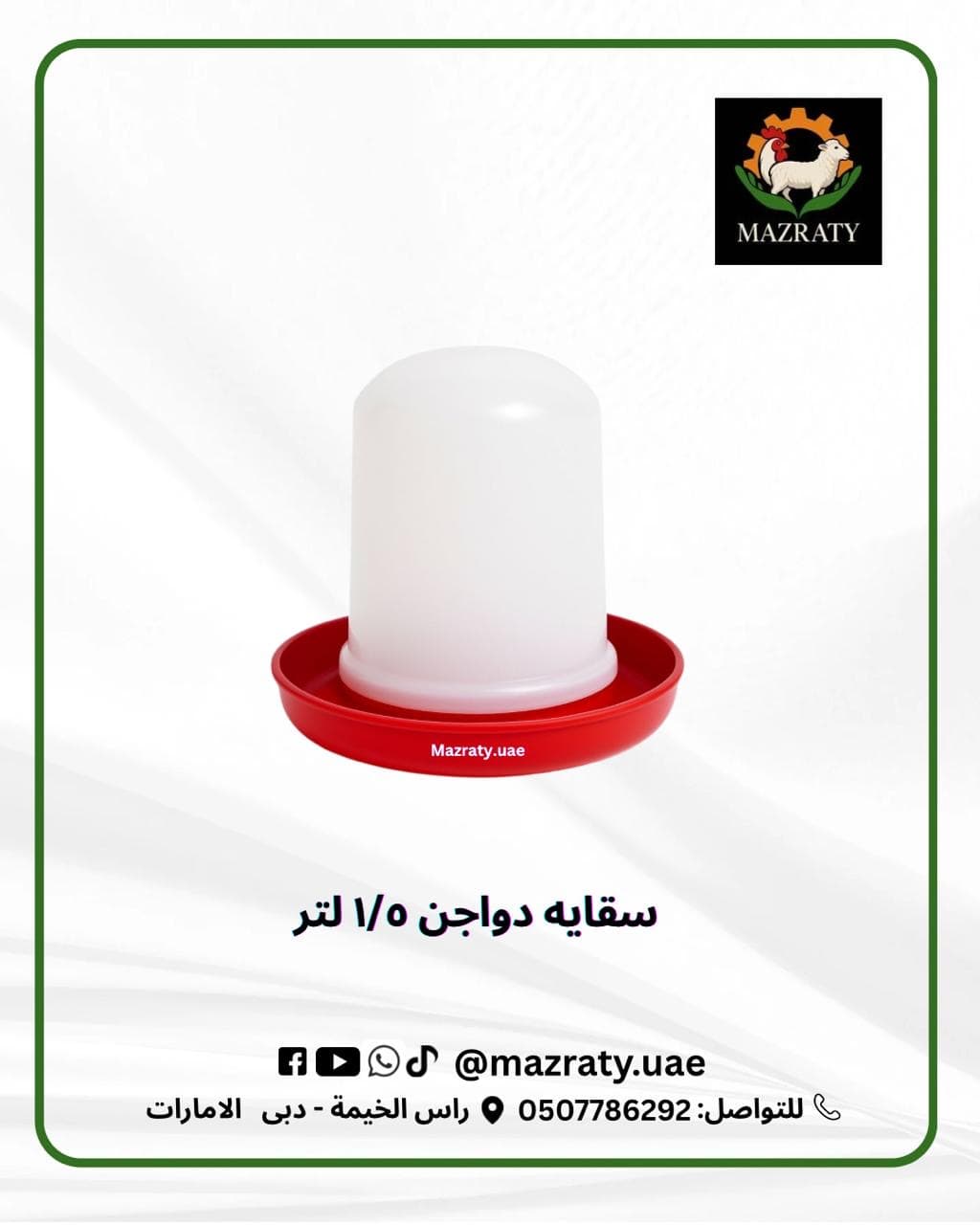
Manual drinkers in various capacities — 5 liter, 10 liter, and 12 liter — are simple containers filled by hand and placed on the ground. They suit very small operations or chick brooding stages. Jumbo drinkers are larger versions for medium bird counts.
Cup with Nipple Systems
This hybrid system combines nipple advantages with a small cup that catches drip water. Birds can drink from the cup or peck the nipple directly. Suitable for larger birds like layers, turkeys, and ducks.
Technical Specifications of Poultry Watering Systems
Flow Rates by Age
Nipple drinker flow rates must match bird age:
- Days 0-7: 40 ml/min for broilers (30 ml for breeders)
- Days 8-14: 50 ml/min (40 ml for breeders)
- Days 15-21: 60 ml/min (50 ml for breeders)
- Days 22-28: 70 ml/min (55 ml for breeders)
- Days 29-35+: 90 ml/min (60 ml for breeders)
Properly adjusted flow rates ensure birds receive adequate water without waste or floor wetting.
Drinking Line Height
The drinking line height must be continuously adjusted as birds grow. The rule: the nipple pin should be at bird eye level. If the line is too low, water leaks and wets the floor. If too high, birds cannot reach it comfortably.
Complete Nipple System Components
A full nipple poultry watering system includes:
- Pressure control unit with flushing system
- Slope regulator to adjust drinking line angle
- PVC or aluminum pipes of appropriate diameter
- Stainless steel nipples mounted on the pipe
- Anti-roost wire to prevent birds from sitting on the pipe
- End valve with water level indicator
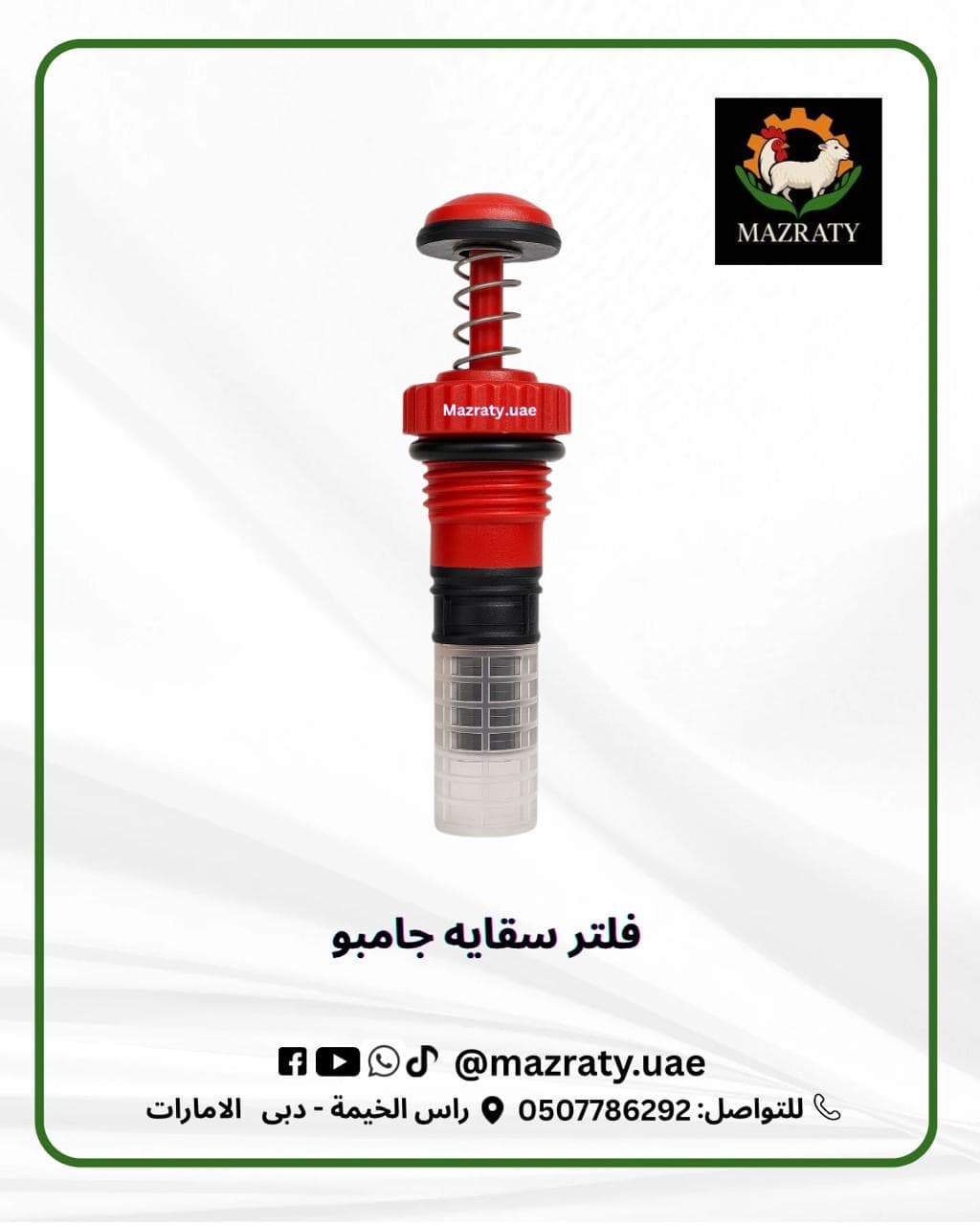
- Water filter to protect nipples from clogging
Why Watering Systems Matter Even More in the UAE Climate
Doubled Consumption in Summer
During a UAE summer, poultry water consumption doubles or triples compared to winter. Your poultry watering system must be designed to meet this elevated demand without any interruption. A large, thermally insulated water tank is essential to ensure relatively cool water remains available.
Water Temperature
Hot water in sun-exposed pipes discourages chickens from drinking and accelerates bacterial growth. Insulating water pipes from sun exposure or burying them underground keeps water cool. Some advanced UAE farms use a dedicated water chilling unit to ensure cool water reaches birds even on the hottest summer days.
Water Quality
In some UAE areas, groundwater may contain high levels of salts and minerals. Installing an appropriate filter at the drinking system inlet protects nipples from clogging and improves water quality delivered to birds. Regular water quality testing is golden advice for every farmer.
How to Choose the Right Poultry Watering System
- Farm size: Small farms (under 500 birds) can use manual drinkers or a simple nipple system. Medium and large farms need a fully automated nipple system.
- Bird type: Chicks need low-flow nipples. Adult chickens need higher flow rates. Ducks and geese may need cup systems.
- Housing system: Floor-raised birds need suspended, height-adjustable drinking lines. Battery cage birds need nipples mounted on each cage.
- Water quality: High-mineral water requires additional filtration and corrosion-resistant nipples.
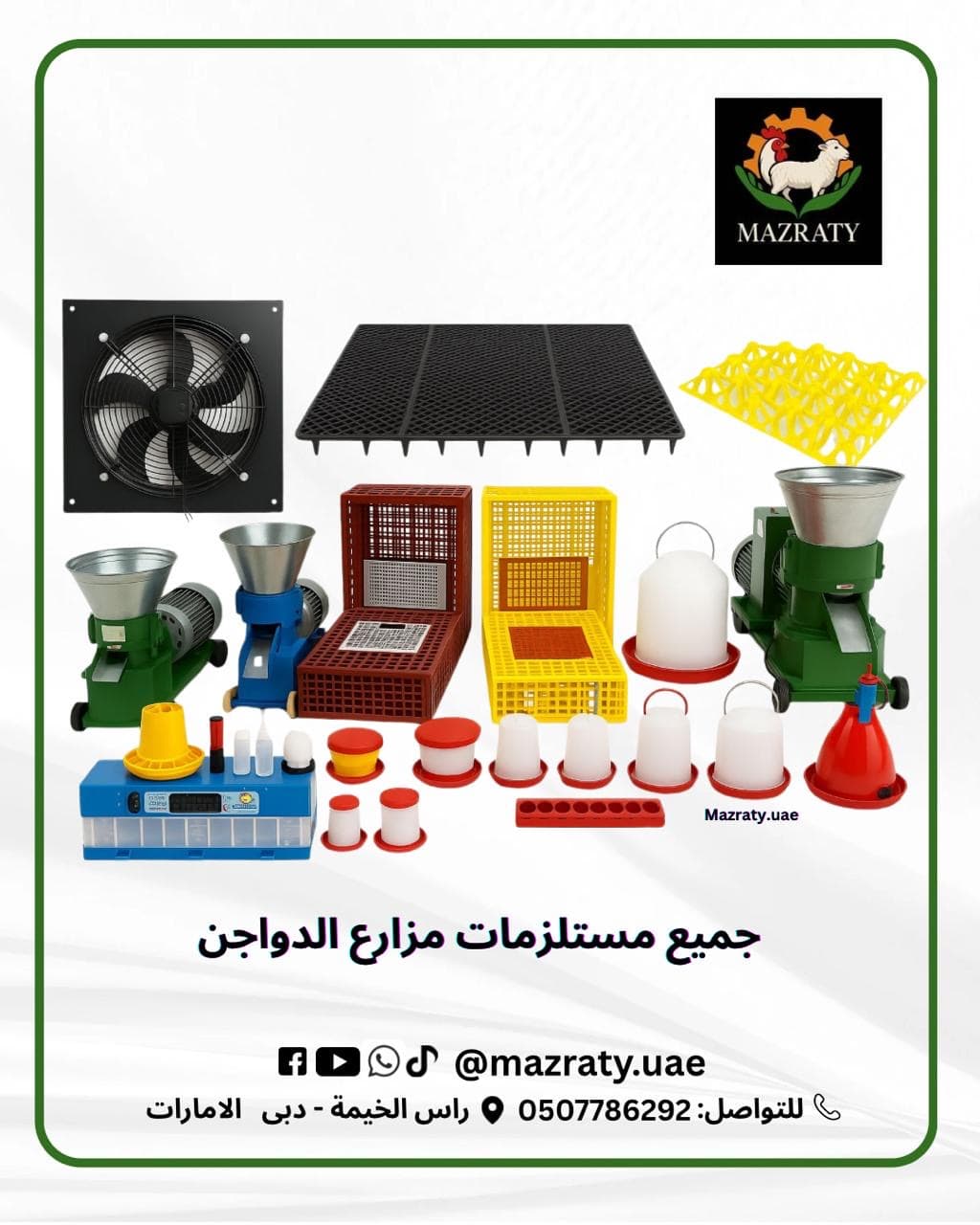
At Mazraty showroom in Ras Al Khaimah, we supply all types of poultry drinkers and watering systems — from simple manual drinkers to complete automated nipple systems. Browse our poultry drinkers and farm supplies.
Reviewed planning sources
These references support operating and welfare principles. Final design and health programs remain site-, strain-, authority- and veterinarian-specific.
Frequently Asked Questions About Poultry Watering Systems
How many nipples do I need per chicken?
The general rule is one nipple per 8 to 12 birds in broiler farms, and one nipple per 6 to 8 birds in layer operations. In the UAE's hot climate where consumption increases, use the lower end (one nipple per 8 birds) to prevent crowding at drinking points.
How do I know if water pressure is correct in a nipple system?
Correct pressure produces a small water droplet visible at the nipple tip without continuous dripping. If no droplet appears, pressure is too low. If water leaks continuously, pressure is too high. A pressure regulator allows precise adjustment.
Are manual drinkers sufficient for small farms?
For very small operations under 100 birds, yes. But even small farms benefit from nipple systems because they reduce daily labor and dramatically improve water hygiene. The investment difference is modest and the return in bird health is significant.
How often should the poultry watering system be cleaned?
Flush drinking lines at least weekly to prevent biofilm and algae buildup inside pipes. Clean water filters monthly and replace as needed. Increase cleaning frequency during summer. Periodic sanitization of the entire drinking system protects against disease.