A complete guide to setting up a professional poultry farm in the UAE: site selection, permits, house design, infrastructure, and operations. Contact Mazraty +971 50 535 3412.
Complete Poultry Farm Setup from Scratch in UAE
The poultry sector is one of the fastest-growing agricultural industries in the United Arab Emirates. As the country continues to prioritise food security and reduce its dependence on imports, setting up a fully integrated poultry farm has become an attractive investment opportunity for entrepreneurs across the UAE. In this comprehensive guide, we walk you through every step of establishing a professional poultry operation, from selecting the right site to launching full commercial production.
Mazraty, based in Ras Al Khaimah, brings over 20 years of hands-on experience in supplying, installing, and maintaining poultry farm equipment across the UAE. We offer free delivery to all seven emirates. For a free consultation, contact us on WhatsApp: +971 50 535 3412.
Step 1: Site Selection for Your UAE Poultry Farm
Choosing the right location is the single most impactful decision you will make for your farm's long-term success. In the UAE's hot, arid climate, specific site criteria must be carefully evaluated:
- Distance from residential areas: Regulations issued by the federal Ministry of Climate Change and Environment, as well as local authorities such as ADAFSA in Abu Dhabi and Dubai Municipality (DM), typically require a minimum buffer of 500 metres to 2 kilometres from residential or commercial zones to limit odour, noise, and disease transmission risk.
- Topography and drainage: A slightly elevated site with good natural drainage is strongly preferred to avoid waterlogging during the UAE's occasional heavy rainfall events, particularly in the northern emirates.
- Infrastructure proximity: Access to paved roads is essential for smooth logistics covering live-bird transport, feed deliveries, and staff commuting.
- Prevailing wind direction: Orient farm buildings so that prevailing winds carry odours away from nearby populated areas.
- Room for future expansion: Choose a site that allows you to scale up production capacity without relocating.
Step 2: Permits and Legal Requirements
Establishing a poultry farm in the UAE requires obtaining multiple licences and approvals from the relevant authorities. The exact process varies by emirate:
Abu Dhabi — ADAFSA
- Submit an agricultural activity licence application to the Abu Dhabi Agriculture and Food Safety Authority (ADAFSA).
- Obtain land use approval from the Department of Municipalities and Transport.
- Comply with ADAFSA biosecurity protocols and farm registration requirements.
- Register under the veterinary health surveillance system.
Dubai — Dubai Municipality (DM)
- Apply for a poultry farm licence through DM's Agricultural Services Department.
- Secure environmental health compliance approval.
- Register the farm in the livestock production tracking system.
Northern Emirates
In Ras Al Khaimah, Sharjah, Ajman, Umm Al Quwain, and Fujairah, local municipalities and agricultural departments handle licensing. Procedures tend to be more streamlined than in the two larger emirates. Plan for a 2–4 month window to obtain all required permits.
Step 3: Poultry House Design for the UAE Climate
Engineering a house that can manage the UAE's extreme summer heat is fundamental to bird survival and production performance. Summer temperatures commonly reach 42–48°C, making ventilation and cooling systems the highest-priority design element.
Standard House Dimensions
- Length: 80–120 metres depending on required capacity.
- Width: 12–16 metres to ensure adequate tunnel airflow.
- Height: Minimum 3.5 metres at the sidewalls and 4.5 metres at the ridge to allow hot air to rise and exit efficiently.
Recommended Construction Materials
- Walls: Sandwich panel sheets at least 10 cm thick for thermal insulation.
- Roof: White or light-coloured cladding to reflect solar radiation.
- Floors: Reinforced concrete at least 15 cm thick with a moisture-barrier layer.
Ventilation and Cooling Systems
The industry-standard approach in the UAE is Tunnel Ventilation, which uses large exhaust fans at one end of the house and evaporative cooling pads (wet-wall panels) at the other. This system can reduce internal temperature by 8–12°C below ambient, dramatically cutting heat stress on birds. Mazraty supplies and installs complete tunnel ventilation systems with automated environmental controllers. Contact us on +971 50 535 3412 for a site-specific design proposal.
Step 4: Utility Infrastructure — Power, Water, and Backup Generation
Three-Phase Electricity
Most modern poultry farm equipment — fans, pumps, automated feeding systems, lighting controllers — runs on three-phase power at 380V. For a 20,000-bird farm, total electrical demand typically falls between 80 and 120 kilowatts. Coordinate with your local electricity provider at least three months in advance to ensure the appropriate supply is available at your site.
Water Tank Sizing
Each 1,000 birds requires approximately 200–250 litres of water per day under moderate conditions. In summer, this demand can rise to 400 litres per 1,000 birds. For a 20,000-bird operation, plan for storage tanks with a total capacity of at least 15,000 litres, backed by a reliable continuous supply from the municipal network or a licensed artesian well.
Backup Generators
Power outages during UAE summers are a life-threatening emergency for poultry. Heat stress can cause mass mortality within hours if ventilation stops. An automatic transfer switch (ATS) generator sized to at least 80% of total farm electrical load is mandatory, with a minimum 48-hour onsite fuel reserve. Never compromise on backup power — it is an insurance policy, not a luxury.
Step 5: Core Equipment and Systems
A fully integrated poultry farm requires the following essential equipment categories:
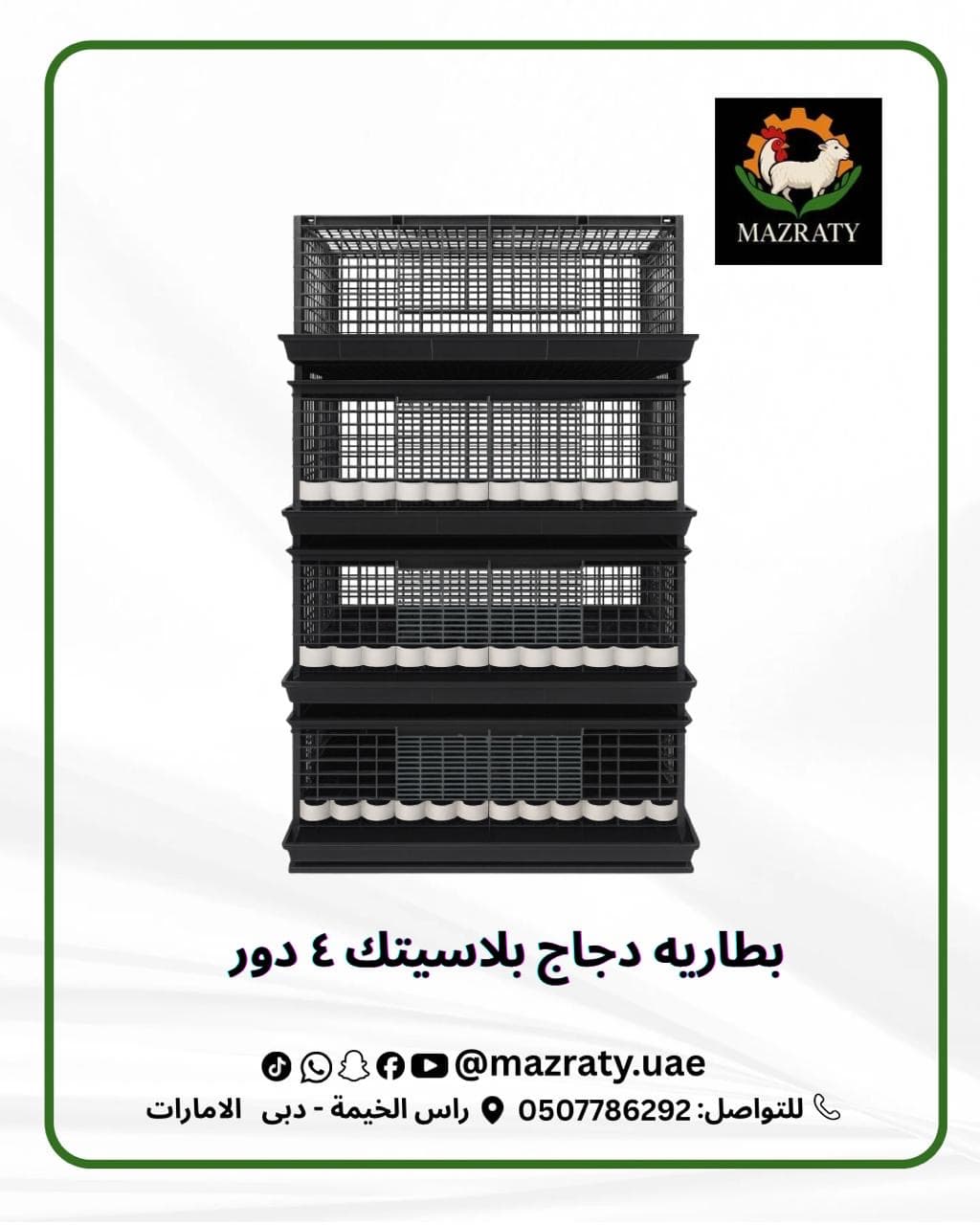
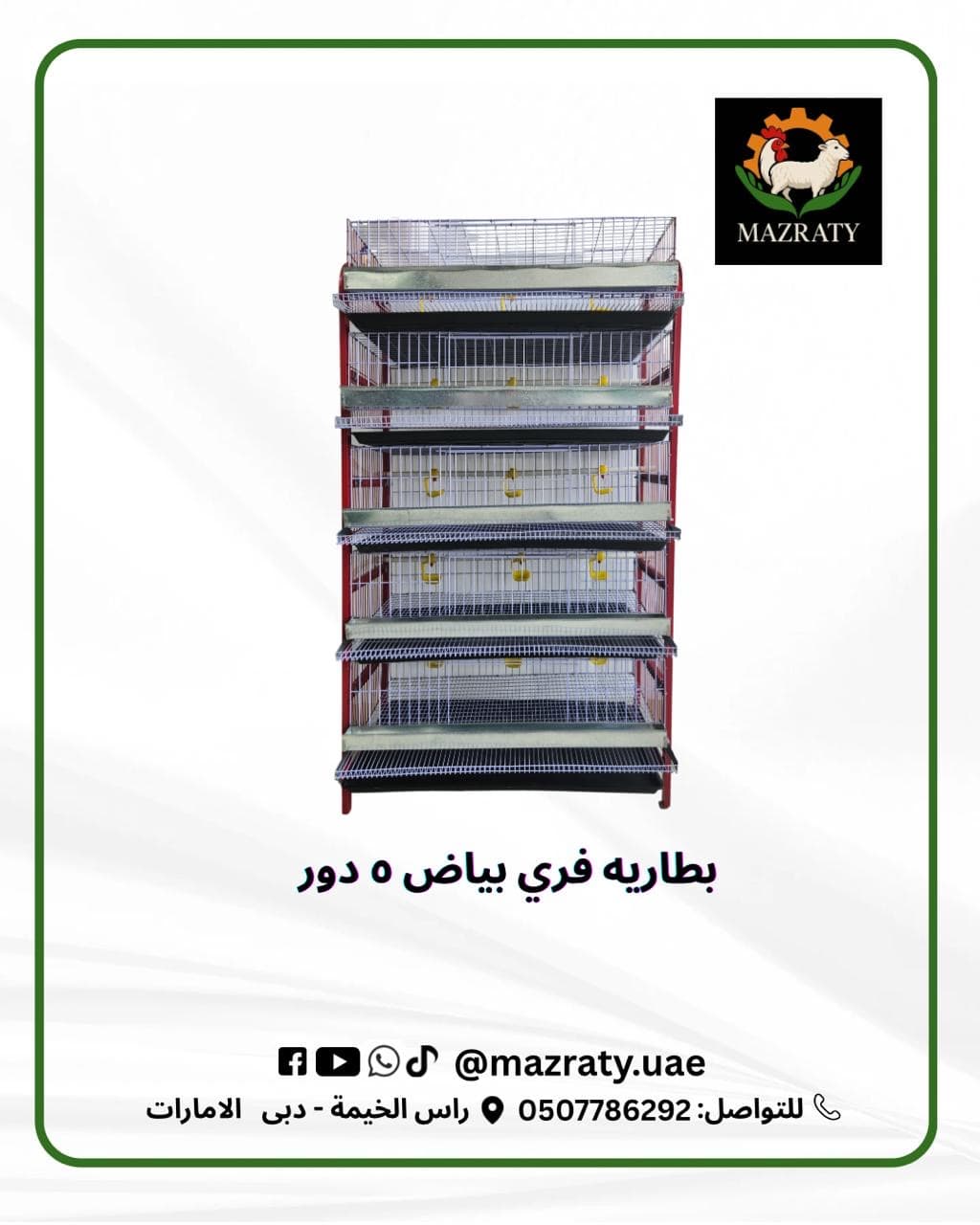
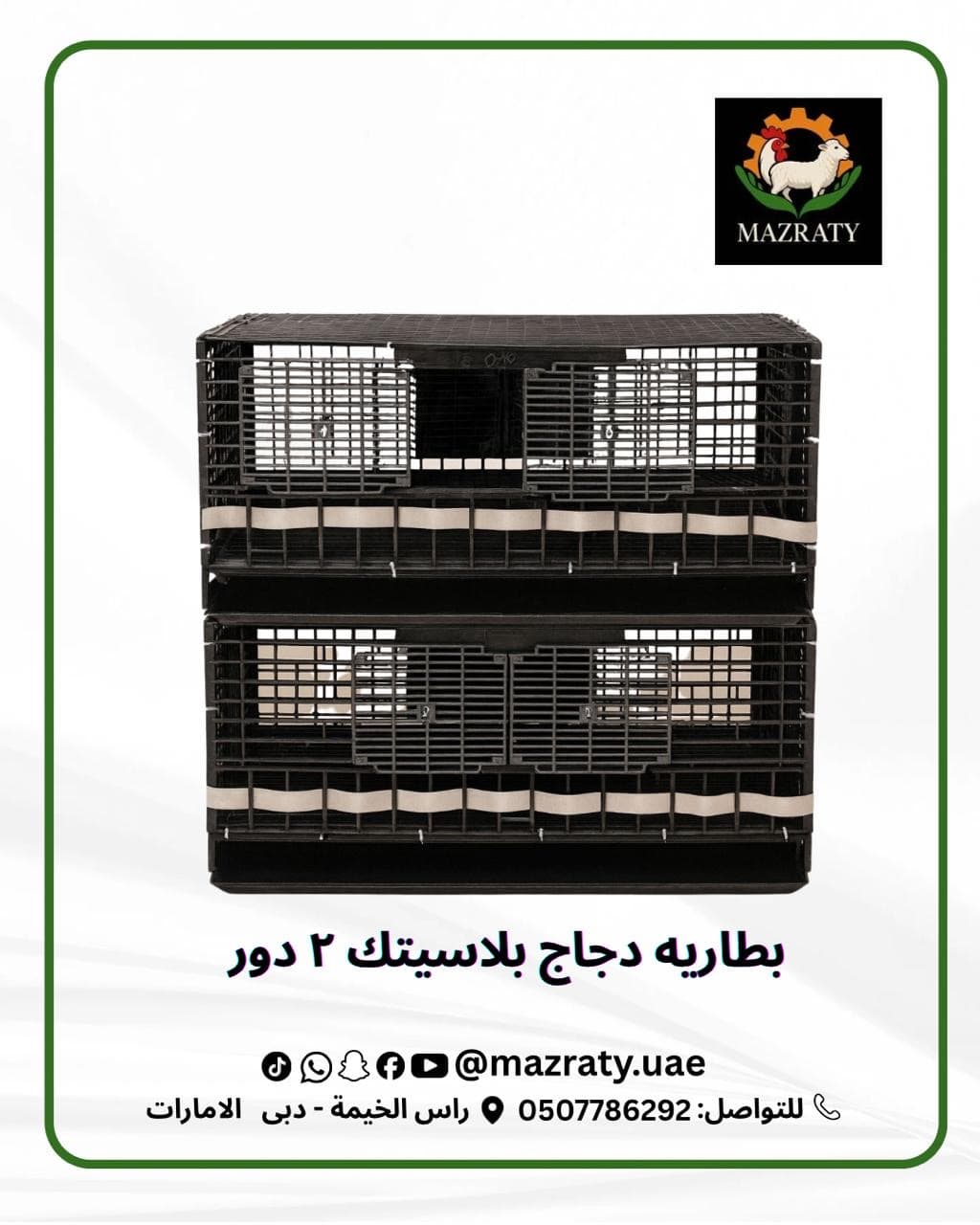
- Automated feeding lines: Reduce labour costs and ensure uniform feed distribution to every bird in the house.
- Nipple drinker systems: Cleaner and more hygienic than open trays, and can reduce water wastage by up to 30%.
- LED lighting systems: Programmable lighting schedules that optimise growth rates and egg production.
- Environmental controllers: Automatically monitor and adjust temperature, humidity, and air quality within each house.
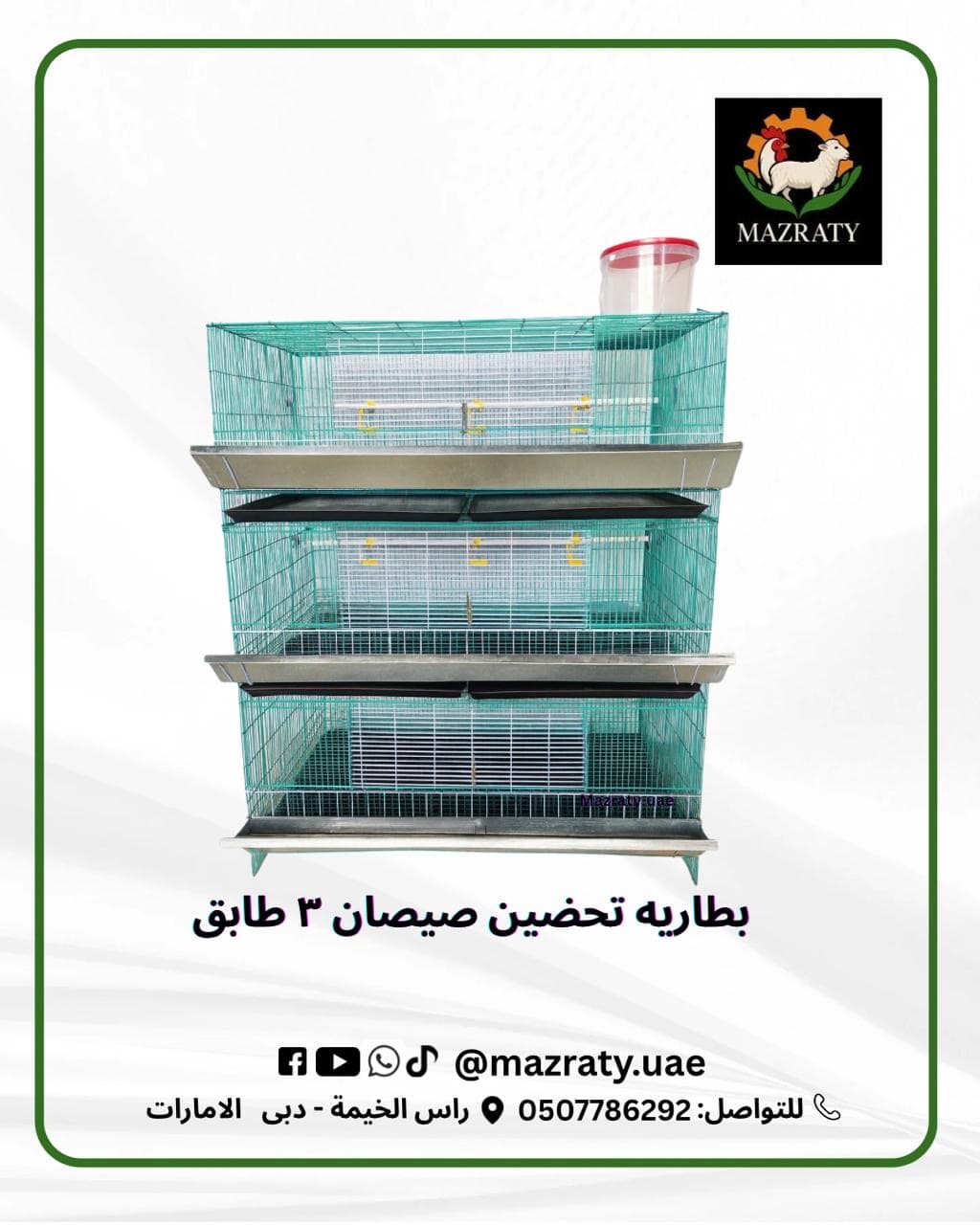
- Brooding heaters: Essential for day-old chicks, particularly during UAE winter months when temperatures can drop sharply overnight.
- Cleaning and disinfection equipment: High-pressure washers and dry-fog disinfection systems for biosecurity between flocks.
Mazraty supplies all of the above with free delivery anywhere in the UAE, plus professional installation and ongoing maintenance. Call or WhatsApp us on +971 50 535 3412 to receive a full equipment package quotation.
Step 6: Staffing and Labour Planning
Correct staffing is a key driver of production efficiency and biosecurity compliance. Based on UAE industry benchmarks:
- General farm workers: One worker per 5,000–10,000 birds in medium-automation farms; this ratio can extend to 15,000 birds per worker in highly automated operations.
- Farm management: A farm supervisor, a stores and inventory officer, and a sales and logistics coordinator.
- Technical staff: An electrician and mechanical technician experienced in agricultural equipment, plus a licensed veterinarian on a scheduled visiting basis.
- Security: A resident security guard is essential to protect birds and equipment, and to enforce strict biosecurity protocols — particularly preventing unauthorised entry that could introduce disease.
On-site accommodation for workers is strongly recommended. It eliminates daily commute costs, ensures faster emergency response, and reduces the biosecurity risk posed by workers entering from outside.
Step 7: Building Your Input Supply Chain
Day-Old Chicks
A reliable, consistent supply of quality day-old chicks is the foundation of uninterrupted production. The UAE has a number of approved local and regional day-old chick suppliers. It is advisable to enter forward supply contracts well in advance to guarantee delivery of specific quantities on specific dates.
Feed
Feed costs account for 60–70% of total operating expenses in poultry production. Ready-mixed broiler feed is available from local UAE suppliers, but many larger farms choose to import raw ingredients (corn, soybean meal) and manufacture feed on-site using grinding and pelleting equipment. The target feed conversion ratio (FCR) for broilers reaching a 2–2.2 kg live weight is 1.8–2.0 kg of feed per kg of body weight gain.
Veterinary Supplies and Vaccines
Develop a strict vaccination schedule in coordination with a licensed veterinarian and secure contracts with approved suppliers for all medicines and vaccines. Compliance with the vaccination programme is non-negotiable for maintaining flock health and farm certification status.
Step 8: Market Channels and Revenue Planning
Securing reliable offtake channels before the first flock arrives is as important as any technical preparation. UAE market channels for poultry products include:
- Wholesale markets: Selling live or slaughtered birds to wholesale traders in Dubai, Abu Dhabi, and Sharjah meat markets provides fast turnover but involves price volatility.
- Retail chains and supermarkets: Supplying major grocery chains offers price stability but requires quality certifications, consistent supply volumes, and formal contracts.
- Hotels and restaurants: The UAE's large hospitality sector represents a premium buyer segment. Direct supply agreements typically offer better margins than wholesale.
- Direct-to-consumer: Digital delivery platforms and farm-direct subscription models are growing in popularity among UAE consumers seeking fresh, locally produced poultry.
- Export: Requires compliance with destination-country health requirements and internationally recognised halal certifications.
Step 9: The 6–12 Month Setup Timeline
A realistically planned timeline for establishing a complete poultry farm in the UAE looks as follows:
- Months 1–2: Feasibility study, site selection, and submission of licence applications.
- Months 3–4: Receiving licences, connecting electricity and water, and commencing construction.
- Months 5–6: Completing construction, installing all equipment, and testing all systems.
- Month 7: Receiving the first trial flock of day-old chicks at 20–30% of full capacity.
- Months 8–9: First production cycle, monitoring and adjusting operational protocols.
- Months 10–12: Reaching full production capacity and commencing full commercial operations.
Step 10: Estimated Project Costs in AED
Investment requirements vary significantly based on farm size and automation level. The following are indicative estimates for a 20,000-bird farm in the UAE:
- Site preparation and construction: AED 350,000 – 500,000
- Equipment and fittings: AED 200,000 – 350,000
- Utility connections (electricity, water, access road): AED 50,000 – 150,000
- Working capital (first production cycle): AED 80,000 – 120,000
- Total estimated investment: AED 680,000 – 1,120,000
For a detailed, site-specific feasibility study and accurate equipment quotations, contact the Mazraty advisory team on WhatsApp: +971 50 535 3412. We can help you plan every component of your investment with confidence.
Ready to Start Your Poultry Farm? Mazraty Is With You Every Step
Building a successful poultry operation in the UAE demands meticulous planning, a reliable technical partner, and rigorous attention to every detail from permitting to marketing. With 20+ years of experience equipping farms across the UAE, Mazraty is uniquely positioned to guide you through the entire process — from site design consultation and equipment supply to installation, commissioning, and ongoing maintenance.
All equipment is delivered free of charge anywhere in the UAE. Get in touch today and take the first step toward making your farm a reality. WhatsApp us on +971 50 535 3412 — we respond fast.
Reviewed planning sources
These references support operating and welfare principles. Final design and health programs remain site-, strain-, authority- and veterinarian-specific.
Frequently Asked Questions
Which authority issues poultry farm licences in the UAE?
The issuing authority depends on your emirate. ADAFSA handles licences in Abu Dhabi, Dubai Municipality covers Dubai, and local municipal and agricultural departments manage licences in Ras Al Khaimah, Sharjah, Ajman, Umm Al Quwain, and Fujairah. Contact the relevant authority early in your planning process to understand all local requirements.
How long does it take to get a poultry farm licence in the UAE?
The full licensing process typically takes 2–4 months, depending on documentation completeness and the responsiveness of the relevant authorities. It is advisable to begin the licensing process in parallel with your engineering and financial planning to avoid delays.
How many workers does a 20,000-bird poultry farm in the UAE need?
With semi-automated equipment, a core team of 3–5 general farm workers plus a supervisor, administrative staff, and part-time technical support is typically sufficient. In highly automated farms, two skilled workers can manage 10,000–15,000 birds each.
Is three-phase electricity available at remote farm locations in the UAE?
Yes, utility providers in all emirates can extend three-phase supply to farm locations, although the process takes 2–4 months and may involve a contribution to grid extension costs. At very remote sites where grid connection is impractical, a primary generator (not just a backup) may be the most cost-effective power solution.
What return on investment can I expect from a poultry farm in the UAE?
Well-managed broiler farms in the UAE typically achieve annual returns on investment of 20–35%, with capital payback periods of 3–5 years. Returns depend heavily on operational efficiency, feed sourcing costs, and chosen market channels. Contact Mazraty on +971 50 535 3412 for a customised feasibility analysis tailored to your specific situation.