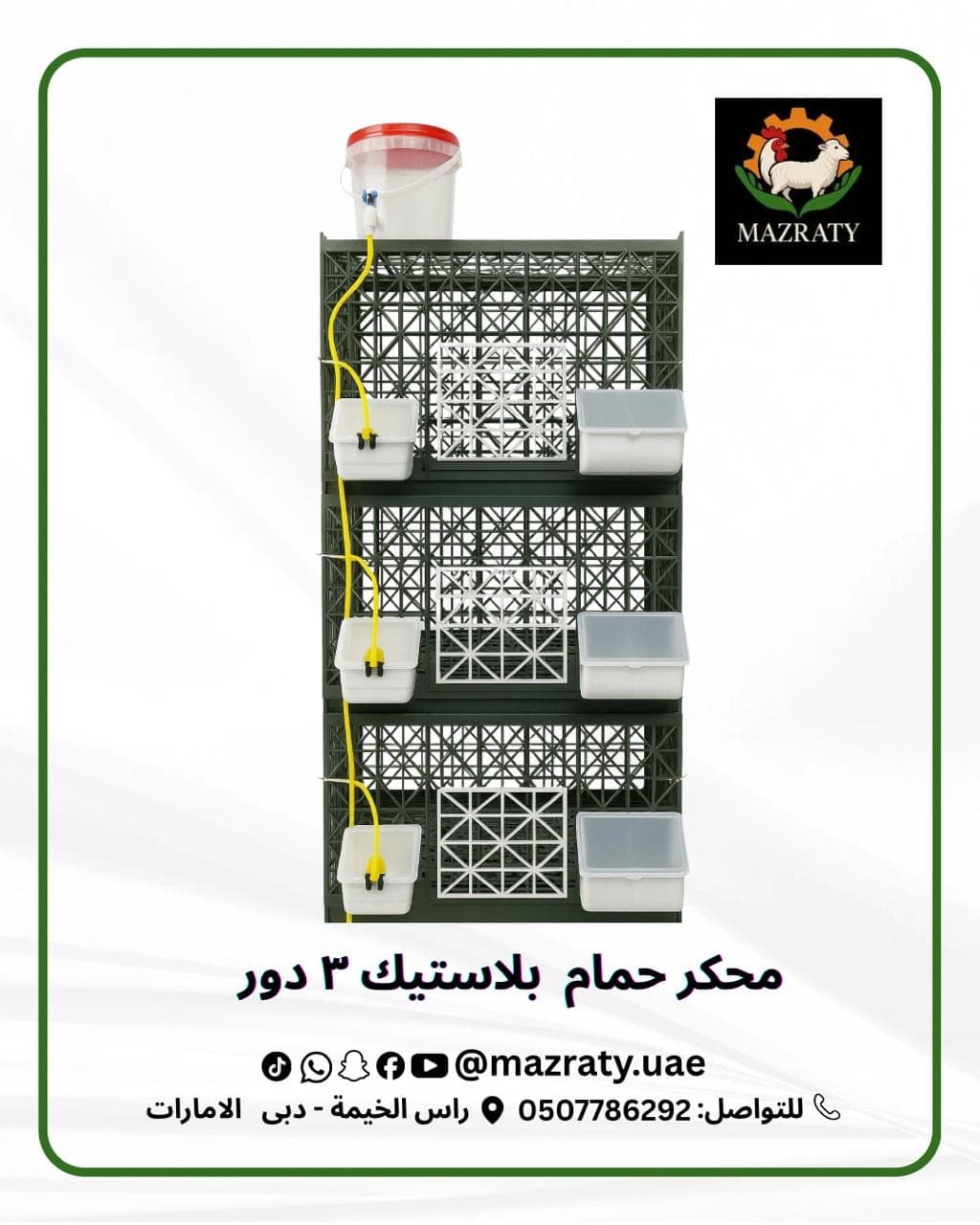
Pigeon racing in the UAE is a deeply rooted tradition that has evolved into a precision sport governed by strict federation rules and supported by advanced electronic timing technology. From the scorching summer heat of Ras Al Khaimah to the cooler racing season between October and March, serious fanciers understand that championship results begin long before race day. Success depends on a purpose-built racing loft with separated sections for cocks, hens, and widowhood training, combined with calibrated ETS clock systems, well-designed bob-wire traps, and a scientifically structured conditioning feed program. This comprehensive guide walks UAE pigeon sport enthusiasts through every critical element — loft architecture, electronic timing systems, progressive toss training from 20 km to 100 km, race-day health protocols, and champion bloodline selection in the Gulf market. Mazraty, Ras Al Khaimah's leading farm and loft equipment supplier, stocks the full range of professional pigeon racing hardware to help you build a winning setup from the ground up.
Mazraty supplies the full ecosystem of equipment that competitive UAE loft owners need — from welded mesh loft panels and landing boards to ETS antenna kits and ventilation hardware — all available for delivery across Ras Al Khaimah and the northern emirates.
Designing a Championship Racing Loft for UAE Conditions
The UAE climate makes loft design non-negotiable for serious racers. A competition loft in Ras Al Khaimah must manage interior temperatures during the autumn cool-down period (October: 28–34°C daytime) while providing excellent year-round ventilation and protection from sand-laden shamal winds. The internationally accepted minimum space standard is 0.5 square metres of floor space per bird, but championship trainers in the Gulf typically allow 0.75–1.0 m² per bird to reduce stress and disease pressure.
Section Layout: Cocks, Hens, and Widowhood Compartments
A proper racing loft is divided into at least three functionally distinct sections:
- Cock section: Houses racing cocks permanently. Fitted with individual nest boxes measuring 60 cm × 60 cm × 60 cm. The widowhood system — where cocks are separated from their hens and reunited only briefly before basketing — is the dominant motivation method used by UAE champions. This requires a full partition wall with a passage door.
- Hen section: Separate compartment of equal size. Hens are kept isolated during widowhood training cycles and only introduced to the cocks 24–48 hours before race basketing. This produces the maximum motivation response that drives 1,000+ metres-per-minute velocity in the best birds.
- Young bird / training loft: A third compartment, ideally on the opposite end of the structure, used for the season's young birds. Fitted with a dedicated landing board and trap system independent of the main loft entrance.
Construction materials preferred in the UAE include galvanised welded mesh panels (19 mm × 19 mm, 1.2 mm wire gauge) for side walls and corrugated aluminium or insulated sandwich-panel roofing to reflect solar radiation. A well-insulated loft roof can reduce interior temperature by 6–8°C compared to uninsulated metal. Mazraty stocks galvanised mesh rolls, loft-frame kits, and pre-cut landing board timber to specification.
Ventilation and Orientation
Orient your loft so the landing board faces north or northeast — the primary race direction for most UAE circuits originating from Oman, Abu Dhabi, or Al Ain. Fit adjustable ridge vents at the roofline (minimum 15 cm gap the full length of the structure) combined with low inlet vents at 30 cm above floor level. Target an interior air change rate of 4–6 complete air changes per hour during the racing season. In summer, automated timer-controlled exhaust fans maintain air quality for non-racing birds held over.
Electronic Timing Systems: ETS Clocks, Antennas, and Verification
No element of the racing loft has undergone more technological advancement than the timing system. Hand clocks and rubber rings are entirely obsolete at federation level in the UAE. The three dominant ETS platforms among Gulf fanciers are RacingAhead, Tauris, and Unikon.
How ETS Systems Work
Each racing pigeon wears a passive RFID electronic ring, typically 10 mm or 11 mm internal diameter, programmed with a unique bird ID. When the bird lands and passes through or over the antenna panel mounted at the loft entrance, the reader antenna records the bird's unique code and timestamps the entry to within ±0.01 seconds. This data is stored in a tamper-proof clock unit. At race end, the fancier brings the clock to the association's verification point where data is downloaded and compared against the basketing sheet — confirming the correct bird arrived and calculating velocity against GPS-measured race distance.
Antenna Placement and Installation
Proper antenna installation is the single most common source of timing errors. Key requirements:
- Mount the flat antenna panel flush with or recessed 5 mm below the landing board surface so birds walk directly over it without hesitation.
- Antenna read range: 5–8 cm for standard flat antennas; tunnel antennas (required by EMRPA for all races above 300 km) have a 12–15 cm read range and completely enclose the bird's passage.
- Cable runs from antenna to clock unit must not exceed 15 metres without a signal booster. Use shielded coaxial cable and avoid running parallel to power cables, which cause interference in the UAE's high-EMF environment near industrial areas.
- Power the clock unit from a dedicated 12V sealed lead-acid backup battery (7Ah minimum) so a power outage during race finish does not lose data.
Mazraty supplies and installs ETS antenna systems, provides clock calibration services, and carries replacement electronic rings in sizes 10 mm and 11 mm for all major pigeon breeds.
Trap Designs: Landing Boards, Bob Wires, and Electronic Entry Systems
The trap — the mechanism that allows the bird to enter the loft from the landing board — directly determines how quickly your pigeon's arrival is recorded. Every second of delay between the bird landing and passing the ETS antenna is race velocity lost. UAE champions obsess over trap training and hardware.
Bob Wire Traps
The traditional and still widely used design consists of a row of vertical wire rods (bob wires) spaced 35–40 mm apart, hung from a horizontal bar so they swing inward only. The bird pushes through the wires and cannot push them back out. Critical design detail: the bob wires must be smooth and free of burrs — file all cut ends. Wire diameter of 3 mm is standard. The vertical opening must be 100–110 mm wide to admit a racing pigeon without hesitation. Train young birds through bob wires from their first week in the loft by propping the wires open progressively, then reducing clearance over 10–14 days until birds enter confidently at full resistance.
Electronic Trap Doors
High-end lofts now use motorised trap doors triggered by the ETS antenna read. When the antenna detects the bird's ring, a solenoid releases a weighted door that swings inward, allowing entry and then automatically resetting. These systems guarantee the bird passes directly over the antenna at entry — eliminating any possibility of a bird entering and the ring not reading. Price range in the UAE market: AED 800–2,200 per door unit depending on brand. Mazraty can source and configure electronic trap door systems on request.
Progressive Training Schedules: 20 km to 100 km Toss Progression
No racing pigeon reaches its competitive potential without a methodical training programme. In the UAE, the racing season preparation window runs from August through September when temperatures begin to moderate, allowing morning training tosses by 06:00–07:30 before heat builds.
Young Bird Training Progression
| Week | Toss Distance | Direction | Notes |
|---|
| 1–2 | 2–5 km (loft surroundings) | All directions | Build loft orientation; release pairs |
| 3–4 | 10–15 km | Race direction (NE/N) | Individual releases after group OK |
| 5–6 | 20–25 km | Race direction | Monitor for stragglers; cull non-returners by day 3 |
| 7–8 | 40–50 km | Race direction | Begin ETS clock training (basket + clock at same time) |
| 9–10 | 70–80 km | Race direction | Race-condition feeding begins; vitamins day before |
| 11–12 | 100–120 km | Race direction | Full simulation: basketing, transport, release |
Transport boxes during training should replicate race conditions exactly: 6–8 birds per compartment, freshly drinked and fed 3 hours before boxing, not immediately before. Use the same transport vehicle so birds associate the vibration and smell with race routine. Mazraty supplies slatted-wood and ventilated-aluminium transport boxes built to EMRPA basketing specifications.
Race-Conditioning Feed: Ratios, Timing, and Supplementation
Feeding strategy separates competitive lofts from average ones. UAE championship trainers follow a structured weekly cycle with distinct phases:
Base Ration (Off-Season and Early Training)
A balanced maintenance mix averaging 14–16% crude protein:
- Barley: 35% (low-energy, high-fibre — keeps birds lean)
- Yellow corn (maize): 20%
- Maple peas: 20% (high protein for muscle maintenance)
- Wheat: 15%
- Linseed (flaxseed): 5% (omega-3 for feather quality)
- Safflower seed: 5% (condition oil)
Race-Week High-Energy Ration
From Wednesday evening before a Saturday race, shift to a high-energy depurative ration:
- Yellow corn: 40% (fast glycogen loading)
- Maple peas: 30% (muscle protein)
- Dari (sorghum): 15%
- Rice (paddy): 10%
- Hemp seed: 5% (rapid energy release)
Feed quantity on the day before basketing: 35–40 grams per bird, given in a single morning feed, then nothing until after basketing. This ensures the bird travels with a full crop glycogen store without excess gut weight. Post-race recovery feed (first 48 hours back): return to the base barley-heavy ration plus extra peas for muscle repair.
Vitamins, Electrolytes, and Amino Acids
The UAE heat creates specific supplementation needs that European protocols do not address:
- Electrolytes (sodium, potassium, magnesium): Add to drinking water for 48 hours after racing to replace sweat losses. Use a commercial electrolyte powder dosed at 2 g per litre.
- Vitamin B-complex: Critical for energy metabolism. Administer via water on Monday and Tuesday of race week. B12 specifically supports red blood cell production — vital for oxygen-carrying capacity over long race distances.
- Amino acid supplement (methionine + lysine blend): Support feather production during moult (April–August) at 1 ml per litre daily.
- Vitamin E + Selenium: Muscle integrity supplement, given twice weekly during training season. Prevents oxidative muscle damage in birds completing 400+ km races.
Health Monitoring and Veterinary Protocols
UAE racing lofts face a specific disease burden driven by high bird density, shared basketing at association points, and temperature stress. The three conditions that most commonly disrupt race performance are:
Paramyxovirus (PMV-1 / Newcastle Disease Variant)
Mandatory vaccination under EMRPA rules. Birds must present a valid PMV vaccination certificate issued within the last 12 months. Vaccinate young birds at 6–8 weeks of age with a killed PMV-1 vaccine, with a booster 3–4 weeks later. PMV in racing pigeons causes neurological symptoms (head twisting, balance loss) and renal shutdown — an affected bird will not race and can spread the virus through shared water at basketing. Keep written records. UAE federal veterinary inspections at association premises do occur.
Trichomonas (Canker)
The most common performance-suppressing infection in the UAE racing scene, caused by the flagellate protozoan Trichomonas gallinae. Symptoms: yellowish plaques in the throat and crop, weight loss, reduced feed intake. Treatment: Ronidazole 10 mg/kg body weight in water for 6 consecutive days, or Metronidazole at 50 mg/kg for 5 days. Never treat within 5 days of race basketing — Ronidazole causes temporary lethargy. Screen a representative sample of 5 birds from your loft with crop swab microscopy before the season opens.
Hexamita (Spironucleus)
Often confused with Trichomonas but infects the intestinal tract rather than the upper digestive system. Signs: green watery droppings, weight loss despite normal appetite, poor race returns. Treated effectively with the same Ronidazole protocol. Combined Trichomonas + Hexamita screening is advisable before each race series.
Mazraty maintains a small veterinary sundries stock including electrolyte powders, vitamin supplements, and crop swab kits, and can connect customers with the nearest licensed avian veterinarian in Ras Al Khaimah for prescription treatments.
Race Day Handling Checklist
Professional UAE fanciers follow a documented pre-race protocol to minimise handling errors:
- Thursday evening (48h before release): Verify each bird's ETS ring is securely fitted and reads correctly through your loft antenna. Weigh a sample of 6–8 birds — ideal race weight is approximately 430–480 g for a standard racing homer.
- Friday morning (24h before release): High-energy race feed, single meal 35–40 g per bird. Clean all drinkers. Add electrolyte + B-complex to water.
- Friday evening (basketing): Basket birds calm, avoid rough handling — cortisol spikes from rough basketing measurably reduce race performance. Each basket should show the bird's ring to the association verifier. Present clock unit for official sealing.
- Saturday race day: Loft antenna powered on, clock unit armed and connected. Clean landing board — remove any droppings that could discourage fast landing. Open widowhood hens 15 minutes before expected first bird home to maximise motivation at the trap.
- Post-race (within 2 hours): Recovery electrolyte water available immediately. Allow birds to rest 30 minutes before offering feed. Inspect all returnees for injury (torn feathers, eye discharge, lameness).
UAE Race Calendar and Popular Circuits
The official UAE racing season calendar typically runs as follows:
- October–November: Young bird sprint series (150–250 km), northern emirates circuits. Liberation points near Al Ain and Fujairah.
- December–January: Open classic series (300–500 km). Oman liberation points (Nizwa, Sur) are popular for the easterly direction that suits Ras Al Khaimah and Fujairah-based lofts.
- February–March: Marathon classics (500–700 km). Historic races from inland Oman or Saudi border areas. These attract the highest prize money in the UAE circuit — top winners in club races have received AED 20,000–100,000 in combined prize and side pools.
Ras Al Khaimah has historically produced strong loft operators in the northern emirates scene due to the emirate's cooler relative humidity (55–65% in winter versus Dubai's 70–80%) and the prevalence of open land for large loft construction. The RAK Pigeon Racing Club holds monthly open training days where fanciers can basket birds jointly for shared transport — a significant advantage for breeders working without a dedicated transport vehicle.
Champion Bloodlines in the Gulf
Selecting the right genetic base is the foundation of a competitive loft. The bloodlines that have proven themselves in Gulf conditions include:
- Janssen (Arendonk strain): The most widely present champion bloodline in UAE lofts. Renowned for consistency over 300–500 km. Birds are typically blue bar, medium-sized (430–470 g), with excellent orientation and heat tolerance compared to northern European breeds.
- Van Loon: Sprint-oriented, explosive speed over 150–300 km. Popular in the young-bird series.
- Koopman: Long-distance genetics, excel in 500–700 km marathon events. Require an additional year of development before racing — patience is rewarded.
- Leo Heremans: Cross-bred extensively in the Gulf for the past 15 years. The Heremans influence increases recovery speed and appetite post-race, which is critical for birds racing on the UAE's weekly-race cycle.
Gulf fanciers import stock from Belgium, the Netherlands, and South Africa, with imports typically costing AED 2,000–15,000 per bird for proven race-stock descendants. Local birds bred over multiple generations in UAE conditions show improved heat adaptation and should not be dismissed in favour of expensive imports.
Build Your Championship Loft with Mazraty
Whether you are setting up your first racing loft or upgrading an existing facility to EMRPA competition standard, Mazraty is Ras Al Khaimah's most complete supplier of pigeon racing and loft equipment. Our range covers galvanised mesh loft panels, landing boards, bob-wire trap kits, ETS antenna systems, transport baskets, feed grain blends, vitamin and electrolyte supplements, and all the hardware you need to build a loft that wins. Our team understands UAE racing federation requirements and can advise you on compliant installations that pass association inspection first time.
Contact Mazraty today for a personalised loft equipment quote, product availability, and delivery across the UAE. Reach us on WhatsApp at +971 50 535 3412 — our team is available six days a week to assist with your racing pigeon equipment needs. Your next race champion starts with the right setup, and that setup starts with Mazraty.
Reviewed planning sources
These references support operating and welfare principles. Final design and health programs remain site-, strain-, authority- and veterinarian-specific.
Frequently Asked Questions
How should a racing pigeon loft be equipped?
Provide airflow, rest areas, a timing entrance, cleaning access and isolation space matched to the team’s routine.
Are racing rules the same for every event?
No. Check the specific organiser’s registration, health, timing and competition rules before entering.