Complete guide to nipple drinker system installation for poultry in the UAE, covering nipple types, pressure regulation, biofilm prevention and Mazraty supply across all emirates.
Nipple Drinker System Installation in the UAE – The Complete Poultry Guide
Installing a nipple drinker system is one of the most important investments a poultry farmer can make in the United Arab Emirates. With summer temperatures regularly exceeding 45°C, traditional open drinkers quickly become contaminated, waste enormous volumes of water, and fail to keep birds adequately hydrated. Mazraty, based in Ras Al Khaimah with over 20 years of experience supplying UAE farms, provides a complete range of nipple drinker systems engineered specifically for the Gulf climate, with free delivery across all seven emirates.
This in-depth guide covers everything you need to know about setting up and maintaining professional nipple water lines: nipple types, correct line height by bird age, pressure regulation, biofilm prevention, medication delivery through water lines, and the critical issue of hot water management during UAE summers.
This setup is also commonly called a poultry drinking system or an automatic drinking line — different names for the same core idea: a nipple line system that delivers water to birds through pressure-regulated nipples instead of open troughs.
Nipple Types: 360-Degree vs. 90-Degree Nipples
The first decision when designing a nipple drinker system is choosing the right nipple type. Two main designs dominate the UAE poultry market:
360-Degree (Omnidirectional) Nipples
360-degree nipples respond to pressure from any direction. Birds can push the trigger pin sideways, forward, or at an angle to release water. This design is best suited for:
- Day-old chicks and early broilers during the first 1 to 14 days when learning to drink
- High-density layer flocks where birds may approach from any angle
- Turkey poults and ducklings in early rearing stages
- Low-pressure systems operating at 5 to 15 cm water column
The key advantage of 360-degree nipples is ease of discovery. Chicks find water faster, reducing early mortality from dehydration — a real risk in UAE summer when temperatures inside brooder houses can still be high despite cooling systems.
90-Degree (Vertical) Nipples
90-degree nipples require the bird to push the pin straight upward from below. This design is optimal for:
- Broiler chickens from two weeks of age until slaughter weight
- High-density houses targeting 10 to 12 birds per nipple
- Medium to high pressure systems (15 to 25 cm water column)
- Farms delivering liquid medications through water lines
90-degree nipples produce significantly less litter moisture because the downward-facing pin does not drip between activations. Keeping litter dry is critical in the UAE, where humidity can spike during the summer monsoon period, and wet litter quickly becomes a source of ammonia, footpad dermatitis, and bacterial disease.
Stocking Density: How Many Birds per Nipple?
Getting the birds-to-nipple ratio right is fundamental to water intake, growth performance, and bird welfare. The internationally accepted guidelines are:
- Broilers from day 1 to 3 weeks: 8 to 10 chicks per nipple
- Broilers from 3 weeks to slaughter: 10 to 12 birds per nipple — this is the global standard for commercial broiler production
- Layer hens: 8 to 10 birds per nipple
- Turkeys: 6 to 8 birds per nipple due to higher individual water consumption
- Quail and small gamebirds: maximum 6 birds per nipple
In the UAE during summer months, leading nutritionists recommend reducing these ratios by approximately 20% because birds drink substantially more in extreme heat. A broiler at 40°C ambient temperature may consume three to four times more water than at 20°C. Mazraty's technical team can calculate the exact nipple count for your house dimensions and flock size. Contact us on WhatsApp at +971 50 535 3412 for a free consultation.
Line Height by Bird Age: Getting It Right
Nipple line height is one of the most frequently mismanaged aspects of poultry water systems. Set too high and birds cannot reach the nipple comfortably; set too low and birds crouch awkwardly, reducing water intake and straining joints.
The 45-Degree Neck Angle Rule
The universal standard is to position nipples so that the bird must extend its neck at approximately 45 degrees above horizontal to reach the trigger pin. In practical centimetre measurements:
- Chicks day 1 to 7: 5 to 8 cm above litter surface
- Day 7 to 14: 10 to 15 cm above litter
- Day 14 to 21: 20 to 25 cm above litter
- Broilers from 21 days to slaughter: 30 to 45 cm depending on breed and target weight
- Adult layer hens: 45 to 55 cm above cage or floor level
Adjustable Lift Systems
The best practical solution for broiler houses is a winch-based adjustable line system. A single farm worker can raise or lower entire water lines in minutes using a pulley and ratchet mechanism. This eliminates the need to change line hardware between flocks and pays for itself in saved labour within the first production cycle. Mazraty supplies complete adjustable nipple line kits with winch sets suitable for UAE broiler house spans.
Pressure Regulation: The Science Behind the Flow
Water pressure is the single most critical variable in nipple system performance. Too much pressure and the nipple drips continuously, saturating litter and raising ammonia levels. Too little and birds cannot trigger an adequate flow, leading to dehydration especially in summer heat.
Recommended Pressure Settings
- Chicks up to 10 days old: 5 to 10 cm water column (approximately 0.005 to 0.010 bar)
- Chicks 10 to 21 days: 10 to 15 cm water column
- Grow-out broilers and layers: 15 to 25 cm water column
Pressure Regulators
Every independent nipple line must have its own pressure regulator. In large farms with multiple houses at different elevations — common in the hilly terrain around Ras Al Khaimah and Fujairah — a single farm-level regulator is insufficient because even small height differences alter pressure at the nipple. Install one regulator per house, or per line in very large houses. Mazraty supplies both manual-adjustment and float-valve regulator heads compatible with all standard nipple line diameters.
Managing Hot Water in UAE Summers
This is a challenge virtually unique to Gulf region poultry farming and rarely addressed in imported technical manuals. During UAE summers, water sitting in exposed PVC lines or in uninsulated header tanks can reach temperatures above 40°C. Broilers and layers presented with water this hot will dramatically reduce their intake, leading to cascading production problems:
- Stalled weight gain and poor feed conversion in broilers
- Significant egg production drops in layer flocks — often 5 to 15% in severe cases
- Heat stress deaths on peak summer days even in cooled houses
- Immune suppression and increased disease susceptibility
Practical Solutions for Hot Water Management
- Insulate all exposed pipework: Wrap PVC lines running outside houses or through hot roof spaces with closed-cell foam pipe insulation. This is a low-cost, high-impact investment.
- Use insulated and shaded header tanks: Paint tanks white or apply reflective aluminium foil wrap. Position tanks in shaded locations or inside a small insulated shelter.
- Morning flush protocol: Programme an automated solenoid valve to open each water line for 3 to 5 minutes before lights-on time, flushing overnight-accumulated warm water from lines and replacing it with cooler water from the insulated header tank.
- Water chillers for intensive farms: Large commercial operations may justify inline water chillers or heat exchangers that actively cool incoming water before it enters the distribution system.
- Monitor water temperature: Place a simple thermometer probe near a mid-house nipple to log water temperature through the day and identify when hot water events occur.
Mazraty's field team has experience with all these approaches across UAE farms. Call or WhatsApp us at +971 50 535 3412 and we will recommend the most cost-effective solution for your specific farm layout and flock size.
Biofilm Prevention: Keeping Lines Biologically Clean
Biofilm is a structured community of bacteria embedded in a self-produced matrix that adheres to the internal walls of water lines. It is the single biggest threat to water quality in any nipple drinker system and is particularly aggressive in warm climates like the UAE.
Why Biofilm Is So Dangerous
- Bacteria inside biofilm are up to 1,000 times more resistant to chlorine and other disinfectants than free-floating bacteria
- Biofilm continuously seeds the flowing water with pathogens including Salmonella and E. coli
- It blocks medication delivery by binding to antibiotic and vitamin molecules
- It clogs nipple trigger pins, reducing flow and creating bird welfare problems
Biofilm Prevention Protocol
- Between flocks (shock treatment): Fill lines with 200 to 300 ppm sodium hypochlorite solution and hold for 24 hours, then flush thoroughly with clean water before introducing birds
- Weekly during production: Acidify water to pH 4.5 to 5.5 using citric acid or dilute acetic acid (food-grade vinegar). This disrupts biofilm matrix and keeps lines biologically clean without harming birds
- Daily flush: Run water through all lines for at least two minutes at the start of each light period to replace stagnant warm water
- Monthly inspection: Physically remove and inspect three to five nipples from different positions in the house to check for internal deposits, biofilm, or mechanical wear
- UV-resistant pipes: Use opaque UV-blocking PVC throughout — never clear or translucent pipe, which allows light penetration and accelerates algae growth
Medication Delivery Through Nipple Lines
One of the major productivity advantages of a well-designed nipple drinker system is the ability to deliver vaccines, vitamins, electrolytes, and therapeutic medications with precision through the water supply. This approach saves labour and ensures accurate, even dosing across the entire flock.
Equipment Requirements
- A calibrated dosing pump or proportioner rated for poultry medication use
- Precise dilution ratio capability, typically 1:100 to 1:128
- Adequate mixing capacity to ensure consistent concentration across all house lines
- A post-medication flush protocol to prevent residue buildup in nipple pins
- Compatibility check between medication formulation and nipple materials — some calcium-based compounds cause precipitation that blocks nipples
Mazraty supplies dosing pumps and proportioners compatible with standard UAE poultry water line configurations. Our team can advise on proper installation and calibration. Reach us on WhatsApp at +971 50 535 3412 for pricing and availability.
Step-by-Step Professional Nipple Line Installation
Materials Checklist
- Food-grade PVC pipe, 25 mm or 32 mm diameter (UV-resistant, opaque)
- Nipple drinkers — 360-degree or 90-degree as specified
- One pressure regulator per line
- Header tank or direct main connection with float valve
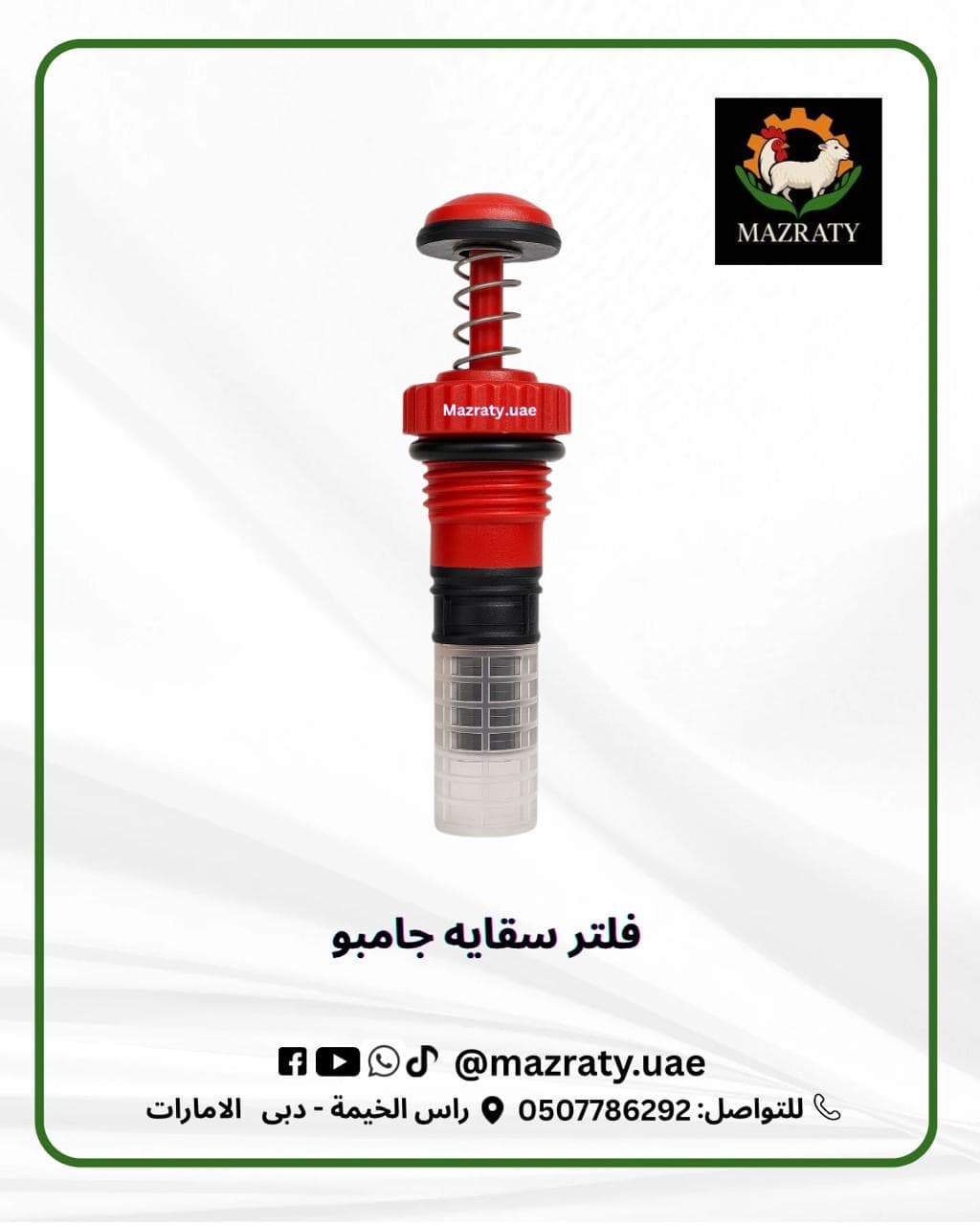
- In-line mesh filter (minimum 100-micron, ideally 50-micron)
- Adjustable wire rope or chain hanger sets with winch mechanisms
- End-of-line drain valves
- Check valve at the feed point to prevent back-siphoning
Installation Sequence
- Design and layout: Measure house length and calculate nipple count based on planned stocking density, then mark line positions at appropriate cross-house spacing (typically every 1.0 to 1.5 metres of house width)
- Header tank installation: Mount tank at the appropriate height outside the house with pressure regulator, float valve, and drainage tap
- Inlet line: Run supply pipe from tank to house entry point, incorporating the mesh filter and check valve
- Distribution pipes: Install main PVC lines parallel to the length of the house at designed spacing
- Nipple drilling and fitting: Use a sharp step drill to create clean holes at measured intervals (typically every 20 to 25 cm for broilers), fit nipples with the correct insertion tool to ensure watertight seal
- Hanger installation: Attach adjustable hangers to roof structure at 1.5 to 2.0 metre intervals along each line, then connect winch mechanisms
- Pressure testing: Fill lines and check all nipples for correct drip-free flow and identify any leaks at fittings
- Disinfection before use: Fill lines with hypochlorite solution, hold for two hours, flush completely, and verify water runs clear and odour-free before introducing birds
Estimated Costs in UAE Dirhams
Cost is naturally a key consideration for any farm infrastructure investment. While exact pricing depends on house dimensions, flock type, and fitting quality, the following estimates provide useful planning benchmarks in AED:
- Standard broiler house 100m x 12m: Typically requires 6 to 8 water lines with 400 to 500 nipples total. Materials cost approximately AED 2,500 to AED 4,000 depending on nipple quality and regulator specification
- Medium layer house: Materials typically AED 1,800 to AED 3,000 depending on flock size and house layout
- Installation labour: Varies by distance from Ras Al Khaimah and system complexity
Mazraty provides free no-obligation site assessments and quotations. Contact us on WhatsApp at +971 50 535 3412 and receive a detailed written quote within 24 hours, with free delivery anywhere in the UAE.
Maintenance Schedule for UAE Conditions
The combination of high temperatures and humidity in the UAE demands a more intensive maintenance programme than temperate-climate guidelines suggest.
Daily Checks
- Verify header tank water level and float valve operation
- Confirm pressure regulator reading at each line
- Spot-check 10 random nipples across the house for correct flow
- Compare total water consumption against expected intake for flock age and ambient temperature
Weekly Maintenance
- Clean in-line filters — UAE summer dust loads can clog 50-micron filters quickly
- Check and adjust line heights as birds grow
- Add acid dose to water to maintain pH 4.5 to 5.5 for biofilm control
Between-Flock Maintenance
- Full chlorine shock treatment of all lines (200 to 300 ppm, 24-hour hold)
- Mechanical inspection of all nipples — replace any showing signs of wear or poor seal
- Clean and descale header tanks
- Inspect and test all pressure regulators and drain valves
- Check winch mechanisms and replace worn cables
Reviewed planning sources
These references support operating and welfare principles. Final design and health programs remain site-, strain-, authority- and veterinarian-specific.
Frequently Asked Questions About Nipple Drinker Systems in the UAE
Which nipple type is better for broilers: 360-degree or 90-degree?
Use 360-degree nipples for the first two weeks to help chicks discover and learn the system easily. From week two onwards, transition to 90-degree nipples which produce less litter moisture — a critical advantage in UAE summer humidity. Many professional UAE broiler farms use 360-degree nipples only in the brooding zone and 90-degree throughout the rest of the house.
How do I deal with dangerously hot water in UAE summer?
The most cost-effective solution is insulating all exposed pipework with closed-cell foam and using insulated, shaded header tanks. Pair this with an automated morning flush that purges warm overnight water before birds wake. For intensive commercial farms, inline water chillers provide the most reliable temperature control but require higher capital investment.
How often should nipple lines be disinfected?
Acidify water weekly during production to control biofilm. Perform a full chlorine shock disinfection between every flock. In UAE conditions where warm temperatures accelerate bacterial growth, increase acid treatment frequency to twice weekly during peak summer months (June through September).
Can I deliver vaccines and vitamins through the nipple lines?
Yes, provided you use a properly calibrated dosing pump and verify that the product formulation does not cause precipitation in the lines. Always flush lines with clean water after each medication session. Mazraty supplies compatible dosing equipment and can advise on specific product compatibility.
Where can I get nipple drinker parts and replacements in the UAE?
Mazraty in Ras Al Khaimah stocks a comprehensive range of nipple drinker components including nipples, PVC pipe, pressure regulators, filters, winch sets, and repair kits, all with free delivery across the UAE. Contact us on WhatsApp at +971 50 535 3412 and we will dispatch your order promptly.
Why Choose Mazraty for Your Nipple Drinker System?
With more than 20 years serving UAE farms, Mazraty offers what no online catalogue can match: practical, climate-specific expertise developed on real Gulf farms through real Gulf summers. Our team has installed and maintained nipple drinker systems in broiler houses, layer farms, and specialty poultry operations across Ras Al Khaimah, Abu Dhabi, Dubai, Sharjah, Fujairah, Ajman, and Umm Al Quwain.
We supply, install, and maintain. We deliver free to your farm gate anywhere in the UAE. And we answer your calls and WhatsApp messages because we understand that a water system failure in a 40,000-bird house cannot wait.
Contact Mazraty today on WhatsApp at +971 50 535 3412 for your free consultation, site visit, and no-obligation quotation on a complete nipple drinker system tailored to your farm in the UAE.