A practical UAE guide to small feed pellet machines: real output, dies, raw-material preparation, cooling, maintenance and operating cost.
A small pellet mill should be selected from daily feed demand, formula preparation, die size and available power. Nameplate capacity is not guaranteed across every formula.
Local Feed Manufacturing: Why UAE Farmers Are Turning to Pellet Machines
The cost of ready-made feed continues to climb in the UAE, and it represents the largest expense — sometimes reaching 70 percent — of operating any livestock farm. This reality has driven a growing number of farmers to seek economic alternatives. The solution that has proven its worth is investing in a feed pellet machine to manufacture feed on-site. Instead of relying entirely on expensive imported feed, you can convert local and imported raw materials into high-quality pellets with a formulation you control entirely.
A farmer who owns a feed pellet machine doesn't just save money. They also gain the flexibility to adjust feed formulations based on animal type, age, and production stage. They ensure freshness and avoid the nutritional losses associated with prolonged storage of commercial feeds.
What Is a Feed Pellet Machine and How Does It Work?
A feed pellet machine compresses ground, mixed raw materials through holes in a die to form solid cylindrical pellets. The process relies on high pressure and the frictional heat generated during compression, which softens the materials and causes them to bind into uniform pellets. After exiting the die, pellets are cut to length by a rotating knife and cooled to become firm and ready for use or storage.
Types of Feed Pellet Machines
Flat Die Pellet Press
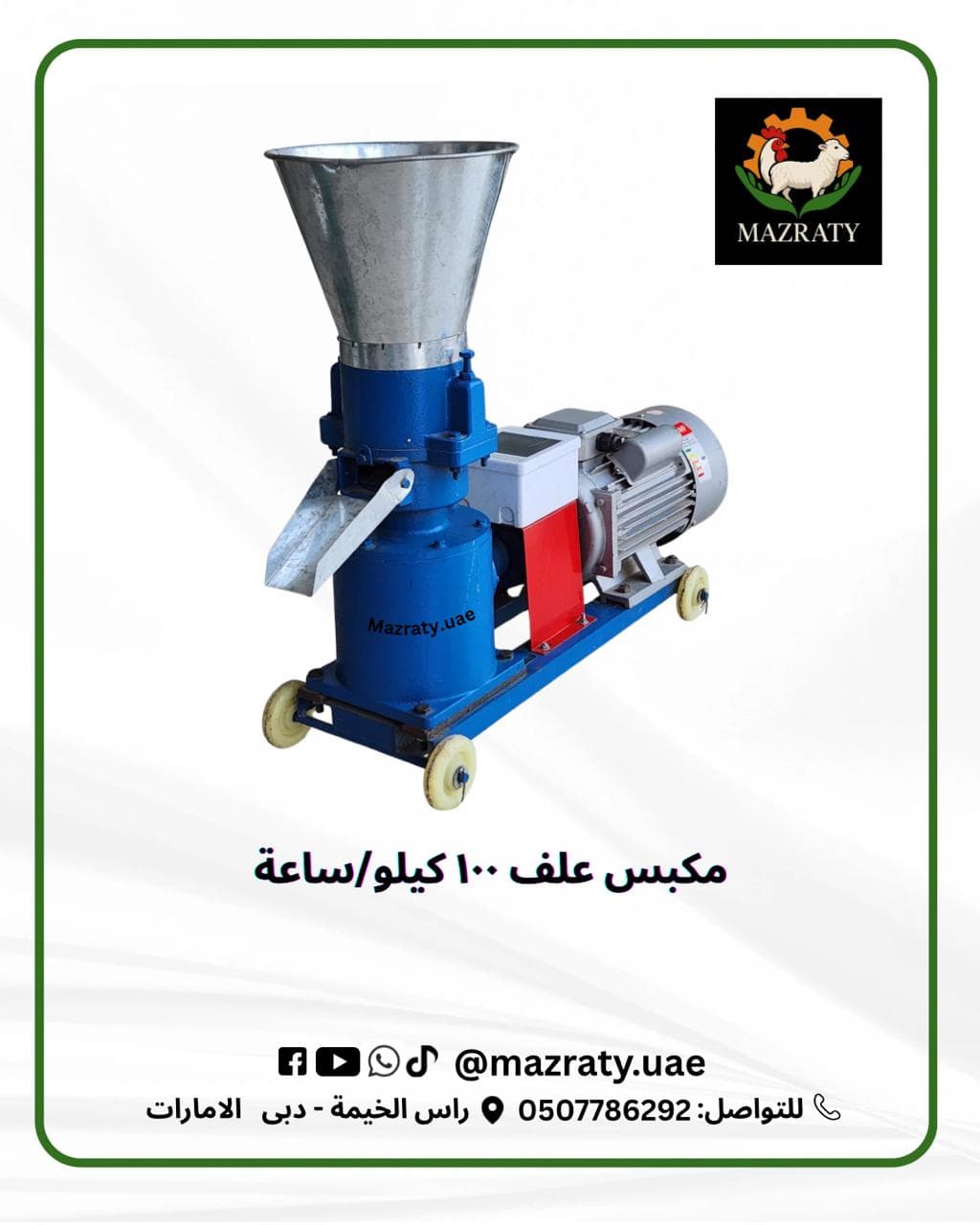
The flat die pellet press is the most common type found on small and medium farms. It features a simple design that is easy to operate and maintain. It consists of a flat circular die with several pressure rollers rotating above it, pushing materials through the die holes. Production capacity ranges from 60 to 1,100 kg per hour depending on the model. A small 3 kW feed pellet machine suits household or small farm use and can produce about 180 kg per hour.
Ring Die Pellet Press
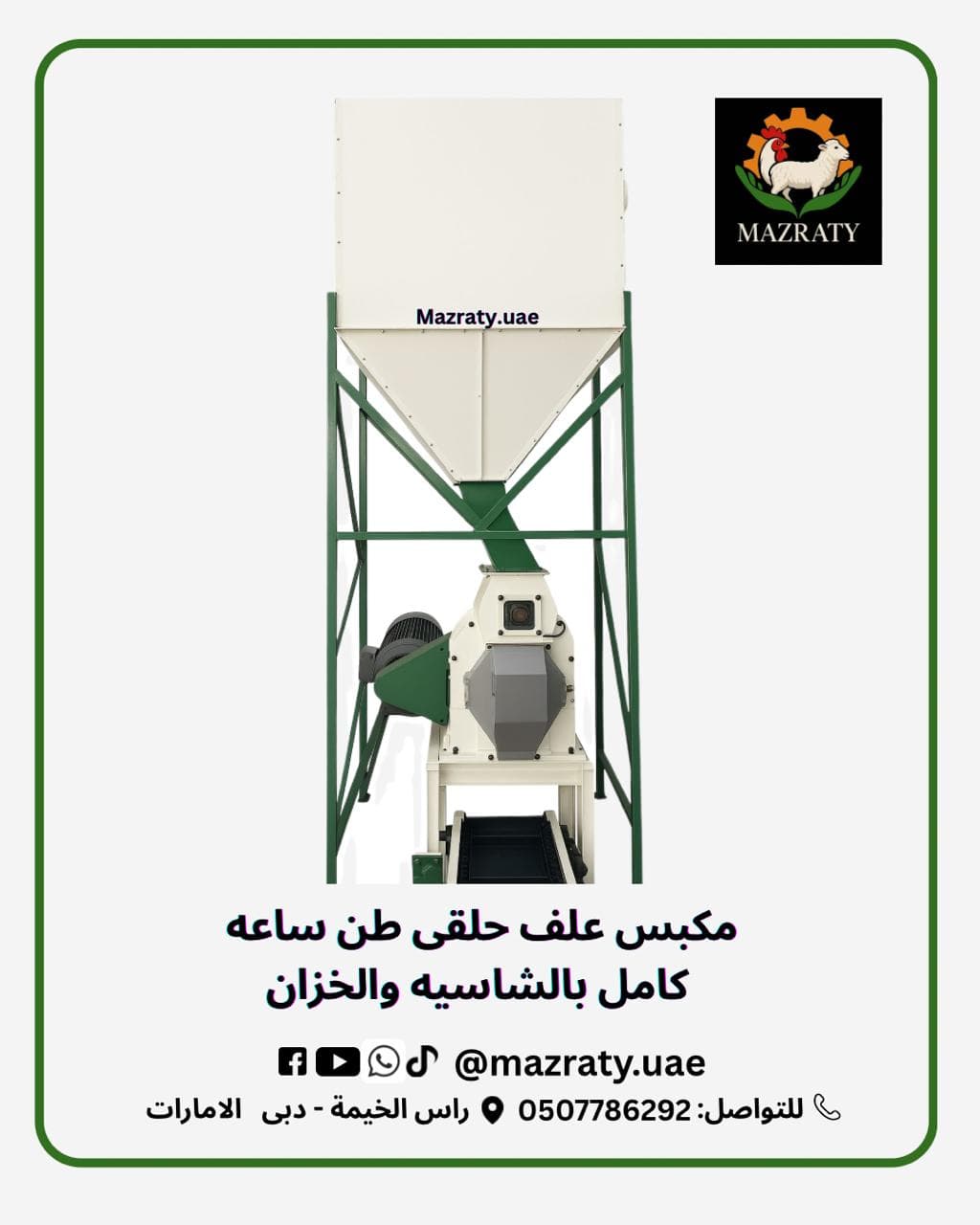
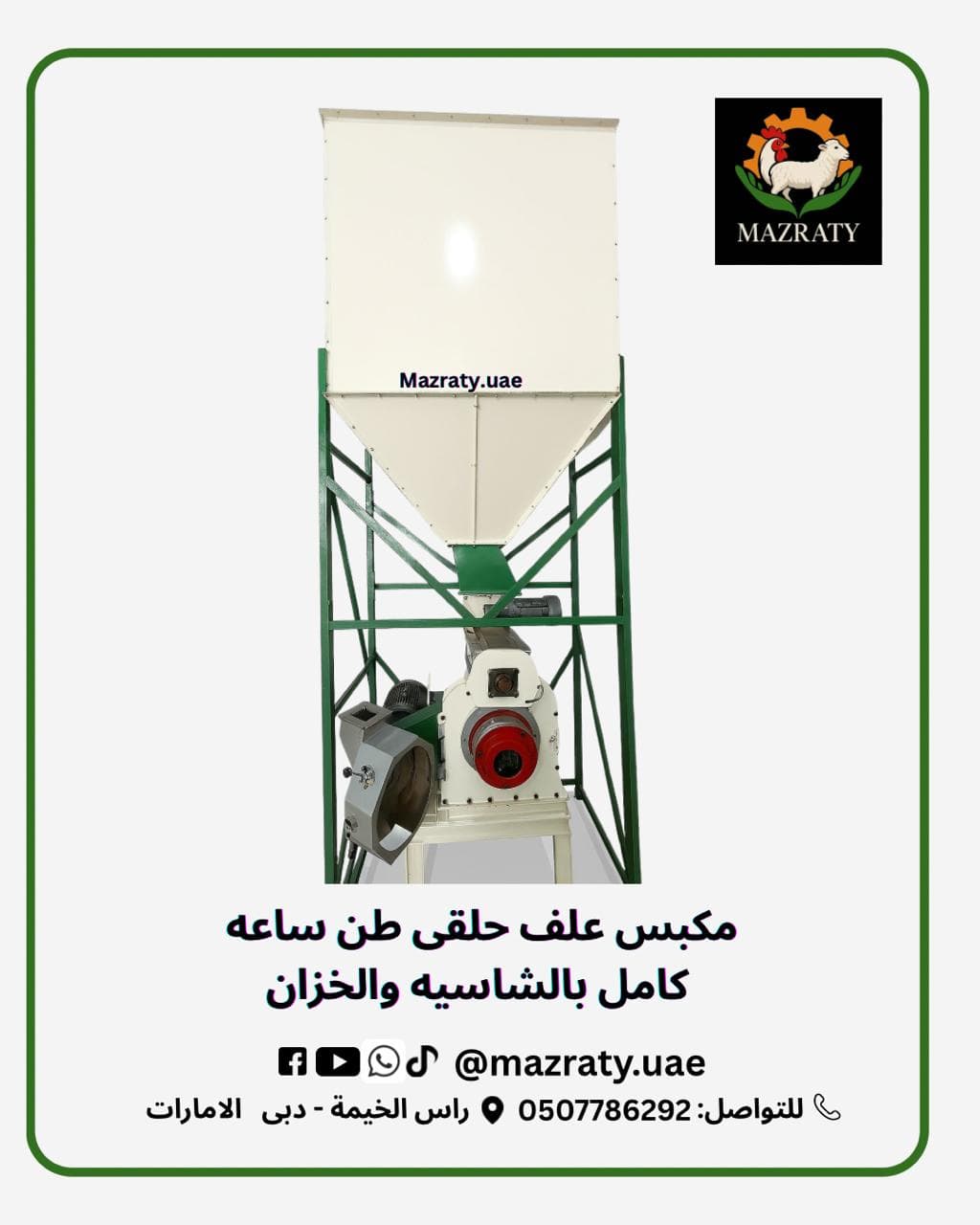
Designed for commercial and industrial production with large capacities starting at one ton per hour and reaching several tons. More expensive and complex, but superior in pellet quality and production consistency. Suitable for commercial feed mills or very large farm operations.
Mobile Pellet Press
Some small feed pellet machines are mounted on wheels and powered by diesel engines, making them easy to transport between different locations. This type benefits farms that need flexibility in operating location.
Essential Technical Specifications
Power Source and Rating
Feed pellet machines run on electricity, diesel, gasoline, or tractor PTO. For UAE farms with reliable power supply, an electric press is the optimal choice for its cleanliness, quiet operation, and efficiency. Power ratings range from 3 kW for home-scale presses to over 100 kW for industrial units.
Pellet Diameter
Pellet diameter is determined by the die hole size. Common diameters are 2.5mm, 3mm, 5mm, and 8mm. Poultry feed requires small pellets (2.5-3mm), rabbit and sheep feed needs medium pellets (3-5mm), and cattle feed suits larger pellets (5-8mm).
Pressure Rollers
The number of pressure rollers affects production efficiency and pellet quality. Quality machines feature 2 to 3 pressure rollers made from hardened steel to resist wear.
The Die
The die is the component that determines pellet size and shape. Manufactured from wear-resistant steel, it requires periodic replacement depending on usage intensity. Ensure replacement dies are available from your supplier.
Complete Feed Production Line
A pellet machine alone isn't sufficient for complete feed manufacturing. An integrated production line includes several stages:
- Crushing: A grain crusher to grind raw materials into fine powder.
- Mixing: A feed mixer to blend different ingredients at precise ratios with supplements and vitamins.
- Pelleting: The pellet machine to compress the mix into pellets.
- Cooling: A cooler to bring hot pellets to ambient temperature for firmness and stability.
- Screening: A sieve to separate intact pellets from broken pieces and dust.
- Packaging: A bagging machine to package the finished product.
At Mazraty, we supply complete feed production lines in various capacities suited for small farms through large commercial mills.
Benefits of Using a Feed Pellet Machine on Your Farm
- Cost savings: Local feed manufacturing saves 20 to 40 percent compared to purchasing commercial feeds.
- Full formulation control: Adjust ratios based on animal type, age, and specific needs.
- Guaranteed freshness: Freshly manufactured feed has higher nutritional value than feed stored for months.
- Reduced waste: Compressed pellets don't scatter or blow away like powdered feed.
- Improved digestion: The pelleting process enhances the digestibility of certain ingredients.
- Easier storage and transport: Pellets are denser than powder and require less storage space.
Steps for Operating the Feed Pellet Machine for Best Quality
- Check raw material moisture content and ensure it is between 13 and 17 percent before pelleting.
- Grind raw materials to an appropriate size — neither too fine nor too coarse.
- Mix ingredients thoroughly in the mixer to ensure uniform formulation before feeding into the machine.
- Start the machine and allow it to warm up for a few minutes before gradually introducing materials.
- Do not exceed the recommended production capacity to avoid overworking the machine and reducing pellet quality.
- Cool pellets after pressing before storage to prevent moisture condensation and mold.
- Clean the machine after every use and follow the scheduled maintenance routine.
How to Choose the Right Feed Pellet Machine
Selecting a feed pellet machine requires evaluating several factors:
- Farm size: Small farms need a home-scale press at 100-300 kg/hour. Medium farms need 500-1,000 kg/hour. Commercial operations need one ton per hour or more.
- Animal types: Different species require different pellet diameters, so confirm appropriate dies are available.
- Available power source: Electric or diesel depending on your farm's infrastructure.
- Budget: Set your budget and ask about installment options if needed.
At Mazraty showroom in Ras Al Khaimah, we stock a wide range of feed pellet machines from household models to industrial-scale units, with all accessories and dies. Browse our feed pellet machines or visit us for a free consultation.
Reviewed planning sources
These references support operating and welfare principles. Final design and health programs remain site-, strain-, authority- and veterinarian-specific.
Frequently Asked Questions About Feed Pellet Machines
Is investing in a feed pellet machine worthwhile for a small farm?
Yes, if your farm consumes reasonable feed quantities monthly. A small 3 kW press can produce enough for a small poultry or rabbit farm. The savings on feed costs over a year often cover the machine's purchase price.
Can one machine produce different types of feed?
Yes, by changing the die you can produce pellets of different diameters suited to various animal species. You can also alter the raw material blend to match the target animal's nutritional requirements.
How long does a pellet machine die last?
This depends on die quality, usage intensity, and the materials being processed. Generally, a quality die lasts 300 to 800 operating hours. Hard, very dry materials wear it faster. Always keep a spare die on hand to avoid production downtime.
Do I need technical expertise to operate a feed pellet machine?
Small and medium machines are straightforward to operate and don't require advanced technical skills. Most suppliers provide training on operation and basic maintenance at the time of purchase. At Mazraty, we provide comprehensive training with every machine we sell.