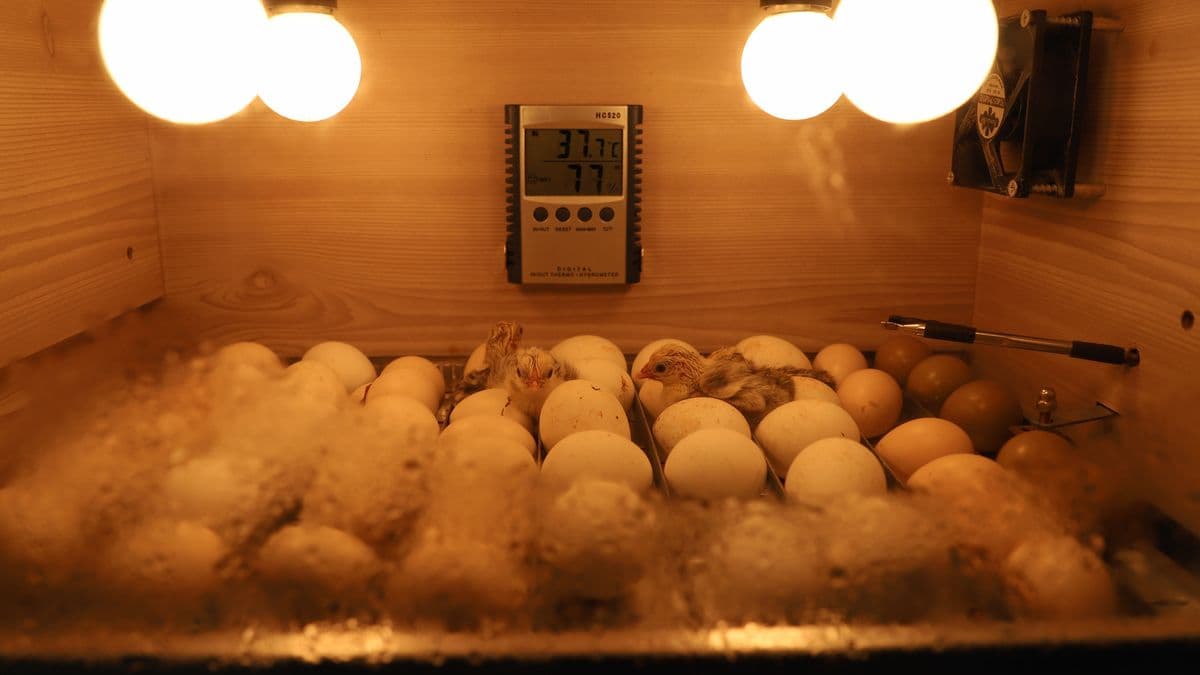
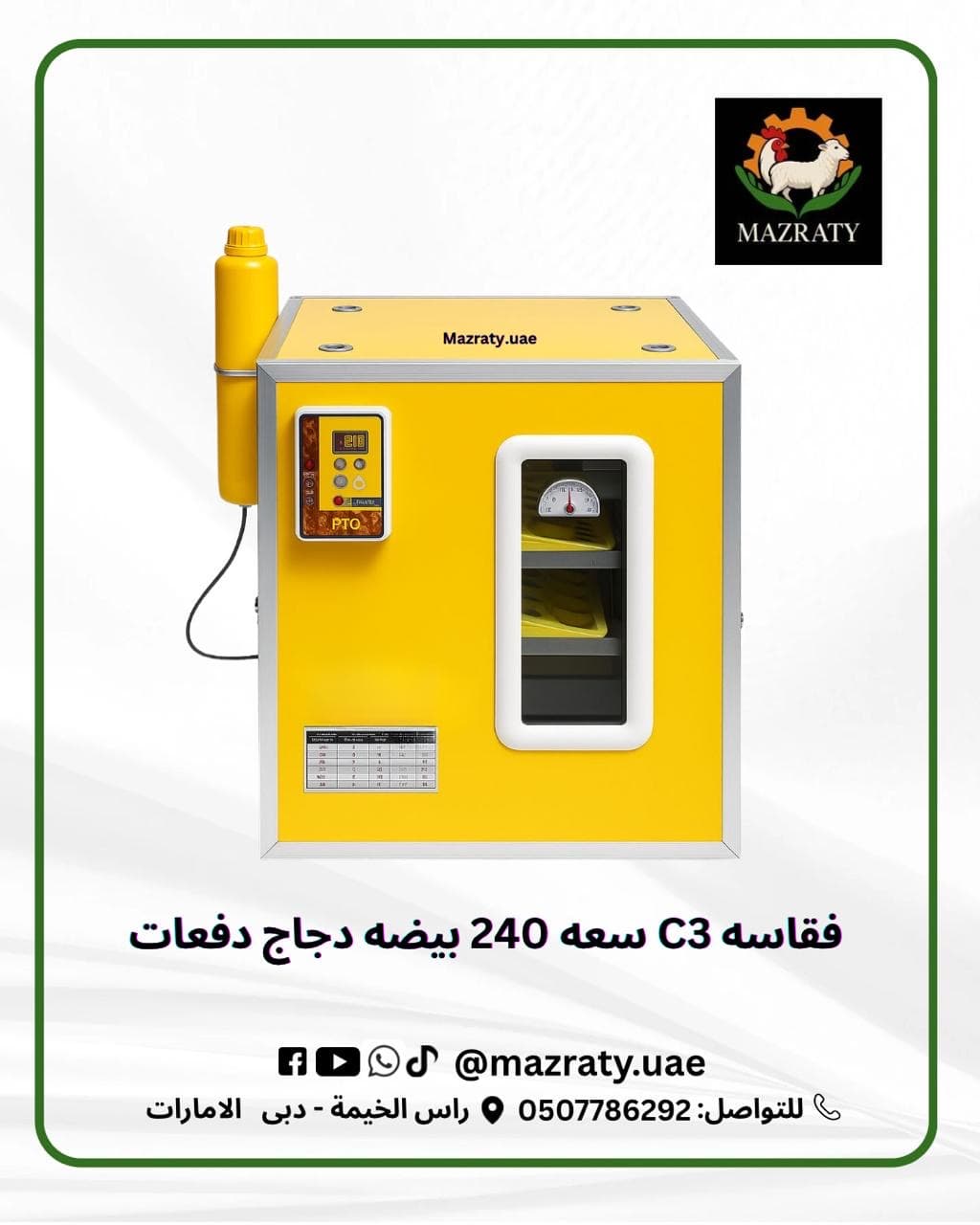
Choosing the right egg incubator in the UAE is one of the most important decisions a poultry keeper can make — whether you manage a small hobby flock in Ras Al Khaimah or operate a commercial hatchery supplying thousands of chicks per cycle. The UAE's extreme heat, frequent dust storms, and occasional power fluctuations create unique challenges that generic incubator guides simply do not address. This comprehensive buyer's guide covers every incubator type available in the market — still-air, forced-air, and fully automatic — explains capacity tiers from 50 to 5,000+ eggs, and gives you the exact temperature, humidity, and turning schedules proven to maximize hatch rates in the Gulf climate. You will also learn how to candle eggs for fertility, perform preventive maintenance, and calculate the true cost of hatching at every scale. Mazraty, Ras Al Khaimah's leading farm equipment supplier, stocks the full range and can match you with the ideal machine for your flock size and budget. Contact us on WhatsApp at +971 50 535 3412 to get expert advice before you buy.
Why the Right Egg Incubator Makes or Breaks Your Poultry Operation in the UAE
Hatching your own chicks, ducklings, or quail gives you full control over your flock's genetics, health history, and production schedule. But artificial incubation is an exacting science — a 0.5°C deviation in temperature sustained for just 12 hours can crash your hatch rate from 85% down to below 30%. In the UAE, where ambient temperatures can swing from 18°C on a winter night to 48°C on a July afternoon, and where dust-laden air clogs sensors, your choice of incubator is the single biggest variable in your hatching results.
Mazraty supplies poultry keepers across Ras Al Khaimah, Sharjah, Ajman, and beyond with professional-grade incubators sized for every operation. This guide is designed to give you the technical knowledge you need so that every conversation with our team moves straight to selecting the right machine — not educating you from scratch.
The Three Incubator Types: Still-Air, Forced-Air, and Fully Automatic
Still-Air Incubators
Still-air incubators rely on passive convection to distribute heat. There is no internal fan; warm air rises from the heating element and cooler air settles toward the base. This creates a natural temperature gradient of 1–2°C between the top and bottom of the egg chamber.
Because of this gradient, the standard operating temperature for a still-air unit is measured at the top of the eggs and should read 38.5–39°C (101–102°F), while forced-air machines target 37.5–38°C (99.5–100.4°F) uniformly. Still-air machines are inexpensive (AED 80–350 for hobby units), simple to operate, and require no moving parts to maintain. Their main weaknesses are:
- Hot spots near the element and cold zones near the walls
- Vulnerable to external temperature swings — a major concern in UAE summers
- Practical capacity limited to roughly 50–120 eggs before temperature uniformity degrades
- Manual turning required every 8 hours unless an auto-turner tray is added
Best for: Hobbyists hatching one or two clutches per year, poultry beginners, school or farm-education projects. Mazraty stocks entry-level still-air units from AED 95 — ask our team about current availability.
Forced-Air Incubators
Forced-air incubators integrate one or more internal fans that circulate heated air throughout the chamber, eliminating hot spots and maintaining temperature uniformity within ±0.1°C across the entire egg surface. This makes them dramatically more reliable than still-air units in the UAE's variable climate because the airflow buffers against external temperature fluctuations.
Key characteristics:
- Operating temperature: 37.5–38°C (uniform throughout the chamber)
- Fan speed matters: high-speed fans can dehydrate eggs if ventilation ports are not properly managed
- Available from 50-egg tabletop units to 1,000-egg cabinet machines
- Mid-range price: AED 350–2,500 depending on capacity and automation level
- Compatible with auto-turner trays that remove the need for manual turning
For most serious backyard and small-commercial poultry keepers in the UAE, a forced-air incubator with an auto-turner represents the optimal balance of reliability, price, and ease of use. Mazraty's team can walk you through the specific models we carry and recommend the right fan configuration for your hatching room conditions.
Fully Automatic Incubators
Fully automatic incubators integrate temperature control, humidity regulation, automatic egg turning, alarm systems, and — in premium models — data logging, remote monitoring via smartphone app, and emergency battery backup. These machines handle nearly every variable of the incubation environment without daily human intervention.
Critical features to look for in a fully automatic incubator for UAE conditions:
- PID temperature controller (not a simple thermostat) for precise regulation in high-ambient environments
- Built-in humidity sensor and automatic water injection — manual humidity management becomes impractical at commercial scale
- Egg turning every 1–2 hours via motorized tray rocking or roller system
- High/low temperature alarms with audible and SMS alert capability
- UPS compatibility or built-in battery backup — critical for UAE areas with occasional power dips
- Integrated setter/hatcher compartments in large models so eggs can move from incubation to lockdown without opening the main chamber
Fully automatic machines range from AED 1,800 for a 56-egg digital unit to AED 25,000+ for a 5,000-egg commercial cabinet. Contact Mazraty on WhatsApp +971 50 535 3412 for a quote tailored to your production targets.
Capacity Tiers: Matching Machine Size to Your Operation
| Capacity Tier | Egg Count | Typical User | Approx. UAE Price (AED) |
|---|
| Hobby | 12–50 eggs | Home keepers, beginners | 95–350 |
| Small Semi-Commercial | 51–100 eggs | Backyard farms, schools | 350–900 |
| Medium Commercial | 101–500 eggs | Small farms, breeders | 900–4,500 |
| Large Commercial | 501–1,000 eggs | Regional suppliers | 4,500–12,000 |
| Industrial | 1,001–5,000+ | Hatcheries, agri-businesses | 12,000–60,000+ |
One common mistake UAE buyers make is purchasing a 500-egg machine when they only have 80 laying hens. An oversized incubator wastes electricity (UAE electricity costs roughly AED 0.23–0.38 per kWh for residential and AED 0.20–0.44 per kWh for commercial), creates larger interior air volumes that are harder to humidity-control, and risks running with a near-empty chamber — which degrades temperature distribution. Buy for your current flock size and upgrade as your operation grows. Mazraty can help you plan that upgrade path from day one.
Temperature: The Non-Negotiable Variable
Embryos developing inside an egg are exquisitely sensitive to temperature. The optimal internal egg temperature during development is 37.8°C (100°F). Incubator air temperature targets are set slightly higher to account for the egg's thermal mass:
- Forced-air incubators: 37.5–38.0°C throughout the 18-day setter period (days 1–18 for chicken eggs)
- Still-air incubators: 38.5°C measured at egg-top level
- Lockdown / hatching (days 19–21): reduce to 37.2–37.5°C as developing chicks generate their own metabolic heat
In the UAE, the greatest temperature risk is not under-heating — it is overheating. A hatching room that reaches 38°C on a summer afternoon can push incubator internal temperatures several degrees above setpoint if the machine lacks a proper PID controller and adequate insulation. Every degree above 38.5°C for more than two hours causes irreversible damage to developing embryos. Investing in a quality incubator with precise electronic temperature control is not a luxury in the UAE climate — it is essential.
Mazraty recommends placing incubators in an air-conditioned room or in a well-insulated, shaded space (a cool garage or utility room kept at 20–25°C) to give the machine the best operating environment and reduce electrical load on its heating system.
Humidity Management in the Gulf Climate
Humidity control is the second most critical variable — and paradoxically, UAE breeders face both challenges: the arid desert outside and the artificially humid incubator inside must be balanced carefully.
Target humidity levels for chicken eggs:
- Days 1–18 (setter phase): 55–65% relative humidity (RH)
- Days 19–21 (lockdown / hatcher phase): 65–75% RH
Low humidity causes excessive moisture loss from the egg (the air cell should grow from about 1/8 of egg volume on day 1 to roughly 1/3 by day 18). If moisture loss is too rapid — common in UAE's dry winter months when indoor RH can drop to 20–30% — chicks will be too small and may stick inside the shell. High humidity slows moisture loss and can cause "mushy chick" or drowning deaths at hatch.
Practical UAE humidity management tips:
- Use a calibrated digital hygrometer — never rely solely on the built-in display of budget machines, which can read 10–15% off
- In summer (June–September), UAE outdoor humidity can exceed 80% during coastal fog periods — monitor incubator humidity closely and reduce water tray surface area if levels climb above 70% during incubation
- In winter (November–February), UAE indoor air is very dry — you may need to add a second water tray or use a wet sponge inside the chamber to maintain 55%
- Fully automatic incubators with ultrasonic humidifiers regulate this automatically — a significant advantage for commercial operators
Egg Turning: Frequency, Direction, and Lockdown
Natural incubation by a broody hen involves continuous slight movement. Artificial incubation must replicate this to prevent the developing embryo from sticking to the shell membrane. The standard recommendation is:
- Frequency: Turn eggs at least 3 times per day (every 8 hours minimum); automatic turners set to every 1–2 hours produce better results, especially in the first week
- Angle: 45° tilt from vertical on each side (total 90° arc); some systems rock in a 360° roll for premium hatch rates
- Last turn: Always end on an odd number of turns per day so eggs spend equal time on each side
- Lockdown: Stop all turning on day 18 (chickens), day 25 (ducks), day 14 (quail). Place eggs horizontally or in hatcher trays. Do NOT open the incubator during lockdown except in genuine emergency
Manual turning requires setting phone alarms for 6 AM, 2 PM, and 10 PM — manageable for 12 eggs, exhausting for 100. For any serious operation, Mazraty strongly recommends purchasing a machine with a built-in auto-turner or adding an aftermarket turner tray. We stock compatible turner trays for most incubator models we sell.
Candling: Reading Fertility and Development Progress
Candling involves shining a bright focused light through the eggshell to view the embryo's development without breaking the shell. It is the most important diagnostic tool available to a breeder and should be performed on:
- Day 7: Clear/infertile eggs show no veining (remove them to prevent contamination from bacterial growth)
- Day 14: Check for "quitters" — embryos that started development but died; they show a dark ring or murky mass without movement
- Day 18 (lockdown): Eggs ready to hatch should be nearly opaque with the air cell clearly visible
In UAE conditions, eggs left too long after dying can develop gas-producing bacteria that cause explosive contamination — ruining an entire incubator set. Regular candling at day 7 and day 14 protects your viable eggs. Mazraty stocks dedicated LED candling torches with narrow beams suitable for dark brown, speckled, and duck eggs. Ask our team when placing your incubator order.
UAE-Specific Challenges and How to Overcome Them
Power Cuts and Voltage Fluctuations
Brief power outages (under 20 minutes) rarely harm an incubation set if the machine is well-insulated — a closed incubator loses only about 1°C per 10 minutes. Prolonged outages (over 1 hour) during the first two weeks can be fatal to embryos. UAE solutions:
- Connect your incubator to a UPS (Uninterruptible Power Supply) rated for 300–600VA for hobby machines, 1,000–2,000VA for medium commercial units
- Some Mazraty-stocked commercial incubators include a built-in emergency battery pack — ask specifically for this feature if your area has unreliable power
- Invest in a voltage stabilizer to protect sensitive digital controllers from the minor voltage spikes common in UAE industrial areas
Dust and Sand Infiltration
UAE dust storms (shamal winds) push fine silica particles into every gap. Inside an incubator, dust accumulates on fan blades (reducing airflow), clogs humidity sensors (causing false readings), and settles on egg surfaces (increasing bacterial contamination risk). Preventive measures:
- Seal incubator ventilation ports with fine mesh cloth (500–750 micron) rather than blocking them completely
- Clean fan blades with a soft brush every 2 weeks during dusty months (March–May, September–October)
- Calibrate humidity sensors monthly using a calibration kit (Mazraty supplies calibration solutions)
- Wipe egg surfaces with a dry cloth (never wet) before loading — wet eggs attract more airborne particles
Temperature Swings Between Rooms and Seasons
A hatching room that is used for storage and regularly has its door opened to the outdoors will subject the incubator to ambient swings of 10°C or more in the UAE's transition seasons (October–November, March–April). Dedicate a single stable room for incubation and use a secondary thermometer to monitor ambient conditions, not just the incubator's built-in display.
Maintenance and Calibration Schedule
A properly maintained incubator will give 5–10 years of reliable service. Follow this schedule for UAE conditions:
- After every hatch: Remove all debris (shell, membrane, fluff), wash removable trays with warm water and poultry-safe disinfectant, wipe interior walls with diluted bleach (1:10), allow to fully dry before next set
- Monthly: Calibrate temperature probe using a calibrated reference thermometer; calibrate hygrometer using salt-test or calibration kit; clean fan blades and motor vents
- Every 6 months: Inspect heating element connections, check fan bearing for noise/wobble, lubricate fan shaft if manufacturer permits
- Annually: Full deep clean with fumigation (formaldehyde or F10 disinfectant), replace humidity sensor if readings drift more than ±5%
Mazraty stocks spare parts, replacement sensors, and approved disinfectants for all major incubator brands we carry. If your machine needs a service, our technical team can advise remotely via WhatsApp or arrange an in-person inspection for larger commercial units.
Cost Analysis: Hobby to Commercial Scale
| Scale | Machine Cost (AED) | Monthly Electricity (AED) | Break-Even Hatches | Annual Chick Output |
|---|
| Hobby (50 eggs) | 250–500 | 15–30 | 3–5 hatches | 300–600 |
| Small Farm (100 eggs) | 500–1,200 | 30–60 | 4–7 hatches | 600–1,200 |
| Medium Farm (500 eggs) | 2,500–6,000 | 80–180 | 6–10 hatches | 3,000–6,000 |
| Commercial (1,000 eggs) | 8,000–15,000 | 200–400 | 8–14 hatches | 6,000–12,000 |
| Industrial (5,000 eggs) | 25,000–60,000+ | 600–1,500 | 12–20 hatches | 30,000–60,000 |
These figures assume an average hatch rate of 75–85% (achievable with proper management) and UAE market chick prices of AED 4–12 per day-old chick depending on breed. A 100-egg forced-air automatic incubator running 6 cycles per year at 80% hatch rate produces approximately 480 chicks valued at AED 1,920–5,760 annually — far exceeding its purchase price within the first year of operation.
Species-Specific Incubation Data Quick Reference
| Species | Incubation Days | Setter Temp (°C) | Setter Humidity | Lockdown Day | Hatcher Humidity |
|---|
| Chicken | 21 | 37.5–38.0 | 55–65% | Day 18 | 65–75% |
| Duck | 28 | 37.5–37.8 | 60–65% | Day 25 | 70–80% |
| Quail | 17–18 | 37.5–38.0 | 55–60% | Day 14 | 65–75% |
| Turkey | 28 | 37.5–38.0 | 55–65% | Day 25 | 65–75% |
| Guinea Fowl | 28 | 37.5–38.0 | 55–65% | Day 25 | 70–75% |
How to Choose: A Decision Framework for UAE Buyers
Use these four questions to narrow your selection before contacting Mazraty:
- 1. How many eggs will you set per cycle? Buy a machine sized for 110–120% of your target set — this allows room for odd-sized eggs and gives the auto-turner space to rotate freely.
- 2. How much daily attention can you give? If you travel or work long hours, spend more on a fully automatic machine with alarms. If you work from home and enjoy hands-on involvement, a semi-automatic forced-air unit saves cost.
- 3. Is your power supply reliable? If yes, standard units suffice. If no, budget for a UPS or choose a machine with built-in battery backup.
- 4. What is your hatching room temperature? If it regularly exceeds 30°C in summer (common in non-air-conditioned UAE structures), invest in a machine with a cooling circuit or ensure the room is climate-controlled.
Purchase Your Egg Incubator from Mazraty Today
Mazraty is Ras Al Khaimah's most trusted supplier of farm equipment, hatching machines, and poultry accessories. Our team has hands-on experience with the UAE's specific poultry-keeping challenges and can match you with the exact incubator model that will perform reliably in your conditions — whether you are hatching 30 quail eggs in an apartment or scaling a 2,000-egg commercial hatchery. We stock still-air starters, forced-air semi-automatics, and fully automatic cabinet incubators with digital PID control, auto humidity, and egg-turning systems from proven brands. Spare parts, candling lights, calibration kits, and poultry disinfectants are all available alongside every machine we sell. Do not make one of the most important investments in your poultry operation based on a generic online recommendation — speak to a specialist who understands the UAE market. Contact Mazraty now on WhatsApp: +971 50 535 3412 and let us help you hatch more, waste less, and grow your flock with confidence.
Reviewed planning sources
These references support operating and welfare principles. Final design and health programs remain site-, strain-, authority- and veterinarian-specific.
Frequently Asked Questions
How should incubator capacity be selected?
Calculate settable eggs during one incubation cycle, then allow for hatching, cleaning, batch separation and contingency.
Does listed capacity apply to every egg type?
Capacity is often stated for chicken eggs and changes with egg size and tray design, so request a capacity table.