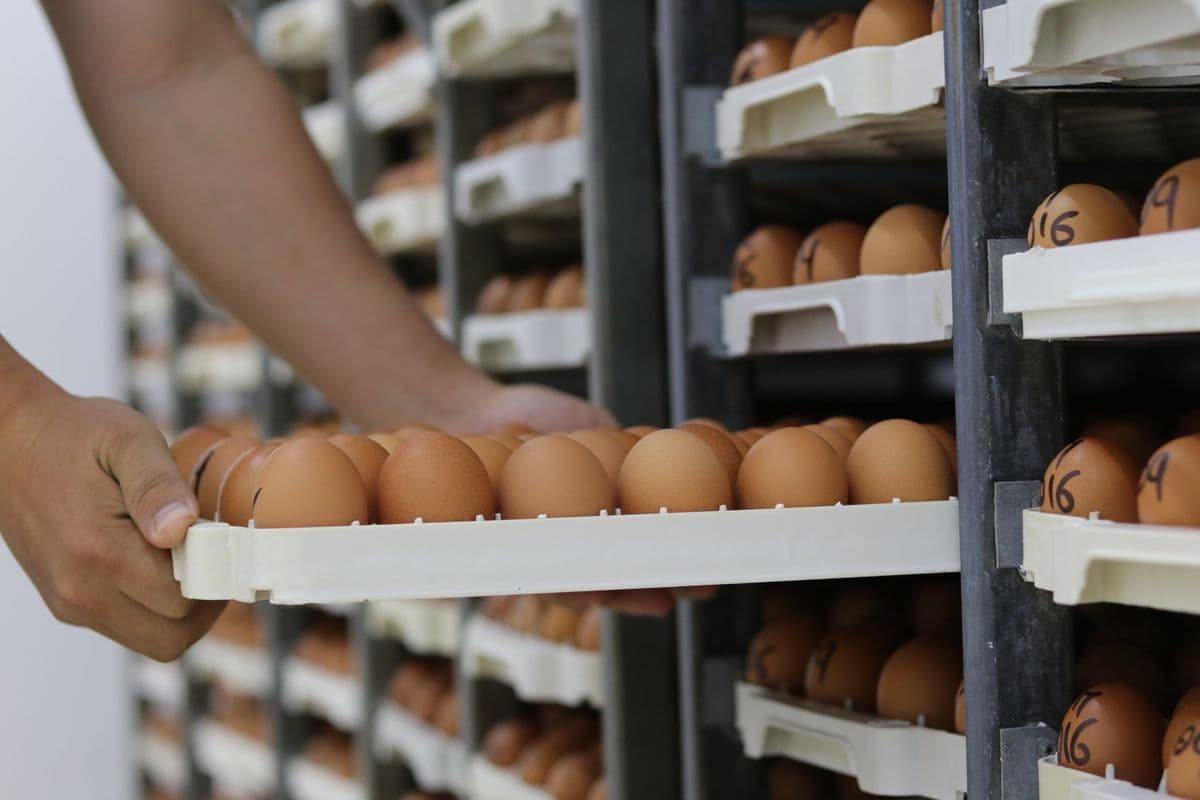
Running a layer farm in the UAE means navigating strict ESMA grading standards, Gulf export protocols, and demanding supermarket buyers — all while managing throughput in a climate that accelerates bacterial growth. Egg grading and washing machines are no longer optional upgrades; they are the operational backbone that separates profitable commercial farms from those losing margin to downgraded and rejected product. This guide breaks down everything UAE layer farmers need to know: why washing removes the protective bloom and why that change demands refrigerated storage, how to select the right throughput category (1,000 to 100,000 eggs per hour), the critical difference between brush washers, water-curtain systems, and UV sanitizers, plus water temperature controls, food-grade detergent selection, candling integration for crack and blood-spot detection, and a practical ROI framework for farms operating 5,000 layers or more. Mazraty, Ras Al Khaimah's leading farm equipment supplier, stocks and supports the full inline and standalone processing line — from first wash to final tray sterilization.
So why wash at all? Because the Gulf supermarket and hotel supply chain demands it. Retailers operating under ESMA (Emirates Authority for Standardization and Metrology) procurement specifications and HACCP audit requirements will not accept eggs with visible soiling, feather fragments, or fecal contamination. Export channels to Saudi Arabia, Kuwait, and Qatar impose equivalent standards. The UAE Ministry of Climate Change and Environment (MOCCAE) requires eggs destined for institutional buyers to meet microbiological surface limits. Washing — when executed correctly with temperature-controlled water, food-grade detergents, and a validated sanitizer step — is the only reliable industrial method to meet those targets consistently at scale.
Mazraty supplies the complete equipment ecosystem for this process, from inlet conveyors rated for 1,000 eggs per hour all the way to high-throughput inline grading-and-washing lines exceeding 50,000 eggs per hour for large commercial flocks.
UAE and Gulf Market Grading Standards: What ESMA Requires
The UAE follows a weight-based grading system aligned with Gulf Standardization Organization (GSO) norms and harmonized with ESMA technical regulations. Understanding these thresholds is essential before specifying your grading machine, because the weight tolerances define the number of weighing lanes and the sensor resolution you need.
| Grade | Weight Range | Primary Market Channel |
|---|
| XL (Extra Large) | > 73 g | Hotels, premium retail, export |
| L (Large) | 63–73 g | Supermarkets, fast food, catering |
| M (Medium) | 53–63 g | General retail, bakeries |
| S (Small) | < 53 g | Processing, food manufacturing |
Modern electronic grading machines use load-cell weighing stations accurate to ±0.1 g, ensuring that no egg is misclassified across a lane running at 20,000+ eggs per hour. Misclassification costs money in two directions: XL eggs sold as L represent lost premium, while L eggs sold as XL trigger buyer complaints and return penalties.
Beyond weight, UAE buyers also specify shell quality grades (A, B, crack) and internal quality grades based on candling results. Grade A eggs must have a clean, uncracked shell, an air cell depth of no more than 6 mm, a firm albumen, and a yolk free from visible defects. Eggs failing any of these criteria are downgraded to Grade B (acceptable for industrial processing) or rejected entirely.
Candling Integration: Detecting Cracks, Blood Spots, and Air Cell Defects
Candling — shining high-intensity light through the shell — is mandatory in any compliant grading line. Modern inline candling systems use high-frequency LED arrays positioned beneath a translucent conveyor belt, combined with high-speed cameras and AI-based image processing to flag defective eggs at line speed.
What candling detects:
- Hairline cracks: Invisible to the naked eye, these allow bacterial ingress and cause consumer safety risks. An infrared crack-detection module identifies shell stress fractures with 99%+ accuracy.
- Blood spots: Small hemorrhages in the albumen or attached to the yolk, caused by ruptures in blood vessels during ovulation. These are aesthetically unacceptable to premium buyers and are flagged by contrast-detection algorithms.
- Meat spots: Small pieces of tissue, similar to blood spots in appearance and origin, requiring the same detection approach.
- Air cell size: A large, mobile air cell indicates an older egg with significant moisture loss. Maximum air cell depth of 6 mm for Grade A is verified by depth-sensing candling optics.
- Double yolks: Detectable by yolk shadow size. Some specialty buyers actively seek these; others require separation into a distinct SKU.
For farms in the UAE where a single flock of 10,000 birds produces 8,000–9,000 eggs per day, manual candling is economically and ergonomically impossible. Inline automated candling with rejection diverters is the only viable approach. Mazraty sources candling modules that integrate directly with grading line conveyors, with rejection chutes feeding directly into collection trays for downgrade processing.
Inline vs. Standalone Washing and Grading Systems
The fundamental equipment architecture decision every UAE layer farm must make is whether to deploy an inline system — where washing, drying, candling, grading, and packing are all linked on a single continuous conveyor — or standalone units that handle each function independently.
Inline Systems
Inline systems are the gold standard for farms producing more than 15,000 eggs per day. The advantages are substantial: minimal manual egg handling (reducing breakage and contamination), consistent throughput without bottlenecks between stations, a single control interface, and lower total footprint per egg processed. A complete inline line for 20,000 eggs per hour requires approximately 12–18 linear meters of floor space and a three-phase power supply.
The sequence in a fully integrated inline system is: collection conveyor → pre-wash rinse → brush washing chamber → water curtain rinse → UV or chemical sanitizer → hot-air drying tunnel → candling station → weight-grading carousel → lane diverters → tray or carton packing.
Standalone Units
Standalone washers and graders are appropriate for smaller flocks (under 5,000 birds) or for farms that are expanding incrementally. A standalone washer processes 1,000–5,000 eggs per hour and can be paired with a separate manual or semi-automatic grader. The capital cost is significantly lower, and the units can be relocated or reconfigured as the operation grows. Mazraty stocks standalone brush washers in stainless steel (SS304) suitable for UAE humidity conditions, with 50 L water tanks and built-in heating elements maintaining set-point temperatures.
Throughput Sizing: Matching Machine Capacity to Flock Size
Selecting the wrong throughput class is one of the most expensive mistakes a poultry farmer can make. An undersized machine creates a daily processing backlog that forces eggs to sit uncollected longer, increasing contamination risk and shell quality deterioration. An oversized machine carries unnecessary capital cost and depreciation. Use the following framework to size correctly:
- Laying rate: Commercial ISA Brown or Hy-Line W-36 flocks in UAE conditions typically achieve 85–92% laying rates. A flock of 5,000 birds produces approximately 4,250–4,600 eggs per day.
- Processing window: Most UAE farms prefer to complete the full processing cycle within a 6–8 hour window per day, leaving time for equipment cleaning, maintenance, and staff scheduling.
- Throughput formula: Required machine capacity (eggs/hr) = (daily egg production) ÷ (desired processing hours) × 1.15 safety factor.
| Flock Size | Daily Production (90% lay) | Machine Capacity Needed |
|---|
| 2,000 birds | ~1,800 eggs | 1,000–1,500 eggs/hr |
| 5,000 birds | ~4,500 eggs | 2,000–3,000 eggs/hr |
| 15,000 birds | ~13,500 eggs | 5,000–8,000 eggs/hr |
| 30,000 birds | ~27,000 eggs | 10,000–15,000 eggs/hr |
| 100,000 birds | ~90,000 eggs | 30,000–50,000 eggs/hr |
Mazraty offers machines across all these throughput bands, with single-machine options up to 20,000 eggs per hour and parallel-line configurations for the largest UAE commercial operations.
Washing Technology: Brush Washers, Water Curtains, and UV Sanitizers
Not all egg washers are equal. Three core technologies dominate the market, each with distinct advantages for UAE farming conditions:
Brush Washers
The most widely used type globally. Rotating nylon or polypropylene brushes — typically arranged in pairs beneath and beside the eggs — provide gentle mechanical scrubbing action while warm water sprays continuously. The critical performance parameter is brush rotation speed (typically 120–180 RPM) and the gap between brush pairs, which must accommodate the range of egg sizes without cracking undersized eggs or inadequately cleaning oversized ones.
In UAE conditions, brush washers must be specified with stainless-steel frames (SS304 or SS316) to resist the combination of detergent chemistry and high ambient humidity. Brush replacement intervals average 6–9 months in continuous operation.
Water Curtain Washers
A pressurized water curtain delivers a high-flow rinse across the egg surface without mechanical contact. These are gentler on shell integrity — important for farms with any known shell-quality challenges in their flock — but less effective on heavy soiling without a pre-rinse or brush stage. Water curtain units are commonly used as the final rinse stage after a brush wash in a multi-stage inline system.
UV Sanitizers
UV-C lamps (254 nm wavelength) provide chemical-free surface sterilization. A 30-second exposure to properly specified UV-C intensity (minimum 16 mJ/cm²) achieves a 4-log reduction in Salmonella enteritidis on shell surfaces — the pathogen of primary concern for egg safety regulators. UV sanitizers are increasingly specified for UAE farms targeting export markets where chemical residue limits on shells are strictly enforced. UV modules bolt directly onto standard conveyor systems and require only lamp replacement (typically every 8,000–10,000 operating hours).
For maximum compliance, Mazraty recommends a three-stage sequence: brush wash → water curtain rinse → UV sanitizer → hot-air drying.
Water Temperature Control: The 5°C Rule
Water temperature during washing is not a minor detail — it is a critical biosafety parameter. The rule applied by USDA and adopted as best practice by Gulf food safety authorities is that wash water must be maintained at a minimum of 5°C (9°F) above the internal egg temperature.
Why? If wash water is cooler than the egg, the egg contents contract and the resulting negative pressure differential pulls water — and any bacteria suspended in it — through the shell pores directly into the interior. In UAE summer conditions, eggs collected from a house running at 28–32 °C must be washed in water maintained at 33–37 °C minimum. In practice, commercial washers set water at 35–40 °C year-round, with automatic thermostat control and visible temperature displays to satisfy auditor requirements.
Water quality also matters. UAE tap water hardness (typically 200–400 ppm CaCO₃ in Ras Al Khaimah) can cause scale buildup on heating elements and spray nozzles. Mazraty recommends water softener pre-treatment for washers operating more than 8 hours per day.
Food-Grade Detergent Selection for UAE Egg Washing
Detergent selection must satisfy three constraints simultaneously: effective at removing organic soil (feces, blood, yolk), non-injurious to the shell, and compliant with UAE food contact regulations (ESMA and MOCCAE approved food-grade chemistry). Alkaline detergents at pH 10.5–12 are standard for primary washing, providing effective saponification of organic deposits at the water temperatures used in commercial washers.
Key selection criteria:
- Free-rinsing formula — no detergent film residue on shell post-rinse
- Low foaming (high-foam detergents overwhelm spray systems and require extended rinsing)
- Certified food-contact safe — check for NSF International or equivalent certification
- Compatible with the downstream UV sanitizer (some surfactants reduce UV transmittance in the water film)
Dosing is automated in all commercial washers through peristaltic dosing pumps, typically set at 0.5–2 mL per liter of wash water. Manual dosing should be avoided in any HACCP-audited operation.
Drying, Packaging, and UV Tray Sterilization
A washed egg that is packed wet will develop mold within 48–72 hours in UAE ambient humidity conditions (average 60–80% relative humidity on the coast). Hot-air drying tunnels — using filtered air heated to 45–55 °C blown across the egg surface — reduce shell surface moisture to safe levels within 30–60 seconds of transit time on the conveyor.
Empty trays and cartons are a frequently overlooked contamination vector. Plastic filler trays returned from retail channels carry residual organic matter and microbial loads that can re-contaminate freshly processed eggs. UV tray sterilization units — positioned before the packing station — expose returning trays to UV-C irradiation for 60–120 seconds, achieving a 3-log surface reduction without chemical contact or tray damage. For farms committed to single-use fiber trays, UV sterilization is applied to the tray surface immediately before loading.
Packaging options in the UAE market include:
- 30-egg fiber pulp trays (standard wholesale and bulk hotel supply)
- 6-egg and 12-egg retail cartons (supermarket and hypermarket supply)
- Sealed clamshell cartons with farm branding and QR traceability codes (premium retail positioning)
Mazraty supplies packing station conveyors that integrate with all three packaging formats, with manual, semi-automatic, and fully automated carton-loading configurations available.
ROI Calculation for Farms with 5,000+ Layers
The business case for a complete washing and grading line becomes compelling at flocks of 5,000 birds and above. Consider a representative UAE farm scenario:
- Flock: 8,000 ISA Brown layers, 90% lay rate = 7,200 eggs per day
- Current situation: manual sorting, no washing, sold at undifferentiated market price
- Average farm-gate price without grading: AED 0.38 per egg
- Average farm-gate price for graded, washed XL eggs to supermarket buyers: AED 0.58–0.65 per egg
- Average flock XL yield: ~30% of production = 2,160 eggs per day at +AED 0.22 premium
- Daily incremental revenue from grade capture: AED 475
- Annual incremental revenue: AED 173,375
A mid-range inline washing and grading line suitable for this farm (5,000 eggs/hr capacity) is priced in the AED 85,000–130,000 range through Mazraty, depending on candling specification and degree of automation. At the incremental revenue figure above, payback period is 6–9 months — before accounting for reduced labor, lower rejection rates, and the ability to access premium supply agreements with organized retail buyers who require grade-certified product.
Additional financial impacts that strengthen the ROI case:
- Reduced breakage: automated handling breaks fewer eggs than manual sorting — typically cutting breakage from 2–4% to under 0.5%
- Export revenue: graded, washed, cold-chain eggs qualify for premium GCC export channels unavailable to ungraded farms
- Compliance cost avoidance: MOCCAE inspections that find non-compliant processing can result in shipment holds or farm ratings downgrades with major buyers
UAE Gulf Market Compliance: ESMA, MOCCAE, and Export Channels
UAE egg production and sale is regulated by a layered framework. ESMA publishes technical standards for egg grading and labeling. MOCCAE issues farm-level food safety requirements. Abu Dhabi Agriculture and Food Safety Authority (ADAFSA) enforces compliance in the Emirate of Abu Dhabi, while Dubai Municipality Food Safety Department holds equivalent authority in Dubai. For farms in Ras Al Khaimah — where Mazraty is based — the RAK Agriculture and Livestock Department coordinates with MOCCAE on inspection protocols.
For GCC export, the Gulf Standardization Organization (GSO) harmonized standards apply, and the destination country's food authority (SFDA in Saudi Arabia, PACI in Kuwait, Ministry of Public Health in Qatar) may impose additional traceability requirements including farm code marking on individual eggs using an inkjet stamping module — available as an integrated add-on to Mazraty grading lines.
Halal certification for eggs is less of a processing compliance issue and more of a farm-management issue, but auditors do review processing line hygiene protocols as part of halal facility assessments. A documented HACCP plan covering your washing and grading line — including water temperature logs, detergent batch records, and UV lamp hour logs — is the foundation document for both halal and food safety certification audits.
Mazraty Equipment Solutions for UAE Layer Farms
Mazraty is Ras Al Khaimah's leading supplier of farm equipment, with a physical showroom and technical support team experienced in UAE poultry production conditions. Our egg processing equipment portfolio covers:
- Standalone brush washers: SS304 construction, 1,000–5,000 eggs/hr, integrated water heating, suitable for small to medium flocks
- Inline washing and grading lines: 5,000–50,000 eggs/hr, multi-stage wash, automated candling, electronic weight grading with 4–8 lanes, hot-air drying, configurable packing station
- UV sanitizer modules: Retrofit-compatible with existing conveyors, 254 nm UV-C lamps, 16 mJ/cm² validated intensity
- UV tray sterilizers: Standalone units for tray decontamination pre-packing
- Inkjet egg stampers: Date, batch code, and farm code marking for regulatory compliance
- Water softener pre-treatment systems: Sized for UAE water hardness conditions
- Spare parts and consumables: Brushes, UV lamps, nozzles, dosing pump tubing — stocked locally for rapid turnaround
Our technical team provides on-site installation, commissioning, staff training, and after-sales service. We understand that a processing line downtime in a layer farm is not an abstract inconvenience — it is a supply chain failure that costs you a buyer relationship. Mazraty's local spare-parts inventory and same-day service response within the Northern Emirates is designed to keep your line running.
Ready to specify the right egg washing and grading system for your UAE layer farm? Contact Mazraty today on WhatsApp at +971 50 535 3412. Our team will assess your flock size, daily production volume, target markets, and budget to recommend the exact equipment configuration — with full installation and commissioning support across Ras Al Khaimah, Fujairah, Umm Al Quwain, and the wider UAE.
Reviewed planning sources
These references support operating and welfare principles. Final design and health programs remain site-, strain-, authority- and veterinarian-specific.
Frequently Asked Questions
How should grader throughput be chosen?
Compare peak eggs per hour with cleaning time, downtime and packing space rather than nameplate output alone.
Is egg washing required in every case?
Requirements vary by market and authority; review the food-safety system before specifying a washer.