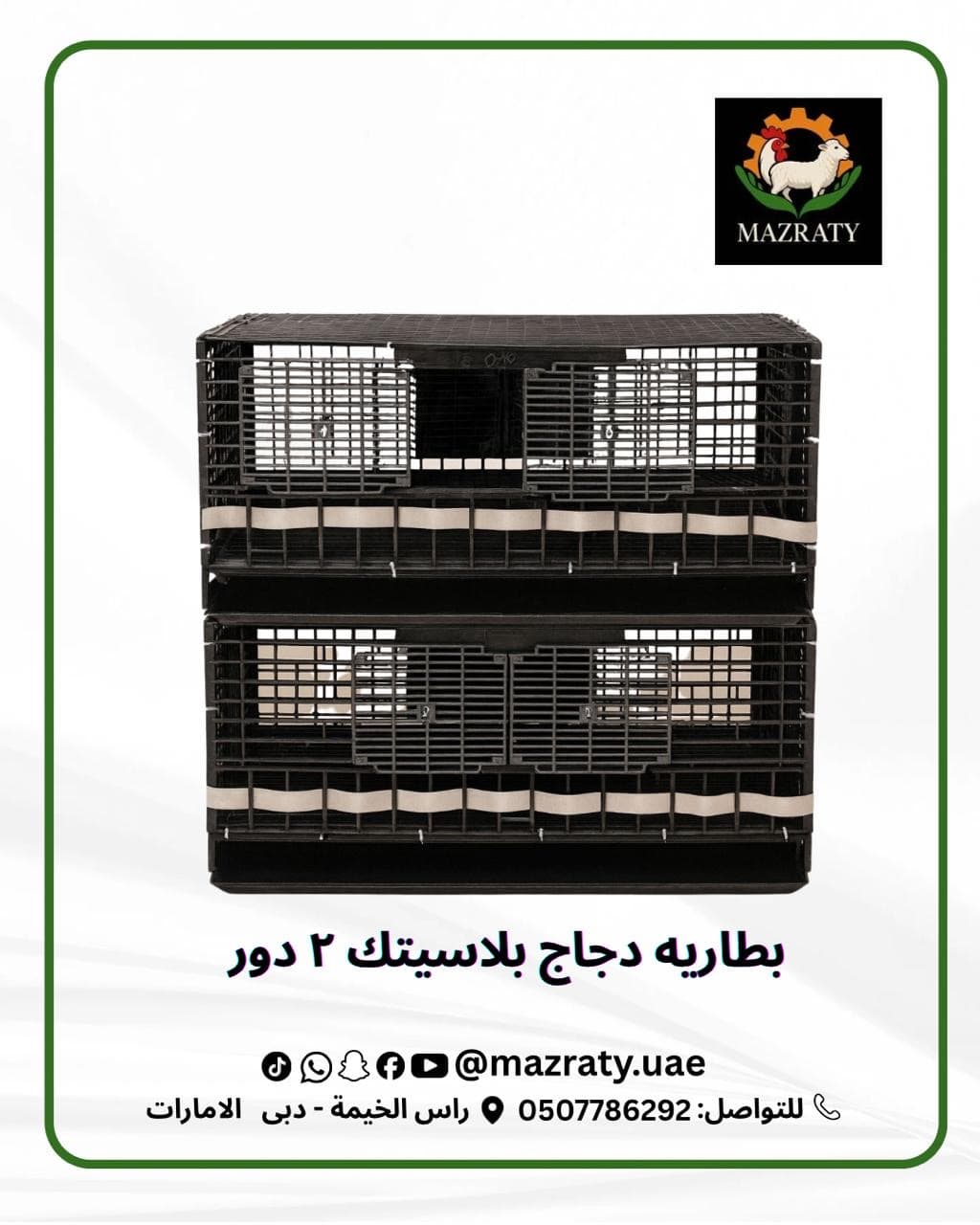
UAE broiler producers face a defining choice: continue with conventional litter-based floor management or transition to modern multi-tier cage systems. This comprehensive comparison examines the real numbers behind both approaches — from feed conversion ratios and stocking densities to capital costs and biosecurity outcomes. With UAE summer temperatures regularly exceeding 45°C and land prices among the highest in the region, the economic case for high-density cage production has never been stronger. Farms that have made the switch report FCR improvements of 10–15%, elimination of litter procurement costs, and the ability to triple effective stocking density without expanding their building footprint. This guide covers 4-tier cage dimensions, integrated climate control, automatic feeding and watering systems, and real conversion case studies from UAE operations. Whether you manage a 10,000-bird house or a 200,000-bird integrated facility, the data here will help you make a financially sound decision. Mazraty supplies and installs complete broiler cage systems across Ras Al Khaimah and the wider UAE.
This guide compares both systems rigorously, using data relevant to UAE conditions: ambient summer temperatures of 42–47°C, relative humidity of 60–85% during the Gulf summer, and the specific regulatory and market context of Emirati broiler production. Mazraty has installed cage systems for UAE farms of all scales and understands the technical requirements that determine success or failure in this climate.
Feed Conversion Ratio: The Core Economic Argument for Cages
Feed represents 65–72% of total broiler production cost in the UAE. A 10–15% improvement in feed conversion ratio (FCR) is therefore not an operational footnote — it is the single most powerful lever available to a UAE broiler producer.
Why do cages improve FCR? The mechanism is straightforward:
- Restricted movement: Birds in cages expend fewer calories on locomotion. Energy that would otherwise fuel walking, scratching, and social interaction is redirected to muscle deposition.
- Controlled feed access: Automatic trough feeders in cage systems allow precise feed presentation. Wastage from scratching and litter contamination — which can reach 8–12% in poorly managed floor houses — drops to under 2%.
- Uniform flock: Cage-housed birds show tighter body weight coefficients of variation (CV). A CV below 8% means more birds hit target slaughter weight simultaneously, reducing the tail of underweight birds that drag average FCR upward.
- Reduced energy loss to thermoregulation: In a well-ventilated cage house with evaporative pad cooling, birds maintain a more stable thermal environment than in litter houses where wet patches create localised cold zones and ammonia spikes create respiratory stress.
In practical UAE farm trials, a shift from litter floor management with an FCR of 1.95 to a cage system achieving FCR 1.70 on a 42-day Ross 308 cycle translates to a saving of roughly AED 1.80 per bird at current UAE feed prices of AED 1,200 per tonne. At 50,000 birds per cycle and six cycles per year, that is AED 540,000 in annual feed savings from FCR improvement alone — often enough to service the capital cost of the cage installation within two to three years.
Stocking Density: Tripling Output from the Same Building Footprint
A single-storey litter floor house in the UAE typically operates at 30–38 kg live weight per square metre, equating to roughly 8–10 birds per square metre at a target slaughter weight of 2.2 kg. Regulatory and welfare guidelines in most GCC markets cap floor density at this level to control ammonia accumulation and heat stress.
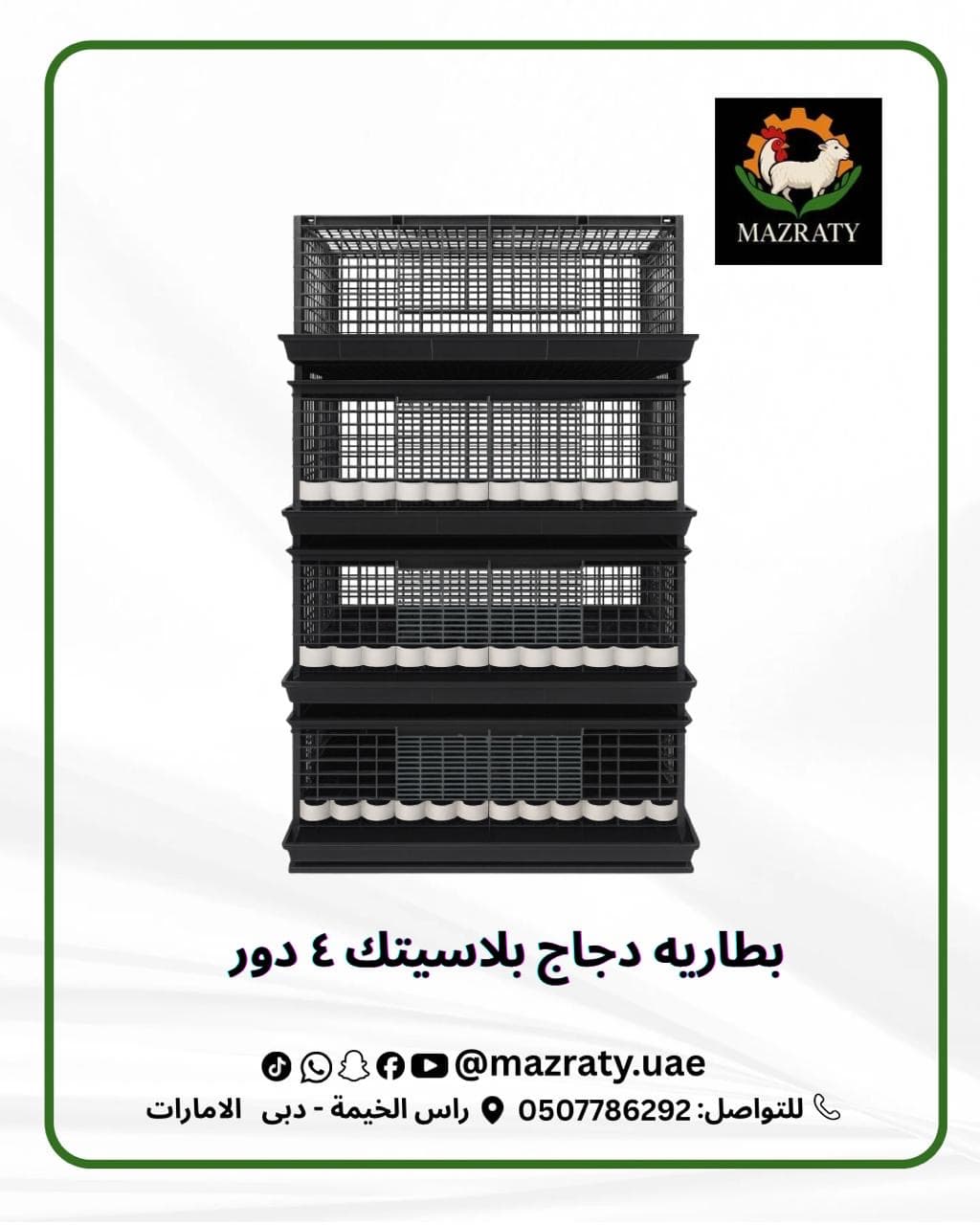
A 4-tier broiler cage system installed in the same building footprint achieves 15–20 birds per square metre per tier, delivering an effective ground-area stocking density of 60–80 birds per square metre across all tiers. Even accounting for the structural clearance required between tiers and the increased ventilation demand, net output from the same building footprint increases by a factor of 2.8 to 3.2.
For a UAE producer operating a 1,000 m² house:
| System | Birds per Cycle | Annual Output (6 cycles) | Live Weight per Year |
|---|
| Litter Floor (9 birds/m²) | 9,000 | 54,000 | 118,800 kg |
| 4-Tier Cage (18 birds/m² × 4 tiers) | 72,000 | 432,000 | 950,400 kg |
This eightfold increase in output from the same land asset is the most compelling argument in a market where greenfield building permits are expensive and time-consuming to obtain. UAE producers who have exhausted their site's floor expansion capacity consistently find that vertical cage intensification is the only viable growth path.
4-Tier Broiler Cage Dimensions and Specifications
The standard Mazraty 4-tier broiler cage system is engineered specifically for the Gulf climate and the genetic lines — primarily Ross 308 and Cobb 500 — that dominate UAE commercial production.
Tier Dimensions
- Cage width: 1.8 m (allowing two birds to pass without restriction)
- Cage depth: 0.65 m front to back
- Tier height (internal): 0.45 m at placement, expandable to 0.52 m via adjustable partition for heavier slaughter weights above 2.5 kg
- Inter-tier gap: Minimum 0.18 m for manure belt clearance and air circulation
- Total frame height (4 tiers): 2.85–3.10 m, compatible with standard UAE poultry house eave heights of 3.5–4.0 m
Floor and Wire Specifications
The cage floor is fabricated from hot-dip galvanised wire mesh, 2.5 mm wire diameter, with an aperture of 25 × 50 mm. This aperture passes manure efficiently while providing full pad support for broiler feet, minimising the hock burn and footpad dermatitis that were early criticisms of cage broiler production. The galvanisation standard used in Mazraty-supplied cages is a minimum 45 μm zinc coating, rated for 15+ years of service under UAE humidity conditions.
Litter Costs Eliminated: A Hidden but Substantial Saving
UAE broiler producers on litter systems typically apply 5–8 cm of wood shavings at placement, with partial top-dressing between flocks for multi-cycle houses. The economics of litter procurement in the Emirates are unfavourable: domestic wood shaving supply is limited, and imported litter materials carry freight costs from Southeast Asia or South Asia.
A realistic litter budget for a UAE floor house running six cycles per year:
- Initial litter application: AED 3.50–5.00 per bird placed
- Top-dressing between flocks: AED 1.20–2.00 per bird
- Litter removal and disposal (labour + transport): AED 0.80–1.50 per bird
- Total litter-related cost: AED 5.50–8.50 per bird per cycle
On a 50,000-bird house running six cycles, this represents AED 1.65–2.55 million per year spent on a material that cage systems eliminate entirely. Cage houses use a continuous manure belt system — manure drops through the wire floor onto a polypropylene belt that conveys waste to a central collection point at the end of the house. Collected manure is drier (45–55% moisture vs 70–80% for litter manure), has higher nitrogen concentration, and commands a better price from local agricultural fertiliser buyers.
Biosecurity Advantages of Cage Systems in the UAE Context
The UAE sits within a biosecurity risk corridor that includes high-traffic international aviation hubs, migratory bird flyways across the Arabian Peninsula, and proximity to markets where avian influenza has historically been more prevalent. UAE Ministry of Climate Change and Environment (MoCCAE) guidelines increasingly emphasise compartmentalisation and rapid flock monitoring as core biosecurity tools.
Cage systems deliver structural biosecurity advantages that litter houses cannot replicate:
- Zero litter as a pathogen reservoir: Newcastle disease virus, infectious bronchitis, and Marek's disease all persist in moist litter. Cage systems remove this reservoir entirely.
- Manure belt separation: Birds never contact their own manure. Coccidiosis pressure is dramatically reduced, often eliminating the need for in-feed coccidiostats — a cost saving of AED 0.40–0.80 per bird.
- Tier-level monitoring: Mortality in a cage house is immediately visible and can be localised to a specific tier and position. In a litter house, dead birds may be obscured for hours. Early mortality detection reduces carcass conditioning losses and speeds veterinary response.
- Compartmentalised cleaning: Each tier can be washed and disinfected independently with high-pressure systems. Mazraty cage frames are designed with no horizontal ledges that accumulate debris, and all joints are sealed-weld construction to prevent biofilm formation.
Heat Stress Management in UAE Cage Houses
Heat stress is the critical design challenge for cage broiler production in the UAE. The thermal mass of a dense, vertically stacked flock generates substantial internal heat load. A 50,000-bird cage house generates approximately 250–300 kW of metabolic heat at summer ambient temperatures — a load that must be removed entirely by the ventilation and cooling system.
Evaporative Pad Cooling
Cellulose evaporative cooling pads, 150 mm thick, are the standard for UAE cage houses. At an ambient temperature of 44°C and 30% relative humidity (typical UAE spring/autumn conditions), a well-designed pad system achieves inlet air temperatures of 28–30°C — within the broiler thermoneutral zone of 20–25°C for growing birds. In high-humidity summer conditions (42°C, 75% RH), cooling efficiency drops and supplemental strategies are required.
Tunnel Ventilation
Tunnel ventilation is mandatory for cage houses above 80 m in length. Air velocity of 2.5–3.0 m/s across the bird creates a wind-chill effect equivalent to a 4–6°C temperature reduction, partially compensating for reduced pad cooling efficiency in humid conditions. Mazraty sources and installs variable-speed EC motor fans with individual speed control — critical for maintaining airspeed uniformity across all four tiers.
Nipple Drinker Cooling Lines
Water temperature at the nipple should not exceed 22°C during summer. Mazraty installs insulated water supply lines with optional chilled water modules for farms where source water temperatures exceed 28°C — a common situation in UAE underground supply lines during July and August.
Automatic Feeding and Drinking Systems for Cage Broilers
Manual feeding in a 4-tier cage house is physically impractical and introduces the labour cost that would eliminate cage economics. Automatic systems are not optional — they are the foundation of the cage production model.
Chain Feeder System
Mazraty installs continuous-loop chain feeders running the full length of each tier. A single motor drives the chain, which carries feed from a central hopper through each cage row. Feed depth in the trough is controlled by the frequency and duration of chain runs, programmed via a PLC controller. Key specifications:
- Feed trough width: 80 mm (provides 25 mm trough access per bird at 15 birds/m²)
- Chain speed: 4–6 m/min, adjustable for different flock ages and feed textures
- Central hopper capacity: 5–10 tonnes, gravity-fed from overhead silos
- Feed distribution uniformity: ±3% across the full house length
Nipple Drinker Lines
Each tier carries a dedicated nipple drinker line with pressure regulators set tier-by-tier to compensate for height differences. Nipple flow rate is adjustable from 30 ml/min at placement to 80 ml/min at slaughter age. Catch cups below each nipple reduce floor wetting, a critical point for cage floor hygiene and footpad health. Mazraty fits inline medication dispensers on each line for vaccine delivery via water.
Flock Uniformity: The Cage System's Hidden Competitive Advantage
UAE integrated processors purchasing from contract growers typically apply a price premium of AED 0.30–0.60 per kg for flocks with body weight uniformity above 92%. Cage systems consistently outperform litter houses on this metric for a combination of reasons:
- Feed access is equal for all birds regardless of social rank — dominant birds cannot monopolise feeder space
- Environmental conditions are more uniform across the house — there are no wet litter patches creating cold, ammonia-rich microclimates
- Sick or lame birds are visible and can be culled early, preventing underweight tail birds from dragging average uniformity scores downward
On a practical level, high uniformity means that slaughter planning is more precise, chiller loading is more uniform, and portioning yield losses from mixed-weight carcasses are reduced. UAE processors running cage-sourced flocks report a 1.2–1.8% improvement in portioning yield compared to equivalent litter flocks, with significant downstream value in a market where breast meat commands a premium.
Capital Cost and ROI: UAE Farm Conversion Case Study
A mid-scale UAE operation in Ras Al Khaimah converted one 1,200 m² litter house to a 4-tier cage system in 2023. The project parameters and financial outcomes illustrate the investment case clearly.
Conversion Investment
- 4-tier cage system, 1,200 m² house: AED 680,000
- Automatic feeding system installation: AED 95,000
- Nipple drinker upgrade (tier-specific pressure control): AED 42,000
- Manure belt and collection system: AED 78,000
- Tunnel ventilation upgrade (additional fans, controls): AED 55,000
- Total conversion investment: AED 950,000
Annual Benefit Realisation
- FCR improvement (1.95 to 1.72, 84,000 birds/year): AED 580,000
- Litter cost elimination: AED 420,000
- Coccidiostat elimination: AED 55,000
- Uniformity premium from processor: AED 75,000
- Total annual benefit: AED 1,130,000
Simple payback: 10.1 months. Net present value over 10 years at a 7% discount rate: AED 6.8 million. These figures are conservative — they do not include the value of the increased throughput from higher stocking density, which requires MoCCAE permit adjustments the farm was pursuing concurrently.
Challenges of Cage Broiler Production and How to Mitigate Them
A balanced comparison requires honest discussion of the challenges cage systems present, along with proven mitigation strategies applicable in the UAE context.
Higher Initial Capital Requirement
The capital cost of a cage system is 3–5× higher per bird capacity than a conventional litter house fitout. This is a real barrier for smaller operations. Mitigation: Mazraty offers phased installation — converting one house at a time, using cash flow from the converted house to fund subsequent conversions. UAE agricultural loan products from Emirates Development Bank and ADCB Agri Finance can be structured to match the demonstrated payback profile of cage conversions.
Heat Stress in Upper Tiers
Without careful ventilation design, upper tiers in a 4-tier system can run 2–3°C warmer than lower tiers due to stratification and the rising thermal plume from lower birds. Mitigation: Mazraty engineers each installation with computational fluid dynamics (CFD) modelling of airflow patterns, adjusting fan placement and panel positioning to achieve less than 1°C tier-to-tier temperature variation.
Mortality Handling
Removing dead birds from mid-tiers is a daily labour requirement that floor houses do not share to the same degree. Mitigation: Proper cage design with cage doors on both sides of the frame allows removal without reaching across other birds. Mazraty frames include quick-release cage door mechanisms rated for 50,000 open/close cycles.
Complete Mazraty Broiler Cage Solutions for UAE Farms
Mazraty is the leading supplier of broiler cage systems, automatic feeders, nipple drinker lines, manure belt conveyors, and climate control equipment for UAE poultry operations. Our team provides site assessment, system design, full installation, commissioning, and ongoing technical support across Ras Al Khaimah, Sharjah, Abu Dhabi, and all seven Emirates.
We supply Galvanised 4-tier and 3-tier broiler cage frames, EC motor tunnel fans, cellulose evaporative cooling pads, PLC-controlled chain feeders, pressure-regulated nipple drinker systems, and manure belt installations — all from a single supplier relationship that simplifies procurement, guarantees system compatibility, and provides a unified warranty.
If you are evaluating a conversion from litter to cage or building a new cage house from the ground up, contact Mazraty today for a no-obligation site assessment and financial projection. Our technical team will model your specific building dimensions, flock targets, and UAE climate conditions to produce a system specification and ROI analysis tailored to your operation. Call or WhatsApp us at +971 50 535 3412 — our agricultural specialists are available seven days a week to support UAE poultry producers making this critical investment decision.
Reviewed planning sources
These references support operating and welfare principles. Final design and health programs remain site-, strain-, authority- and veterinarian-specific.
Frequently Asked Questions
Are broiler cages always better than floor housing?
No. Each system has different welfare, ventilation, capital and operating requirements; the fit depends on site and team.
What data is needed for a fair comparison?
Use flock size, cycles, house dimensions, labour, utilities, manure handling and current performance records.